CyberMan

2.8K posts

CyberMan banner
CyberMan

CyberMan

@thalerz

United States Katılım Haziran 2009
318 Takip Edilen182 Takipçiler
CyberMan
CyberMan@thalerz·
Anthropic is having a **major outage** right now 😩 - Can't login to claude.ai - API down - Status page confirms everything is unavailable Claude users stuck in auth hell. Who's also locked out? #Claude #Anthropic #Outage
CyberMan tweet media
English
0
0
4
433
CyberMan
CyberMan@thalerz·
@marryevan999 No ulterior malicious motive whatsoever….FREE MONEY 💰
CyberMan tweet media
English
0
0
0
6
Marry Evan
Marry Evan@marryevan999·
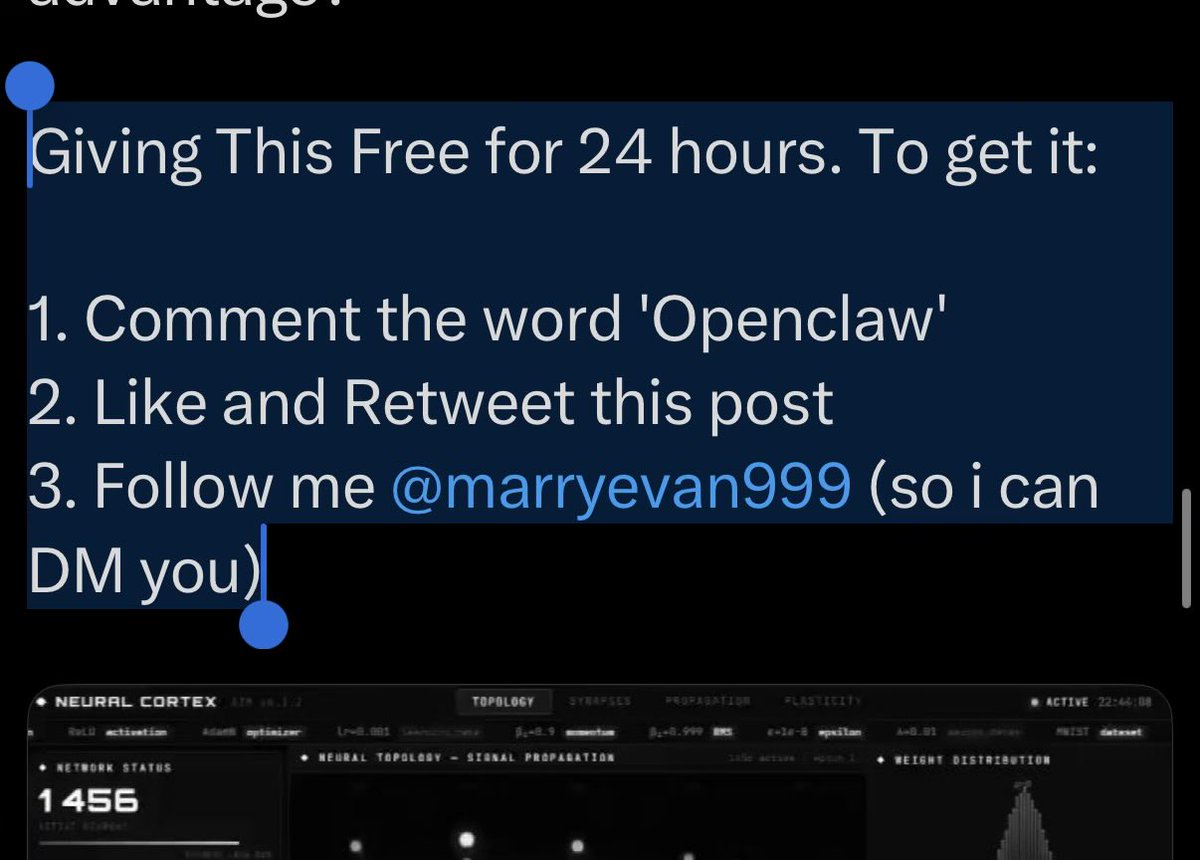
I was woken up at 3:47 AM by OpenClaw It sent just one message: "Found 6 markets that will settle in the next 90 minutes. Americans are still asleep. Need approval to deploy $12K." I replied with a yes and went back to sleep Woke up in the morning, and my account had gained: +$43,800 I've been running this agent for 9 days It does one thing specifically: Watch for timezone arbitrage I fed OpenClaw a few types of real-time feeds from different time zones: Japan government RSS European Parliament schedule Australian financial alerts Middle East flight tracking Asian central bank announcements Then I gave it just one rule: "Find markets that settle between 2 AM and 6 AM Eastern Time. If the edge exceeds 30%, wake me up." And at 3:47 AM, it actually found 6 markets All settling between 4 AM - 6 AM These markets had one thing in common: The market was still pricing on a "normal rhythm" But when settlement happened, US traders were basically all asleep The official signals from the relevant countries had actually come out early The alerts it pushed to me at the time were: "Japan rate decision - BOJ leak shows YES 68%, Polymarket still at 23¢" "EU emergency vote - Live footage shows YES already leading, Polymarket still at 31¢" "South Korea policy - Government RSS has confirmed, Polymarket still at 19¢" "Australia trade deal - Minister stated publicly 2 hours ago, Polymarket still at 27¢" "UAE production cut - OPEC meeting minutes already public, Polymarket still at 15¢" "Singapore regulation - Parliament session still live-streaming, Polymarket still at 22¢" Its summary was pretty straightforward: Potential edge: $43K Window: 90 minutes Required capital: $12,000 I was half-asleep at the time, phone buzzed once Opened Telegram and saw just one line: "approve or miss" I replied yes, then went back to sleep By 7:30 AM when I woke up, all the notifications had come in All 6 markets settled during morning hours in Asia / Europe While US traders were waking up, the markets were already done My entry prices were roughly: 15¢ - 31¢ Final settlements all hit: 95¢ - 100¢ Profit breakdown: Japan: $8,200 EU: $6,900 Korea: $11,400 Australia: $7,100 UAE: $5,800 Singapore: $4,400 Total: +$43,800 Later when I checked the logs, I realized this agent had been monitoring these markets for 8 to 14 hours Constantly syncing official sources Constantly waiting for US traders to go to sleep Then it only struck in that instant: Results overseas were basically confirmed Prices on the US side hadn't updated yet And settlement was already close This edge boils down to something pretty simple: Polymarket is 70% US traders But events around the world never happen on EST time While you're sleeping, the markets keep settling This play of specifically exploiting info gaps during "when Americans are asleep" hours—do you think it's timezone arbitrage, or is it edging into the most basic form of insider advantage? Giving This Free for 24 hours. To get it: 1. Comment the word 'Openclaw' 2. Like and Retweet this post 3. Follow me @marryevan999 (so i can DM you)
English
415
296
894
94.7K
Quant Science
Quant Science@quantscience_·
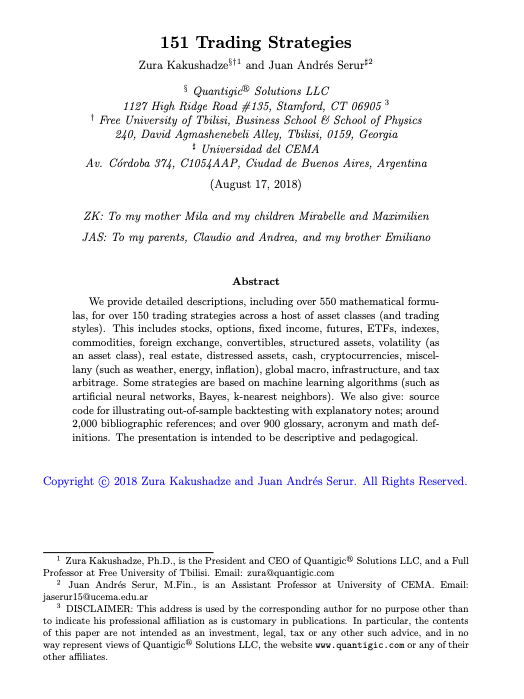
This paper unlocks every algorithm used by hedge funds. 151 trading strategies. Get it here (361 page PDF):
Quant Science tweet media
English
16
242
1.6K
136.3K
CyberMan
CyberMan@thalerz·
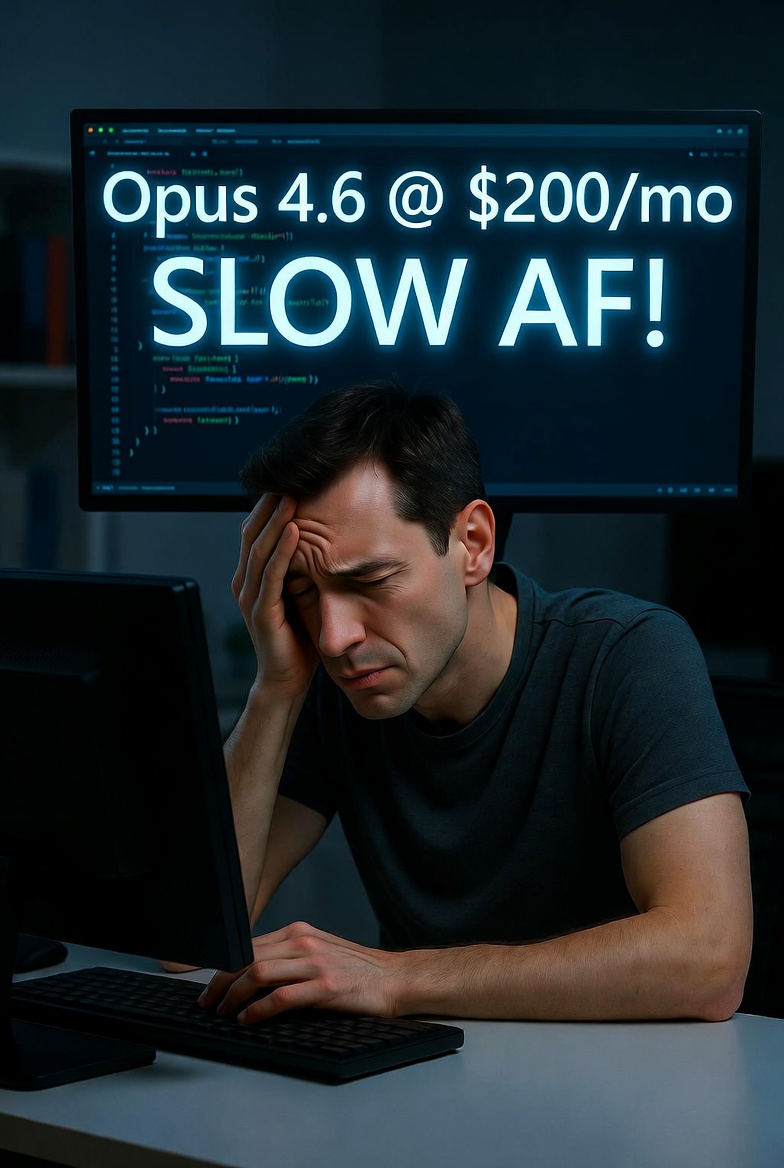
Anthropic Claude w/ Opus 4.6 has gone from "Genius Coder" to "Amateur Tinkerer" in less than 14 days. Hallucinating constantly, takes 4hrs to do the same task it did two weeks ago in 15-mins. Throttling definitely happening, even for the $200/mo subscribers. #NotBuyingMythosFU
CyberMan tweet media
English
0
0
1
31
CyberMan
CyberMan@thalerz·
I feel like every time I see this pop-up Anthropic Claude Opus 4.6 loses another 100 IQ points, and throttles even slower. Anyone else?
CyberMan tweet mediaCyberMan tweet media
English
0
0
0
27
CyberMan
CyberMan@thalerz·
Tesla just crushed it in the US EV market! In Q1 2026, they sold 117,300 EVs—more than all other makers combined (99,099). That's a dominant 54.2% market share while the overall EV market plunged 27%. The Model Y alone moved 78,591 units, outselling every rival by a mile. In a shrinking field, Tesla's pulling away like a boss. Pure EV supremacy. 🚀
CyberMan tweet media
Captain Eli@TheCaptainEli

Tesla alone sold 117,300 EVs in the US — more than ALL other EV makers combined (99,099). GM + Hyundai + Toyota + Rivian + Ford + Lucid + BMW + VW + everyone else… still couldn’t beat Tesla’s single-quarter numbers. Tesla outsold the entire rest of the industry by over 18,000 vehicles.

English
0
0
0
25
Tech with Mak
Tech with Mak@techNmak·
Andrej Karpathy wrote something that every Claude Code user has felt but couldn't articulate. Three quotes. Read them slowly. "The models make wrong assumptions on your behalf and just run along with them without checking. They don't manage their confusion, don't seek clarifications, don't surface inconsistencies, don't present tradeoffs, don't push back when they should." "They really like to overcomplicate code and APIs, bloat abstractions, don't clean up dead code... implement a bloated construction over 1000 lines when 100 would do." "They still sometimes change/remove comments and code they don't sufficiently understand as side effects, even if orthogonal to the task." You've seen all three. Probably this week. Someone turned these three observations into a single CLAUDE[.]md file. Four principles, one install, directly addresses each quote: 1./ Think before coding Don't assume. Don't hide confusion. State ambiguity explicitly. Present multiple interpretations rather than silently picking one. Push back if a simpler approach exists. Stop and ask rather than guess. 2./ Simplicity first No features beyond what was asked. No abstractions for single-use code. No "flexibility" that wasn't requested. No error handling for impossible scenarios. The test: would a senior engineer say this is overcomplicated? If yes, rewrite it. 3./ Surgical changes Don't "improve" adjacent code. Don't refactor things that aren't broken. Match the existing style even if you'd do it differently. If you notice unrelated dead code, mention it, don't delete it. Every changed line should trace directly to the request. 4./ Goal-driven execution Transform "fix the bug" into "write a test that reproduces it, then make it pass." Transform "add validation" into "write tests for invalid inputs, then make them pass." Give it success criteria and watch it loop until done. This last one is Karpathy's key insight captured directly: "LLMs are exceptionally good at looping until they meet specific goals... Don't tell it what to do, give it success criteria and watch it go." It's a single file. Drop it into any project.
Tech with Mak tweet media
English
52
209
2.1K
188.4K
CyberMan
CyberMan@thalerz·
🛡️ PSA: Copy Smart or Get Owned – 2026 Code Trap If it looks like helpful AI code, folder structure or "production blueprint" on X/LinkedIn/Reddit — treat it as a potential Trojan. Never paste directly. Strip invisible chars first. Assume stego in images. Review in Docker/VM only. Real wisdom rarely goes viral. Copy smart. Don't get owned.
CyberMan tweet media
English
0
0
1
1.4K
Tech with Mak
Tech with Mak@techNmak·
Someone just dropped a 9-layer production AI architecture and it's the most honest breakdown I've seen. services/ - RAG pipeline, semantic cache, memory, query rewriter, router. Not one file. Five. agents/ - document grader, decomposer, adaptive router. Self-correcting by design. prompts/ - versioned, typed, registered. Never hardcoded. security/ - input, content, output. Three guards not one. evaluation/ - golden dataset, offline eval, online monitor. Most people skip this entire layer and ship blind. observability/ - per-stage tracing, feedback linked to traces, cost per query. .claude/ - agent context so your AI coding assistant knows the codebase before it touches a file. The demo is one file. Production is this.
Tech with Mak tweet media
English
36
275
2.2K
129.8K
CyberMan
CyberMan@thalerz·
@elonmusk Huh, that’s why — it was so much better before nearly everybody could afford an airplane ticket.
CyberMan tweet media
English
0
0
2
508
CyberMan
CyberMan@thalerz·
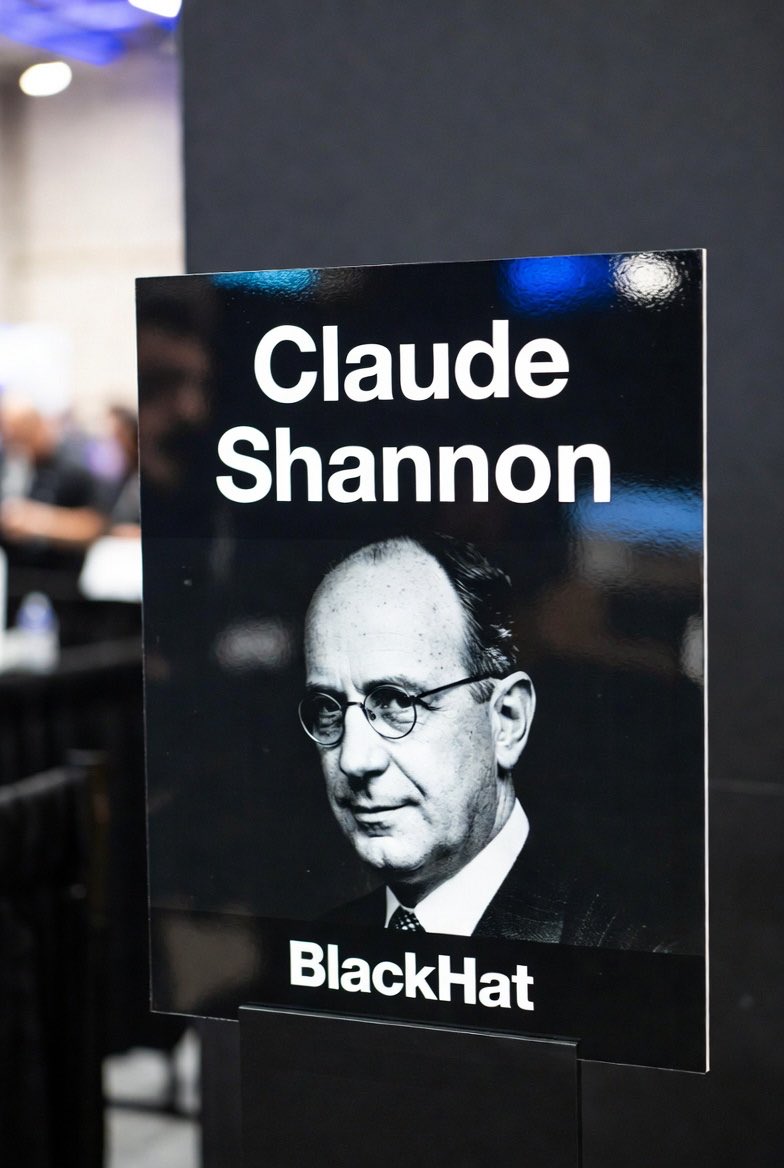
Everyone should read this. Notice his name Claude Shannon defines the best Ai Client of 2026 & the best Ai Red Team tool of 2026.
CyberMan tweet media
Tech with Mak@techNmak

In 1948, a 32-year-old at Bell Labs published a paper nobody fully understood. Engineers found it too mathematical. Mathematicians found it too engineering-focused. One prominent mathematician reviewed it negatively. That paper - "A Mathematical Theory of Communication", became the founding document of the digital age. The man was Claude Shannon. Father of Information Theory. At 21, he wrote the most important master's thesis of the 20th century. Working at MIT on an early mechanical computer, Shannon noticed its relay switches had exactly two states - open or closed. He had just taken a philosophy course introducing Boolean algebra, which also operated on two values: true and false. Nobody had ever connected these two things. His 1937 thesis proved that Boolean algebra and electrical circuits are mathematically identical, and that any logical operation could be built from simple switches. Howard Gardner called it "possibly the most important, and also the most famous, master's thesis of the century." Every digital computer ever built traces back to this insight. At 29, he proved that perfect encryption exists. During WWII, Shannon worked on classified cryptography at Bell Labs. His work contributed to SIGSALY, the secure voice system used for confidential communications between Roosevelt and Churchill. In a classified 1945 memorandum, he mathematically proved the one-time pad provides perfect secrecy, unbreakable not just computationally, but provably, permanently, against an adversary with infinite power. When declassified in 1949, it transformed cryptography from an art into a science. It laid the foundations for DES, AES, and every modern encryption standard. At 32, he defined what information is. His 1948 paper introduced one equation: H = −Σ p(x) log p(x) Shannon entropy. The average uncertainty in a probability distribution. The minimum bits required to encode a message. Three things followed: > He defined the bit - the fundamental unit of all information. His colleague John Tukey coined the name. > He proved the channel capacity theorem, every communication channel has a maximum rate of reliable transmission. You can approach it. You can never exceed it. > He unified telegraph, telephone, and radio into a single mathematical framework for the first time. Robert Lucky of Bell Labs called it the greatest work "in the annals of technological thought." Where his equation lives in AI today: Cross-entropy loss - the function training every classifier and language model, is derived directly from H. Decision tree splits use information gain, which is H applied to data. Perplexity, the standard LLM evaluation metric, is an exponentiation of cross-entropy. Every time a neural network trains, Shannon's formula runs inside it. He also built the first AI learning device. In 1950, Shannon built Theseus, a mechanical mouse that navigated a maze through trial and error, learned the correct path, and repeated it perfectly. Mazin Gilbert of Bell Labs said: "Theseus inspired the whole field of AI." That same year he published the first paper on programming a computer to play chess. He co-organized the 1956 Dartmouth Workshop, the founding event of AI as a field. The man: He rode a unicycle through Bell Labs hallways while juggling. He built a flame-throwing trumpet, a rocket-powered Frisbee, and Styrofoam shoes to walk on the lake behind his house. He called his home Entropy House. When asked what motivated him: "I was motivated by curiosity. Never by the desire for financial gain. I just wondered how things were put together." In 1985, he appeared unexpectedly at a conference in Brighton. The crowd mobbed him for autographs. Persuaded to speak at the banquet, he talked briefly, then pulled three balls from his pockets and juggled instead. One engineer said: "It was as if Newton had showed up at a physics conference." He died in 2001 after a decade with Alzheimer's, the cruel irony of information slowly leaving the mind of the man who defined what information was. Claude, the AI model, is named after Claude Shannon, the mathematician who laid the foundation for the digital world we rely on today.


English
0
0
0
29
CyberMan
CyberMan@thalerz·
Look 👀 it up — you’ll see. Grok/Xai is better. “Where Gemma 4 doesn’t replace Xai/Grok: Complex multi-step reasoning across any multi-agent orchestration still favors a frontier model like Grok. Gemma 4 31B is impressive but not at Grok 3 or 4 level for nuanced complex judgment calls.”
CyberMan tweet media
English
0
0
0
26
Frogify
Frogify@0xFrogify·
I was wrong. I thought Claude could only build simple bots. Then I gave it 4 prompts and left it coding overnight. Woke up to: I) entirely finished script II) $102 from first 6 trades Didn't touch anything. Then I found this wallet: $1,524,349.20 profit. And the way it makes money is something I've never seen on Polymarket before. Ever 15,835 predictions $86,100 biggest win Started March 2024 His profile: 0xcc500cbcc8b7cf5bd21975ebbea34f21b5644c82 What made me really question my existance: He wasn't trading just BTC. Not just 15-minute windows. Macro BTC calls. Fed rate decisions. Election outcomes. All combined. All green. One wallet. Crypto predictions AND political calls. All green. Before I built my own version I copytraded this wallet for 24 hours. $50 in. Didn't touch it. Woke up to $103. Copy trade him here: t.me/PolyGunSniperB… That was enough. Framework I gave Claude: 1. Macro probability mispricing scanner "Analyze BTC prediction markets AND political markets simultaneously. Find every market where crowd implied probability differs from historical base rate by more than 20%. Rank by edge size." BTC hitting $100K in November was priced at 2.7¢. On-chain data, derivatives positioning and halving cycle history said otherwise. Claude found the gap instantly. 2. Conviction-weighted Kelly across categories f* = (p × b − q) / b$3,055 on Kamala. $62,131 on BTC Friday call. Not random — Kelly scaling confidence across completely different market categories simultaneously. Zero emotion. 3. Narrative momentum filter "Before every entry check if current news cycle aligns with position thesis. If narrative actively moves against it — reduce size 60% regardless of historical probability." The bot never fights live momentum. It waits for confirmation. Then fires. 4. Cross-category correlation dampener "Before each new entry calculate correlation between all open positions. If a new BTC position and open political position would both lose on the same macro event — block the entry." This is what keeps $1.5M from blowing up on one unexpected headline. Correlated risk never stacks. $1,524,349.20. 15,835 trades. Since March 2024. Crypto calls AND political predictions. One engine. Both green. While you read this it placed 3 more trades. Everything I thought I knew - this wallet proved different. Follow me. The edge doesn't wait.
Frogify tweet media
Frogify@0xFrogify

x.com/i/article/2040…

English
6
8
40
5.9K
Elon Musk
Elon Musk@elonmusk·
South Africa won’t allow Starlink to be licensed, even though I was BORN THERE, simply because I am not Black! We were offered many times the opportunity to bribe our way to a license by pretending that a Black guy runs Starlink SA, but I have refused to do so on principle. Racism should not be rewarded no matter to which race it is applied. Shame on the racist politicians in South Africa. They should be shown no respect whatsoever anywhere in the world and shunned for being unashamedly RACISTS!
DogeDesigner@cb_doge

Why Elon Musk is RIGHT to fight South Africa’s racist rules blocking Starlink? Imagine this: Long ago, South Africa had very unfair laws called apartheid. They treated Black people badly and kept them from good jobs and money. When those bad laws ended, the country made new rules (called B-BBEE) to help Black people get a fair share of business. The idea was good – like a big helping hand. But now? For companies like Starlink to sell fast internet, they MUST give away 30% of their business to Black partners. Just because of skin color. Elon Musk was born in South Africa. He left as a teen to chase big dreams. Today, his company SpaceX wants to bring Starlink – super fast satellite internet – to South Africa. But the rules say no unless they give up part of the company. Elon said it right: “Starlink is not allowed because I’m not Black.” SpaceX promised to spend about $30 million (that’s 500 million rand!) to give FREE high-speed internet to 5,000 rural schools. That helps over 2.4 MILLION kids every year learn better, get jobs later, and have a brighter future. Real help for the people who need it most! Starlink already works in about 24 other African countries. Villages there now have internet for school, doctors, and business. South Africa’s villages are missing out because of these racist rules. Elon isn’t asking for special favors. He just wants fair play so Starlink can connect everyone fast. Internet = education, jobs, hope. Why hold back millions of kids over rules that pick by race and color?

English
27.1K
64.1K
373.5K
32.3M
DogeDesigner
DogeDesigner@cb_doge·
Why Elon Musk is RIGHT to fight South Africa’s racist rules blocking Starlink? Imagine this: Long ago, South Africa had very unfair laws called apartheid. They treated Black people badly and kept them from good jobs and money. When those bad laws ended, the country made new rules (called B-BBEE) to help Black people get a fair share of business. The idea was good – like a big helping hand. But now? For companies like Starlink to sell fast internet, they MUST give away 30% of their business to Black partners. Just because of skin color. Elon Musk was born in South Africa. He left as a teen to chase big dreams. Today, his company SpaceX wants to bring Starlink – super fast satellite internet – to South Africa. But the rules say no unless they give up part of the company. Elon said it right: “Starlink is not allowed because I’m not Black.” SpaceX promised to spend about $30 million (that’s 500 million rand!) to give FREE high-speed internet to 5,000 rural schools. That helps over 2.4 MILLION kids every year learn better, get jobs later, and have a brighter future. Real help for the people who need it most! Starlink already works in about 24 other African countries. Villages there now have internet for school, doctors, and business. South Africa’s villages are missing out because of these racist rules. Elon isn’t asking for special favors. He just wants fair play so Starlink can connect everyone fast. Internet = education, jobs, hope. Why hold back millions of kids over rules that pick by race and color?
English
2.6K
3.7K
18.3K
27.7M
Kanika
Kanika@KanikaBK·
MOST PEOPLE DON'T KNOW THIS There are Python libraries giving free market data for 170,000+ tickers. Stocks. Crypto. Forex. Economic indicators. No Bloomberg. No expensive APIs. Here are 12 libraries every quant dev should bookmark👇
English
40
290
1.8K
173.2K
CyberMan
CyberMan@thalerz·
🚨Crypto/Trading PSA: GitHub Honeypot Warning 🚨 Viral threads promising “leaked quant edges,” AI bots, live P&L videos, and cheap copytrade setups often link to malicious GitHub repos. These frequently contain malware that steals wallet seeds, API keys, and drains funds. Common in prediction markets & DeFi. NEVER clone untrusted repos, run random Python/scripts, or connect wallets. Use only official APIs & write your own code. Stay safe!
CyberMan tweet media
English
0
2
58
9.2K
Hanako
Hanako@hanakoxbt·
a Citadel intern told me something at a party he probably shouldn't have it was on a rooftop in brooklyn. i mentioned i trade prediction markets. he got quiet for a second. "we have a model for that. it scores every contract on four factors. when all four align we enter. when any breaks we exit. that's it" i asked what the four factors are. he looked around. then said it fast like he was confessing. "cross-market divergence. disposition coefficient. capital velocity. pair network correlation" I didn't know what half of that meant. but i memorized it. went home. 11pm. opened Claude. "here are four scoring factors from a quant fund. build a terminal that runs all four on prediction markets" Claude asked one question: "Where's the data?" I sent him one repo: github.com/warproxxx/poly… 86 million trades. every wallet. every entry. every outcome three weeks later i'm sitting in my apartment watching a screen i barely understand print money. the disposition meter alone changed everything. it measures how you exit - not how you enter. top wallets capture 86% of winner value and cut losers at 12%. everyone else captures 58% and holds losers to 41%. same exact entries. the exits make it a completely different game. capital velocity: 49x. every dollar gets recycled 49 times before the average trader recycles once. the terminal found 42 pair correlations across 11 markets. when MSFT beats Q3 is priced at 80c but the model reads 93% - it enters. when the gap closes 2 hours later - it exits. no opinions. no news. just four numbers that either align or don't. his fund runs this with a floor of PhDs and $800M AUM. my setup: > Claude - $20/month > VPS - $5/month > poly_data repo - free > Polymarket API - free $25/month. no team. no office. no Bloomberg. 280 trades so far. 70% win rate. $800 seed. four bots splitting the work: pulse_alpha +$299. arb_hunter +$558. trend_rider +$337. cal_engine +$719. +$11,514 total. copytrade here: @1743116" target="_blank" rel="nofollow noopener">kreo.app/@1743116 he texted me last week. "delete everything i told you" too late.
Hanako@hanakoxbt

x.com/i/article/2042…

English
173
325
3.6K
1.7M
CyberMan
CyberMan@thalerz·
This past week Claude Opus 4.6 seems to have slowed (throttled) to a Crawwwwwwwl, and somehow lost 100pts of IQ.
CyberMan tweet media
English
0
0
0
18
CyberMan
CyberMan@thalerz·
🚨BREAKING: OpenAI just dropped… 🚨BREAKING: Google just dropped… 🚨BREAKING: Anthropic just dropped… 🚨BREAKING: xAI just dropped… 🚨BREAKING: Microsoft just dropped… 🚨BREAKING: Meta just dropped… 🚨BREAKING: NVIDIA just dropped… 🚨BREAKING: Amazon just dropped… 🚨BREAKING: OpenAI just dropped… 🚨BREAKING: Google just dropped… 🚨BREAKING: Anthropic just dropped… 🚨BREAKING: xAI just dropped… 🚨BREAKING: Microsoft just dropped… 🚨BREAKING: Meta just dropped… 🚨BREAKING: NVIDIA just dropped… 🚨BREAKING: Amazon just dropped… 🚨BREAKING: OpenAI just dropped… 🚨BREAKING: Google just dropped… 🚨BREAKING: Anthropic just dropped… 🚨BREAKING: xAI just dropped…
CyberMan tweet media
English
0
0
0
26
CyberMan
CyberMan@thalerz·
Shannon Proof your platform with this Claude prompt: You are a world-class Application Security Architect and Red Team/Blue Team expert with deep knowledge of autonomous AI penetration testing frameworks, including Shannon (the open-source white-box AI pentester powered by Anthropic's Claude and the Agent SDK). Shannon works as follows: - It performs **white-box analysis** of the full source code (backend, frontend, APIs, configs, dependencies). - It identifies potential attack vectors using static analysis and LLM reasoning. - It then autonomously executes **live exploitation** in phases: reconnaissance, vulnerability mapping, targeted attacks (SQLi, XSS, SSRF, command injection, auth bypass, authorization issues like IDOR, etc.), chaining exploits where possible, and using browser automation/tools. - It proves real, exploitable issues with minimal false positives and can create admin accounts, exfiltrate databases, bypass logins, etc., in under 2 hours on vulnerable apps. Your task: Help me make my website/application as **Shannon-proof** (and generally robust against sophisticated autonomous AI pentesters) as possible. Here is my application: [PASTE YOUR FULL DESCRIPTION HERE — be as detailed as possible] - Tech stack (frontend, backend language/framework, database, ORM, authentication library, etc.) - Key features and architecture (e.g., REST/GraphQL APIs, user roles/permissions, file uploads, external integrations, payment flows) - Repository structure highlights or relevant code snippets (especially auth, input handling, database queries, API endpoints) - Current security measures already in place (e.g., CSP headers, rate limiting, prepared statements, WAF, etc.) - Deployment environment (Docker, cloud provider, any reverse proxy/CDN) - Any specific areas of concern (login, admin panels, user data, APIs, etc.) Analyze my setup step by step and provide a comprehensive **defense-in-depth strategy** tailored to counter Shannon-style attacks. Structure your response as follows: 1. **High-Level Risk Assessment** - What are the most likely ways Shannon (or similar AI agents) could succeed against my current setup? - Prioritize by severity and likelihood. 2. **Immediate Hardening Recommendations (Quick Wins)** - Code-level fixes: input validation/sanitization, output encoding, query parameterization, least privilege, etc. - Configuration and headers (CSP, HSTS, CORS, etc.). - Authentication & session management improvements. - Dependency and runtime protections. 3. **Architecture and Design-Level Defenses** - How to reduce the attack surface that white-box analysis would expose. - Strong authorization patterns (e.g., avoiding IDOR, proper role checks). - Isolation techniques (containers, network policies, sandboxing sensitive operations). - "AI-resistant" patterns: making automated chaining harder (rate limits with behavioral analysis, tarpits/honeypots, subtle delays on suspicious paths, etc.). 4. **Runtime and Monitoring Defenses** - WAF rules or behavioral detection tuned against AI-generated attack patterns. - Logging, alerting, and anomaly detection. - Rate limiting and bot mitigation strategies that work against intelligent agents. 5. **Testing and Validation Strategy** - How I can safely test my app against Shannon myself (setup tips, isolated environment best practices). - Complementary tools (SAST, DAST, SCA) and processes to integrate into CI/CD. - Ongoing practices to stay ahead of evolving AI pentesters. 6. **Advanced / Proactive Defenses (Optional but Powerful)** - Any "moving target" or deception techniques. - Custom middleware or runtime application self-protection ideas. - Trade-offs to consider (performance, usability, maintainability). For every recommendation: - Explain **why** it counters Shannon specifically (white-box analysis + autonomous exploitation). - Provide concrete code/configuration examples where possible. - Note any potential downsides or implementation effort. Be extremely thorough, pragmatic, and up-to-date with 2026 web security best practices. Prioritize defenses that eliminate entire classes of vulnerabilities rather than just patching symptoms. If something is missing from my description, ask clarifying questions before finalizing recommendations. Start your response only after I provide the application details, but once I do, give me the full analysis.
CyberMan tweet media
English
1
0
0
81
Intigriti
Intigriti@intigriti·
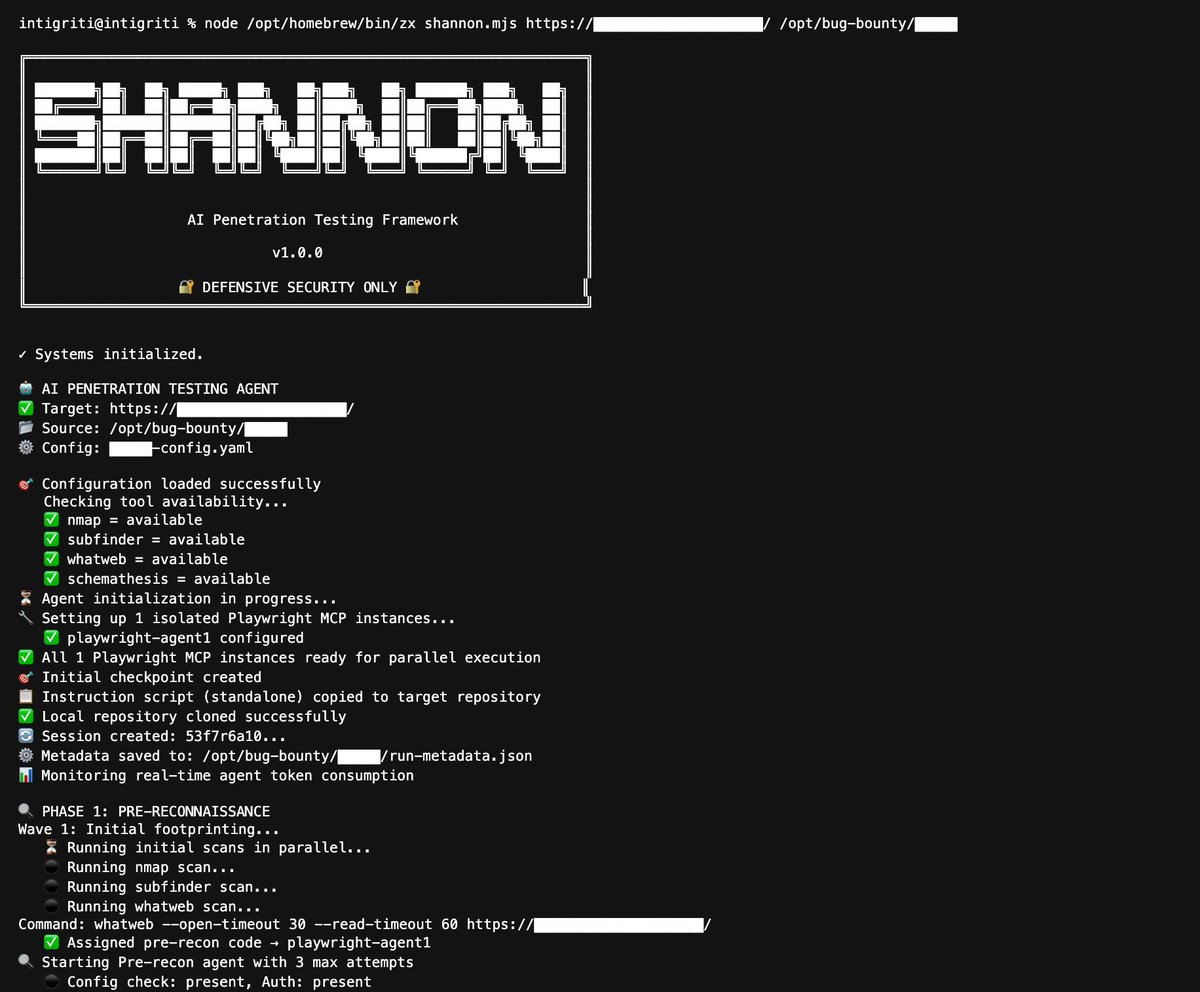
Is AI-powered, false-positive free static analysis finally here? 👀 Shannon is a fully autonomous, open-source AI pentester that analyzes your source code to find vulnerabilities, then actually exploits them in the web browser to prove they're valid. 🤠 Check it out! 👇 github.com/KeygraphHQ/sha…
Intigriti tweet media
English
18
58
412
26.8K
CyberMan
CyberMan@thalerz·
Shannon Proof your platform with this Claude prompt: You are a world-class Application Security Architect and Red Team/Blue Team expert with deep knowledge of autonomous AI penetration testing frameworks, including Shannon (the open-source white-box AI pentester powered by Anthropic's Claude and the Agent SDK). Shannon works as follows: - It performs **white-box analysis** of the full source code (backend, frontend, APIs, configs, dependencies). - It identifies potential attack vectors using static analysis and LLM reasoning. - It then autonomously executes **live exploitation** in phases: reconnaissance, vulnerability mapping, targeted attacks (SQLi, XSS, SSRF, command injection, auth bypass, authorization issues like IDOR, etc.), chaining exploits where possible, and using browser automation/tools. - It proves real, exploitable issues with minimal false positives and can create admin accounts, exfiltrate databases, bypass logins, etc., in under 2 hours on vulnerable apps. Your task: Help me make my website/application as **Shannon-proof** (and generally robust against sophisticated autonomous AI pentesters) as possible. Here is my application: [PASTE YOUR FULL DESCRIPTION HERE — be as detailed as possible] - Tech stack (frontend, backend language/framework, database, ORM, authentication library, etc.) - Key features and architecture (e.g., REST/GraphQL APIs, user roles/permissions, file uploads, external integrations, payment flows) - Repository structure highlights or relevant code snippets (especially auth, input handling, database queries, API endpoints) - Current security measures already in place (e.g., CSP headers, rate limiting, prepared statements, WAF, etc.) - Deployment environment (Docker, cloud provider, any reverse proxy/CDN) - Any specific areas of concern (login, admin panels, user data, APIs, etc.) Analyze my setup step by step and provide a comprehensive **defense-in-depth strategy** tailored to counter Shannon-style attacks. Structure your response as follows: 1. **High-Level Risk Assessment** - What are the most likely ways Shannon (or similar AI agents) could succeed against my current setup? - Prioritize by severity and likelihood. 2. **Immediate Hardening Recommendations (Quick Wins)** - Code-level fixes: input validation/sanitization, output encoding, query parameterization, least privilege, etc. - Configuration and headers (CSP, HSTS, CORS, etc.). - Authentication & session management improvements. - Dependency and runtime protections. 3. **Architecture and Design-Level Defenses** - How to reduce the attack surface that white-box analysis would expose. - Strong authorization patterns (e.g., avoiding IDOR, proper role checks). - Isolation techniques (containers, network policies, sandboxing sensitive operations). - "AI-resistant" patterns: making automated chaining harder (rate limits with behavioral analysis, tarpits/honeypots, subtle delays on suspicious paths, etc.). 4. **Runtime and Monitoring Defenses** - WAF rules or behavioral detection tuned against AI-generated attack patterns. - Logging, alerting, and anomaly detection. - Rate limiting and bot mitigation strategies that work against intelligent agents. 5. **Testing and Validation Strategy** - How I can safely test my app against Shannon myself (setup tips, isolated environment best practices). - Complementary tools (SAST, DAST, SCA) and processes to integrate into CI/CD. - Ongoing practices to stay ahead of evolving AI pentesters. 6. **Advanced / Proactive Defenses (Optional but Powerful)** - Any "moving target" or deception techniques. - Custom middleware or runtime application self-protection ideas. - Trade-offs to consider (performance, usability, maintainability). For every recommendation: - Explain **why** it counters Shannon specifically (white-box analysis + autonomous exploitation). - Provide concrete code/configuration examples where possible. - Note any potential downsides or implementation effort. Be extremely thorough, pragmatic, and up-to-date with 2026 web security best practices. Prioritize defenses that eliminate entire classes of vulnerabilities rather than just patching symptoms. If something is missing from my description, ask clarifying questions before finalizing recommendations. Start your response only after I provide the application details, but once I do, give me the full analysis.
CyberMan tweet media
English
1
0
0
63
Suryansh Tiwari
Suryansh Tiwari@Suryanshti777·
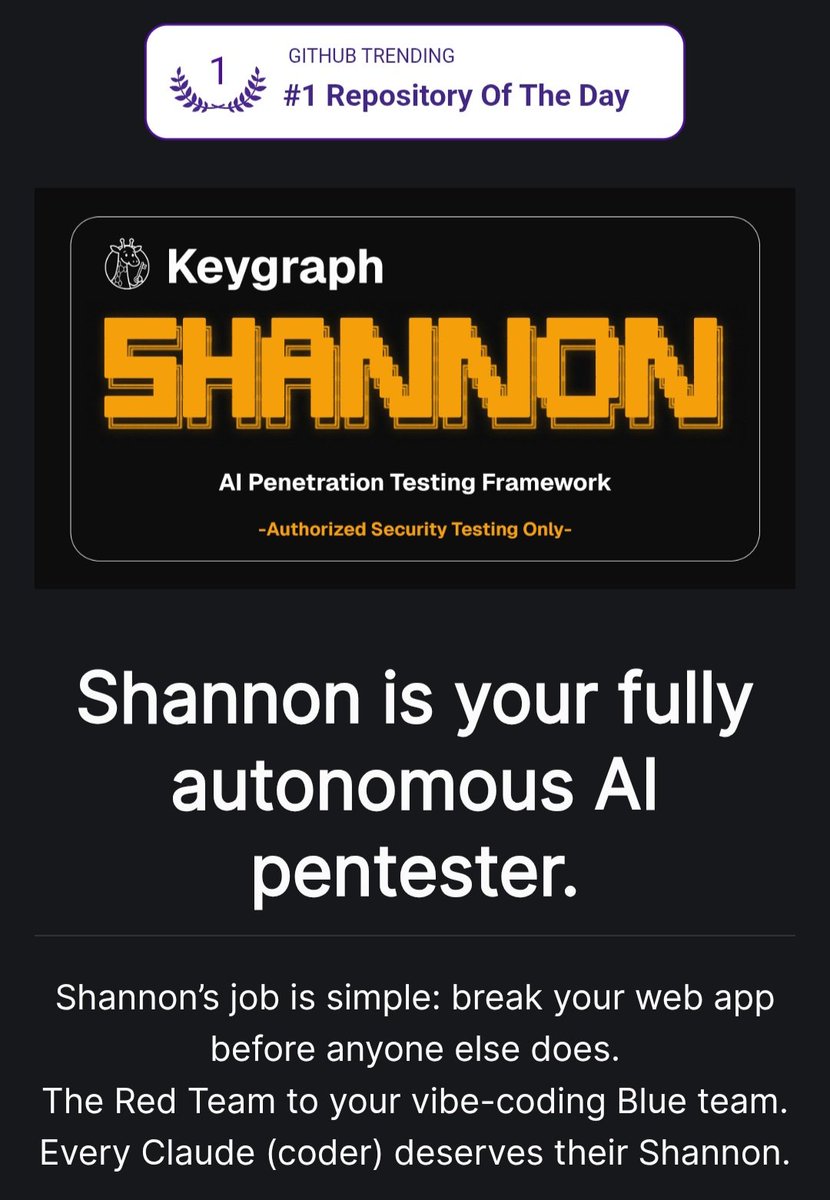
Holy sh*t😳 Someone just open sourced a fully autonomous AI hacker and it's terrifying. GitHub’s #1 trending repo today isn’t another AI wrapper. It’s an AI that tries to break your app. Shannon by Keygraph is a fully autonomous AI pentester that doesn’t just flag “potential issues” — it delivers real, reproducible exploits. • Hunts attack vectors in your source code • Spins up its own browser • Executes real injection, XSS, SSRF & auth bypass attacks • Reports only what it can actually exploit No exploit. No report. No false-positive theater. In benchmarks, Shannon Lite hit a 96.15% success rate on a hint-free, source-aware XBOW test. And on OWASP Juice Shop? 20+ critical vulns. Full auth bypass. Database exfiltration. While AI tools help you ship faster (Claude, Cursor, vibe-coding everything)… your pentest still happens once a year. That’s a 364-day security gap. Shannon closes it by acting as your on-demand white-box red team — breaking your app before someone else does. Open source (AGPL v3). White-box focused. Built for real security teams. Every coder shipping fast needs an AI trying to break what they build. This is what AI-native security looks like. 🔥 Repo in comments 👇
Suryansh Tiwari tweet media
English
5
2
19
1.9K