Sayad
122 posts


@lostsec_ @ayesha_fatiima Delete this tweet bro
They gonna path if they see this 💀
English

I remember my Telegram account got banned on the official app. A few months later, I installed Telegram X and was surprised to see that my account was still active there. All my chats were restored. After that, I tried logging into the official Telegram app again and it worked. I was able to access my account normally. If your Telegram account gets banned, you can also try logging into the same account through Telegram X. It worked for me.
English

@Itx_Shad0w MashaALLAH habibi
Hope we can collaborate one day aswell InshaALLAH 😅
English

InShaAllah I hope we do more collabs like this ❤️
Lobo@itx_l0b0
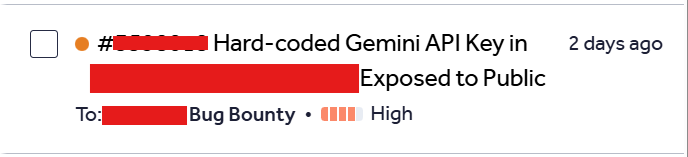
Worked on a Collab With @Itx_Shad0w , We Dropped The Report on LinkedIn and it just got Triaged on @Hacker0x01 Honestly Really Happy with how this one went Good Research, Good People Also Eid Mubarak to Everyone Celebrating 🌙 #BugBounty #HackerOne #EidMubarak #linkedln
English

For years, Google API keys (AIza...) had little to no real-world impact.
But recently, many of them unexpectedly gained access to Google Gemini.
curl "generativelanguage.googleapis.com/v1/models?key=…"
This appears to be a widespread misconfiguration that can be hunted in the wild.

English

@thehacktivator Thank you
99% of people put this stuff behind a paywall !!!
May Allah Reward You brother
English

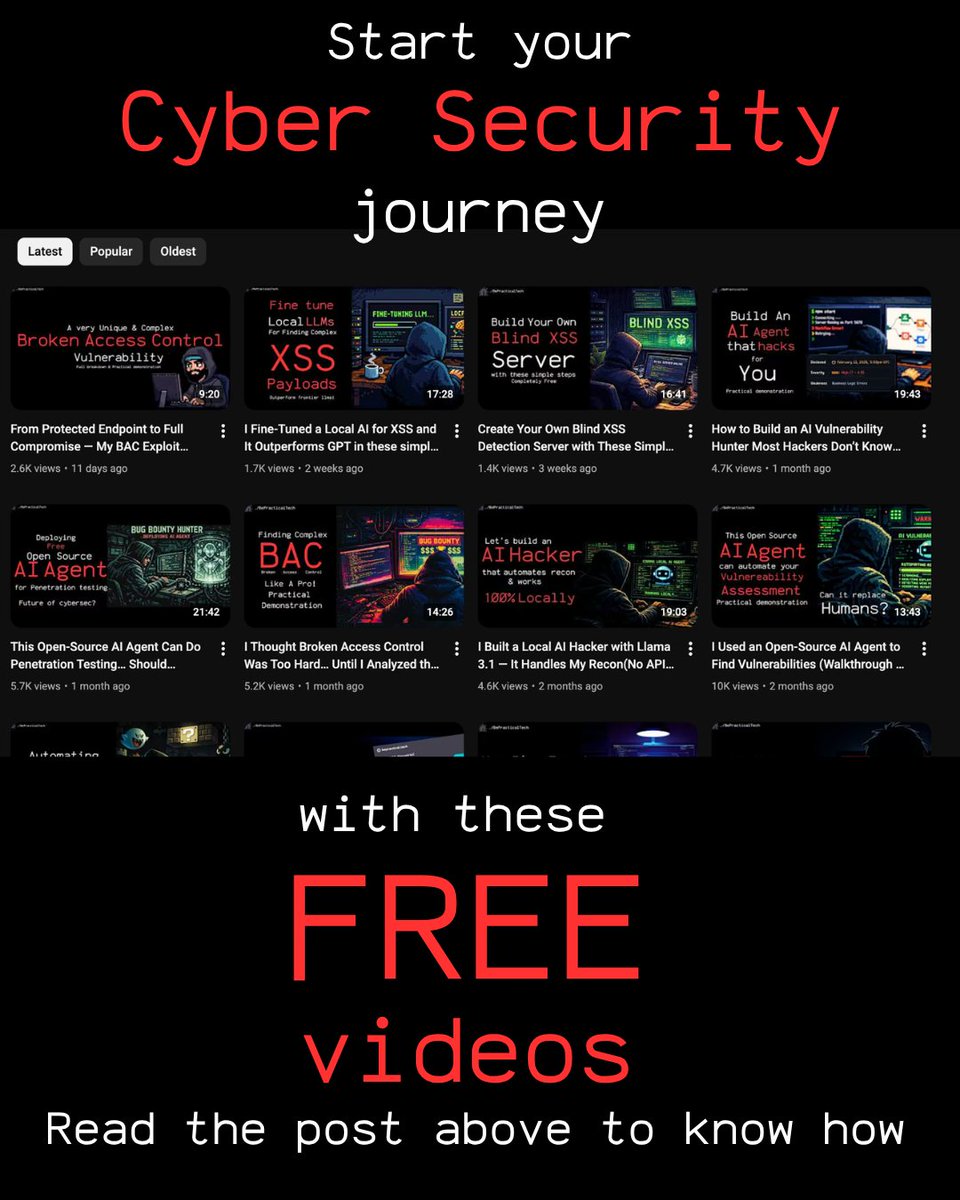
Here are 170+ cybersecurity videos with full practical demonstrations that you can watch for free.
When I started, I was overwhelmed — too many resources, too much theory, and not enough real-world clarity.
So I built a YouTube channel focused on one thing: learning by actually doing.
Every video I create is based on real-world scenarios — not just slides or definitions. I try to break down how vulnerabilities actually appear in live applications, how attackers think, and how you can identify and exploit them step by step.
On the channel, I’ve covered:
Broken Access Control (one of the most common real-world issues)
Cross-Site Scripting (XSS) with real bypass techniques
SQL Injection with practical exploitation
Chaining multiple vulnerabilities to increase impact
Bug bounty methodologies used on real targets
AI vulnerabilities and how automation is changing security
The goal is simple:
Start from scratch → build strong fundamentals → move towards advanced, real-world exploitation.
No fluff. No paid courses. No unnecessary theory.
Just practical cybersecurity, explained in a way beginners can actually follow.
If you're serious about learning cybersecurity the right way, you might find this useful:
Check it out here: youtube.com/c/BePracticalT…

English

@rikeshbaniya @Hacker0x01 I only have knowledge of BAC bugs so how can i choose a program and hunt ??
Or is this not enough yet?
English

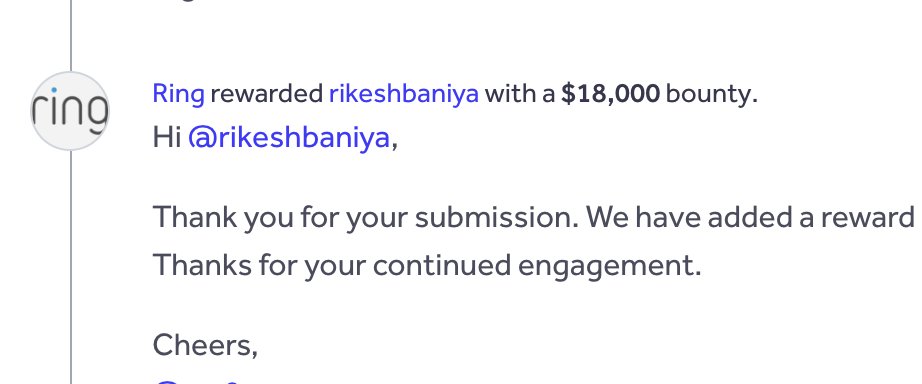
Yay! 🎉 I was awarded $18,000 on @Hacker0x01
Public programs are a goldmine if you know where to look. 💰
Confused on the first step? Ask me anything

English

@rehman0g0 @Itx_Shad0w I was just asking, not objecting
Of course it is better
English

If I vanish tomorrow, remember I begged the world with just a dot “.”
If you're browsing, please leave a dot. It's just a dot.
Dr.Mohammed🇵🇸@hmd_mhmd9832
Unfortunately, I was shot in the hand a while ago. Unfortunately, I'm not in the right place, or unfortunately I don't have the money for the operation. We hope you can help me. Pray for me.💔 If you're scrolling, PLEASE leave a dot. it's just a dot
English

I'm a Palestinian Black Palestinians are forgotten 💔
I'm not a terrorist.
If u believe me, PLEASE leave a dot . it's just a dot .
Maysara Musleh in Gaza@MuslehMay43064
Humanity is gone... today we begin surviving on water and salt. If you see this reply with a dot. chuffed.org/project/123088…
English

theSayad Here's a quick breakdown:
1. Web architecture: Overall structure of web systems—APIs for data exchange, reverse proxies (e.g., Nginx) for routing traffic/security, cloud platforms (e.g., AWS) for scalable hosting.
2. Server-side: Backend processing—APIs handle requests, MVC organizes code (Model: data, View: UI, Controller: logic), routing maps URLs to handlers (functions that process inputs).
3. Browsers: Apps like Chrome that fetch/render pages, execute JS; security like Same-Origin Policy prevents unauthorized access, CSP blocks injections.
English

@Rhynorater Hey @grok i can understand http and client (js, html, css) part very well!
But what is the other 3 ?!
1. Web architecture(apis, reverse proxy, cloud, etc)
2. Server-side(api, mvc structure, routing and handlers)
3.browsers (functio, security constraint, ect)
English