The Chartist

29.7K posts

The Chartist banner
The Chartist

The Chartist

@thechartist

Proven, systematic share market investment strategies. Membership | Managed Accounts Tweets by Nick Radge https://t.co/3g2Q8FGR86

Katılım Mart 2009
478 Takip Edilen48K Takipçiler
Sabitlenmiş Tweet
The Chartist
The Chartist@thechartist·
A brief intro to new followers: - I'm Nick Radge, a 100% systematic investor with over 38 years of experience - 10 year CAGR of 22% - I specialize in momentum trading, trend-following, and disciplined tactical wealth-building strategies. - trying to provide insightful analysis, practical advice, and professional perspectives to navigate the markets effectively. Join me on this journey to achieve your financial goals.
English
1
7
153
37.5K
Cordie Walker | GolfWell
Cordie Walker | GolfWell@cordie_golfwell·
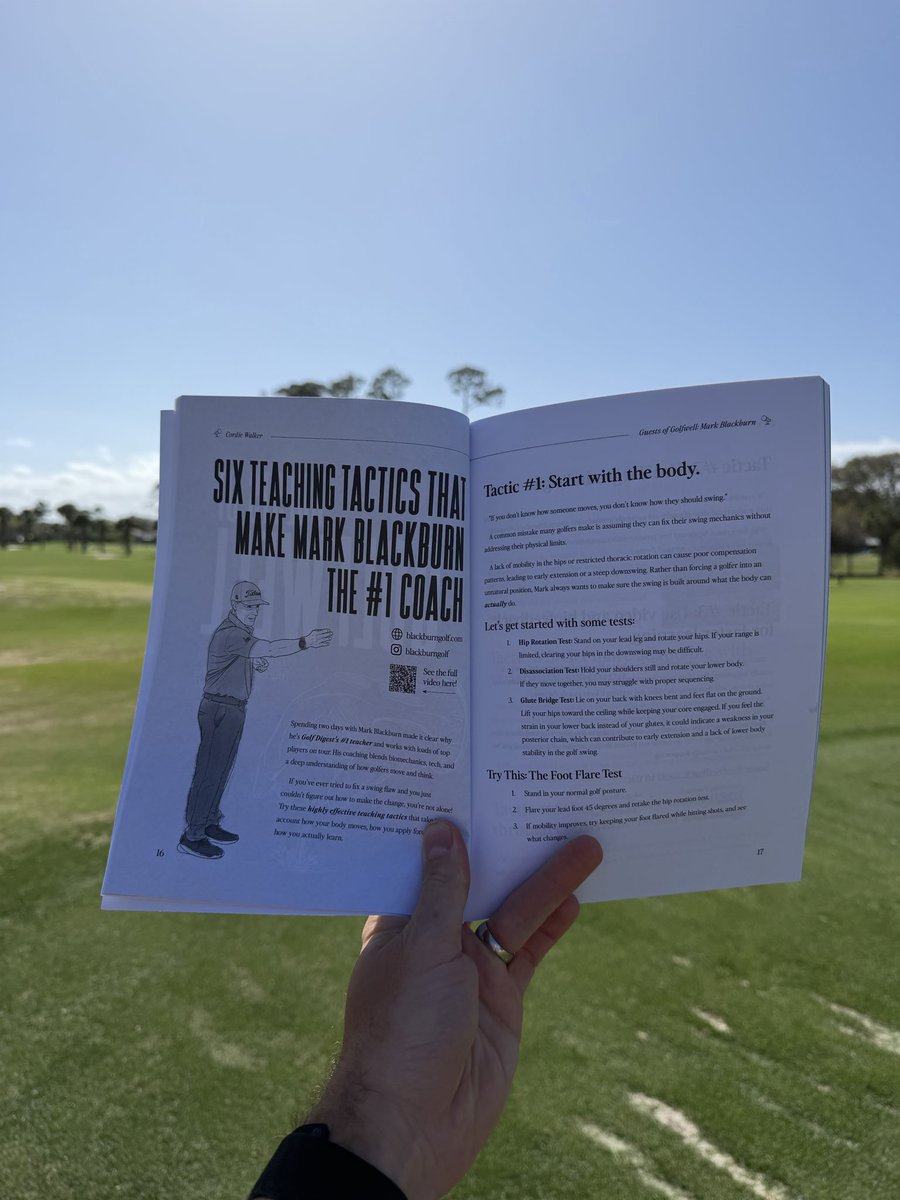
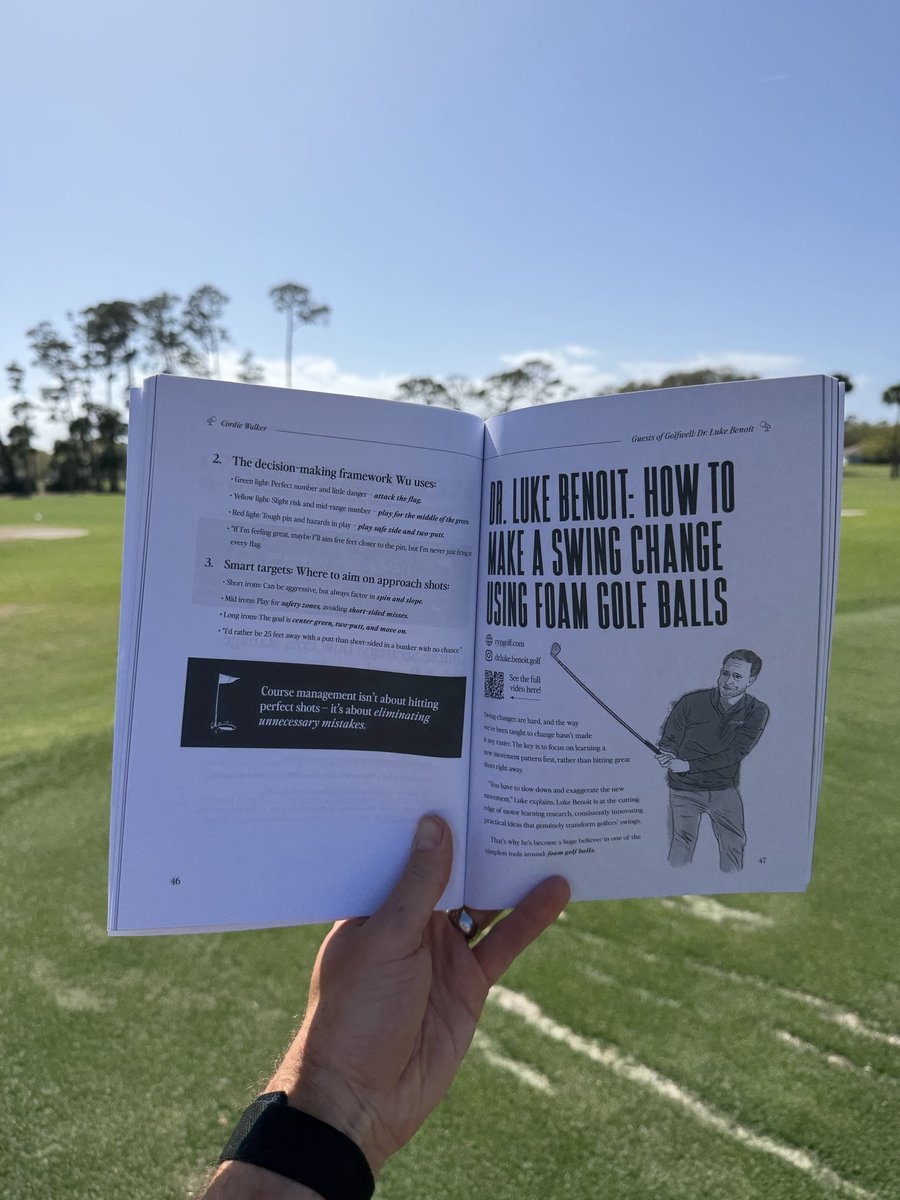
It’s LIVE on Tuesday!!!! Golfwell guidebook volume 1 - the scoring edge. It’s all the best and most interesting ideas drills templates strategies from top coaches that we’ve talked to on the YouTube channel on podcast!! I’m so lucky to learn from so many incredible people. They’re so generous with their knowledge and experience. The new guidebook is a way to be able to reference that when you’re on the range when you’re practicing and when you need it most. Honestly, because I found myself forgetting so many things and wanted something I could refer back to You can grab a copy on Amazon March 24th!
Cordie Walker | GolfWell tweet mediaCordie Walker | GolfWell tweet mediaCordie Walker | GolfWell tweet mediaCordie Walker | GolfWell tweet media
English
4
1
6
5.3K
Fearless Trades
Fearless Trades@Fearless_Trades·
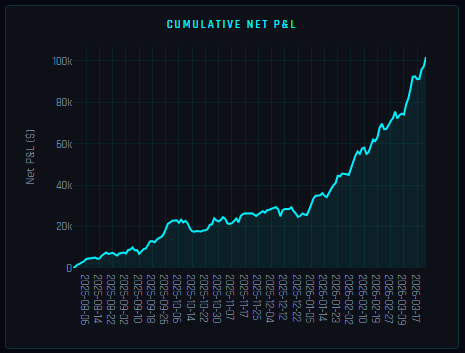
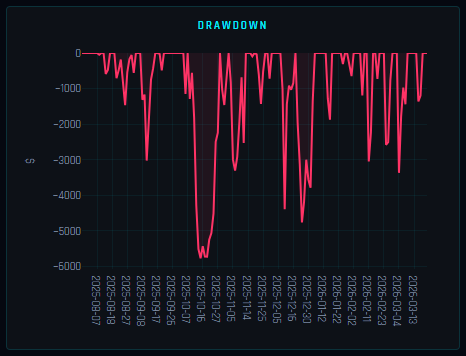
System account just hit 100k 🚀🍻 ($1,700 > $100k in 8 months, fully systematic. Or maybe more like 95% systematic). Now running 13 strategies (12 short, 1 long), all vibe coded using Cursor and Massive. I know folks have been complaining about small caps lately, and things have been slow. What I will say is that scalps have been the way to go in this market. All day holds have been rough. A lot of my system profit has come from trades < 1h so far this year.
Fearless Trades tweet mediaFearless Trades tweet media
English
26
6
182
22.5K
Zee
Zee@MichelleSenden·
@thechartist I'll be flying over here for 3 days. Not much storm
English
1
0
3
82
The Chartist
The Chartist@thechartist·
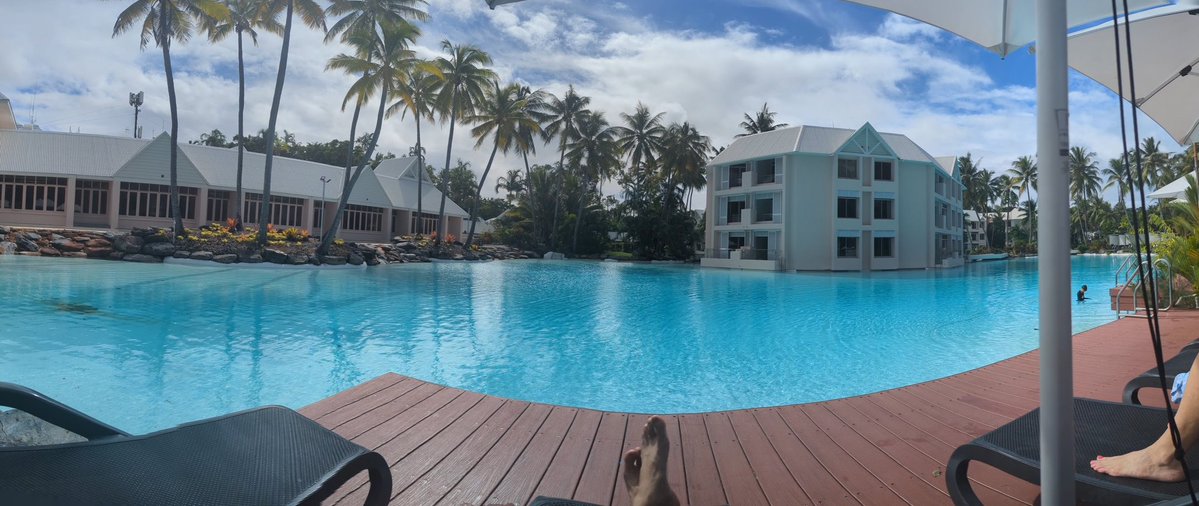
Dodging cyclones @ Port Douglas
The Chartist tweet media
English
2
0
25
2.4K
Adam Young Golf
Adam Young Golf@adamyounggolf·
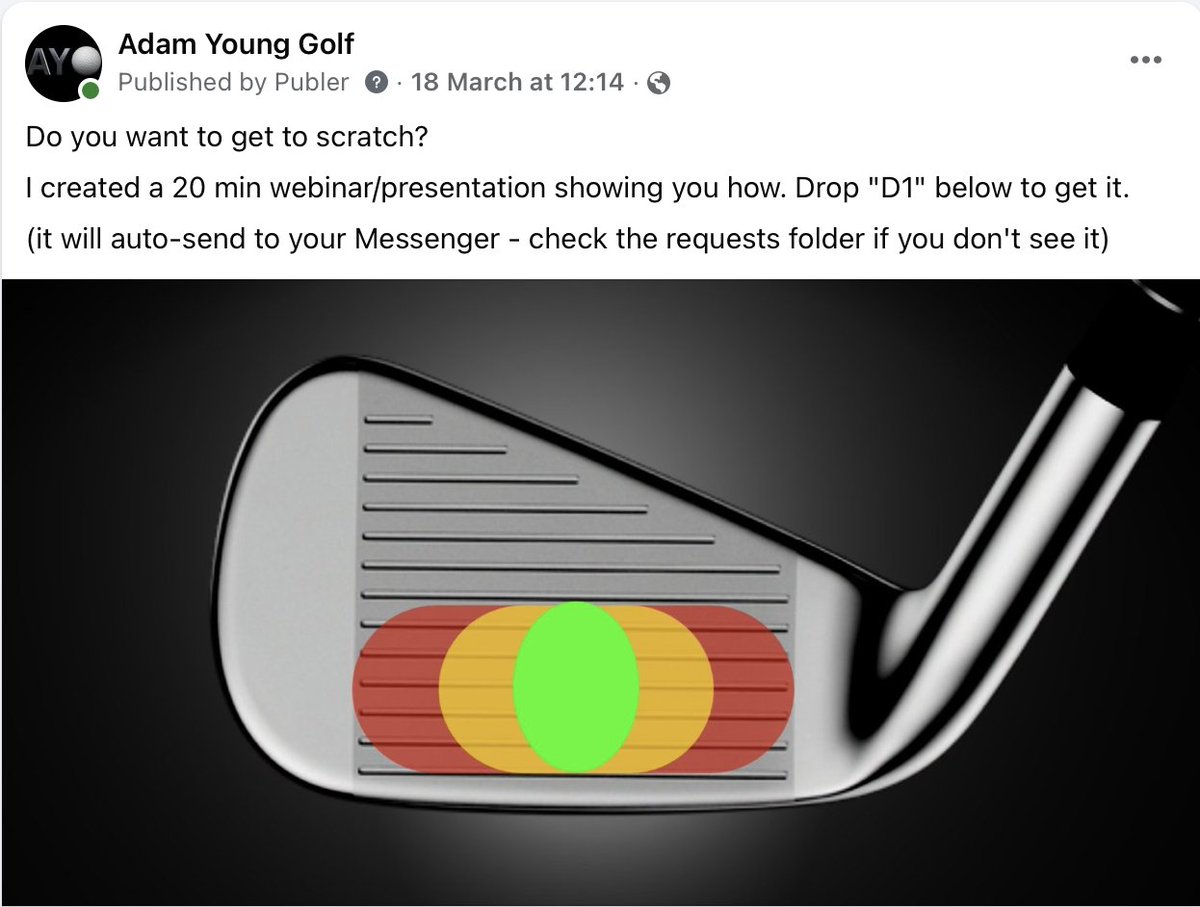
Do you want to get to scratch? Say D1 below and I'll DM you the webinar.
Adam Young Golf tweet media
English
550
8
113
64.1K
Atul
Atul@Atul4ward·
@thechartist Nice. Is it complete based out of India ? And the results are after handling survivorship bias ? I have my own all weather port which generates 29% with 12% DD but limited to 2015 backtest. Hence curious
English
1
0
0
77
The Chartist
The Chartist@thechartist·
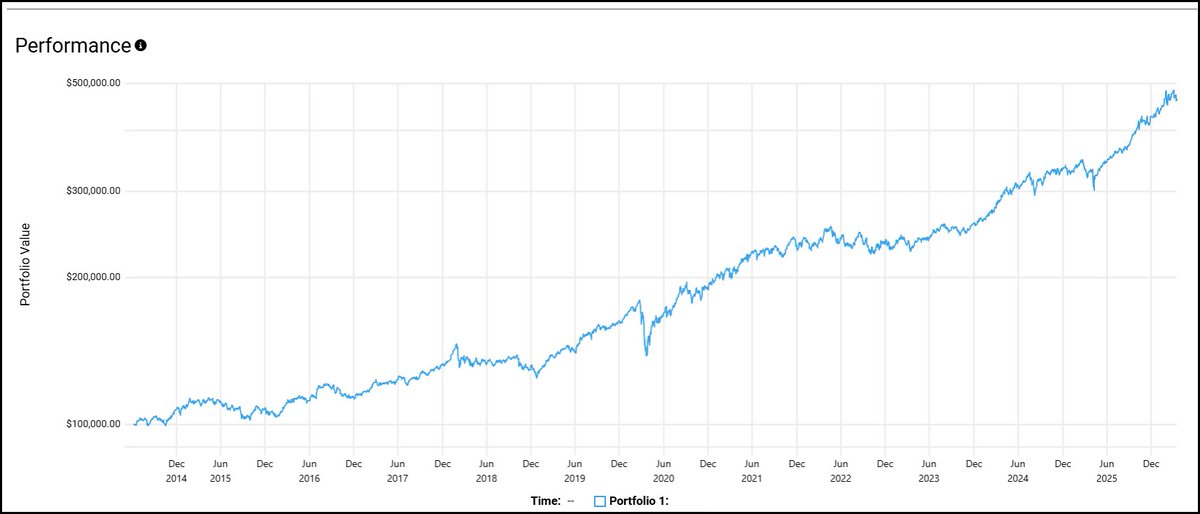
All Weather portfolio update. Current drawdown -8.35% which is within the expected return/risk profile. CAGR since release running at +24.2%, which is above the expected return profile. #next1000trades
The Chartist tweet media
English
3
3
58
4.5K
Atul
Atul@Atul4ward·
@thechartist What’s the backtest period and max DD ?
English
1
0
0
120
The Chartist
The Chartist@thechartist·
ETF Combo 30% $SPHB 30% $GLD 40% $DBMF (managed futures) Quarterly rebalance only. CAGR 16.5% vs 14.0% maxDD -19.8% vs -33.8% Vola 13.3% vs 20.1% Sharpe: 0.97 vs 0.73 Unfortunately, $DBMF data is limited to 2019 onward...
The Chartist tweet media
English
3
1
37
10.2K
Pete Petrovsky 🔋⚡️🚘🇦🇺 Tesla Ahead of the Curve
Ever since FSD (Supervised) became available in Australia in August last year, I’ve supervised my car driving me for approximately 15,000 km. In that time, the car would have driven me past thousands of other drivers and passengers on the road, yet I doubt more than a handful—if any—realised it was the Tesla driving itself rather than me. If self-driving software is based on computer code the cars will stick out in traffic as they will feel and behave like a rigid robot but importantly there is no way the code will be sophisticated enough to handle rare edge-case scenarios the real world throws up. By contrast, when the system is trained on billions of miles of real human driving data, it learns to behave and drive like a human. It blends so seamlessly into the flow of traffic that other road users almost never realise the person behind the wheel, while, they may have proper control, is merely supervising. It’s the car that’s actually in control of the full suite of driving inputs including steering, both foot pedals, indicators, high beams when needed, and even operating the windscreen wipers as conditions change. The driver sits ready to intervene, but in everyday driving, the Tesla’s actions feel so natural and human-like that no one gives it a second glance. To achieve safe, seamless and human-like driving the software requires an immense amount of real-world human driven data to learn how to deal with rare situations and edge case scenarios. As at the beginning of the month, Tesla’s Full Self-Driving (Supervised) system had accumulated over 8.4 billion miles (roughly 13.5 billion km), with billions more being added each year. (For perspective that’s about 42 times more than Waymo’s 200 million miles at the same time.) As a result, according to Tesla’s reported US data, the software is already showing significantly fewer major collisions than the average human driver—in the range of being about 7-8 times safer. That enormous training volume—equivalent to circling the Earth’s equator hundreds of thousands of times, or making around 30 round trips to Mars—allows the neural network to absorb nuanced, human-like driving patterns. It masters reactions to rare events and picks up on subtle social cues on the road, so the car’s behaviour feels human-like, natural and predictable rather than robotic or overly cautious. As the data keeps growing (heading towards the 10 billion mile mark that Elon Musk has highlighted as critical for tackling the long tail of edge cases), that human-like seamlessness will only improve. Then, once FSD Unsupervised arrives and people start noticing empty driver’s seats, they’ll suddenly realise just how many self-driving cars are already out there—and why accident rates and road fatalities are beginning to drop.
Pete Petrovsky 🔋⚡️🚘🇦🇺 Tesla Ahead of the Curve@Ahead_of_Curve

I’m convinced FSD has learned how to interpret the body language of pedestrians understanding their intentions with amazing speed and accuracy. Watch FSD Supervised apply the brakes the instant this pedestrian turns their head👇

English
12
12
149
14.3K
The Chartist
The Chartist@thechartist·
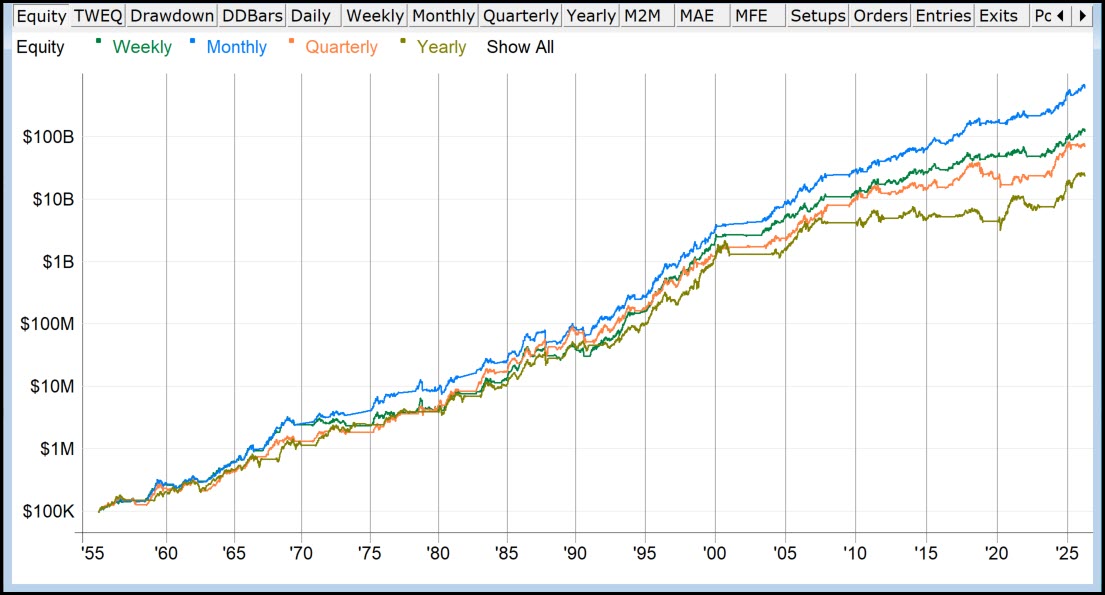
@NChanduka These include transaction costs. Quarterly had a significantly larger drawdown, i.e 50% greater than weekly and monthly
English
0
0
3
83
nitin chanduka
nitin chanduka@NChanduka·
@thechartist After transaction costs I found quarterly could be better..- also these long term charts are very susceptible to starting point bias.. rolling 5 year cagr analysis as per me suggests regime filters kind of fail unless there is a very prolonged bear market.
English
1
0
0
78
The Chartist
The Chartist@thechartist·
1/ An expected question we get during these periods is, "Should we wait till the month end to close positions, or do it now because everything is going to sh*t" Firstly, the month-end strategies are exactly that - acted upon at the month's end. To deviate from that is an entirely emotional decision, which is what we're trying to avoid by being a systematic investor. Secondly, and more importantly, we should not be swayed by short-term fluctuations; rather, we should rely on long-term expectations driven by data Let's take a look...
English
7
2
59
6.6K
The Chartist
The Chartist@thechartist·
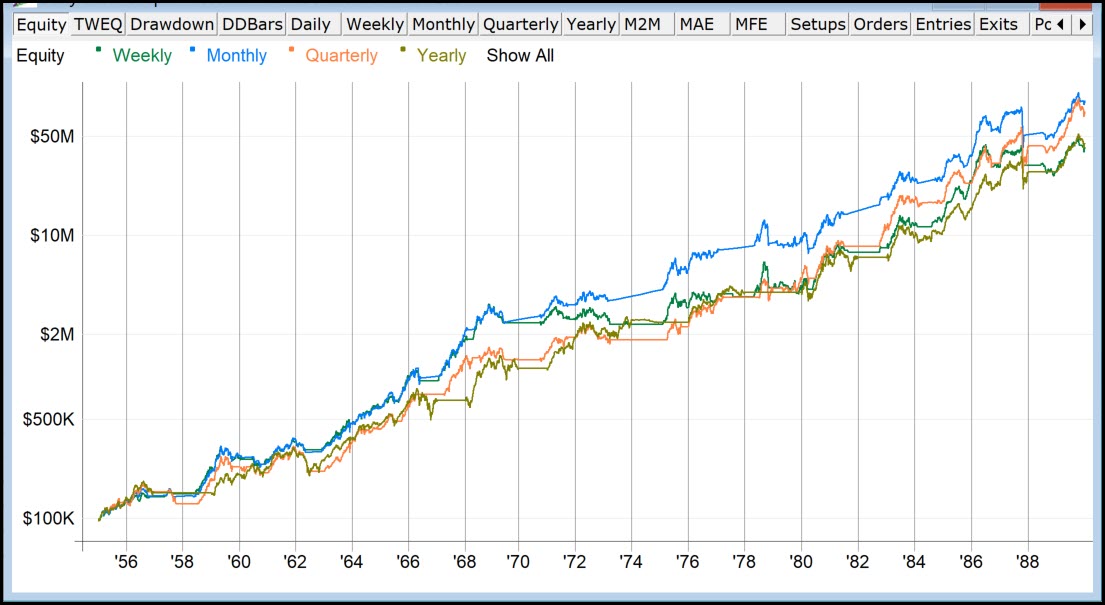
5/ It's a little closer that post-1990, but even so, the monthly rotation remains the 'better' option. Bottom line: if you're sitting here nervous about the current volatility and thinking action should be taken now rather than at month's end, doing so over the long term will detract from performance. Of course there is that little voice saying, "yeah, but this time is different". But is it really? We saw this stuff back in the 60's and 70's and we've seen a lot of other sh*t during the last 70 years... What we do know, what the data tells us, is that yes, there are some nervous unknowns, but as I've said before, it's a bumpy road to outperformance.
The Chartist tweet media
English
2
1
16
1.9K
The Chartist
The Chartist@thechartist·
4/ Since 1990, the removal of a regime filter still sees the monthly rotation as far superior risk/return profile. What about before 1990? Let's now test from 1955 through 1990.
The Chartist tweet media
English
1
0
8
2.2K