Nick Manteris

190 posts

Nick Manteris banner
Nick Manteris

Nick Manteris

@thecostofwork

Why a regular paycheck used to cover a regular life and doesn't anymore. Restaurant server. Reader. Writing about what the economic debate keeps leaving out.

Texas Katılım Nisan 2026
41 Takip Edilen21 Takipçiler
Nick Manteris
Nick Manteris@thecostofwork·
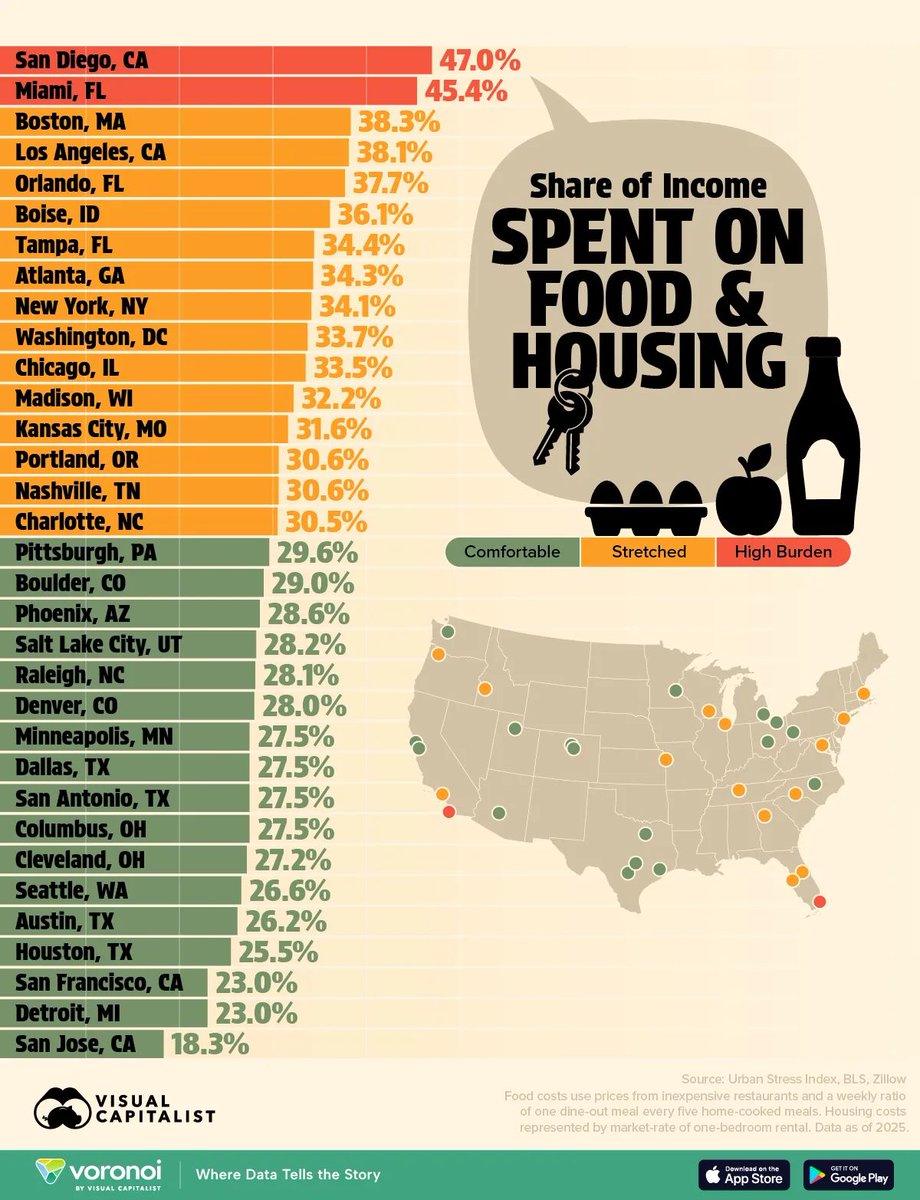
Food got cheaper to produce. Housing got cheaper to build. Both take a larger share of income than they did 30 years ago. The cost of delivering these things fell. The price of buying them didn't. That gap isn't explained by the cities. It's the same gap in every city on the list.
English

0
0
0
67
Nick Manteris
Nick Manteris@thecostofwork·
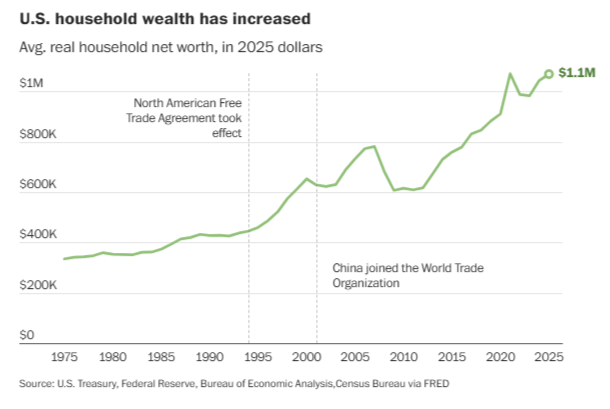
Average net worth is driven by asset prices. The top 10% holds 67% of all household wealth. When home prices and stocks rise, the average rises even if the median household gained nothing. Median net worth for households under 35 tells a different story. The average is real. It's also misleading.
English
0
0
0
11
Scott Lincicome
Scott Lincicome@scottlincicome·
"If trade deficits drain wealth from a country, Americans’ average real net worth would have fallen over the past half-century. Instead, even after accounting for growing government debt, it has risen significantly." 😮washingtonpost.com/opinions/2026/…
Scott Lincicome tweet media
English
5
27
89
6K
Nick Manteris
Nick Manteris@thecostofwork·
@CatoInstitute @HumanProgress Resources got more abundant. So why does the median family feel more squeezed? Because abundance measures what the economy produces. It doesn't measure who gets it. Production rose. Prices didn't fall. The gap between those two facts is the whole story.
English
0
0
0
22
Cato Institute
Cato Institute@CatoInstitute·
For every 1% increase in global population, population-level resource abundance grew by about 6.3% — according to @HumanProgress's new Simon Abundance Index. More people doesn’t mean more scarcity; it means more ideas, innovation, and problem-solving capacity. Learn more from @Marian_L_Tupy. ow.ly/wbmN50YPtgJ
English
2
24
131
36.1K
Nick Manteris
Nick Manteris@thecostofwork·
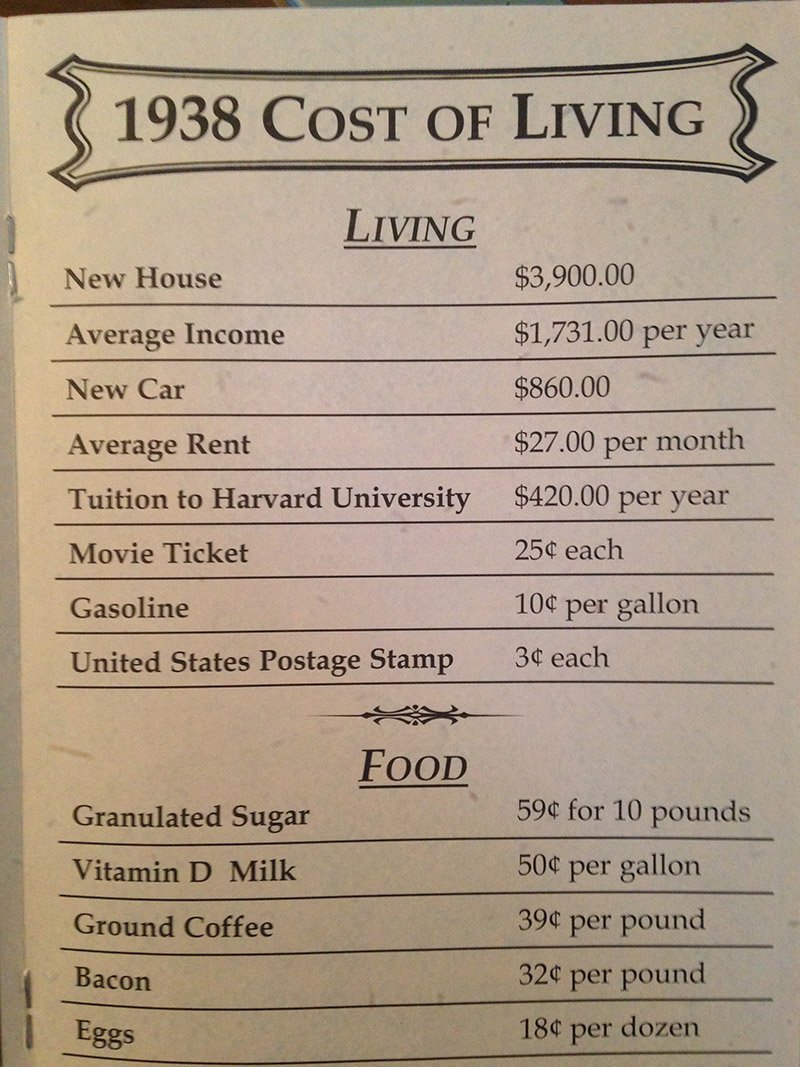
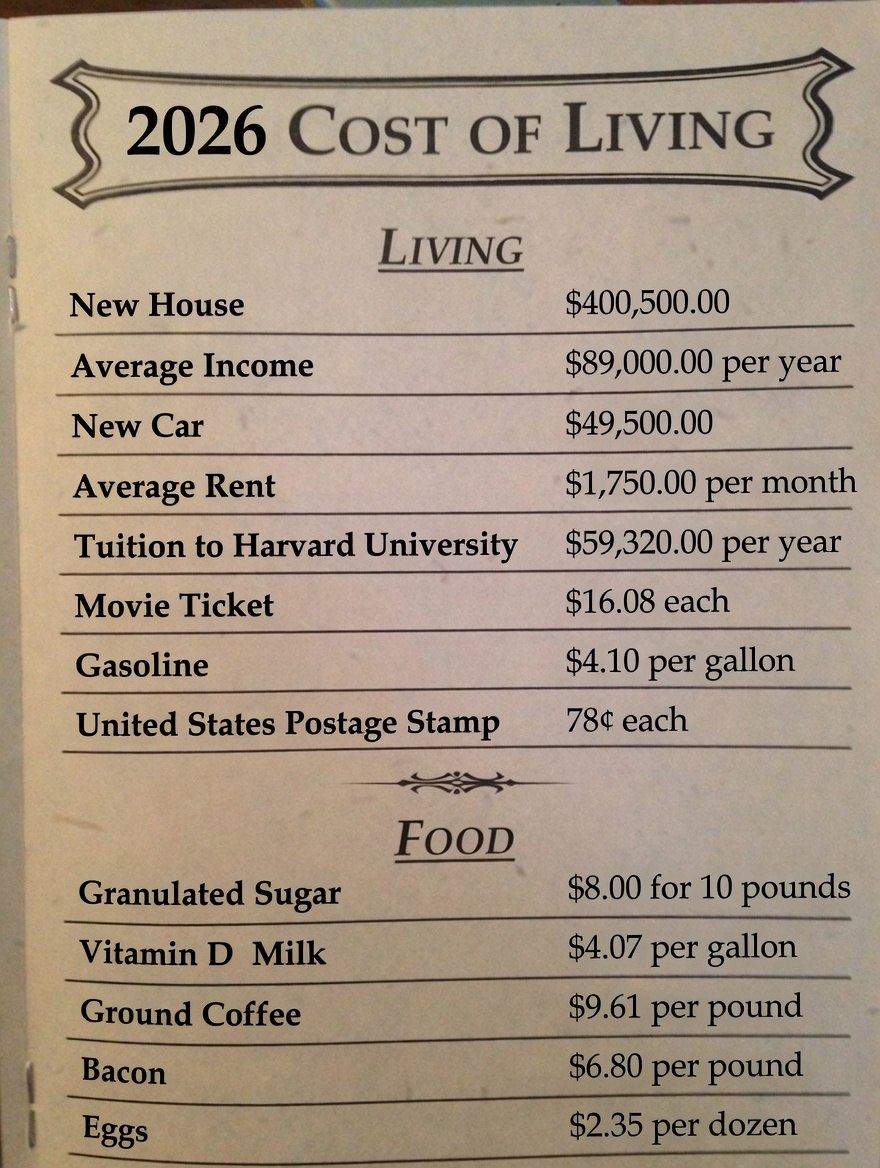
@eyezenhour The items that rose the most (housing, tuition, cars) are all financed with credit. The items that rose the least (food, stamps) are paid in cash. The gap between the two groups isn't random. It tracks which sectors the financial system touches most.
English
0
0
1
13
eye zen hour 🥶
eye zen hour 🥶@eyezenhour·
The American Dream isn't dead It's just not realistic for 99% now Cost of Living Difference over 88 years: 📈 New House: 10,169% 📈 New Car: 5,655% 📈 Average Rent: 6,381% 📈 Harvard Tuition: 14,023% 📈 Movie Ticket: up 6,332% 📈 Gasoline: 4,000% 📈 Stamp: up 2,500% 📈 Sugar: up 1,255% 📈 Milk: 714% 📈 Ground Coffee: 2,364% 📈 Bacon: 2,025% 📈 Eggs: 1,205% Meanwhile, income only increased 5,041% Income kept pace on paper Life didn’t Housing, rent, cars, and college exploded far beyond wages. So people earn more, but the milestones got harder to reach No wonder ever gen Z kid is trying to gamble their way out on Polymarket or sports betting or memecoins
eye zen hour 🥶 tweet mediaeye zen hour 🥶 tweet media
English
21
92
267
23.9K
Nick Manteris
Nick Manteris@thecostofwork·
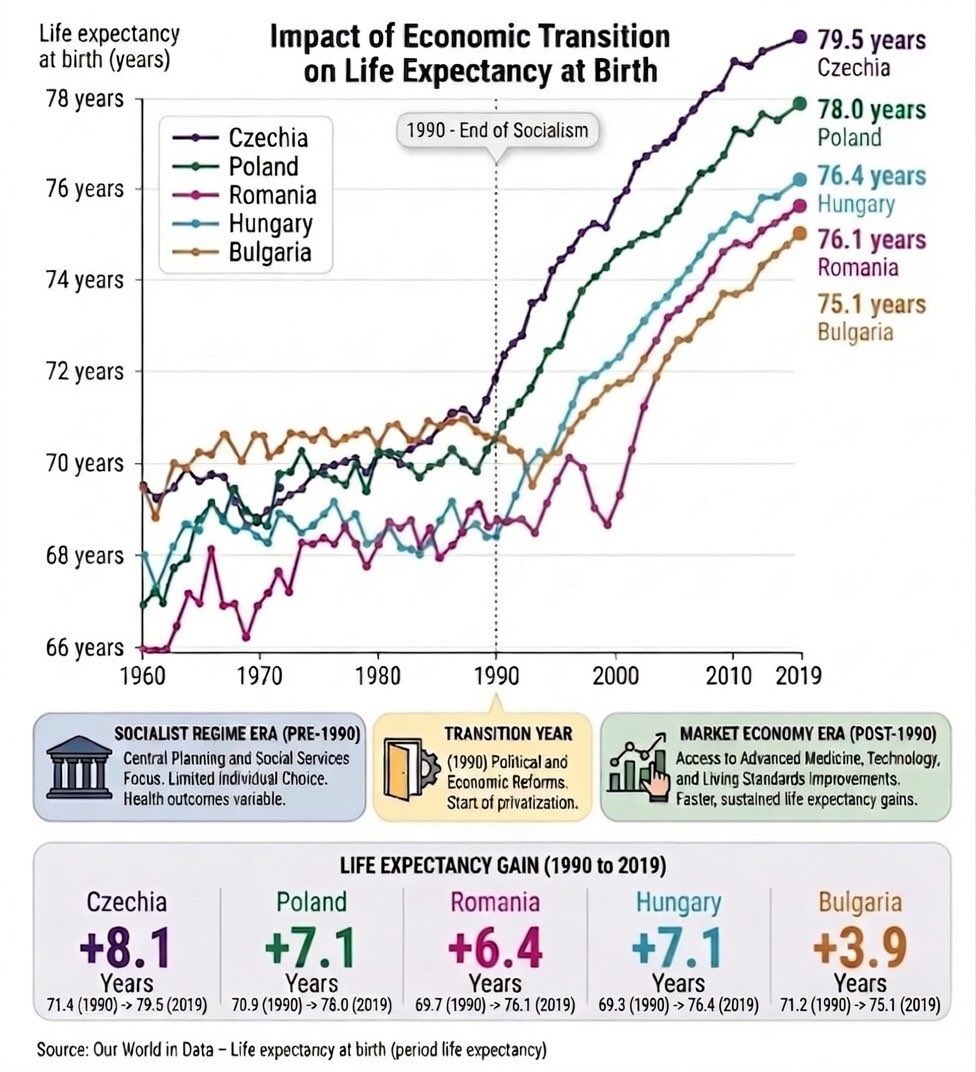
@MichaelAArouet The part of this chart nobody mentions: US life expectancy peaked in 2014 and has been declining since. The country that won the Cold War is now moving in the wrong direction while the countries that lost it keep climbing. Whatever is causing that isn't socialism.
English
0
0
1
32
Michael A. Arouet
Michael A. Arouet@MichaelAArouet·
This is by far the most powerful chart showing the difference between socialism and capitalism. It’s not only about differences in wealth and prosperity, life expectancy improvement under capitalism is literally off the charts. Can you take naive Western socialists seriously?
Michael A. Arouet tweet media
English
47
196
475
24.3K
Nick Manteris
Nick Manteris@thecostofwork·
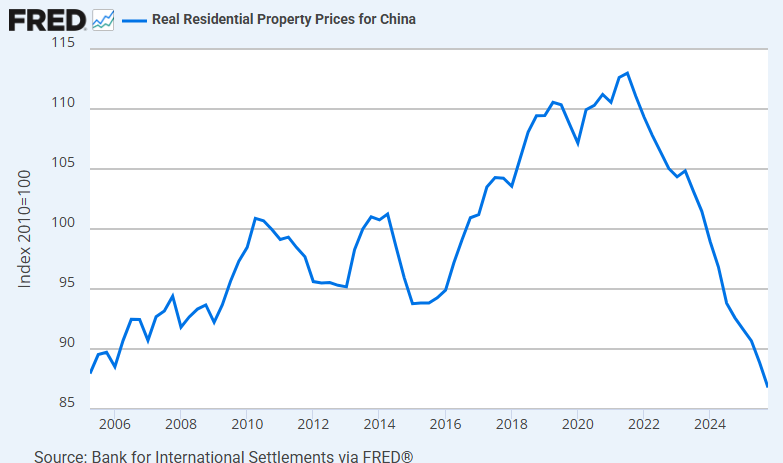
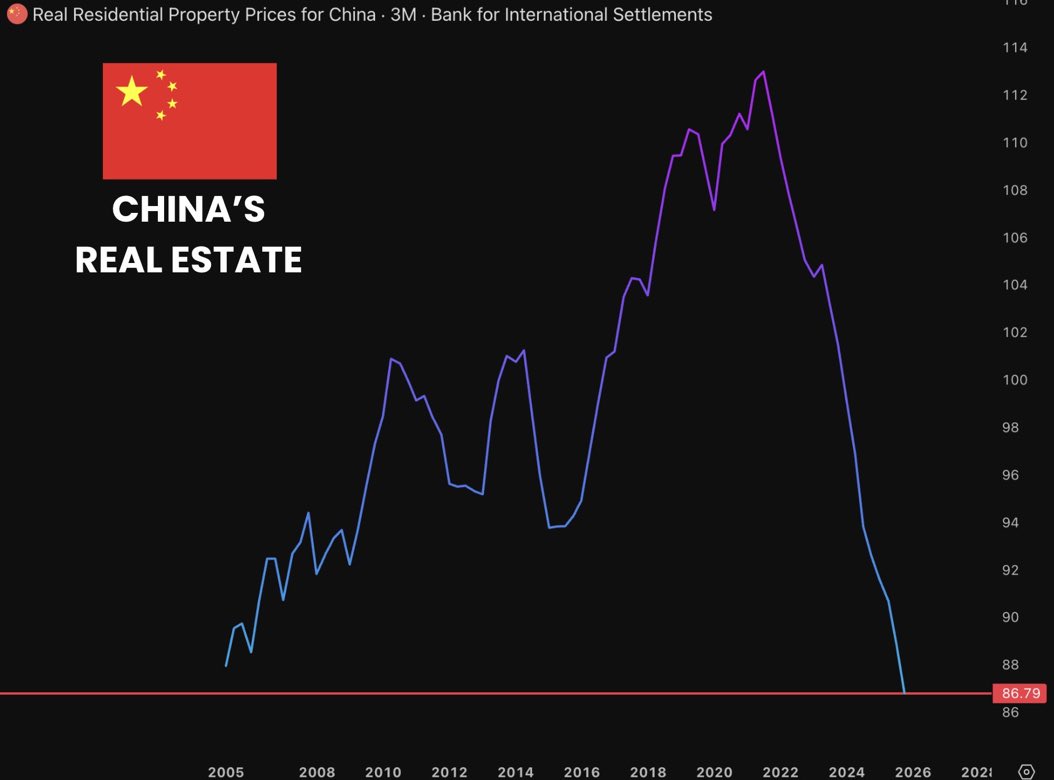
@Hedgeye Different political system. Different culture. Different regulatory structure. Same pattern: credit expansion inflates an asset class, families concentrate their wealth in it, the asset deflates, and the families hold the loss. The pattern is monetary, not national.
English
0
0
4
4.1K
Hedgeye
Hedgeye@Hedgeye·
🚨 China's Real Estate Market has erased all gains from the last 20 years
Hedgeye tweet media
English
827
1.8K
10.7K
7.4M
Nick Manteris
Nick Manteris@thecostofwork·
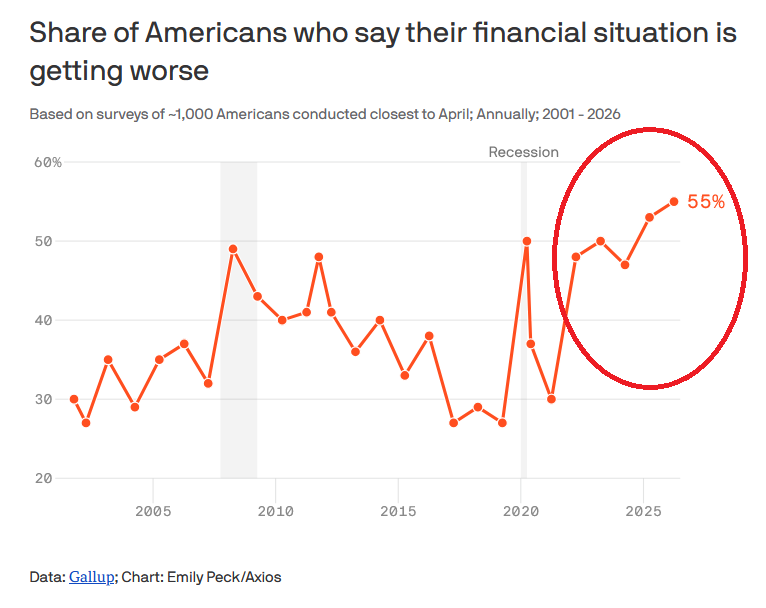
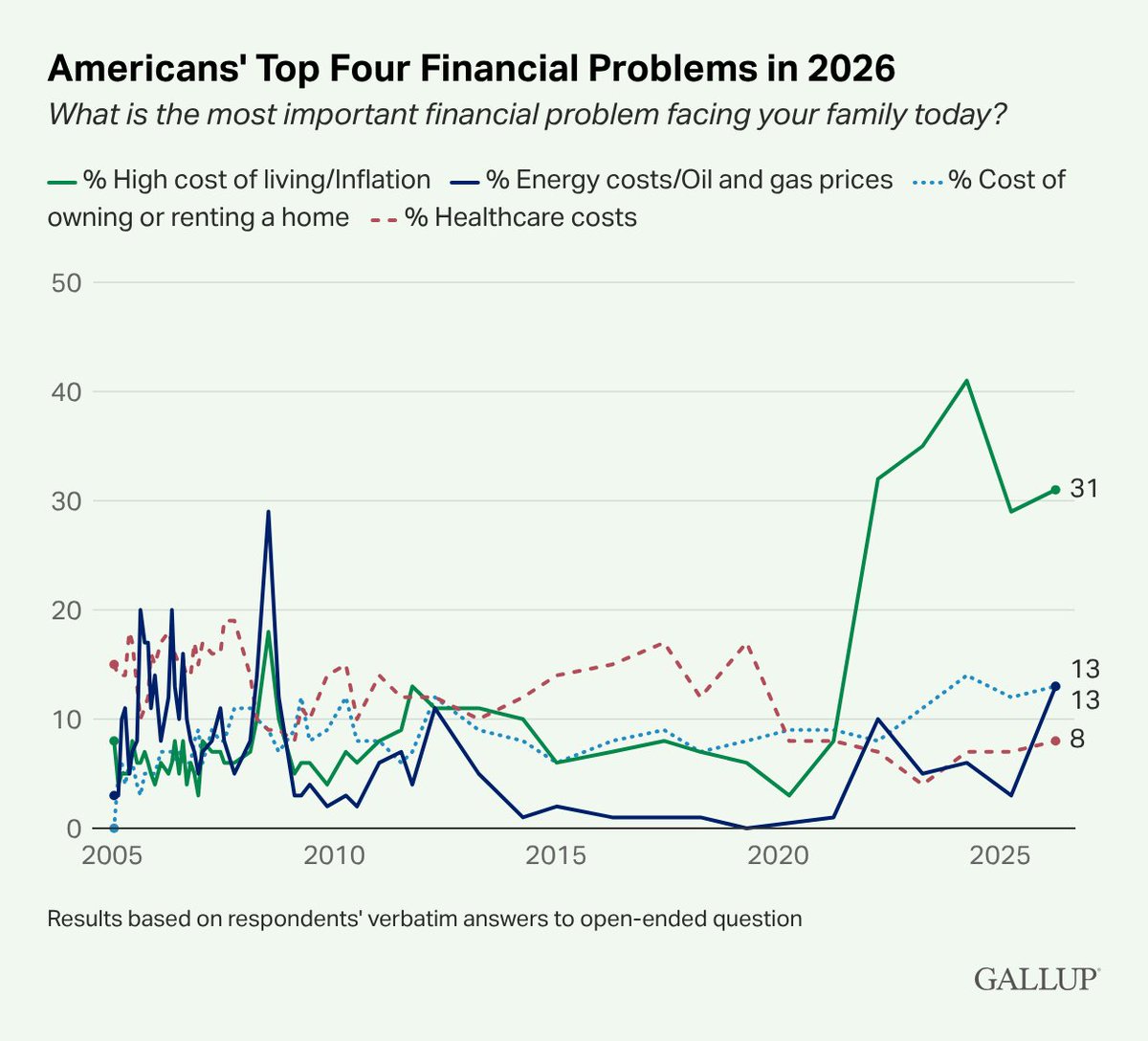
@GlobalMktObserv 55% say it's getting worse. The number was 30% in 2003. Wages rose over that period. GDP rose. Productivity rose. The economy got bigger and the people inside it got worse off. That's not a recession. It's the system working as designed.
English
0
0
3
71
Global Markets Investor
Global Markets Investor@GlobalMktObserv·
🚨Americans have NEVER been this pessimistic about their finances: 55% of Americans say their financial situation is getting worse, up from 53% last year and 47% in 2024, the highest since Gallup began tracking in 2001. This is the 5th consecutive year that more Americans say their finances are worsening than improving, surpassing even the readings seen during the 2020 Crisis and the Great Financial Crisis The cost of living tops the list of financial concerns at 31%, while energy costs rose to 13% of mentions, up +10 percentage points YoY, the highest since 2008. Meanwhile, the average gas price rose to $4.18 per gallon, the highest since 2022, per AAA. American wallets are under pressure from nearly all sides.
Global Markets Investor tweet media
English
12
45
131
13.5K
Nick Manteris
Nick Manteris@thecostofwork·
Every pension and entitlement system was built assuming a growing population of workers funding a smaller population of retirees. That ratio is collapsing. The systems were already underfunded before the demographic shift. Fewer workers paying into programs that were never solvent to begin with.
English
0
0
0
3
Jesús Fernández-Villaverde
Jesús Fernández-Villaverde@JesusFerna7026·
I’m sharing my slide deck on the demographic future of humanity, 🔗 Slides: sas.upenn.edu/~jesusfv/Slide… prepared for the keynote address I will give tomorrow to the 7th EBRD and CEPR Research Symposium on “The Economics of Demographic Change”: 🔗 Symposium: ebrd.com/home/news-and-… Here are a few key ideas I’ll be discussing tomorrow, some of which even economists tracking population trends may not fully appreciate: 1️⃣ Fertility is falling everywhere: rich and poor countries alike, booming and stagnating economies, secular and religious societies. The decline is happening far faster than anyone anticipated, even me, ten years ago! 2️⃣ For example, Colombia’s fertility rate is 1.06, Iran’s is 1.44, and Turkey’s is 1.48, all of which are below the U.S. 3️⃣ The decline accelerated around 2014, well before the COVID pandemic. 4️⃣ As a result, humanity’s fertility is likely already below the replacement rate. 5️⃣ Many assume the replacement rate is 2.1 children per woman. That’s true for rich, advanced economies. But not for emerging economies, where selective abortion and higher young female mortality push the replacement rate higher. Thus, for humanity, the replacement rate is closer to 2.2. 6️⃣ The 2024 UN World Population Prospects are riddled with data and forecasts that, frankly, make little sense to my coauthor Patrick Norrick (at @AEI) and me. 7️⃣ Most of the differences in economic growth among advanced economies over the past 35 years can be attributed to demographic factors. Once adjusted for this, Japan’s economic performance is roughly on par with the U.S. (See my paper with Gustavo Ventura, @King_ofSweden, and Wen Yao, The Wealth of Working Nations): 🔗sciencedirect.com/science/articl… There are many other ideas (I could talk about this for hours!), but here’s the punchline: the world’s fertility crisis is worse than you thought, even after considering you already thought it was bad.
Jesús Fernández-Villaverde tweet media
English
134
734
2.8K
1.2M
Nick Manteris
Nick Manteris@thecostofwork·
The Boomers aren't wrong that the world they built worked. It did. The part they can't see is that it stopped working for structural reasons, not cultural ones. The same house, the same job, the same discipline produces a different outcome now. That's not relativism. The math changed.
English
0
0
0
4
Chris Arnade 🐢🐱🚌
Chris Arnade 🐢🐱🚌@Chris_arnade·
I've written for the last decade about the educational divide in the US, but culturally there is now a large divide between generations — specifically those over sixty versus basically everyone else. The sixty-plus cohort (Boomers which I'm at the very tail end of) have a lot more certainty that they've discovered the Truth — or the high point, and often end point, of many things. From music (rock will always be here), to fashion (why would anyone wear anything but blue jeans), to politics (liberal democracy with emancipation from all forms of obligation as a human Telos). Younger people are much more uncertain and relativistic. They don't accept the claim that it's been solved, and the Boomers' rigidity and religious-like certainty seems to them either laughably naive or arrogantly condescending. The Boomers see everyone else as having fallen away from the path to historical perfection they paved, and are uniformly angry about that. What most of the Boomers miss is that the younger generation is living in the world they built — of hyper-individuality, of smashing of prior norms, and of moral relativism. This post-truth, post-gatekeeping, hyper-partisan world is an endpoint of their worldview, and yet they are angry about it.
English
88
84
906
108.3K
Nick Manteris
Nick Manteris@thecostofwork·
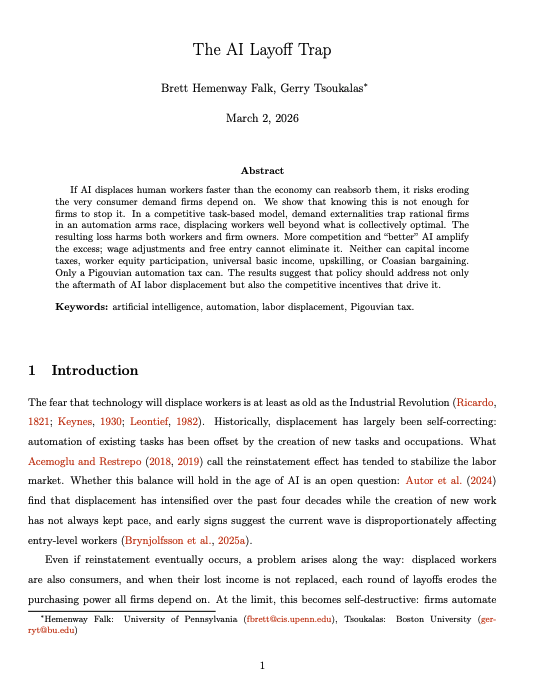
@AiwithYasir The paper identifies the problem: companies that automate destroy the demand their products need. What it doesn't ask is where the productivity gains go. Every previous wave of automation made things cheaper to produce. Prices didn't fall. The gains went somewhere.
English
0
0
0
687
Yasir Ai
Yasir Ai@AiwithYasir·
🚨BREAKING: Two researchers from UPenn and Boston University just published a paper that should be uncomfortable reading for every CEO automating their workforce right now. The argument is straightforward. Every company replacing workers with AI is also eliminating its own future customers. Laid off workers stop spending. Enough of them stop spending and nobody can afford to buy anything. The companies that fired everyone end up selling into an economy with no purchasing power left. Every executive can see this. The math is not complicated. But here is why nobody stops. If you do not automate, your competitor does. They cut costs, lower prices, take your market share, and you collapse anyway. So every company automates knowing it is collectively destructive because the alternative is dying alone while everyone else survives. The researchers proved this is a Prisoner's Dilemma playing out in real time. The numbers are already moving. Block cut nearly half its 10,000 employees this year. Jack Dorsey said AI made those roles unnecessary and that within the next year the majority of companies will reach the same conclusion. Salesforce replaced 4,000 customer support agents with AI. Goldman Sachs deployed a coding tool that lets one engineer do the work of five. Over 100,000 tech workers were laid off in 2025 and AI was cited as the primary driver in more than half those cases. 80% of US workers hold jobs with tasks susceptible to AI automation. The researchers tested every proposed solution. Universal basic income does not change a single company's incentive to automate. Capital income taxes adjust profit levels but not the per-task decision to replace a human. Collective bargaining cannot hold because automating is always the dominant strategy. They also identified what they call a Red Queen effect. Better AI does not solve the problem, it accelerates it. Every company chases faster automation to gain market share over rivals but at the end everyone has automated equally, the gains cancel out, and the only thing left is more destroyed demand. The one thing the math says could work is a Pigouvian automation tax. A per-task charge that forces companies to account for the demand they destroy each time they replace a worker. The conclusion is that this is not a transfer of wealth from workers to owners. Both sides lose. Workers lose income. Companies lose customers. It is a deadweight loss with no market mechanism to stop it on its own. (Link in the comment)
Yasir Ai tweet media
English
619
4.2K
12.1K
3.1M
Nick Manteris
Nick Manteris@thecostofwork·
@Barchart The national average is 25%. Three quarters of a median family's income gone before they save a dollar. In Hawaii it's 91%. In 1971 the number was different. Nobody tracks the comparison.
English
0
0
0
18
Barchart
Barchart@Barchart·
How Much Income Americans Keep After Expenses and Taxes by State 🚨
Barchart tweet media
English
16
56
241
31.7K
Nick Manteris
Nick Manteris@thecostofwork·
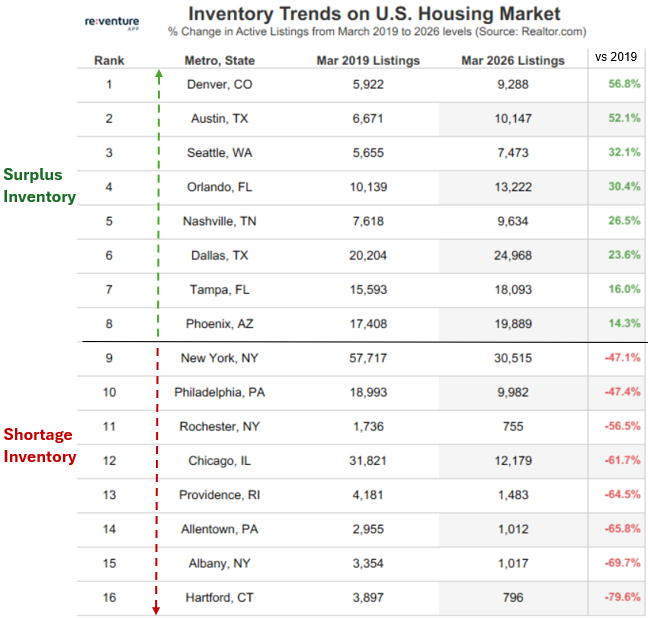
Denver and Austin had the biggest building booms when rates were near zero. Now they have the most inventory. Hartford and Chicago never got the cheap-credit construction wave. Now they have the least. The split isn't geography. It's which cities were most inflated by cheap money and which ones weren't.
English
0
0
0
10
Nick Gerli
Nick Gerli@nickgerli1·
The housing market has broken into two. Sun Belt markets like Denver, Austin, Seattle, and Orlando are experiencing exploding inventory (+30% or more from 2019 levels). Prices are now dropping in these markets. However, in New York, Chicago, Providence, and Hartford, inventory is down more than 50% from 2019 levels. Indicating an acute housing shortage where prices are still rising. The market has flipped on its head. The boomtown Sun Belt locations are now the ones dropping, while the boring Northeast markets are the ones rising. If you're a serious homebuyer, investor, or seller in 2026, you need to know the inventory trends in your area. Download our app and search your ZIP: reventure.app/mobile
Nick Gerli tweet media
English
95
101
769
230.2K
Nick Manteris
Nick Manteris@thecostofwork·
@Gallup Three of the top four are things technology made cheaper to deliver. The cost of living line tracks monetary expansion, not scarcity.
English
0
0
0
13
Gallup
Gallup@Gallup·
The high cost of living continues to top Americans’ list of the most important financial problems facing their families.
Gallup tweet media
English
15
81
170
11.5K
Nick Manteris
Nick Manteris@thecostofwork·
@SantiagoAuFund They won't. Voluntarily. No institution dismantles the mechanism that funds it. Change comes when the mechanism stops working. Every fiat currency in history either reformed or collapsed. Consider: Does the math force the change before or after the damage becomes irreversible?
English
0
0
0
5
Santiago Capital
Santiago Capital@SantiagoAuFund·
If Govs prefer fiat currency bc it is designed to help them steal purchasing power from citizens…then why on earth do you believe they would they be looking to change to a currency that doesn’t allow them to steal purchasing power from citizens…?
English
79
34
469
33.4K
Nick Manteris
Nick Manteris@thecostofwork·
Chinese families held roughly 70% of their wealth in real estate. The government encouraged it. The banks financed it. Prices rose for 15 years. Now prices are below where they started two decades ago. Different political system. Different culture. Same pattern: credit expansion inflates an asset, families bet their future on it, the asset deflates, and the families hold the loss. The US version of this chart hasn't happened yet. The structure that would produce it is identical.
English
0
1
2
221
Brian Roemmele
Brian Roemmele@BrianRoemmele·
The real estate situation…
Brian Roemmele tweet media
English
28
24
224
13.8K
Nick Manteris
Nick Manteris@thecostofwork·
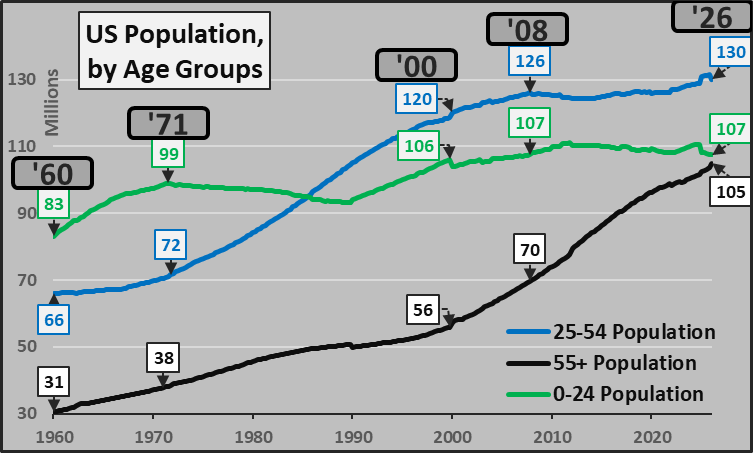
The 55+ population is about to surpass the under-25 population for the first time. Social Security was built when there were 16 workers per retiree. Now there are fewer than 3. The retirees didn't design this ratio. They paid into a system that promised them benefits funded by a growing population that stopped growing. The workers funding it didn't design it either. Both generations are trapped in an architecture built for a country that no longer exists. Blaming the generation collecting the benefits ignores the structure that made the promise impossible to keep.
English
0
0
3
16
CH
CH@Econimica·
the generational war is nearing a TKO as elderly will surpass the population of young (likely this year) while the benefits they collect are 6x greater than those collected by the young. This system, created based on pre-WWII patterns of population growth and relatively short life spans in retirement persisting, is now literally sucking the life out of younger generations.
CH tweet media
English
7
11
44
2.6K
Nick Manteris
Nick Manteris@thecostofwork·
@ToscaAusten The money isn't missing. It's being absorbed by the system built to distribute it. I addressed the issue here: @thecostofwork/note/c-249619869" target="_blank" rel="nofollow noopener">substack.com/@thecostofwork
English
0
1
0
139
Tosca Austen
Tosca Austen@ToscaAusten·
The "Progressive" Paradox 📉🤡 Bill Maher asked the $1 Trillion question to Bernie Sanders. “How can you be soaking the rich and failing the poor so badly?" Maher leaned in: The Top 1% pays 42% of all federal income taxes. The Top 10% pays 76%. We have the "soaking" part down. The money is being taken. So why aren't the results showing up at the bottom?” Because the "Machine" isn't a pipeline for the poor—it’s a filter for the middleman. The money goes in, the bureaucracy grows, and the problem stays the same. Soaking the rich is the distraction. The "Machine" eating the proceeds is the crime. 🏛️💸 Who is actually getting the check? It isn't the working class. 👇
English
135
2.4K
7.6K
206.3K
Nick Manteris
Nick Manteris@thecostofwork·
@unusual_whales Warsh did say: the Fed's balance sheet 'disproportionately helps those with financial assets.' He's describing the problem. Will he fix it?
English
1
0
1
19
unusual_whales
unusual_whales@unusual_whales·
Kevin Warsh has said he wants the Fed to adopt a new approach to measuring inflation, per YF
English
293
185
1.8K
303.4K
Nick Manteris
Nick Manteris@thecostofwork·
The incoming Fed chair wants to change how inflation is measured. The current method already excludes food and energy. The new method trims out extreme price moves in either direction. Each revision makes the official number smoother and further from what people actually pay. One thing Warsh did say clearly: the Fed's balance sheet 'disproportionately helps those with financial assets.' The person nominated to run the institution is describing the problem. Whether he'll fix it is a different question.
unusual_whales@unusual_whales

Kevin Warsh has said he wants the Fed to adopt a new approach to measuring inflation, per YF

English
0
0
0
41