

Namit Jindal
358 posts

Namit Jindal
@thenamitj
everything is possible except defying physics
Katılım Mayıs 2010
544 Takip Edilen489 Takipçiler

We were Clay's largest user at one point in time, hitting their platform 17.3 million times per week. Last month we replaced them entirely with a $200/mo Claude Code subscription.
I can't write code. Neither can James, my VP of Growth who built the replacement.
Here's the full story.
Clay is a GREAT product and I TRULY think most people should use it. But we hit their ceiling.
50,000 row limit per table.
12.5 million row cap per workspace.
Tables that take days to actually delete.
Clicking "run all" thousands of times and waiting days for things to clear out.
So
When you're processing millions of leads, all the above become the bottleneck of your entire business.
James had never touched Claude Code before. Three weeks after learning it, he built our entire core system.
With Clay, processing 1 million leads took 27 hours.
And it would error out often enough that we would always have to plan on hitting the “run all rows” button again on 20+ clay tables. IYKYK
but
Our new system waterfall enriches 1 million leads in 5 seconds. 272,000 leads PER SECOND.
AND On top of the core engine, we vibe coded a Google Maps scraper that pulls leads zip code by zip code across all 32,000 US zip codes.
AND An AI lead finder that hits 95% contact match rates where Apollo gives you about 30%.
AND Ad library scrapers for Google and LinkedIn.
AND An AI campaign analysis system.
AND An auto-refill system so clients never run out of leads mid-campaign.
One we started building with Claude, we just couldn’t stop
Now we have the data ready for clients sending 5 million emails a month within 1 week of signing the contract.
I put together the full system blueprint -- every tool, the tech stack, a Clay vs custom comparison, and a 6-step playbook for building your own. Plus a video walkthrough where I show you the live system and how each tool actually works.
Retweet or Reply CODE below and I'll DM it to you.
English
Namit Jindal retweetledi

@hardikar_dhruv Depends on your industry but the most easiest/fastest/cost efficient form of marketing
English

Here’s what Alex Hormozi got wrong about Cold Email. And here’s why his advice does not apply to everyone:
Context first: He’s a huge reason I’m good at cold email. No-brainer offers. Lead magnets. Value first.
That foundation works.
But copying his tactics blindly in B2B/SaaS is where people get hurt 👇
English
The pattern people miss:
Hormozi gives principles.
People copy tactics.
My take:
Test everything.
Build infrastructure first.
Then scale ruthlessly.
That’s how outbound actually compounds.

English
“Script is God.”
Reality: Context is God.
Scripts help beginners.
They fail with sophisticated buyers.
In B2B:
→ Openings can be fixed
→ Closings can be fixed
→ Objections must be flexible
No adaptability = lost deals.
English
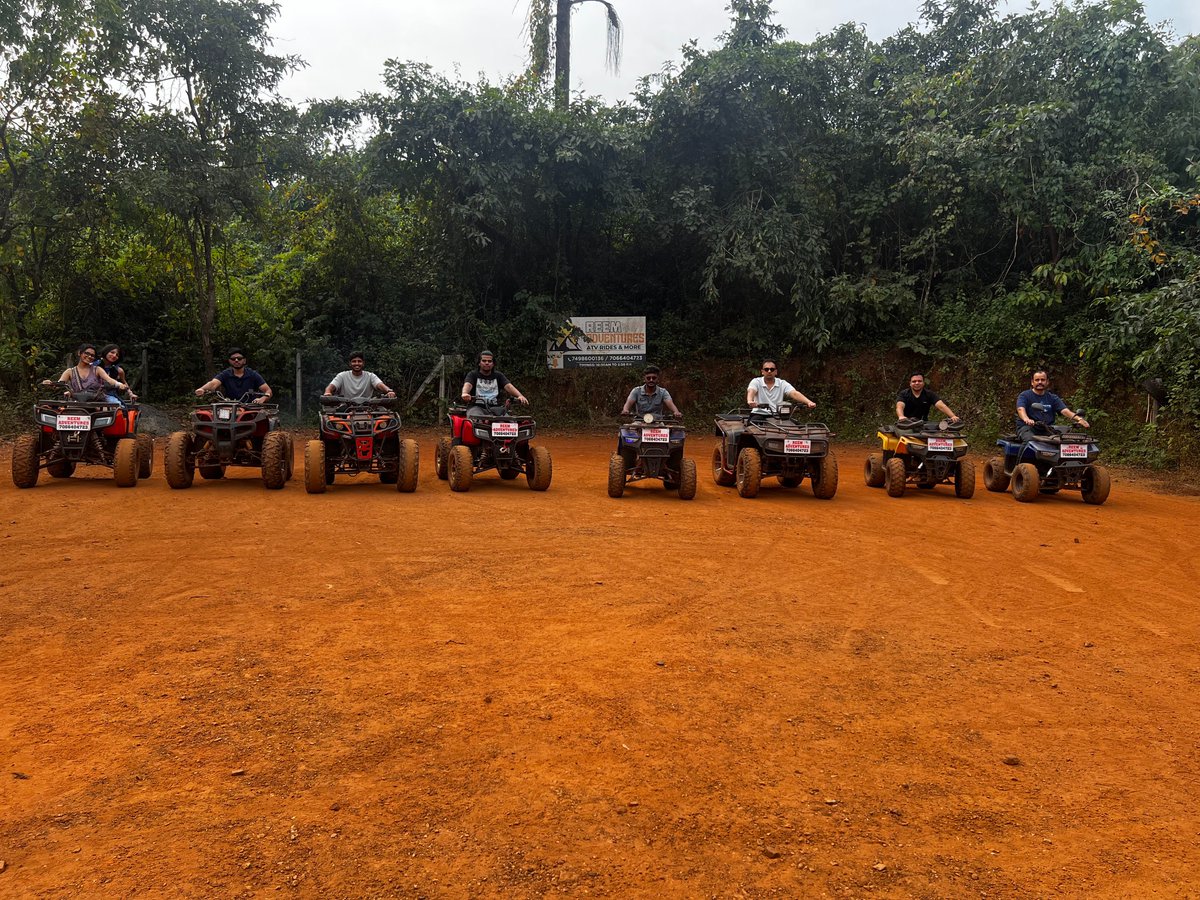
This month, the Aerosend team met in person for the first time.
We’ve been remote since day one.
Shipping fast. Solving hard problems. Building with people we’d never met IRL.
I wanted to see how we think without screens.
How we debate.
How we solve problems with paintball guns instead of laptops.
I learned more about this team in 3 days than in the last 6 months.
Best idea I’ve had.
Huge respect to the team, who showed up as their full selves.
Different backgrounds. Same mission.
Until next time ❤️
English
99% of cold emailers are fighting over the same stale signals.
There’s a cheaper, fresher intent signal hiding in plain sight
Facebook Ads Library.
And it’s one of the strongest intent signals out there.
Output is clean and reliable.
Two API calls do the heavy lifting.
If they’re running ads → you can tailor your copy accordingly.
Ex: For SEO companies: Hard pitch your services by comparing cost per click and the ROI if they rank #1.
Use cases:
– SEO / PPC / Lead gen agencies
– Marketing & attribution software
Reply “Facebook Scraper” and I’ll DM the entire workflow with exact API endpoints. (Must be following)
English
Here’s a stupidly simple trick to learn better cold email writing.
Your brain knows you’re sending it to 2,000 people so you write robotic stuff.
Here’s the fix:
Pick ONE row from your list. Pretend you’re only emailing that person today.
Grab:
→ Website
→ LinkedIn
→ Title
→ What they actually do
→ One real pain point
→ Your offer in 1 line
Write the email to that one person. Add variables + scaling later.
This single shift will make your emails feel human and relevant.
English
Namit Jindal retweetledi
we’re shipping non-stop. here’s some of the stuff we worked on. more soon
English
Last month, I analyzed over 50M emails to find which emails got replies from Outlook
Found patterns in Warmup, Sending, ESP Mixes, Content Fingerprinting, Domain Redirect
Stuff no one speaks about.
Comment "Outlook" for access. Will DM webinar link.
English

Clutch is the biggest database for targeting agencies.
That should be your first database.
Found a free scraper online that you can use.
Add a clutch URL, you get a list of all of the companies.
Comment “agency” to get the link.
(Must be following)

English

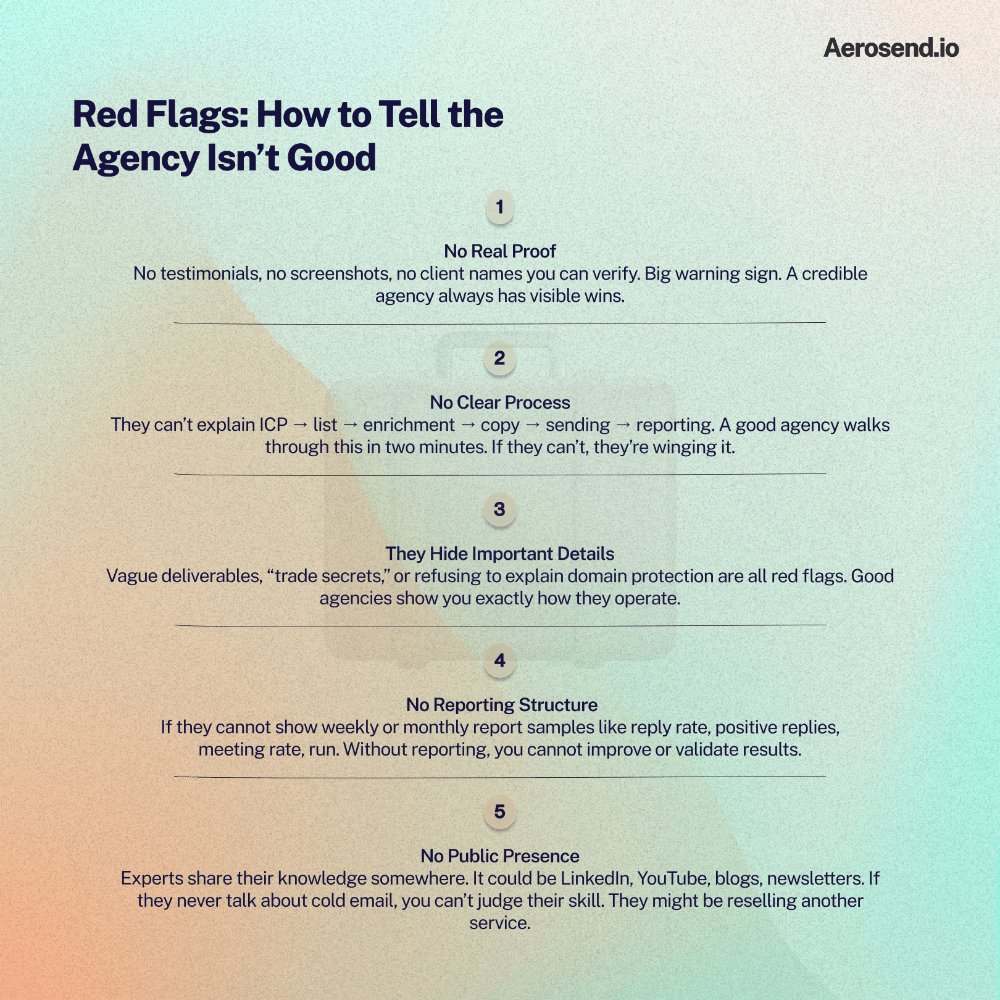
Making these mistakes while hiring a cold emailing agency cost me over 5 figures.
👇 Here’s what NOT to do (Read):


English

You can rank #1 in ChatGPT in 45 days (not 12 months like Google SEO)
ChatGPT handles 2.5 billion searches daily and will overtake Google by 2027.
I reverse-engineered exactly how to do it (giving away the full playbook at the end).
Here's what changes when you rank #1 in AI search:
- Your brand gets recommended when people ask "What's the best [your category]?"
- You show up in comparison requests against competitors
- ChatGPT, Perplexity, Claude, and Gemini cite YOUR content as the authority
- You capture buyers BEFORE they even visit Google
- Your content gets seen by people who never click traditional search results
The difference between AI search and traditional SEO:
Traditional SEO:
12-18 months, domain authority aging, endless backlink building
AI search:
30-45 days, content freshness, structured data, and expertise
Companies already winning with this playbook:
Deepgram: 24x traffic in 60 days
Webflow: 40% traffic lift in DAYS
Chime: 3x AI citations in under a month
They're not doing traditional SEO anymore.
They cracked AI search while everyone else is still optimizing for Google.
Inside the playbook:
- How to audit your current AI visibility across all platforms
- The 7 ranking factors AI prioritizes (completely different from Google)
- Content formats that get cited 10x more than generic articles
- How to reverse-engineer competitors dominating AI search
- The refresh strategy that keeps you ranked (not just published)
This is the exact system brands like Webflow and Klaviyo are using to dominate AI recommendations.
And you can start implementing it today.
Follow + comment "SEARCH" and I'll DM you the complete playbook.

English
⚠️ Conrad from CallPad 4x’d his reply rate by switching to Aerosend
Meetings booked? 3x
Reply rate? 1% → 4%
He says that if you’re already spending on leads and tools, Aerosend doubles that investment by just getting you in the inbox. We agree. :) Watch. 👇 🎥
English