

TBraz
7.5K posts

The goal of education is not information.
It is interpretation.

English

Getting back into reading a lot & need to know where to turn on nights like last night where it seemed like a good idea to read 'just the first chapter' of 'I Who Have Never Known Men' at midnight & then had to lie awake all night like this
GIF
English
@PallasInstitut @SophiaCycles @PallasInstitut Sounds exciting. Where can we learn more about your program?
English
@SophiaCycles this is a good summary - we're building a Jungian-inspired humanities curriculum
English

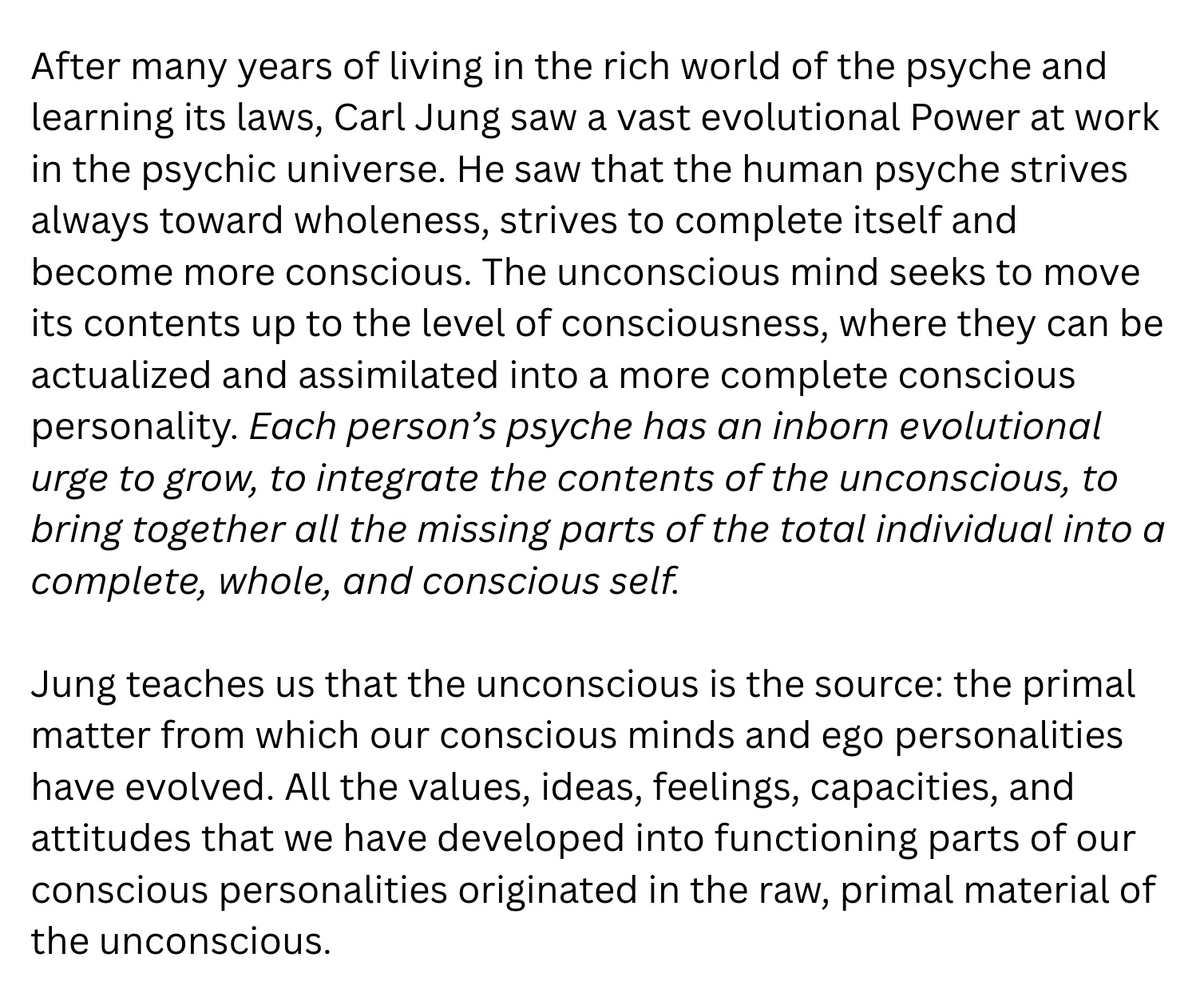
If you are new to the work of CG Jung, this is the author to start with. Robert A Johnson writes simply and uses psychological analyses of myths to explore Jungian contents. This is from this book: We: Understanding the Psychology of Romantic Love.
English

texting “have you ever read any Ursula Kayla Guin?” and waiting for the replies
English

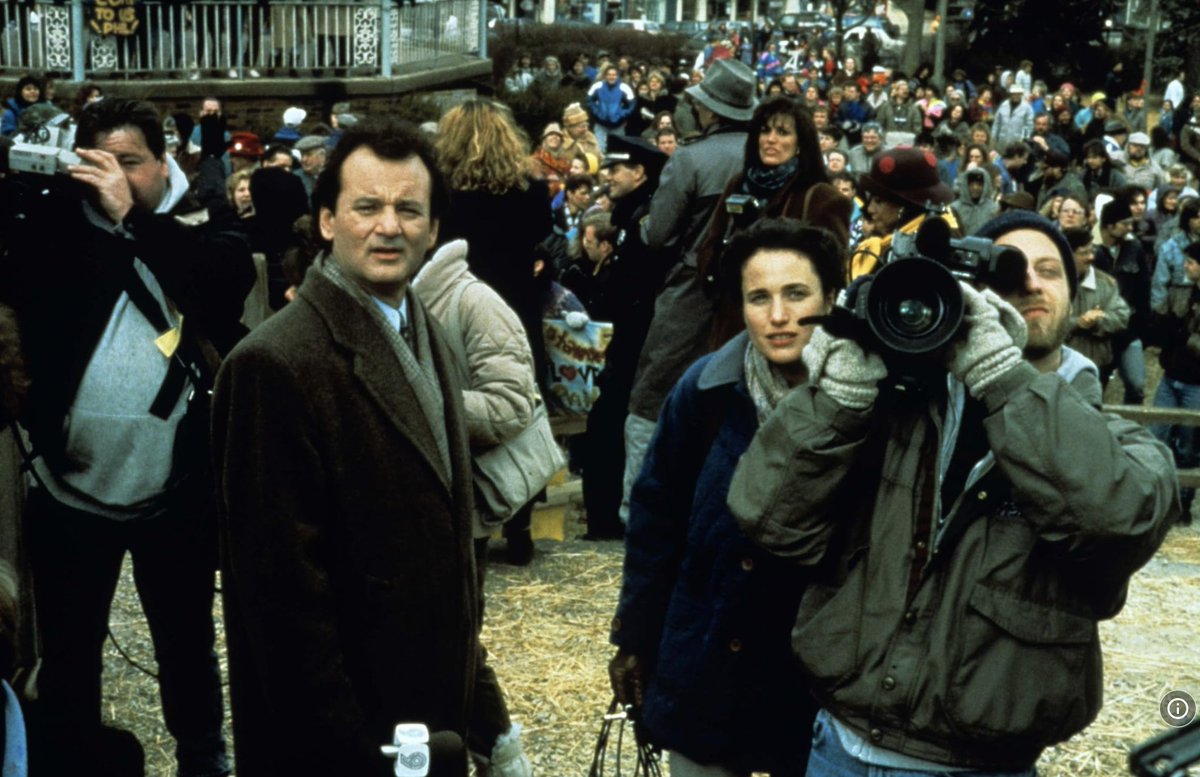
Today's family film: Groundhog Day (1993). It'll be fun to see my kids' reaction to it
English

the first rule of nature is not self-preservation, but love
English
@Jeanvaljean689 When you say “the answer is behind you” are you referring to issues stemming from childhood dynamics?
English

90% of being a psychotherapist is getting people to slow their roll
most emotional problems, (maybe ALL?), are really tempo problems, e.g.:
1) you're trying to speedrun something that can't be speedrun;
2) you're racing forward due to anxiety but the answer is behind you, etc
English

And underneath all our attempts to control, save, help, fix: fear x.com/FU_joehudson/s…
Joe Hudson@FU_joehudson
When I realized this, it rearranged something inside me: Every time you try to save, help or fix others, you're essentially asking them to hold your fear.
English

Who Gets to Decide What’s Good? My first post on @Substack Let me know what you think fam. open.substack.com/pub/theorbital…

English

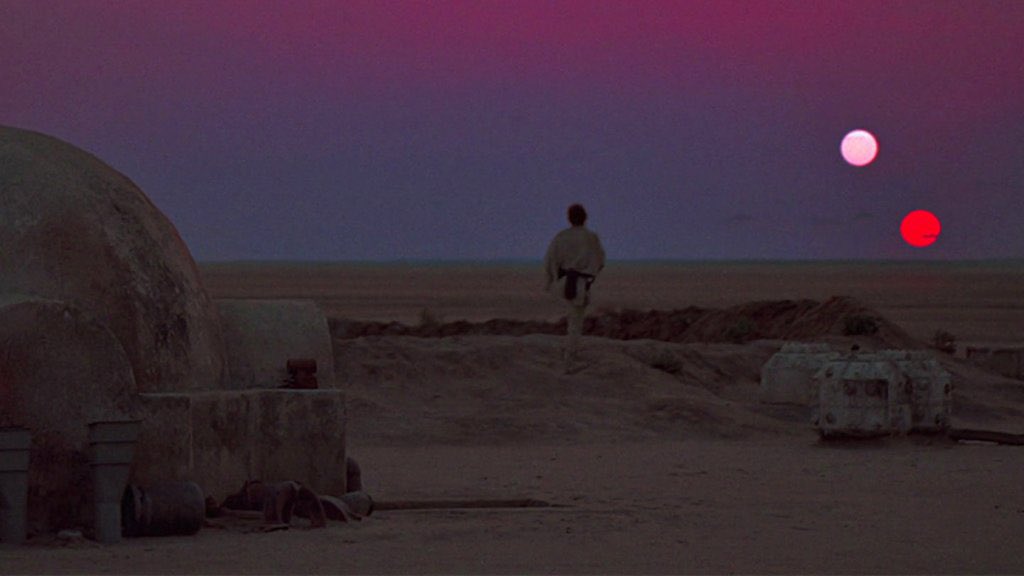
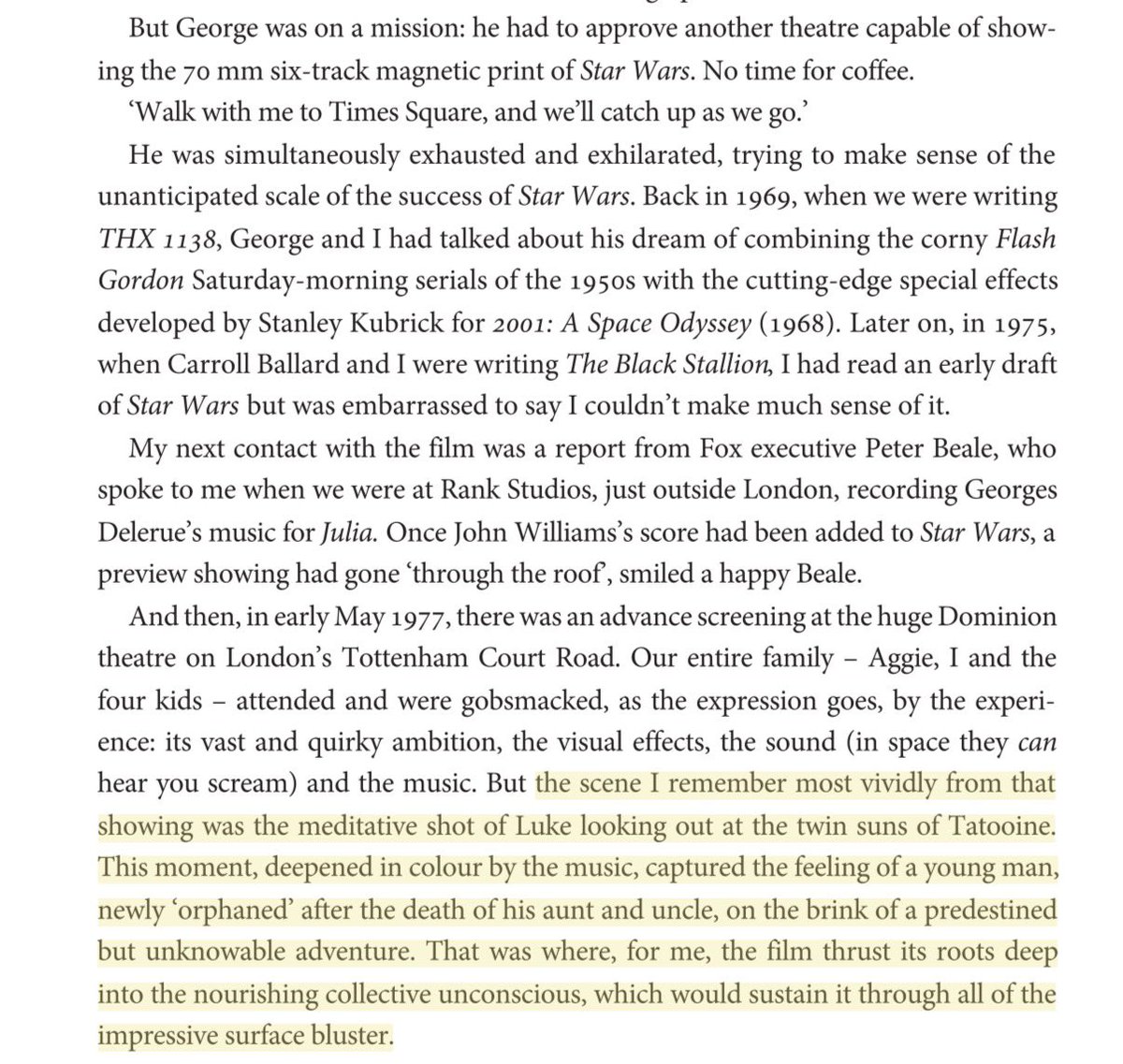
The great Walter Murch on seeing Star Wars for the first time:
English
English

what @artofaccomp podcast episode or video do you find yourself rewatching or relistening to? i'd love to know
i'm thinking about what aoa content is truly lindy & impactful, & how to make more that
i'm re-listening to "how love gets confused" this weekend (thanks to @neats29)
English

One of the best modern-day Hero’s Journey arcs. If for some crazy reason you’ve never seen it…
Cinema Tweets@CinemaTweets1
This weekend is your chance to watch David Fincher’s The Game. 2026 is turning into a juggernaut for Cinema- so much is happening. But don’t lose sight of the fact we’re getting a new David Fincher film this year. So, act accordingly: see this film if you haven’t yet. It’s great.
English

I’ve been a bit disconnected from twitter and writing lately… guess I’ve been IRLing too hard lol. but here are the broad strokes of some things I’ve been up to in the last couple months:
- I’ve been doing a lot of sessions (and an IFS training), feb and march were very busy months
- I’ve been loving my time in mexico
- I got my heart broken hehe
- I’ve been dancing a lot of salsa and focusing on getting better at leading
- I’ve been dipping my toes into spanish
- I’ve been navigating waves of shame related to attachment wounds
what have you guys been up to?
English
@FU_joehudson @FU_joehudson I’m curious what emotion you avoiding the most in your life
English
Advice I'd give my 20-year-old self: The emotion you most avoid is the one running your life. You'll spend enormous energy routing around it: in work, relationships, and decisions. That energy is not free. And the thing you're avoiding only gets louder as you grow older.
English


Cam and I love to ask Chat:
If you were helping an alien understand Earth and the human’s journey to awakening, what movies would you recommend?
Groundhog’s Day. About Time. The Truman Show. Click.
We’ve watched all of them recently, and what strikes me is that they’re all telling the same story with different costumes on.
Someone is given the ability to control time. To fast-forward, rewind, redo, escape. And in every single case, they use that power to try to optimize. Get the best outcome. Skip the boring parts. Avoid the pain.
And in every single case, the realization that arrives is… there are no boring parts.
There is nothing to skip. The puddle you step in on the way to the party is not the obstacle to the good day. It is the good day. All of it is.
I think about this when I’m rushing. When I’m mentally already at the next thing before the current thing is finished or when I’m eating a meal I barely taste or having a conversation I’m half-absent for.
I think: what are you fast-forwarding toward?
There’s this moment in About Time where the main guy can time travel back to any moment in his past. He decides to re-live every day twice, but eventually stops. He realizes that he doesn’t need the second pass if he focused on making the absolute most of the first pass.
Even with time travel, the ultimate trick is just being there the first time.
English

“The mediocre see it encroaching on mediocrity.
The exceptional notice it being exceptional.
The incurious see a defective calculator. The neurotic see a threat. The curious see possibilities. The industrious see applications. The uncreative see a search engine.”
- @BackTheBunny
English

There exists, for almost every recurring struggle in your life, one structural decision that would dissolve it.
Kpaxs@Kpaxs
Systems thinker Donella Meadows spent decades studying where and how to change complex systems. Her most counterintuitive finding: the places where most people intervene (the numbers, the quantities, the individual behaviors) are the least effective leverage points in any system. Changing a parameter (eating less, sleeping more, checking your phone less) is the weakest possible intervention. It requires constant maintenance. It fights the system's existing structure rather than changing it. The high-leverage interventions are structural. They change the rules, the feedback loops, the goals of the system itself. Fix the system and stop patching the output. geni.us/syJQ5u
English

@eugenewei Genuine question, why is the NBA considered to have a problem with "meaningless" games but MLB and NHL do not?
English

Lots of people hating on the Heat for intentionally fouling to get Bam more chances to score, but this made me tune into an NBA regular season game for the first time all season. If the league won't shorten the season, there's not much that can be done about how meaningless each game is, so this might be the alternative to making the season entertaining.
Also, it's rational for teams to tank, but if they're going to, then let's at least shame them. At the end of the game, the Wizards finally started doubling Bam to try to stop him. If shame is what it takes to get tanking teams to try, then I'm all for it. Let's have open season on NBA records against tanking teams.
Lakers play the Wizards on March 30, let's see Luka go for Wilt's 100 point single game scoring record. Spurs play the Kings in 10 days, let's see Wemby go for a quadruple double. Nothing else has worked to curb tanking, why not try humiliation?
NBA@NBA
83 POINTS FOR BAM ADEBAYO. THE SECOND-MOST EVER. Wilt: 100 Bam: 83 Kobe: 81
English
@su_dreams Does this mean we shouldn’t focus our efforts on fulfilling our desires?
English

This is exactly it - the "connection" to our desires is a large part of our wellbeing, not just the fulfillment.
It's also a little more nuanced though - this connection supports us in so far as it comes from a stance of openness. "I can see I don't have this thing now, but I'm open to what comes or not" (paraphrased from the original post).
The underlying attitude is "I'm (mostly) happy regardless, but I'm also open to the good stuff that comes my way".
But sometimes, this same connection comes from a place of desperation ("I MUST have this, and I'm to do everything I can to get it"). The underlying attitude here (obviously) is fear of not having it.
This is not too different from rationalizing not having stuff - both two different protective mechanisms for the same underlying fear.
Sort of similar to anxious and avoidant attachment styles - anxious being the "I must have it" types and "avoidants" being the "meh, I don't need it (but I'm actually afraid of wanting it".
Heidi Priebe ⛰️☀️@HeidiPriebe1
I hired a *really* good coach recently. Today she was explaining to me that some of the unhappiest clients she see are clients who are unsatisfied with their lives but rationalizing it away (i.e. convincing themselves they 'must not actually want' whatever it is they don't have), And then some of the happier clients she sees are people who *also don't have what they want,* but who can openly admit what they want out of life & are leaving space open for it to come along or not. Essentially: it is the *connection to* our desires that does the heavy lifting in keeping us feeling whole & regulated - not just the fulfilment of them. I have no idea if this is a 'duh' thing to everyone else but it feels like one of the biggest perspective shifts I've had in years.
English