The American Tribune@TAmTrib
A story from the life of Captain John Smith in the early days of Colonial Virginia, as the colonists learned how to handle the Indians, is relevant here:
Force works, and generally leads to better outcomes for all than "tolerance"
Many of Smith's compatriots thought the savages should be treated with kid gloves in the hope they'd convert to Christ and civilization. Not Smith. He, a veteran of wars against the Ottoman pagans, knew force was the only thing that would be respected, and lead to the problems going away
So, instead of ever showing weakness when negotiating with them, Smith displayed force and strength. Often, as when he negotiated with the Susquehannok, this meant no force actually needed to be used. They respected him, and remained peaceful
Similarly, when dealing with the Powhatan Indians, he knew that repaying violence with violence and forcing them to go along with him was the only way to get them to stop preying on the English. This contrasted with the tolerant approach of the kind-hearted Christians, all of whom disagreed with him, but it worked far better.
Philip Alexander Bruce, describing it in his life of Smith in The Virginia Plutarch, volume 1, provides a few examples of what it was like for Smith to do so by the 1609 period of English weakness, saying:
"Smith never suffered himself to be assaulted first by the Indians. He always anticipated his adversaries’ blows. When the savages at Paspaheigh in 1609 showed by their demeanor that they were about to attack him and his escort, he ordered his men to fire on them. Six or seven were killed and many taken prisoners. He set the torch to their wigwams, pulled up their weirs, and carried off their boats. When he moved forward to capture the Chickahominy village, its inhabitants dropped their tomahawks, bows, and arrows, and implored him to be merciful; and this example of submission on their part was followed by the members of other tribes.
"Smith was always severe in punishing the thievery of the Indians who visited Jamestown. In 1609 he threw into the jail there a youthful warrior who had stolen a pistol. The frightened savage soon lost consciousness under the influence of the fumes of a charcoal fire, and his brother, thinking him dead, raised a wild lamentation. Smith promised that he would bring the supposed corpse back to life if thence-forward they would refrain from purloining further. By means of simple remedies, the limp brother in a few minutes evinced signs of recovering his senses, and the two were sent to their village to relate the story of this incident of miraculous restoration to health. Powhatan was made so apprehensive by the tale, that he gathered up all the stolen articles at Werowocomoco and, together with the thieves themselves, returned them to Jamestown."
This worked, and he struck a couple-year peace with the Powhatan, who were terrified of him
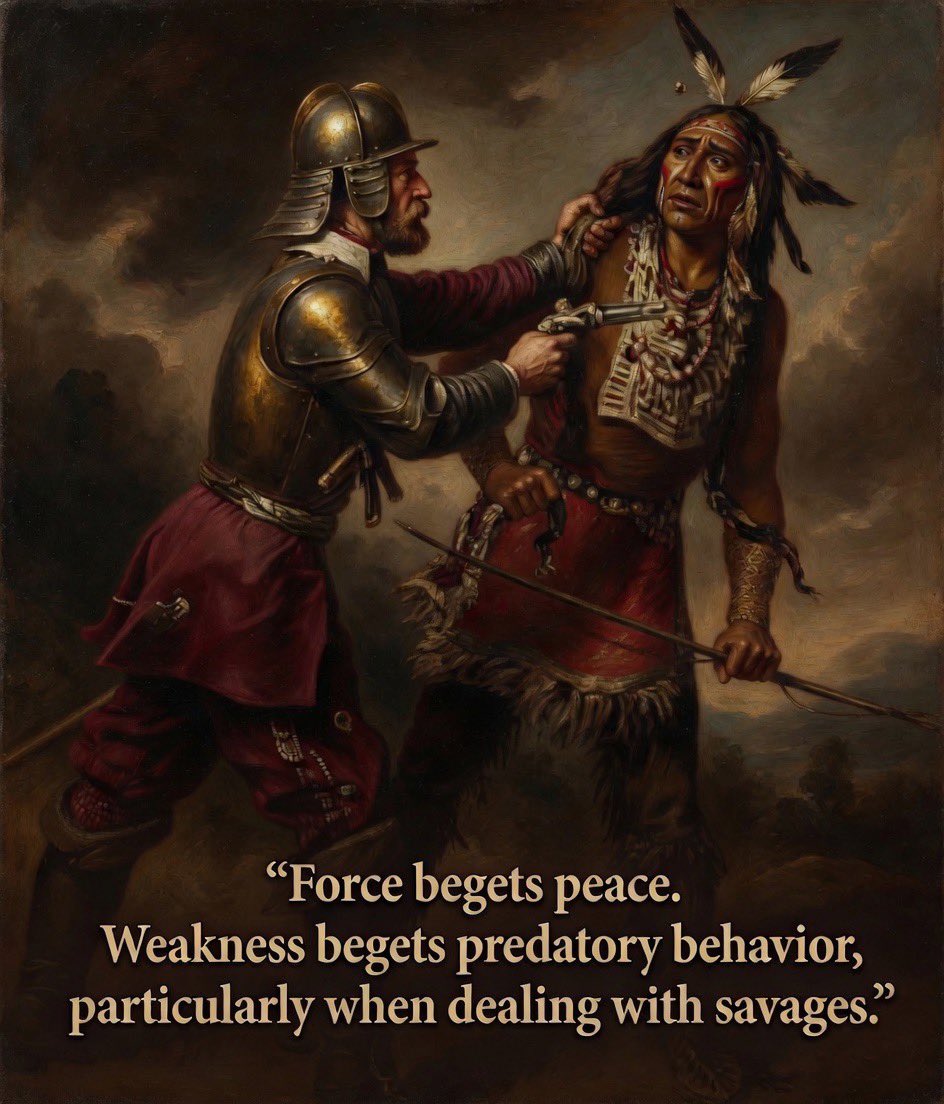
The same sort of thing is true now. Force begets peace. Weakness begets predatory behavior, particularly when dealing with savages