
Michael Foster

29K posts

Michael Foster banner
Michael Foster

Michael Foster

@thisisfoster

I'm a pastor and writer. My wife and I live with our eight children on a small farm in Batavia, OH.

Batavia, OH Katılım Ocak 2014
268 Takip Edilen70.1K Takipçiler
Sabitlenmiş Tweet
Michael Foster
Michael Foster@thisisfoster·
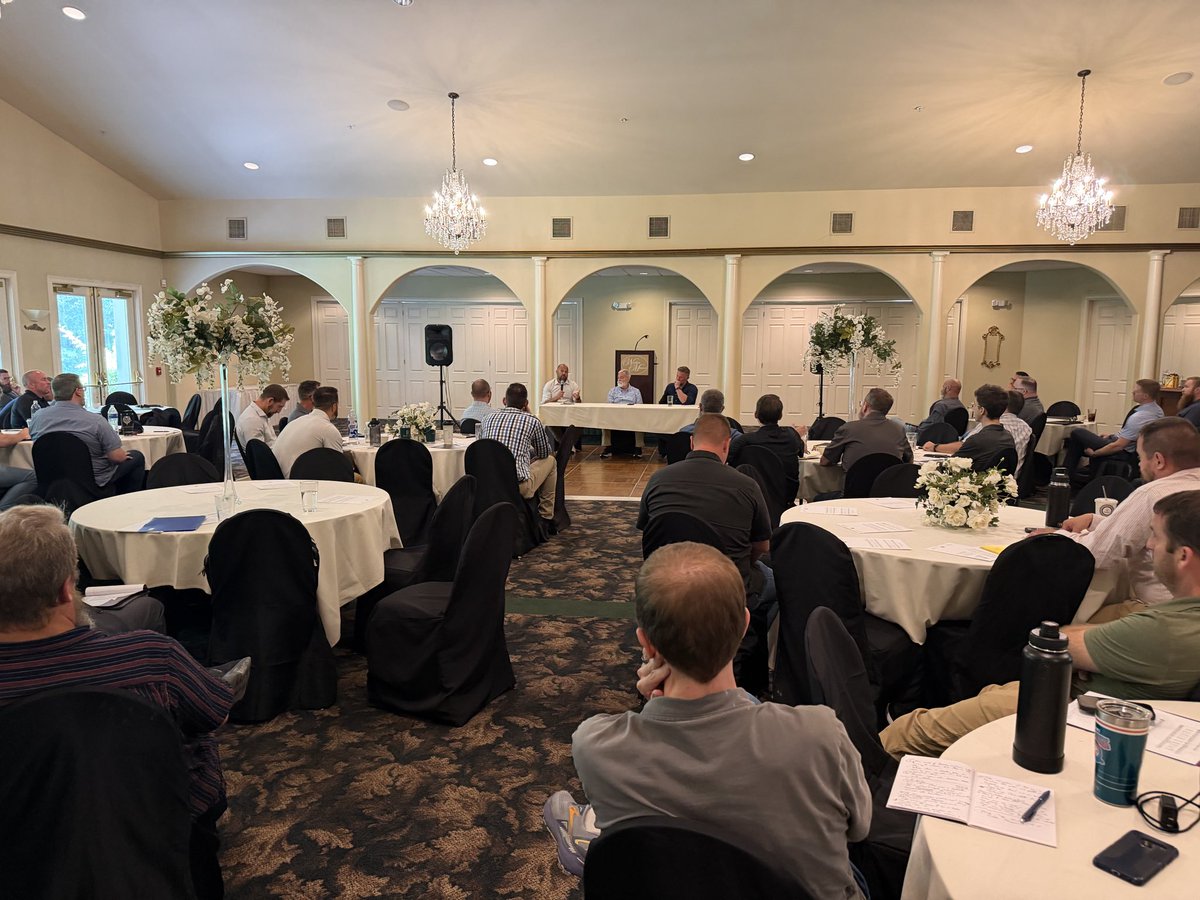
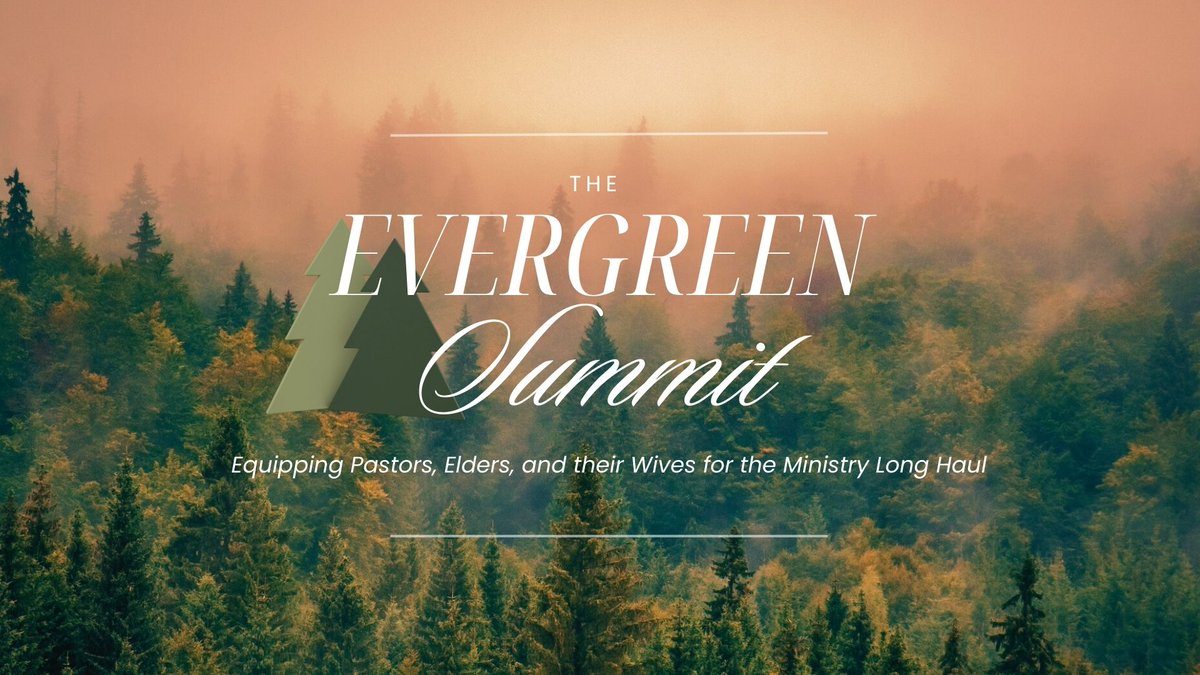
A different sort of event for church leaders and their wives... Faithful ministry can be lonely and comes with pressures most people never see. Over time, church leaders and their families can get worn down or stuck in the same ruts. Instead of working on themselves and the ministry, they can end up stuck in the grind of just keeping up and barely surviving. With this in mind, we’re reworking our pastors’ conference into The Evergreen Summit. We’re calling it “Evergreen” because the aim is to equip pastors, elders, and their wives for the long haul of ministry. We’re going to do things a little differently in two main areas. First, no keynotes. Frankly, most pastors’ conferences are largely a summons to hear “big names” preach sermons. We want something more practical and interactive. This isn’t about platform building for Christian celebrities or content generation for media-centered ministries. Second, no recordings. We want presenters and attendees to be able to speak freely about the real challenges of ministry, so this event will not be livestreamed or recorded. We will provide printed materials for all attendees, but all workshops and mastermind group conversations will remain private. So what will we do? We’ll have three workshop blocks, each consisting of three back-to-back 20-minute presentations. Each block will be followed by a 15-minute break, and then the three presenters will take part in a moderated panel and answer questions from attendees. Our full lineup of workshop sessions is still being finalized, but it will include topics like How I Survived a Coup d’État, Cultivating a Leadership Pipeline, and Protecting Your Wife and Kids. We’re aiming to be very practical and brutally honest. There will also be one workshop block just for ministry wives, led by Rosaria Butterfield, Emily Foster, and a presenter TBA. It will run concurrently with one of the main workshop blocks. Another key component of the summit is the masterminds. These are small groups of six to eight people who will identify two real problems within the group and work together to find a path forward. There will be two mastermind sessions for the men’s track and two for the wives’ track. We’ll also share meals together and have a catered party on Friday night for all attendees. The goal is to come ready to work on real problems and return home refreshed and ready to get things done. We will not have childcare available, but babes-in-arms are welcome. Presenters include: Michael Clary • Rosaria Butterfield • Chris Wiley • Michael Foster • Doug Ponder • Bryan Laughlin • Emily Foster • Brian Brown …and more to be announced. Date July 16-18, 2026 Location East River Church, 299 Haskell Lane Batavia, OH 45103 Purchase Tickets here: eventbrite.com/e/the-evergree…
Michael Foster tweet media
English
10
7
112
33.4K
Michael Foster
Michael Foster@thisisfoster·
This is a blockhead statement. This isn’t about saying “I told you so.” It’s about the fact that we warned the church this was a dangerous departure from Scripture, that it would lead to real consequences. And when we said it, we were treated like we were harsh, unloving, or theologically off. We weren’t. We were doing our job. We warned. That warning was ignored, dismissed, or mocked. This is the same pattern again. There are people who want to act like they’re more loving, more understanding, because they refuse to connect theology to behavioral outcomes. They’re not more compassionate. They’re just unwilling to do the hard work of pastoral ministry.
Jared@RevJaredJones

I think posting "I told you so" when a pastor resigns and has admitted his sin is one of the grosser things that happens on this app, and its always the same people who do it.

English
16
39
360
10.4K
Michael Foster
Michael Foster@thisisfoster·
Here are the three main problems with the gay celibate Christian movement. They... 1. Deny the goodness of shame. 2. Deny the sinfulness of effeminacy. 3. Deny the sinfulness of unnatural desires that arise from within man. Consequently, they... - Delay and reject marriage, though they lack the gift of celibacy. - Create a category of same-sex intimacy that they claim is aesthetic and not erotic, which sets them up to act on their desires. - Rob homosexual and/or SSA Christians of hope.
English
16
31
325
7.3K
Michael Foster
Michael Foster@thisisfoster·
Again, it was so obvious...
Michael Foster tweet mediaMichael Foster tweet media
English
5
10
157
5.2K
Dave
Dave@StandAndKnox·
@thisisfoster Gay guy who supports gay identification did gay stuff. Woah dude that’s crazy who could have ever guessed.
English
1
0
45
1.7K
Michael Foster
Michael Foster@thisisfoster·
People warned about Allberry’s position on same sex attraction for years. It all was so obvious.
English
26
30
663
35.6K
CPK
CPK@CP19090·
@thisisfoster That's not what the church's statement says.
English
1
0
0
129
Michael Foster
Michael Foster@thisisfoster·
Every couple of years I feel the need to post this somewhere. That is especially true as more people follow along with what I write, record, or post. Most of us here are not friends. And odds are, I’m not your pastor either. Social media creates a sense of closeness that isn’t actually there. You read someone’s thoughts. You listen to their voice. You follow their work over time. After a while, it starts to feel like you know them. In some sense, you do. But it isn’t the same thing as a real relationship. I don’t know you. I’m not in your life. I don’t see how you live. I don’t see how you handle pressure. I don’t see how you treat your family. I don’t see how you make decisions when it costs you something. You don’t see that in me either. At least not in any full or meaningful way. There’s a name for this: parasocial interaction. It describes a one-sided sense of knowing someone through media. It’s common now. It’s not entirely bad. It can even be useful in limited ways. But it becomes a problem when people start treating it like something it’s not. I was reminded of this recently while listening to someone discuss Mel Robbins. She’s extremely popular. She’s clearly effective at what she does. Part of that effectiveness comes from how personal her language is. She tells her audience, “I love you.” She speaks like she knows them. She speaks like there’s a shared relationship there. People respond to that. But it isn’t personal in any real sense. It can’t be. That kind of language at scale isn’t real intimacy. It’s purposeful manipulation. People are hungry for connection, so they accept something that feels like it, even when it isn’t. The same dynamic shows up in the masculinity and brotherhood space. It just takes a different form. Instead of “I love you,” it’s “we’re a band of brothers,” “we’re in this together,” or “this is your tribe.” I don’t doubt there can be some good there. I’ve been part of it. I even led something like that for a number of years. But I kept hitting the same wall. You don’t actually know these men. You don’t see their homes. You don’t watch their marriages. You don’t know if they’re telling you the truth about what’s going on. And they don’t really know you either. So you end up trying to do real accountability and real counsel in a setting that can’t support it. Things end up shallow, frustrating, or both. What ties all of this together is that we’re trying to get things out of these platforms that they aren’t built to give. You can share ideas. You can encourage people. You can even be helped by someone at a distance. But you can’t build real friendship or real pastoral care without shared life. That takes proximity. It takes time. It takes mutual knowledge. It takes actual responsibility on both sides. It takes being in each other’s lives, not just in each other’s feeds. Without that, things get weird. People start thinking they have access to someone when they really don’t. They give that person more influence than they should. They feel known by someone who doesn’t actually know them. Sometimes they even expect to be cared for or led by someone who has no real way to do that. And it cuts the other way too. The person with the platform can start talking like a friend, a brother, or even a pastor, without actually assuming the responsibilities that come with those roles. I’m thankful for my readership and online connections. Some of you I’ve interacted with enough to call acquaintances. A few of you are real friends. But most of you are not. You matter. I just don’t know you beyond a few passing pixels on a screen. We live in treacherous times. Many individuals and families are scattered far from their hometowns, if they ever had one. Many are deeply isolated from meaningful local relationships. In their loneliness and need, they turn to the internet to find something it was never built to give. You can find your niche online very quickly. But real community takes time and presence. Online relationships can be genuine. They can be helpful. But they only work as a supplement to a healthy relational life. They can’t replace it.
Michael Foster tweet media
English
11
13
122
6.6K
Michael Foster
Michael Foster@thisisfoster·
@westernpilgrm Given my heritage, a lot of these guys don’t seem to be interested in talking to me.
English
0
0
0
64
Michael Foster
Michael Foster@thisisfoster·
I had some friends who got really deep into the QAnon stuff. I tried repeatedly to help them see that while a small part of it might have some basis in reality, most of it was just crazy nonsense. Of course, they told me to “do your own research,” which I had already done. The more I tried to get them to consider the facts, the more entrenched they became. Eventually, I just let it go. I had made a real effort, gotten nowhere, and wasted a lot of time. Now most of those same friends have rejected all of it. I brought it up to one of them a few months ago, and they said, “I don’t ever want to talk about that again.” They realized how much they had been spun up by all the online propaganda and craziness of the time. More of that to come.
English
29
10
281
12.7K
Michael Foster
Michael Foster@thisisfoster·
Can the PCA achieve 100 overtures? Only 11 to go.
English
5
0
38
3.9K
Michael Foster retweetledi
Abigail Dodds
Abigail Dodds@abigaildodds·
To start, we strengthen them by pursuing it ourselves, loving it, and getting good enough at marriage and mothering that we even have an example that can be transparently shown and offered that is desirable and lovely *in real life*. Also, working hard at helping them find husbands.
English
5
2
64
3.1K
Michael Foster
Michael Foster@thisisfoster·
We need women who believe that is infinitely better to be great at being a woman than to be mediocre at being a man.
English
25
91
856
12K
Michael Foster
Michael Foster@thisisfoster·
How do we strengthen young women in femininity and godliness? This is actually one of the most pressing and difficult cultural-spiritual questions we have to answer. It’s wild how quick things change but change they have.
English
50
19
345
13.8K
AR
AR@IusEtPecator·
@thisisfoster And here I was, ready to dig in Batavia.
English
2
0
0
114
Michael Foster
Michael Foster@thisisfoster·
Putting down roots is hard, especially if you grew up like I did. I was born in Independence, Missouri, in 1980. By the time I was thirteen, we had moved to North Dakota, Kansas, Indiana, and Virginia. I had gotten used to being the new kid at school. In those early years, I went to five different school districts in Indiana, so the longest I stayed in any one district was about a year and a half. I wasn’t a military brat. My dad was just searching for Mayberry, which is ironic, given that where we finally landed was next to a bar across from a whiskey plant in Lawrenceburg, Indiana. That is where I finished eighth grade and all four years of high school. I know every nook and cranny of Lawrenceburg. This was before the internet really took over, so we spent all our time outside. Functionally speaking, that is my hometown. It sits right on the edge of the greater Cincinnati area. This is where I went to college, entered the workforce, got married, and had my first two sons. This region is home. Place matters a hundred times more than most people give it credit for these days, and it is the people who make it. In 2009, I went on a vision quest of sorts and moved my family three hours west to Bloomington, Indiana, for what was supposed to be three years. It turned into five. And while I knew we needed to end up back in Cincinnati, we decided to add another leg to the journey and relocate to Spartanburg, South Carolina, for another five years. At one point, I casually suggested to my wife that maybe this was where we belonged. She disagreed, and she wasn’t wrong. There are good people everywhere, but we didn’t quite fit in. They had their own history, and we shared very little of it. We were Midwesterners from north of the Mason-Dixon and west of the Appalachians, and those are two very significant divides. As a side note, I would say the same thing is true of being west of the Mississippi or west of the Rockies, though by degrees. We did not belong there. We did not have family there. My mother had moved to be close to us, but she had no history there either. She just wanted to be close to her people. So in late 2018, Emily and I decided it was time to make preparations to go back home. After a little over a decade away, we moved into the apartment above my father-in-law’s former dental practice in Hyde Park. It was the very place where I used to pick Emily up when we were dating in high school after she got done working as a dental assistant. We had friends here. Emily still had her aunt and uncles here, along with her mother. My family was scattered out west in Colorado, Arizona, and Montana. They, too, had a bit of the wanderer in them. We had to pick somewhere, and I picked the place where I had the most roots, the most history, the most connections, and at least a little head start on building something deeper. During the pandemic years, people didn’t just move. They scattered with a purpose. Some were chasing political alignment. Some wanted space, land, and a feeling of control if things went wrong. And a noticeable slice were looking for strong church communities. Our little town of Batavia ended up on the radar for more than a few of those people. Between my online presence and the early growth of East River, we became, at least in their minds, a kind of destination. And I remember those conversations. Some of them were… something. People asking what our plans were to influence the local sheriff. Others telling me I needed to be building out serious food storage systems for supply chain collapse. One guy insisted my deacons should be leading that effort. We didn’t even have deacons or elders. We were a year or so into a church plant with an advisory board and a sending church. A lot of people who reached out weren’t just looking for a church. They were looking for a finished product, something already built that they could step into without having to do the hard, slow work of building anything themselves. I wasn’t offended those folks didn’t come. Honestly, I was relieved. We couldn’t have handled it. But what stuck with me, especially in 2021 and 2022, was the mindset. Church had become something to shop for. Like a truck with a checklist. It needs four-wheel drive. It needs to be this color. It needs to have this feature and that feature. Underneath that was a deeper assumption that real community could be acquired fully formed, and it can’t be. Even if you walk into a mature, healthy church, you still have to build relationships, and real relationships take time. You still have to learn the weather and the history, the traditions and the people. Otherwise, you stay what a lot of people have quietly become: a kind of refugee, always evaluating, never settling. I’ve talked to pastors in some of those destination communities, the ones that pulled people in during the pandemic, and what they’re seeing now is telling. A number of those transplants are restless again, unsatisfied, already looking for the next place. That’s a good thing. Disillusionment is reality breaking through a bad picture in your head. My dad went looking for Mayberry, and a lot of people did something similar in 2020. But Mayberry doesn’t exist; it’s a projection, and you can’t move there. Communities aren't products to be purchased. They have to be joined and, over time, built. Sometimes the right move is going back: back to family, back to history, back to somewhere you already have roots. That’s essentially what we did. I’m grateful for our years in the South, but we were always something like temporary missionaries there: helpful, involved, invested to a degree, but not from there and not ultimately staying. We were always coming back here. Even with our history here, it hasn’t been automatic. We’ve had to work at it: building friendships, reestablishing rhythms, plugging in. I’ve invested deeply in local business and civic life. Our kids have gotten involved in trade school and local sports. Making a generational home takes time… generations even. Wherever you go, you’re going to have to live the rest of your life there, and there are no shortcuts through that.
Michael Foster tweet media
English
10
8
89
6.2K
Old Grog
Old Grog@grog_old12773·
To ‘belong’ somewhere, you must ‘Be long, somewhere.’
Michael Foster@thisisfoster

Putting down roots is hard, especially if you grew up like I did. I was born in Independence, Missouri, in 1980. By the time I was thirteen, we had moved to North Dakota, Kansas, Indiana, and Virginia. I had gotten used to being the new kid at school. In those early years, I went to five different school districts in Indiana, so the longest I stayed in any one district was about a year and a half. I wasn’t a military brat. My dad was just searching for Mayberry, which is ironic, given that where we finally landed was next to a bar across from a whiskey plant in Lawrenceburg, Indiana. That is where I finished eighth grade and all four years of high school. I know every nook and cranny of Lawrenceburg. This was before the internet really took over, so we spent all our time outside. Functionally speaking, that is my hometown. It sits right on the edge of the greater Cincinnati area. This is where I went to college, entered the workforce, got married, and had my first two sons. This region is home. Place matters a hundred times more than most people give it credit for these days, and it is the people who make it. In 2009, I went on a vision quest of sorts and moved my family three hours west to Bloomington, Indiana, for what was supposed to be three years. It turned into five. And while I knew we needed to end up back in Cincinnati, we decided to add another leg to the journey and relocate to Spartanburg, South Carolina, for another five years. At one point, I casually suggested to my wife that maybe this was where we belonged. She disagreed, and she wasn’t wrong. There are good people everywhere, but we didn’t quite fit in. They had their own history, and we shared very little of it. We were Midwesterners from north of the Mason-Dixon and west of the Appalachians, and those are two very significant divides. As a side note, I would say the same thing is true of being west of the Mississippi or west of the Rockies, though by degrees. We did not belong there. We did not have family there. My mother had moved to be close to us, but she had no history there either. She just wanted to be close to her people. So in late 2018, Emily and I decided it was time to make preparations to go back home. After a little over a decade away, we moved into the apartment above my father-in-law’s former dental practice in Hyde Park. It was the very place where I used to pick Emily up when we were dating in high school after she got done working as a dental assistant. We had friends here. Emily still had her aunt and uncles here, along with her mother. My family was scattered out west in Colorado, Arizona, and Montana. They, too, had a bit of the wanderer in them. We had to pick somewhere, and I picked the place where I had the most roots, the most history, the most connections, and at least a little head start on building something deeper. During the pandemic years, people didn’t just move. They scattered with a purpose. Some were chasing political alignment. Some wanted space, land, and a feeling of control if things went wrong. And a noticeable slice were looking for strong church communities. Our little town of Batavia ended up on the radar for more than a few of those people. Between my online presence and the early growth of East River, we became, at least in their minds, a kind of destination. And I remember those conversations. Some of them were… something. People asking what our plans were to influence the local sheriff. Others telling me I needed to be building out serious food storage systems for supply chain collapse. One guy insisted my deacons should be leading that effort. We didn’t even have deacons or elders. We were a year or so into a church plant with an advisory board and a sending church. A lot of people who reached out weren’t just looking for a church. They were looking for a finished product, something already built that they could step into without having to do the hard, slow work of building anything themselves. I wasn’t offended those folks didn’t come. Honestly, I was relieved. We couldn’t have handled it. But what stuck with me, especially in 2021 and 2022, was the mindset. Church had become something to shop for. Like a truck with a checklist. It needs four-wheel drive. It needs to be this color. It needs to have this feature and that feature. Underneath that was a deeper assumption that real community could be acquired fully formed, and it can’t be. Even if you walk into a mature, healthy church, you still have to build relationships, and real relationships take time. You still have to learn the weather and the history, the traditions and the people. Otherwise, you stay what a lot of people have quietly become: a kind of refugee, always evaluating, never settling. I’ve talked to pastors in some of those destination communities, the ones that pulled people in during the pandemic, and what they’re seeing now is telling. A number of those transplants are restless again, unsatisfied, already looking for the next place. That’s a good thing. Disillusionment is reality breaking through a bad picture in your head. My dad went looking for Mayberry, and a lot of people did something similar in 2020. But Mayberry doesn’t exist; it’s a projection, and you can’t move there. Communities aren't products to be purchased. They have to be joined and, over time, built. Sometimes the right move is going back: back to family, back to history, back to somewhere you already have roots. That’s essentially what we did. I’m grateful for our years in the South, but we were always something like temporary missionaries there: helpful, involved, invested to a degree, but not from there and not ultimately staying. We were always coming back here. Even with our history here, it hasn’t been automatic. We’ve had to work at it: building friendships, reestablishing rhythms, plugging in. I’ve invested deeply in local business and civic life. Our kids have gotten involved in trade school and local sports. Making a generational home takes time… generations even. Wherever you go, you’re going to have to live the rest of your life there, and there are no shortcuts through that.

English
1
1
11
680