thomas bethke

4.5K posts

thomas bethke

thomas bethke

@thomasbethke

ex-Digital payments and fraud product development

Arizona, USA Katılım Ağustos 2015
276 Takip Edilen385 Takipçiler
Jason
Jason@3PeaksTrading·
Well I guess at least I get 5% cash back on gas purchases with my Citi credit card 😭
Jason tweet media
English
4
0
33
4.3K
thomas bethke retweetledi
Ruxandra Teslo 🧬
Ruxandra Teslo 🧬@RuxandraTeslo·
The story about bureaucracy almost stopping a man from treating his dog’s cancer with an mRNA vaccine went viral. The problem transfers to humans: we’ve made these clinical trials unnecessarily hard, denying hope to patients. New article on this. writingruxandrabio.com/p/the-bureaucr… Excerpts: "A story about Paul Conyngham, an AI entrepreneur from Sydney who treated his dog Rosie’s cancer with a personalized mRNA vaccine, has been circulating on X since yesterday. What makes the story inspiring is the initiative the owner showed: he used AI to teach himself about how a personalized vaccine could work, designed much of the process himself and approached top researchers to take it forward. Whether the treatment itself was fully curative and how much of an improvement it is over state-of-the art is not the main focus of this essay. Others have already debated that question at length, and I recommend following their discussions. What interests me instead is the bureaucratic absurdity the dog’s owner encountered while trying to pursue the treatment. He described the long and frustrating process required simply to test the drug in his dog: “The red tape was actually harder than the vaccine creation, and I was trying to get an Australian ethics approval and run a dog trial on Rosie. It took me three months, putting two hours aside every single night, just typing the 100 page document.” Even in a small and urgent case, where the owner was fully willing to fund the treatment himself, the effort was slowed by layers of procedure. Of course, this kind of red tape is not confined to Australia, nor to veterinary medicine. In fact, in the US, the red tape is even worse, at least for in-human trials. In a previous post, I recommended the Australian model for early stage In the United States, GitLab co-founder Sid Sijbrandij found himself in a similar position after the relapse of his osteosarcoma. When the ordinary doors of medicine closed, he entered what he called “founder mode on his cancer.” Like many entrepreneurs confronted with a difficult problem, he began trying to build his own path forward by self-funding his exploration of experimental therapies. Even then, he ran into the same maze of regulatory and institutional barriers that not only delayed him, but also unnecessarily raised the price of his experimental therapies. These are obstacles that only someone with extraordinary resources could hope to navigate, often by assembling an entire team to deal with them and navigate the opacity. In the end, Sijbrandij prevailed: he has been relapse free since 2025, after doctors had told me he was at the end of his options. Around the same time, writer Jake Seliger faced a similar situation while battling advanced throat cancer. Like Sid Sijbrandij, he was willing to try anything that might help. The difference was that Seliger was not a billionaire. He could not hire a team to navigate the system on his behalf, and he struggled even to enroll in the clinical trials that might have offered him a chance. A system originally conceived to safeguard patients has gradually produced a strange and troubling outcome: the mere chance of survival is effectively reserved for the very few who possess the means to assemble an army of experts capable of navigating its labyrinthine procedures. What makes these stories particularly frustrating is that we already know clinical trials — especially small, early-stage ones like the ones Sijbrandij enrolled in for himself— can be conducted far more cheaply and with far less bureaucracy than is currently required. Ironically, the original article cites Australia as a bad example, yet clinical trials there are conducted 2.5–3× cheaper and faster than in the U.S., at least for human trials, without any increase in safety events—a genuine free lunch. Removing unnecessary barriers has long been important. That is why I co-founded the Clinical Trial Abundance initiative in 2024, a policy effort aimed at increasing both the number and efficiency of in-human drug trials and have consistently argued about the importance of making this crucial but often neglected part of the drug discovery process more efficient. Since then, the issue has only become more urgent with the rise of AI. One of the central promises of the AI revolution is that it will accelerate medical progress. Organizations such as the OpenAI Foundation list curing disease as a core goal, and researchers like Dario Amodei of Anthropic have argued that AI could dramatically speed up biomedical innovation. But, as I have written before in response to an interview between Dario and Dwarkesh Patel, AI will not automatically accelerate a key bottleneck in making these dreams a reality: clinical trials. Conyngham’s observation that navigating the red tape to start a trial for his dog took longer than designing the drug itself only underscores the point. Clinical trials themselves vary widely. At one end are small, bespoke trials involving one or a few patients testing highly experimental therapies—like the treatment in the Australian dog story or the experimental therapy Sijbrandij pursued. At the other end are large-scale trials involving thousands of participants, designed to confirm earlier findings and support regulatory approval. Different types of trials require different reforms. In this essay, I will focus on the former: small, exploratory trials, which will be called early-stage small n trials for the purpose of this essay. These are often the fastest way to test promising ideas in humans and learn from them. They represent our best chance at a meaningful “right-to-try,” form the top of the funnel that generates proof-of-concept evidence, and may be the only viable path for personalized medicine and treatments for ultra-rare diseases. Understanding why these trials have been made unnecessarily difficult—and how we might change that—is essential if medical innovation is to keep pace with our growing ability to design new therapies. When the story first circulated on X, many people interpreted it as evidence that a cure already exists but simply hasn’t been used due to bureaucracy. That isn’t quite true, as I explained. The type of mRNA vaccine that the owner pursued looks promising, but he did not know a priori whether it worked or not, as it had not been tested before. So it was not a cure, but “a chance at a cure”. I hesitate to call it an “experimental treatment”, since this term evokes fears of potential safety issues while we generally can predict safety quite well now. The inaccuracy of whether this was a cure or not, however, does not make the story of the bureaucratic red tape that Conyngham encountered any less infuriating. More and more promising treatments are accumulating in the pipeline, fueled by an explosion of new therapeutic modalities, ranging from mRNA to better peptides and more recently, by AI. Yet we are not taking full advantage of them. To better understand these points, it is helpful to briefly outline the clinical development process—the sequence of in-human trials through which a promising scientific idea is gradually translated into a therapy. Drug development is often described as a funnel: many ideas enter at the top, but only a few become approved treatments. Early human studies, known as Phase I trials, sit at the entrance of this process. They involve small numbers of patients and are designed to quickly test whether a new therapy is safe and shows early signs of effectiveness. If the results look promising, the therapy moves to larger and more complex studies, including Phase III trials that enroll large numbers of patients to confirm whether the treatment truly works. Most people gain access to new therapies only after these large randomized trials are completed. On average, moving from a promising idea to Phase III results takes seven to ten years and costs roughly $1.2 billion. Accelerated approval pathways in areas such as cancer or rare diseases can shorten this timeline by relying on surrogate endpoints, but the process remains slow. As a result, many discoveries that make headlines today will take close to a decade before they become treatments that patients can widely access. Part of this delay is unavoidable. Observing how a drug affects the human body simply takes time. But much of it is not. Layers of unnecessary bureaucracy, regulatory opacity, and rising trial costs add years to the process without clearly improving patient safety, which is why I started Clinical Trial Abundance. Allowing a higher volume of small-n early stage trials, the focus of this essay, is a rare “win-win” for both public health and scientific progress. For patients, it transforms a terminal diagnosis from a closed door into a “chance at a cure,” providing legal, supervised access to cutting-edge medicine that currently sits idle in labs. For researchers and society, it unclogs the drug discovery funnel; by lowering the barrier to entry for new ideas, we ensure that the next generation of mRNA, peptide and AI-driven therapies are tested in humans years sooner, ultimately accelerating the arrival of universal cures for everyone. Next, I will explain why making it easier to run these early stage trials matters. First, from a patient perspective, they often provide the closest practical equivalent to a right-to-try. In theory, right-to-try laws allow patients with serious illnesses to access treatments that have not yet been confirmed in large randomized Phase III trials. In practice, these pathways rarely function as intended. Pharmaceutical companies are often reluctant to provide experimental drugs outside formal trials, and treatments typically must have already passed Phase I testing. As a result, very few patients gain access through these mechanisms. Early-stage trials offer a more workable alternative. They allow experimental therapies to be tested in structured clinical environments—often in academic settings or academia–industry collaborations—where patients can be monitored and meaningful data can be collected. Second, early-stage small-n trials are essential for personalized medicine and the treatment of ultra-rare diseases. Many emerging therapies—such as personalized cancer vaccines, gene therapies, and other individualized interventions—do not fit easily into the traditional model of large randomized trials involving thousands of participants. By their nature, these treatments target very small patient populations and often require flexible, adaptive clinical designs. From a societal perspective, these trials play a crucial learning role. As I argued in my earlier essay Clinic-in-the-Loop, early-stage trials are not simply regulatory checkpoints on the path to approval. They are part of the discovery process itself, creating a feedback loop between laboratory hypotheses and human biology. Later-stage studies, particularly Phase III trials, are designed mainly for validation: they test whether a treatment works under defined conditions and produce the evidence needed for approval. Early-stage trials, by contrast, are oriented toward learning. Conducted with small patient groups and often using exploratory designs, they allow researchers to observe how a therapy behaves in the human body and how the disease responds. In this way, they close the gap between theory and real-world biology. In the Clinic-in-the-Loop essay, I explain how these trials were crucial to the discovery of Kymriah, the first curative cell therapy for blood cancer."
English
19
90
404
96.8K
thomas bethke retweetledi
SpaceX
SpaceX@SpaceX·
Electromagnetic mass drivers on the Moon
English
280
862
5.7K
351.2K
thomas bethke retweetledi
Tom McClellan
Tom McClellan@McClellanOsc·
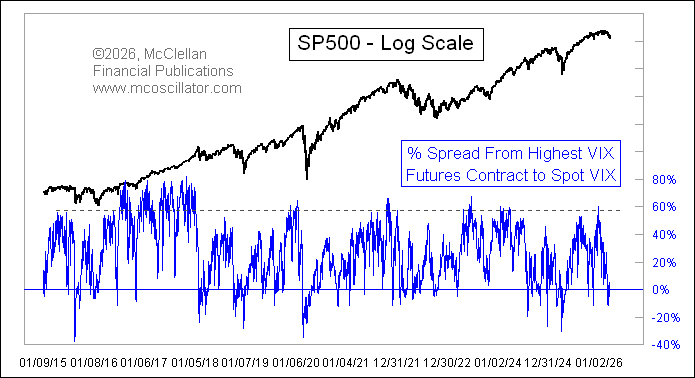
Here is another interesting oversold indication. The VIX Index has gone above the price of all of its futures contracts, resulting in a below zero reading for this indicator. Getting one of these readings can be early, but all are associated with meaningful price bottoms. Now, in another case of up and down not being the same, it is worth noting that very high readings can sometimes mark a price top. But a strong trend can power through those indications. So if you see a high reading and it does not "work" to put in a top, that is a good way to know that you are in a strong uptrend and should hang on. See 2016-18, and also 2024.
Tom McClellan tweet media
English
26
74
467
32.4K
thomas bethke retweetledi
Time Capsule Tales
Time Capsule Tales@timecaptales·
Chuck Norris held a 183-10-2 record and was a 6x world champion in full contact bare knuckle karate. On top of that, he beat heavyweight kickboxing world champion Joe Lewis 3 consecutive times and also had a brutal sparring match with undefeated kickboxing world champion, Bill Superfoot Wallace, that lasted an hour and a half. According to Wallace, they practically stalemated and "beat the crap out of each other". Chuck was trained in kickboxing/boxing by Benny The Jet Urquidez and was also trained in BJJ by the Gracies and Machados for 20 years. Even being able to submit Carlos Machado himself on occasion. Chuck had a 315 Ibs bench press at 180 lbs bodyweight and was said to have a grip back in the day that nobody could escape from because he was so strong. Even Jean Claude Van Damme said he'd never fight Chuck Norris, despite being a kickboxing world champion himself. Chuck held a 10th degree black belt in Chun Kuk Do, a 9th degree black belt in Tang Soo Do, an 8th degree black belt in Taekwondo, a 5th degree black belt in Karate, a 3rd degree black belt in Brazilian Jiu Jitsu and a black belt in Judo. Rest in peace, Chuck!
English
974
13.8K
72.6K
2.7M
thomas bethke retweetledi
Jeffery Mead
Jeffery Mead@the_jefferymead·
Bernie Sanders is ALWAYS complaining about the most productive members of our society. I've noticed Socialist LOVE to talk about taking other people's wealth. But they rarely talk about creating their own.
English
462
2.2K
13.3K
86.4K
thomas bethke retweetledi
U.S. Senator John Fetterman
U.S. Senator John Fetterman@SenFettermanPA·
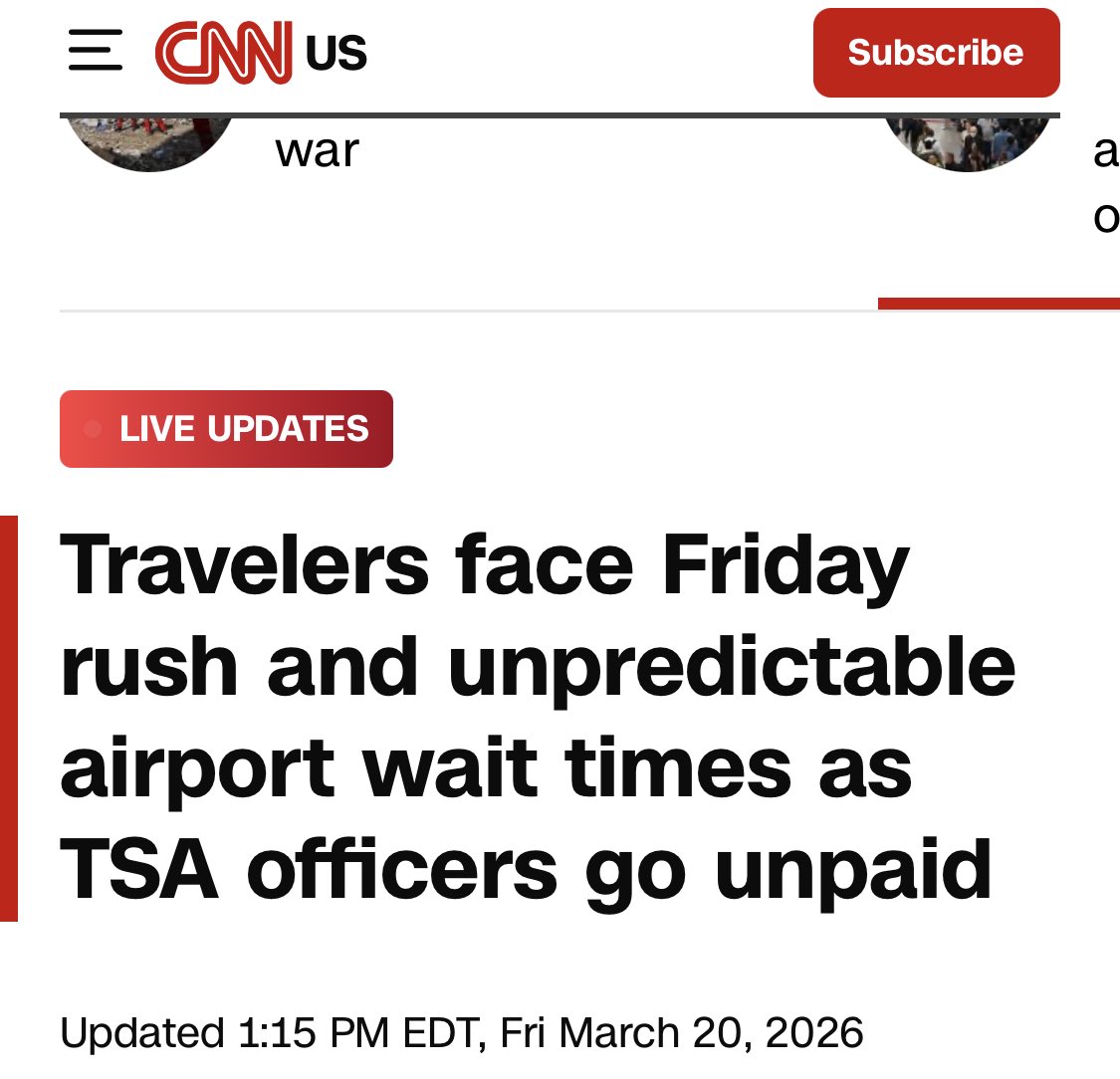
Heading to vote, and I will remain the only Democrat that refuses to shut our government down. Pay TSA agents. Reopen DHS.
U.S. Senator John Fetterman tweet media
English
5.7K
7.3K
52K
649.3K
thomas bethke retweetledi
Brett Winton
Brett Winton@wintonARK·
Space compute distilled Manufacture a 3 ton satellite with 100kW compute for $4m At $300 per kg it costs $1m to launch At $12b per GW in terrestrial compute competition the satellite can pull in $1.2m per year 3 to 4 year payback with the additional year before orbital decay producing excess cashflow. Launch that same satellite with an AI model attached and you can generate $3.6m to $7.2m in annual revenue (dependent upon your expectations for AI model monetization growth.) Payback period drops from 3-4 years to .5 - 1.
Brett Winton@wintonARK

The AI company business model distilled. Rent compute at $10b per GW Sell AI model output at $30b per GW. The cost per terrestrial GW of compute is going up 6% per year. The monetization rate per GW on selling AI models running on that compute is growing 20% per year.

English
223
643
2.7K
1.1M
thomas bethke
thomas bethke@thomasbethke·
@sharkbiotech It's better than funding a bunch of NGOs indefinitely so a bunch of people can sponge off the payroll
English
0
0
0
71
Dan Rosenblum
Dan Rosenblum@sharkbiotech·
someone knew that statement from Trump was coming the futures flew up about 15 handles in the 15 minutes before the 5pm close
English
7
1
56
8.4K
thomas bethke retweetledi
Dan Niles
Dan Niles@DanielTNiles·
S&P is not quite oversold using the RSI but arguably one of the most important prices in the world is, 2yr bonds. Their yields at ~3.90% are the north star for Fed funds rates (3.5-3.75%) and have risen over 50 bps (the equivalent to two 25 bps hikes) since late Feb. Jerome Powell statements on Wednesday including "the possibility that our next move might be an increase did come up at the meeting," and "if we don't see progress on inflation, we won't see a rate cut" helped drive this. But a rate hike at the next April meeting seems unlikely given the global risks to growth. Also a new Fed chair should start in mid-May and is more biased towards cuts. As a result, now might be a good time to consider putting some cash to work for those willing to take on more risk and inclined to “buy to the sound of cannons.” Gold related securities which have gone from overbought in late February to now oversold and are historically uncorrelated to the market I believe are a good risk adjusted idea.
English
46
49
561
70K
thomas bethke retweetledi
Circle
Circle@circle·
Circle Current: Banking on Stablecoins We brought senior banking leaders together in NYC to discuss what’s actually changing inside financial institutions. What stood out most: for banks, stablecoins are not a technology experiment. → Regulation is shaping, not slowing, adoption → Always-on settlement is moving closer to legacy infrastructure → Tokenized money is shifting from pilots to production planning → Stablecoins are being embraced as real payment rails What stood out most: for banks, stablecoins are not a technology experiment. They’re an infrastructure and competitive positioning decision. The new internet financial system is being built in real time. Navigate what’s next in the new internet financial system: circle.com/current
English
43
90
396
37.9K
Austen Allred
Austen Allred@Austen·
@thomasbethke We charge 25% and still have good margins after flying and housing and feeding everyone for months lol
English
1
0
2
352
Austen Allred
Austen Allred@Austen·
It's still kinda wild to me that Gauntlet AI works. Send half a million dollars to a hotel for housing, hundreds of thousands for food, fly people from all over the world to our office. And because of what they can do by graduation we can fund it all with recruiter fees.
English
26
7
224
19.1K
thomas bethke
thomas bethke@thomasbethke·
@aleabitoreddit Ai agents will make this real. Merchants have been trying to get out of network fees forever, but consumer behavior is very hard to change, agents don't have that problem
English
0
0
0
154
Serenity
Serenity@aleabitoreddit·
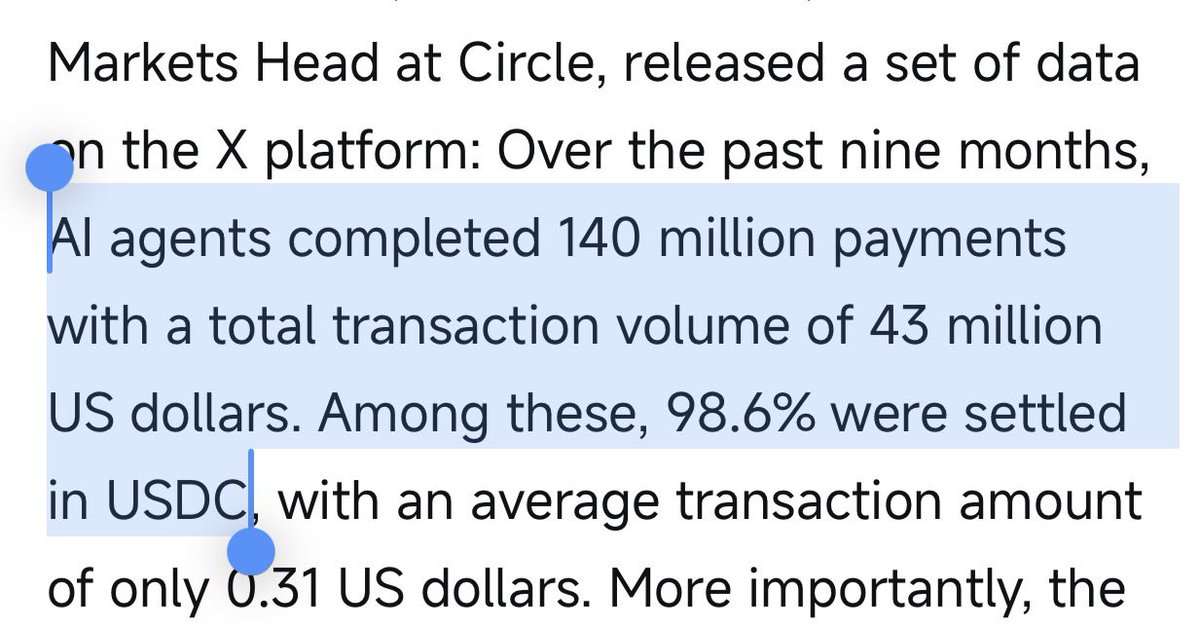
I’m surprised markets aren’t pricing in long term disruption of card networks + interchange like $V and $MA. By $CRCL and $COIN. From Global Markets Head at Circle: "Over the past nine months, AI agents completed 140 million payments with a total transaction volume of 43 million US dollars. Among these, 98.6% were settled in USDC, with an average transaction amount of only 0.31 US dollars." Card networks and % fee payment processors like $PYPL are likely going to be cooked?
Serenity tweet media
English
99
49
715
152.6K
thomas bethke
thomas bethke@thomasbethke·
@rohindhar Ai agents don't need networks and can go right to the source, so I doubt it matters. Fsbo may see a big revival
English
0
0
2
119
Rohin Dhar
Rohin Dhar@rohindhar·
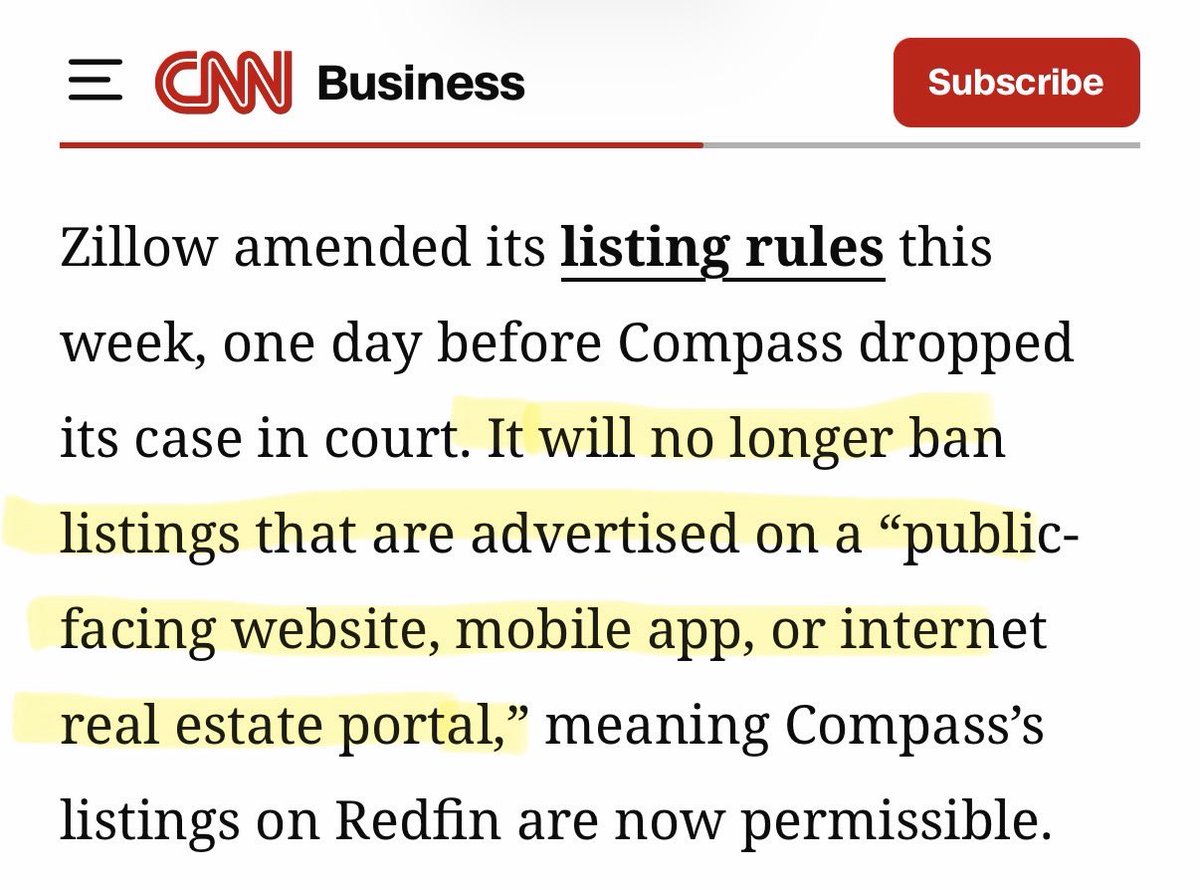
Zillow drops its ban on displaying real estate listings that were previously marketed privately (ie not on the MLS) Compass drops its lawsuit against Zillow because they want to market listings not on the MLS so they’re happy Would not be surprised if in a few years there is a disintegration of the MLS entirely, with homebuyers having to piece together inventory from a variety of different sources Will either unlock a golden age of innovation for home buyers or be a complete pain in the butt!
Rohin Dhar tweet media
English
17
3
91
15.7K
thomas bethke
thomas bethke@thomasbethke·
@CDMCapital Ai Agent commerce displaces the network model.. v/MC don't maintain their current margins in the AI agent world. Networks lose their value as agents can solve the complexity and go direct with smart contracts or stable coins
English
0
0
0
7
CDM Capital
CDM Capital@CDMCapital·
$MA & $V are a natural inflation hedge, they get a percentage fee on Gross Dollar Volume (GDV). I.e. if Gas prices go from $2.50 ->$5.00, they essentially 2X their fee income. Interesting the market has sold these duopolies down so much of late given the tailwind from inflation.
English
17
10
251
38.7K