@RWestgaard@batcountry1980 My god, for a minute there I thought you actually knew the credits for b-sides to Heartbeat, the single. Turns out it’s two tracks on the album b-side. Still, impressive triviacore
@thomastalseth@batcountry1980 Ups and downs for SRV. One moment you're lead guitar on "Let's Dance" and work with Bowie and Nile Rodgers. Suddenly you find yourself playing solos on a couple of obscure b-side tracks on Don Johnson's "Heartbeat",,,
I am a fan of the guise adopted on Let’s Dance, and the sound Bowie shapes. He’s clearly having fun, and if anyone deserved to make some serious coin from their endeavours, it’s him. The sequencing doesn’t do the album any favours, though. It’s not that there aren’t good songs throughout. But opening with that mammoth trilogy of almighty pop gems sets a serious moonlight, sorry, momentum, that the record never quite catches up with again. Still, I do love how Bowie just decides “now I’m going to be a bright, shiny, massive unit shifting, MTV-conquering pop star” and then clicks his fingers and does it, just to show how easy he could.
@MickPuck@Lloyd_Cole Love this fanboytalk between rock legends. Especially because Old England and Rattlesnakes (to name a few) are up there with anything Bowie or Iggy ever made.
The best track on any of the Bowie/Iggy 1977 run of albums (Low, Idiot, Heroes, LustForLife) is DUM DUM BOYS. It's got it all: pathos, edge, death, drone, haunt, croon, roar, riff & mothergroove plus that killer finger-snap eulogy intro. A masterpiece. m.youtube.com/watch?v=-ioRWl…
@pitchfork Good album, not too many truly great songs, yet all of them still served well by the record’s monstrous sound, those «hairy» beats and the pummeling bass
For today's Sunday Review, we're revisiting Madonna's sensuous fifth album, an intimate and conflicted record that was all too easily overshadowed by controversy pitchfork.com/reviews/albums…
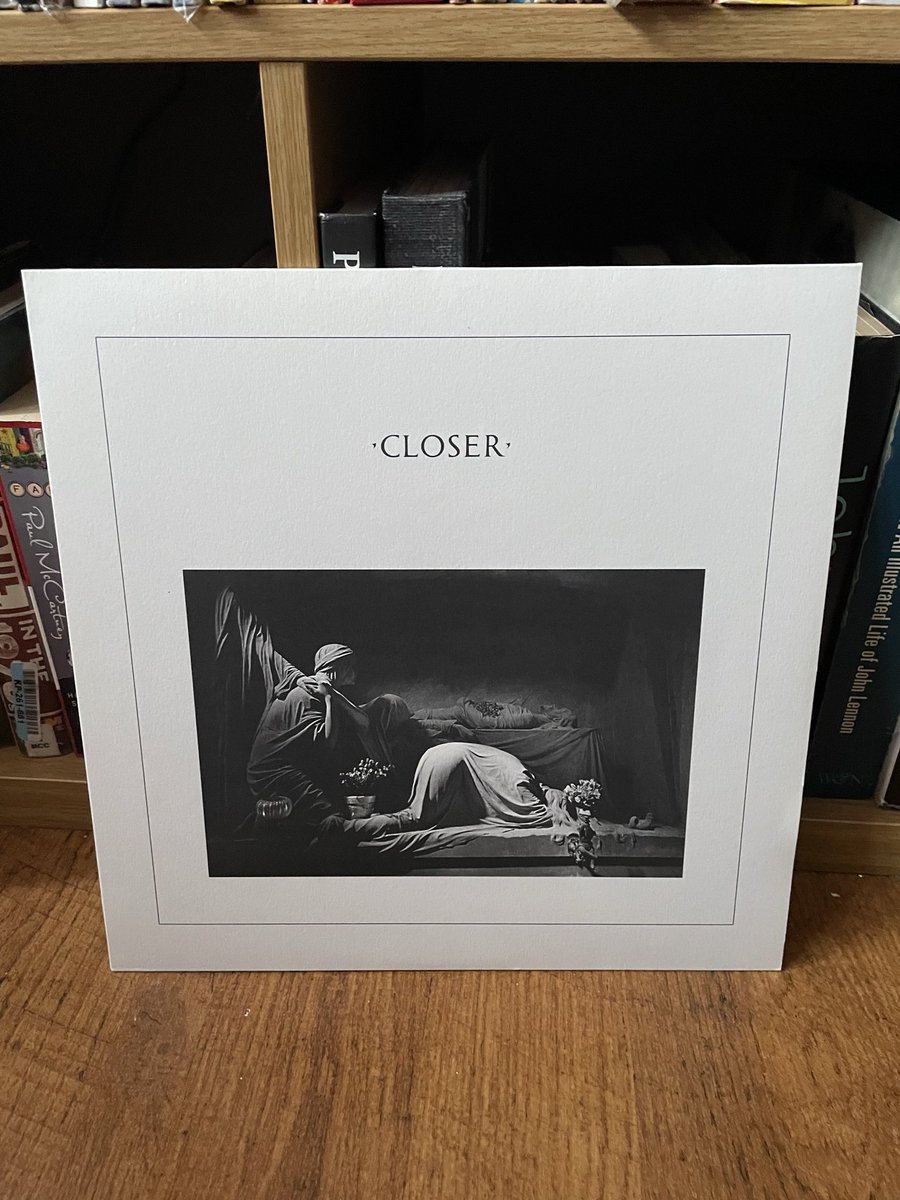
Seen a lot of talk this week about the mighty Unknown Pleasures, and quite right too. It’s a tremendous album, but I’ve always preferred Closer. Why? Well, when talking about two records, nay, masterpieces, like these, the usual analysis goes out the window, and it comes down to something this simple: I like the songs on this more. Nothing more than that. Oh, and Isolation is an absurdly great pop song, like Jim Morrison fronting a Salfordian Kraftwerk. So there’s that.
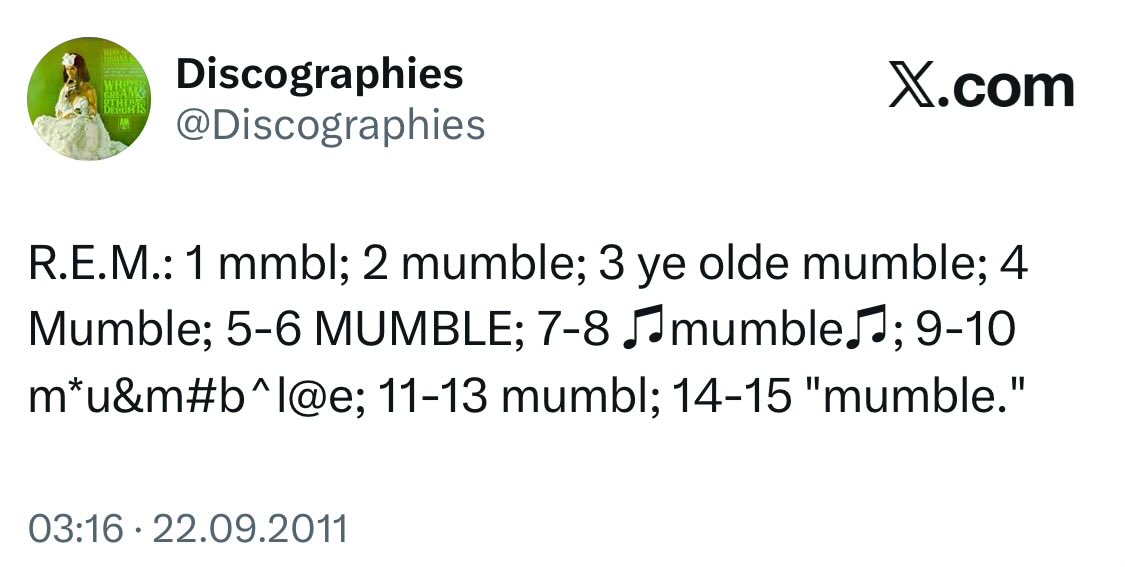
Whether it’s singles or albums, us music fans love runs. And for my money, here’s one of the greatest, R.E.M.’s entire Berry era, from Chronic Town (it might be an EP, but it’s got to be included) right through to New Adventures in Hi-Fi.
🧵
A great run doesn’t hinge on years, or the amount of albums. Some are brief but brilliant. There’s something remarkable, though, about a band doing such a huge amount of amazing work over an extended stretch. You’ve got 11 records here across 14 years, and not a dud moment amongst them.
Runs are, of course, subjective. There’s no point arguing for R.E.M.’s run if someone turns and says, “I don’t like R.E.M.” It’s a non-starter then. What matters isn’t how these albums stack up against other bands’ peaks, but how they hold up against each other. That’s what defines a great run, the consistency fans feel from start to finish.
And while some insist on an I.R.S. versus Warner divide, I’ve never understood it. Document already has Scott Litt on board, and big crossover singles. It bridges perfectly into Green, and it feels like that transition would have happened whether they’d moved to a major label or not.
The real brilliance of R.E.M. is the evolution, an organic growth worthy of study by Darwin. The I.R.S years flow into the Warners era, so by the time they take over the world with Out of Time, it feels completely natural, as if they’ve bent the world to their will rather than the other way around.
That’s what makes this collection so incredible: sustained quality, organic development. And while I’ve grown to love Up and the albums that follow, these records stand together as a complete story, and one of the all time great runs.
U2's "Rattle and Hum", released October 10, 1988 was a mess. Functioning as both the soundtrack to the group's feature-film documentary and as a tentative follow-up to their career-making blockbuster "The Joshua Tree", the hybrid live/studio album is all over the place.
The live songs lack the power of "Under a Blood Red Sky" and are undercut by Bono's embarrassing stage banter, the worst offender being a hideous "Helter Skelter" cover with the singer proclaiming "This is a song Charles Manson stole from the Beatles, and now we're stealing it back".
Another example is Bono's exhortation about Desmond Tutu and South African apartheid during a live version of "Silver and Gold". In the middle section of the song, Bono attempts to rouse the audience with a now infamous statement "OK, Edge, play the blues!" on this worthy but decidedly un-bluesy track.
U2 reacted to their new found success by attempting to boost their classic rock credibility as they embraced American roots rock. Occasionally, these experiments work: "Desire" has an intoxicating Bo Diddley beat, "Angel of Harlem" is a punchy soul tribute, "When Loves Come to Town" is an endearingly awkward blues duet with B.B. King and "All I Want Is You" is a beautiful U2 ballad that ranks alongside "With or Without You".
"Rattle and Hum" is by far the least-focused record U2 has ever made, and it's little wonder that they retreated for three years after its release to rethink their whole approach.
#ListeningThroughthe1980s
What The World Was Waiting For:
A Tale of Music, Magic, and Manchester
-Part 1
🧵
Much like roses, music needs ideal conditions to grow. It starts with the people: that correct combination of the right bandmates, the perfect producer, a strong chemistry. Get one of those wrong and the music might still bloom, though not as brightly. But even if the key players are in position, there’s something else just as essential: the time and place. Musicians aren’t robots clocking in to perform on command; what they create reflects the lives they’re living and the world around them. Miss the moment, and the music dies on the vine.
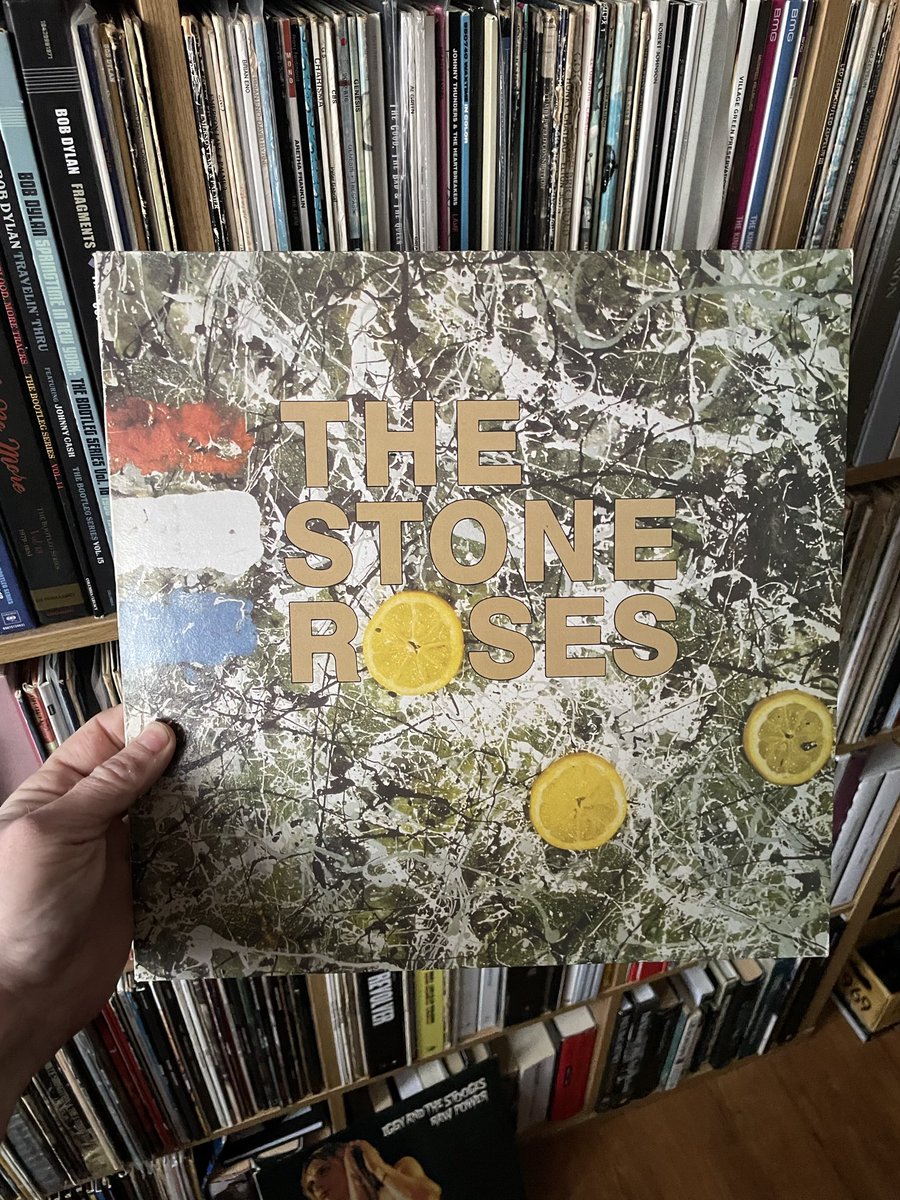
But when all of this comes together, the people, the place, the moment, you occasionally get one of those rare albums that feels as if it’s grown from the very soil beneath the artists’ feet. Records that couldn’t have happened anywhere else, at any other time. The Stone Roses’ debut is one of them. For these Roses could only have bloomed in one climate: late-’80s Manchester.
@batcountry1980 Not going to argue with that. I’ll rephrase a bit; Waterpistol is the only one I’ve heard that even comes close to capturing a bit of the prime time Roses vibe.
@batcountry1980 Glorious writing on the single most life-changing LP I came across. There is one record that kind of sounds and feels like them, though. Waterpistol by Shack, which could’ve been the second Roses album if they’d released a world-weary one in ‘91 going for strum instead of groove.
Probably an unpopular opinion but: As a big-time Talking Heads fan, I find late-period David Byrne really cringy. I couldn't finish AMERICAN UTOPIA, and the aesthetic of this video is not my thing even though (like AU) it's heavily STOP MAKING SENSE coded
youtube.com/watch?v=PNmcF6…
@batcountry1980 Speaking of chutzpah, kicking off your solo debut in 1969 with a boldly rearranged Street Fighting Man - pulling it off 💯 - does send a message.
The sheer arrogance of this record just makes me laugh. It’s the chutzpah of the covers, can just imagine big Rod leaning on the mic, drink in hand, saying to the band with a sly grin, “right lads, let’s show them how it’s done”
“The Stones did that? Give us it here”
“I hear what yer going for there, Elton, this is how it should sound”
“Do you want people to care about this hobo, Bob? Let’s try it with heart, eh?”
He even takes on a Marriott vocal. Now, no one can sing like Marriott, but the fact Rod makes a bold grab for the song, and with three former Small Faces behind him, shows the type of self belief we’re dealing with here.
Of course, the originals are none too shabby either. The title track inhabits that world Stewart is a master of, where exquisite folky arrangements threaded with sharp electric guitar meet soulful vocals, a bleary-eyed, morning after the night before, plea to the past.
His next album is Every Picture Tells A Story, but the thing with early Rod is every album tells the same story. Whether it’s with Beck, Faces or solo, he surrounds himself with great musicians, proper heavy hitters, and when this guy steps up to the mic, every song, cover or original, is delivered with such warmth, emotion, charm and confidence you just feel it right in your soul. One of the best to do it, and he had the best time doing it.
Man, I love this guy. It’s the sneer, the constant sneer, the pure venom as he spits the words out, angrily thrashing his poor guitar. 2 months after the debut album and he’s already got the Attractions pumping up the old songs. Fantastic live performance.
youtu.be/fJKt-DhII_4?si…
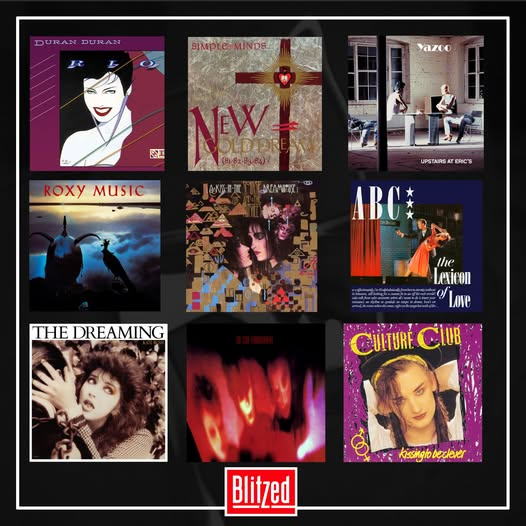
1982 proved to be a vital year for some of the most classic albums of the 80s era.
We've selected nine of the best here. But, as usual, you're only allowed to pick two albums from the list. What are your favourite 1982 choices and why?
@thomastalseth@aragon_r2@blitzed80smag1 Not really. No one band or artist ‘invented’ the 80s. If you mean their influence on New Romantics then I’d say Bowie was ahead of Roxy’s.
On Use Your Illusion II it goes; So Fine into Estranged into You Could Be Mine into Don’t Cry. What a run of tunes that is. Pure overblown, glorious Rock in excelsis deo, man.
Year 1987
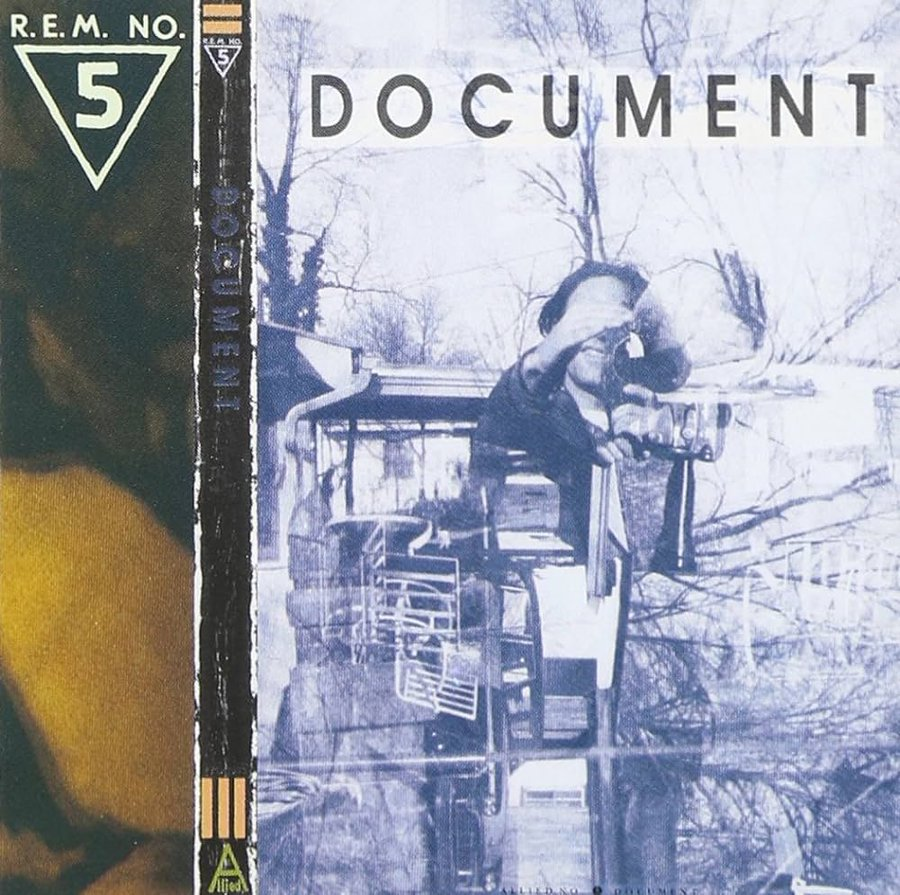
REM: Document
This is a shift of REM sound from college rock to maturity (and the first album where you can actually understand what Stipe is singing).
To me, the dark horse of their catalog.
First of six albums produced by Scott Litt.