

Thomas Humphreys
244 posts

Thomas Humphreys
@thomphreys
expanding top of funnel @ethereumfndn
bundler Katılım Ekim 2022
252 Takip Edilen262 Takipçiler

I think the curator industry is poorly designed because there’s not actual curation happening.
Just some incompetents and crooks (and often both) with extremely malicious game theory pushing them to seek more risk in a sociopathic setup.
We can do better.
Omer Goldberg@omeragoldberg
1/ Millions in bad debt, at the time of writing, were created across Gauntlet's Morpho vaults from the Resolv USR exploit. Almost all of it was supplied ** after ** the exploit. So why would curators supply millions in USDC to a broken market? Let’s dive in.
English
Thomas Humphreys retweetledi

Today, the Foundation’s Board released the EF Mandate.
This document, which was first intended for EF members, reaffirms the promise of Ethereum, and the role of EF within this ecosystem.
English
@DerekBarrera @andreaslbigger @phylaxsystems i mean, you're describing a firewall. i'm more interested in knowing what to do when that firewall breaks? post tx analysis is only useful when the escape hatches are closed, which they're often not, which would render the any external system useless.
English

The money shouldn't have left the protocol that you'd be protecting from bridging out is more what i'm pushing toward. We need to get out of the mindset that a full bank heist can happen on chain and we just are reactive to something that is faster than most systems to react.
Correctness comes from atomic verification: we validate intent before execution and verify outcomes after execution. If the outcome fails invariant checks, it’s treated as an exploit attempt and cannot settle.
Post transaction analysis can happen via the external systems available today and the policy system could be updated to alleviate any misclassifications but at least the money didn't get stolen vs what we see onchain today.
English

Introducing Edge, a high level, strongly statically typed, multi-paradigm domain specific language for the Ethereum Virtual Machine (EVM).
github.com/refcell/edge-rs
English
@DerekBarrera @andreaslbigger @phylaxsystems post tx validations have their own challenges. an attacker that submits a malicious intent has to escape the bridge (usually 3rd parties) before the sequencer/someone figures it out. basically, exploit must be found + reverted/alerted before malicious funds are bridged out
English
@thomphreys @andreaslbigger @phylaxsystems One huge note here is that most of these are pre-transaction assertions vs pre AND post.
All teams do pre, but the real power and control happens during post. Even if you verify the pre transaction changes, post changes can still have a material effect on mandates etc
English
@DerekBarrera @andreaslbigger @phylaxsystems agreed on your mainnet point - much harder to coordinate. tho, I don't see why this can't be baked into other stage 0/1 sequencers. Linea integrated them and it's working. both impls can co-exist :)
linea.build/blog/linea-sta…
English
Great share! I hadn’t seen this yet. They have to modify their sequencer though which makes it not compatible with the eth base layer and other chains.
Our implementation has zero external dependencies and runs fully onchain during the transaction mining process without any changes
English
@andreaslbigger I think you might be the only other person who's done this outside of our work on Matador. Amazing to see!!!
DMs are open, would love to talk.
matador.steer.finance
English
@Paul_Glavin @ethereum @gardens_fund do moderators receive incentives or akin to x's community notes? cool idea btw
English

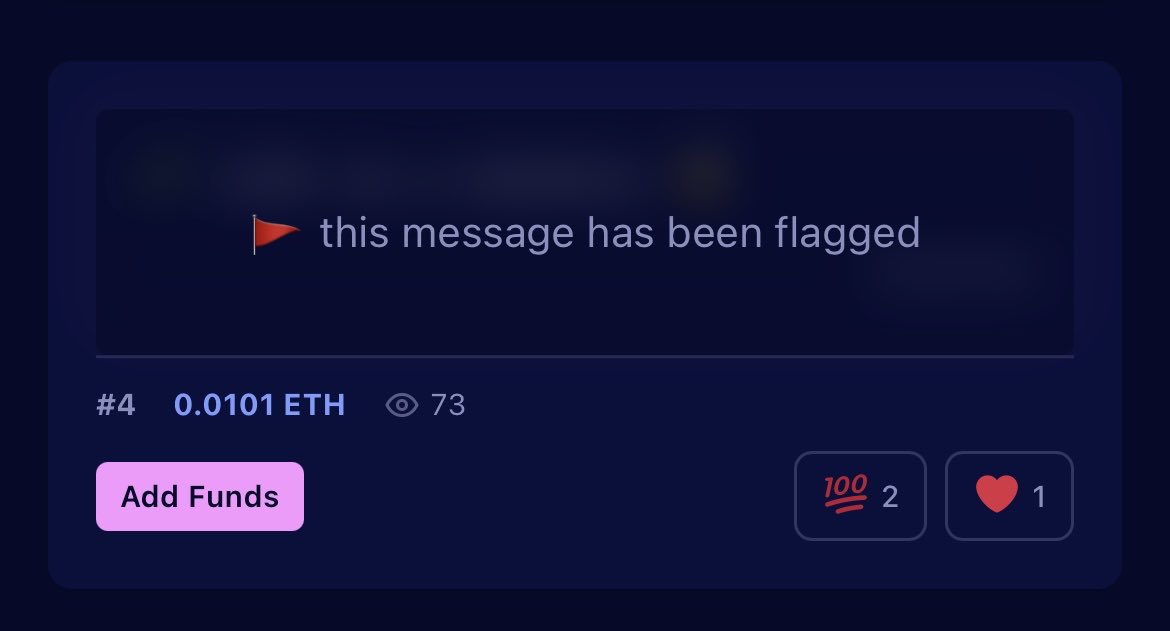
@thomphreys @ethereum @gardens_fund You can set a list of addresses that can moderate messages on your site.
Flagging is frontend-only, so the message will show as blurred on the site, but is still immutable in the smart contract.
English
I've been working on public goods funding in the @ethereum ecosystem for 7 years now.
I've helped allocate > $1M in funding using god knows how many "experimental" mechanisms we've cooked up in this space.
Most of that time I've been building @gardens_fund which just recently reached a point where - if you forced me on a post-apocalyptic island and said I could only bring 1 public goods funding mechanism with me - I'd take Gardens.
(I know y'all were planning on doing this to me btw 👀)
Quietly with the Gardens team I've been cooking something up on the other side of the equation:
Not where money goes, but where it comes from.
How do we break free from charity, taxes, and gambling as crutches?
We've long since understood in Ethereum that the next wave of fundraising tools won't look like 2017-era ICOs.
Bands have merch. Sports teams have tickets. Digital communities now have a better, crypto-native way to monetize attention:
Markee@markee_xyz
gm. We’re turning the lights on💡 Markee is a sign - anyone can pay to change - that funds the internet. Live now on @Superfluid_HQ | @gardens_fund | markee.xyz 👇
English
Thomas Humphreys retweetledi
Some of @ethereum's most critical infra is stuck in a loop: ship > run out of funding > scramble for grants > repeat.
Project Odin breaks the cycle. At EF Funding Coordination team, we embed strategic advice, operations and funding diversification so sustainability is built in.
English
Thomas Humphreys retweetledi

At PGF Power Hour, @sejal_rekhan and @owocki dove into the mechanics behind public goods funding.
The focus: how protocol-level tools sustain open ecosystems and civic experimentation.

English
Thomas Humphreys retweetledi

We’ve spent years talking about how to divide the money. Now it’s time to talk about how we increase it. 🔱🏔️
@devanshmehta from the @ethereumfndn breaks down the Ethereum funding flywheel, from in-protocol validator coordination to "public good frontends" enabled by AI velocity.
In an age where anyone can vibe-code a frontend, we have a massive opportunity to redirect fees back to the ecosystem. We’re moving past the "prisoners' dilemma" of public goods and building a system where everyone wins by investing in the core protocol. 📈🤖
Don't miss the #ETHBoulder talk on scaling Ethereum's growth and the roadmap for AI-driven public goods:
English
@medhakothari i wonder (a) how will humans submit/convey their intents? (b) will users adopt a new (ux) behavioral shift?
English

genuinely think that the longterm consumer of the Uniswap protocols will be agents.
humans care about the intent; eg
- i want to make money
- i want to pay for something
- i want to rebalance my portfolio
- I want to DCA into this asset im bullish on
etc
longterm those intents get put into an app/wallet/robobank and they do it for u! and all of those things will use agents to do that
so humans will still be the main user, but the agents r the ones executing the human demand
English
Thomas Humphreys retweetledi

In these five years, the Ethereum Foundation is entering a period of mild austerity, in order to be able to simultaneously meet two goals:
1. Deliver on an aggressive roadmap that ensures Ethereum's status as a performant and scalable world computer that does not compromise on robustness, sustainability and decentralization.
2. Ensures the Ethereum Foundation's own ability to sustain into the long term, and protect Ethereum's core mission and goals, including both the core blockchain layer as well as users' ability to access and use the chain with self-sovereignty, security and privacy.
To this end, my own share of the austerity is that I am personally taking on responsibilities that might in another time have been "special projects" of the EF. Specifically, we are seeking the existence of an open-source, secure and verifiable full stack of software and hardware that can protect both our personal lives and our public environments ( see vitalik.eth.limo/general/2025/0… ). This includes applications such as finance, communication and governance, blockchains, operating systems, secure hardware, biotech (including both personal and public health), and more. If you have seen the Vensa announcement (seeking to make open silicon a commercially viable reality at least for security-critical applications), the ucritter.com including recent versions with built in ZK + FHE + differential-privacy features, the air quality work, my donations to encrypted messaging apps, my own enthusiasm and use for privacy-preserving, walkaway-test-friendly and local-first software (including operating systems), then you know the general spirit of what I am planning to support.
For this reason I have just withdrawn 16,384 ETH, which will be deployed toward these goals over the next few years. I am also exploring secure decentralized staking options that will allow even more capital from staking rewards to be put toward these goals in the long term.
Ethereum itself is an indispensable part of the "full-stack openness and verifiability" vision. The Ethereum Foundation will continue with a steadfast focus on developing Ethereum, with that goal in mind. "Ethereum everywhere" is nice, but the primary priority is "Ethereum for people who need it". Not corposlop, but self-sovereignty, and the baseline infrastructure that enables cooperation without domination.
In a world where many people's default mindset is that we need to race to become a big strong bully, because otherwise the existing big strong bullies will eat you first, this is the needed alternative. It will involve much more than technology to succeed, but the technical layer is something which is in our control to make happen. The tools to ensure your, and your community's, autonomy and safety, as a basic right that belongs to everyone. Open not in a bullshit "open means everyone has the right to buy it from us and use our API for $200/month" way, but actually open, and secure and verifiable so that you know that your technology is working for you.
English
@devanshmehta cartel risk is about raising the cost to attack. you can't eliminate it, but u can make it expensive via multi-stakeholder checks, rate limits, hard caps etc
honestly tho i think it's fine? rational validators won't cartelize bc doing so tanks eth price which hurts their own bags
English

the next step change for growth of the onchain economy is removing the ability to defect in prisoners dilemma situations
the real world imperfectly solves free riding with taxes that all must pay
alas, the onchain world has no solutions at all. we only have voluntary taxes (for eg all the public goods programs at foundations or DAOs) & enough literature shows they don't produce stable equilibrium,since those who bear the costs get outcompeted by those who defected but still enjoy the benefits
many web3 teams have noticed funding programs drying up; in my opinion, a protocol level solution to the prisoners dilemma is what's needed to get the spigots open once more
what might this concretely look like? 3 illustrative examples below;
1. similar to how ethereum validators raise a flag showing willingness to increase gas limits, they can indicate how much of their rewards they are willing to redirect into growth & security.
if a majority signals an increase, all validators must now part with some of revenue, thus eliminating free-riding within the validator set where some invest but all would enjoy the benefit
2. L2s paying blob base fees can indicate how much they are willing to pay for research. a majority of blob payers willing to redirect fees results in all who use blobs doing so
3. L2s can be configured such that its users can flag amount per transaction they are willing to give to development. A majority putting it at a non zero amount means all users must pay the amount
example use cases here are cooperation by competing corporations to invest in technologies moving forward their industry but where they don't want possibility of a competitor who defects; a trade union at a company where 51% of workers paying their dues means all 100% must
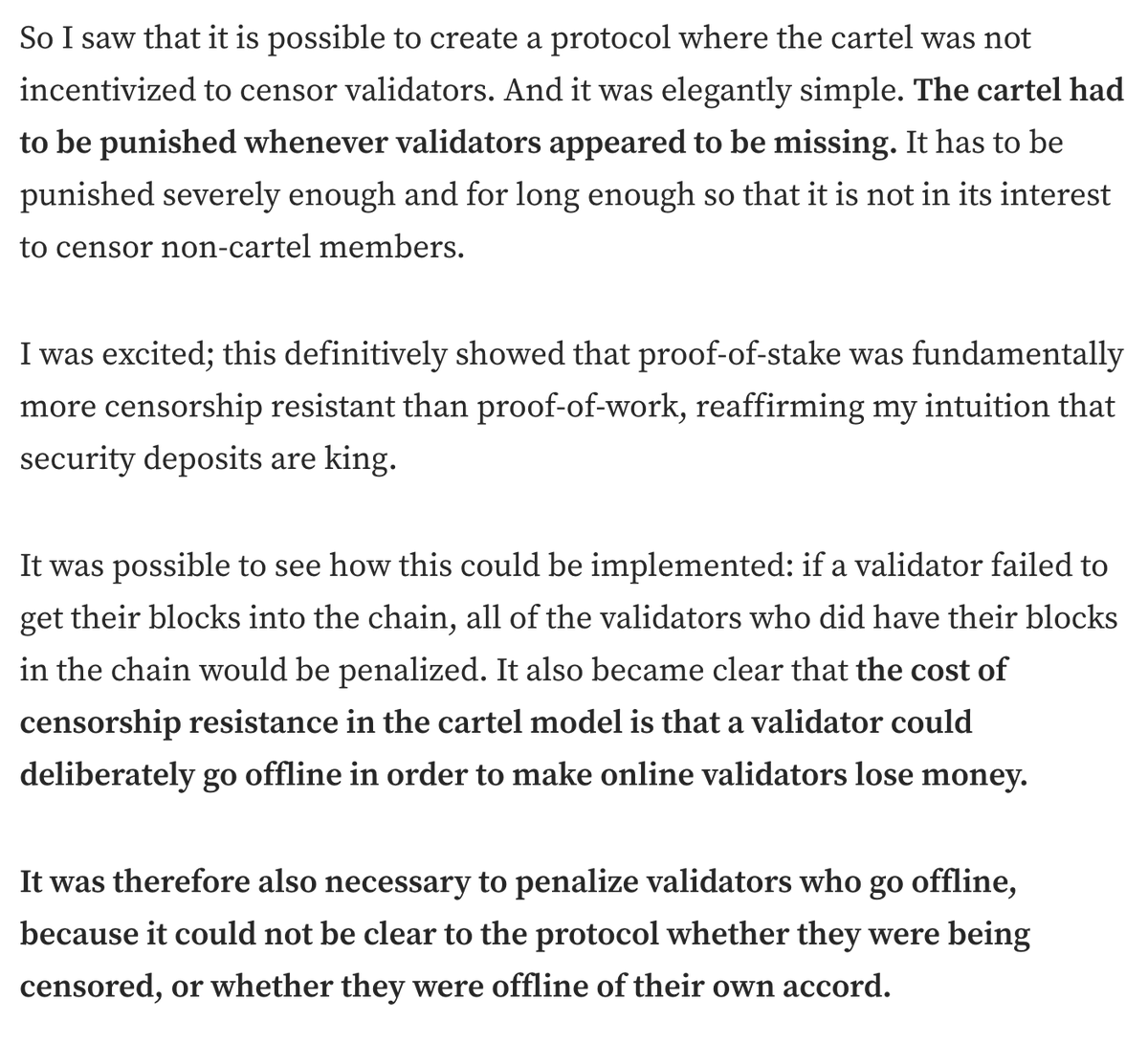
the one issue i haven't fully thought through is the cartel like incentives such a change would produce as the majority can coerce or steal funds from the minority
this was incidentally the final missing piece in @VladZamfir's design sprint for Ethereum PoS. the protocol can't differentiate between validators who are offline or were having their blocks censored by a cartel, so his elegant solution was levying a a penalty on both offline validators and all the other validators
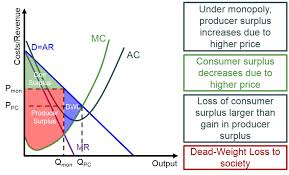
to conclude, if we seek to create genuinely better economic systems than the traditional world, blockchain protocols need pareto improvements (no group is worse off for the change & at least some are better off) where everyone can collectively fund strategic initiatives that improves absolute wellbeing of all while not changing relative power of one vs another
this will reduce deadweight loss which will let us outcompete the traditional system. but today, thanks to taxations inelegant solution to the prisoners dilemma, they are outcompeting us without any solution at all


English
Thomas Humphreys retweetledi

We're hiring on the @ethereumfndn Enterprise team
→ Enterprise Lead - US (East Coast)
→ Enterprise Lead - APAC
We're looking for a key connector between traditional finance and the Ethereum ecosystem. Someone who can serve as the go-to point of contact for enterprises wanting to engage with Ethereum in the region.
Apply 👇

English
Thomas Humphreys retweetledi

Fusaka is live on Ethereum mainnet!
- PeerDAS now unlocks 8x data throughput for rollups
- UX improvements via the R1 curve & pre-confirmatons
- Prep for scaling the L1 with gas limit increase & more
Community members will continue to monitor for issues over the next 24 hrs.
English
the web3 version of this could use a simple client side location attestation wrapped in a ZK proof. Smart wallets would then escrow funds until the proof verifies you’re in your trusted zone.
Revolut@Revolut
Today, we’re rolling out Street Mode — a new security feature and a smarter way to keep your money secure based on where you are. Here’s how it works 🧵
English
Talked about this a lot with @p3rmissionl3ss
ERC20-R style reversibility seems possible but Circle legally needs court orders which take too long. Tether can freeze faster because they don’t have the same process (not 100% certain).
A new stable wrapper could work, DAO or alliance-driven, to freeze funds when needed. It costs permissioned coordination but could prevent big losses.
Circle itself might not be able to change its contract due to regulation but a new wrapper could tho.
_gabrielShapir0@lex_node
re: the yETH hack: at this point I actually really wish Circle/Coinbase would truly lean into something like ERC20-R with an appropriately well fleshed out (non-kangaroo-court) dispute resolution procedure etc. no one is going to get a court order over $200k worth of cbETH or USDC, yet this can be a meaningful amount to whoever lost it the asset is totally centralized, crypto broadly speaking is getting "fintech-ized" all over the place anyway in light of these factors it should be possible to reverse an illicit transaction at relatively low-cost (lower than conventional U.S. court system) and without killing crypto's advertised benefits, but centralized asset issuers still demand court orders and haven't invested into ADR-based reversibility
English

A single dirty deposit breaks Railgun’s innocence proofs forever — one drop of ink, whole glass black.
Tornado Cash doesn’t have this problem: it’s simple, permissionless, and every user can individually prove clean funds when needed.
One model survives contamination.
The other dies the moment it happens.
Pretty obvious which one is more reliable.
曾嘉俊 Zeng Jiajun@zengjiajun_eth
@GagolAdam @RAILGUN_Project So everything will become tornadocash in the end without such feature enabled. Pre-check is like a theater.
English
@KhanAbbas201 5) underspecified risk: teams often don’t address risk clearly enough, even tho it’s the first thing LPs look at. Morpho found PMF fast because the contracts were simple and easy to trust. LPs want to allocate, but only into low risk DeFi, and teams need to show that upfront.
English

Feedback request from DeFi founders
One of the most common requests we get at Founder Success from DeFi teams is help with liquidity.
After going through my CRM yesterday, I found 34+ teams that have asked for introductions to funds and LPs. While we do help with these intros, I’ve realized this isn’t a sustainable system.
Here’s why:
1) LP fatigue: Funds don’t appreciate getting flooded with too many blurbs from different teams.
2) Misaligned interests: Each LP looks for specific types of protocols, risk levels, or ecosystems, so mass introductions don’t always create real matches.
3) Relationship burn-out: Even if intros come from EF, too much outreach dilutes credibility. LPs may start overlooking projects that might actually interest them.
4) Short-term focus: A lot of early-stage teams often chase quick liquidity instead of building longer-term relationships or sustainable token models that attract LPs organically.
I also spoke to a few L2 DeFi leads and it turns out they’re running into the same problem.
After collecting feedback and exploring ideas, I believe we should shift towards a more intentional model.
That means sending fewer introductions, understanding LP preferences more deeply, and only making matches where there’s strong alignment.
In parallel, we could build an educational system for teams to learn how to attract liquidity, reach out to funds, design incentives, and think strategically about protocol growth.
I’m still refining this idea and would appreciate any input from founders, LPs, and ecosystem partners on what a more sustainable model for liquidity support could look like.
English