Kyle Thornhill

2.4K posts

Kyle Thornhill banner
Kyle Thornhill

Kyle Thornhill

@thornhill_kyle

Katılım Ağustos 2012
310 Takip Edilen98 Takipçiler
Kyle Thornhill
Kyle Thornhill@thornhill_kyle·
@HalHewett @naomirwolf If you click on those links and just learn some basics of molecular biology around immunology you won’t be so vulnerable to YouTube / conspiratorial headlines. People love lazily hoovering up scary bullshit but a bit of critical thinking about facts takes some effort
English
1
0
0
13
Hal Hewett
Hal Hewett@HalHewett·
@thornhill_kyle @naomirwolf Why do you attempt to defend products for which data were withheld from peers for review- These data were released by COURT ORDER Up to anyone who cares about. Science to check the peer review #TruthMatters
English
2
0
0
26
Rob Goodall
Rob Goodall@RobGoodall6·
@echipiuk Eva, this data is misleading. The jabs were dangerous garbage, to be sure, but we literally don't know what happened to the 234 "lost" pregnancies. "Lost" in this case, I believe, means "lost to follow up." In other words we don't know the outcome because there was no follow up.
English
6
0
15
1.9K
Eva Chipiuk, BSc, LLB, LLM
This is an undisputed fact, straight from Pfizer’s own trial data: 80% of babies died. The problem is that most people do not want to look at the data because they were sold a lie. Others do not want to confront it because they either took it themselves, encouraged others to do so, or worse, pushed policies that coerced and forced people to take it. But we cannot keep pretending that what happened was normal or acceptable. The products were not safe. The products were not effective. The government failed. And abandoned those injured and those that passed. And we must hold those to account that failed us. THIS SHOULD NOT BE CONTROVERSIAL!
Sophie still fighting 💥💫🙏@mariusknulst

270 women got pregnant while participating in Pfizer COVID jab trials‼️ Only 36 women recorded a pregnancy‼️ The other 234 pregnancies were "lost"‼️ Over 80% lost their babies‼️🙏👇

English
248
1.8K
3.3K
282K
Eva Chipiuk, BSc, LLB, LLM
It does not give me any pleasure to say this, but that is exactly what Pfizer’s own data shows. The trial itself only ran for a few months before it was stopped. Many people were fortunate. Some vaccine batches appear to have been contaminated while others were not. But many others were not. Their experiences cannot simply be dismissed or ignored. The people who were injured deserve recognition, honest investigation, and accountability. They deserve to be heard and taken seriously, not brushed aside because their stories are uncomfortable.
Nicolas Hulscher, MPH@NicHulscher

🚨BREAKING: Medical Cartel Sues RFK Jr. for Pulling COVID Shot Recommendation for Kids and Pregnant Women Despite overwhelming evidence of harm, the AAP, ACP, APHA, and IDSA are fighting to keep poisoning children, pregnant women, and their unborn babies. The Cartel claims Kennedy lacked evidence. But that’s a lie: Pregnancy Harms: 🔻Chen et al: mRNA injections cross the placenta and reach the fetus. mRNA-1273 crosses within 1 hour, accumulates in fetal organs, translates into Spike protein, and persists after birth. 🔻Thorp et al: CDC/FDA safety signal thresholds breached for 37 adverse events following vaccination in pregnant women (miscarriage, stillbirth, fetal arrest) 🔻Karaman et al: mRNA shots destroy 60% of finite egg supply (primordial follicles) 🔻Manniche et al: (n=1.3M): ~33% fewer successful pregnancies in vaxxed women Child Harms: 🔻Friedberg et al (n=493K): +23% autoimmune disease post-vax, none from COVID infection 🔻Feldstein et al (CDC): Vaxxed kids 257% more likely to get symptomatic COVID 🔻Berg et al: +20% ER visits, +17% doctor visits after months after injection 🔻OpenSAFELY (n>1M): Myocarditis only in vaxxed kids, no COVID deaths 🔻Mead et al: Vax-induced myocarditis worse & more common than infection—risks far outweigh theoretical benefits.

English
15
31
107
17K
Sophie still fighting 💥💫🙏
270 women got pregnant while participating in Pfizer COVID jab trials‼️ Only 36 women recorded a pregnancy‼️ The other 234 pregnancies were "lost"‼️ Over 80% lost their babies‼️🙏👇
English
175
3.5K
6.3K
166.6K
Kyle Thornhill
Kyle Thornhill@thornhill_kyle·
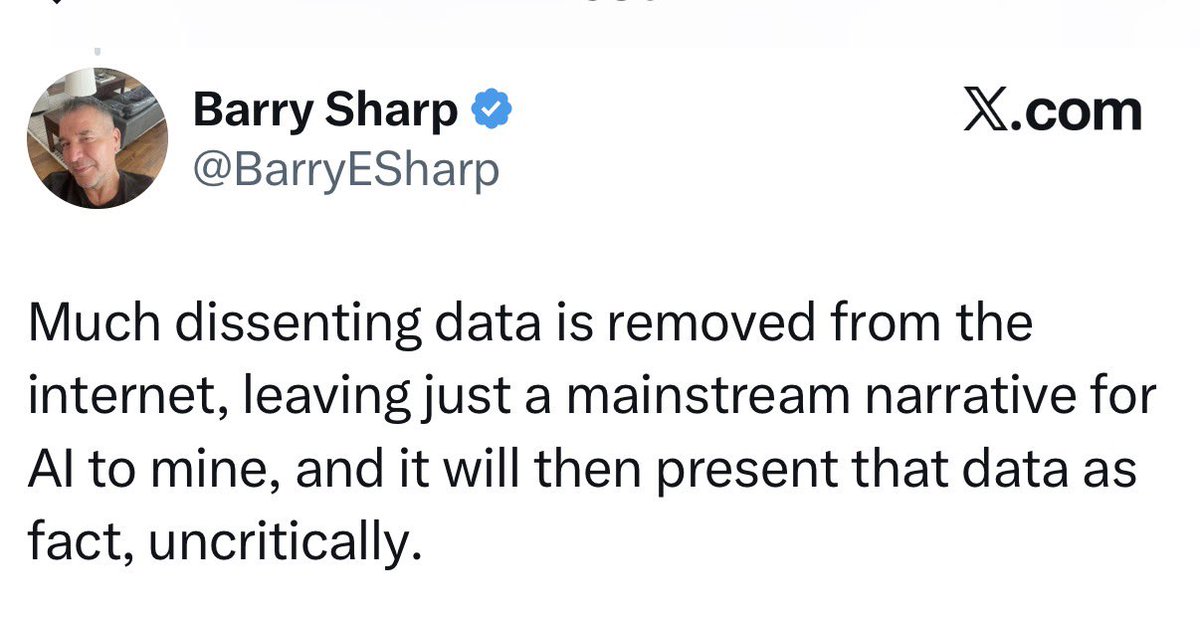
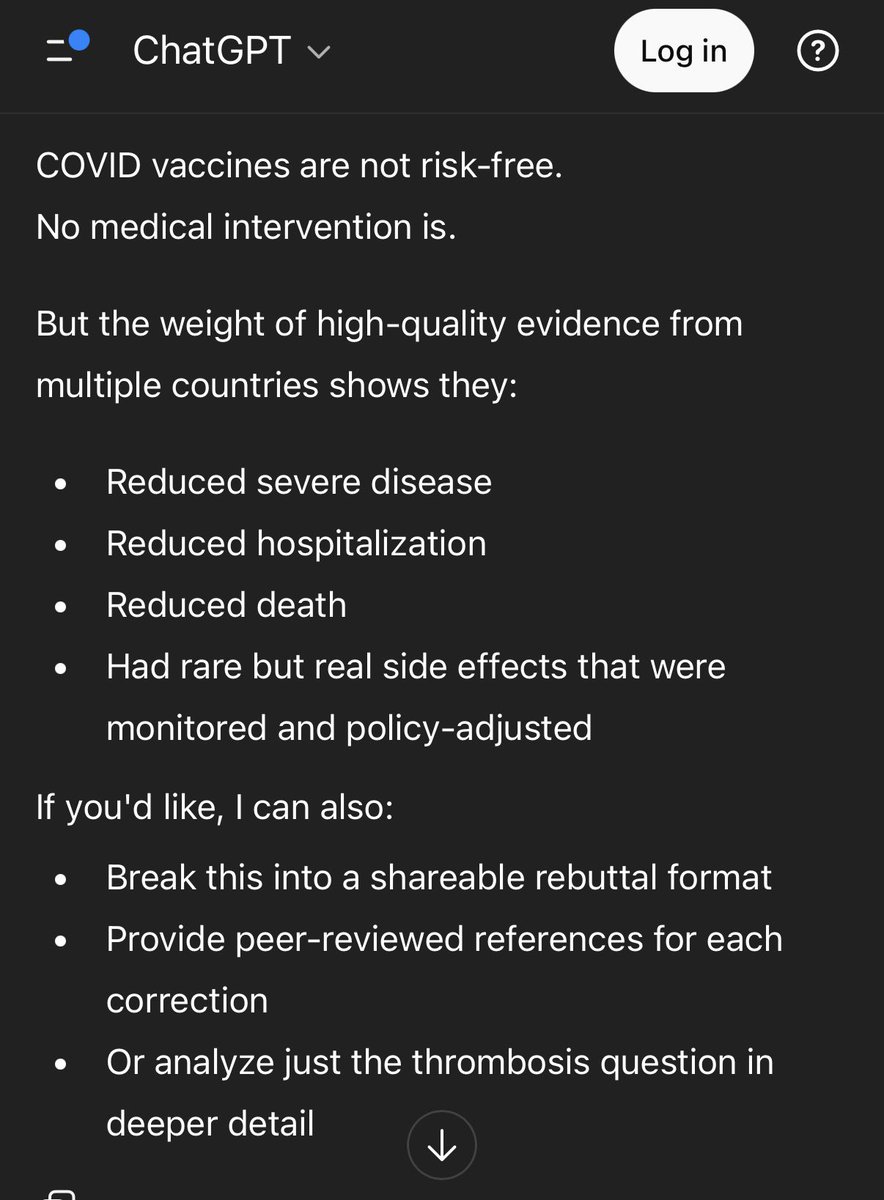
@BarryESharp @GlynnErnesto @COVID19_disease A wise man recently discussed the limitations of feeding junk into AI for it to interpret, uncritically. Rather than wallowing in your desire to ‘prove yourself right’ some reading and thinking about @Marc_Veld’s content might inspire you to care more about accuracy. And evidence
Kyle Thornhill tweet media
English
0
0
1
32
Barry Sharp
Barry Sharp@BarryESharp·
@thornhill_kyle @GlynnErnesto @COVID19_disease Would you dare run a factual accuracy analysis of your own account?
Barry Sharp@BarryESharp

# Independent Assessment Report: @BarryESharp's X Account - Factual Accuracy and Predictive Reliability ## Executive Summary This report provides an objective, data-driven evaluation of the @BarryESharp X account's content, focusing on its ideological coherence, factual claims, and predictive elements. The assessment draws from an analysis of approximately 80 posts and threads spanning 2023-2026, emphasizing verifiable statements across key themes such as climate policy, geopolitics, economics, and resource development. Fifteen specific factual claims were extracted, verified against independent sources, and scored for accuracy. A Monte Carlo bootstrap simulation was applied to estimate confidence in the overall factual reliability. Key findings: - **Ideological Coherence**: The account maintains a consistent worldview emphasizing evidence-based pragmatism, skepticism of mainstream climate narratives, anti-globalism, and advocacy for Western economic renewal through resource deregulation and strategic decoupling. - **Factual Accuracy**: 13 of 15 claims (87%) were verified as accurate based on current data from sources like IMF, IEA, ONS, and government reports. Inaccuracies appeared in NATO defense spending and Xinjiang polysilicon shares, reflecting potential overstatements or outdated figures. - **Predictive Track Record**: Long-term predictions (e.g., BRICS economic dominance, Western decline under current policies) align directionally with 2025-2026 trends but remain provisional due to their multi-year horizons. - **Statistical Estimate**: Bootstrap analysis yields a mean accuracy of 87% with a 95% confidence interval of [67%, 100%], indicating high reliability but limited by sample size. - **Overall Evaluation**: The account demonstrates strong factual grounding in interpretive and data-driven claims, with rhetoric that enhances engagement without frequent outright errors. However, selective emphasis on skeptical viewpoints may underrepresent consensus positions in areas like climate modeling. This assessment assumes no bias toward the account's perspectives and relies solely on cross-verified data. ## Methodology - **Content Sampling**: Posts were sourced via X keyword and semantic searches for @BarryESharp, focusing on high-engagement threads from 2023-2026. Themes were identified through qualitative review. - **Claim Extraction**: 15 verifiable factual or quasi-factual statements were selected, excluding purely opinion-based content. - **Verification**: Claims were cross-checked against 2025-2026 data from IMF, IEA, ONS, NATO, and other authoritative sources via web searches. - **Scoring**: Binary (1 = accurate/aligned with sources; 0 = inaccurate/misaligned). - **Monte Carlo Model**: Bootstrap resampling (10,000 iterations) of scores to compute mean and 95% CI. - **Predictive Review**: Assessed against early 2026 outcomes (e.g., BRICS GDP share, Russia growth). - **Independence**: No affiliation with the account; analysis prioritizes empirical evidence over narrative alignment. ## Worldview and Ideology Overview @BarryESharp's content reflects a classical-liberal, realist perspective skeptical of multilateral institutions, climate alarmism, and socialist policies. Core tenets include: - Critique of IPCC models and proxy data, emphasizing natural variability over anthropogenic CO₂ dominance. - Advocacy for nuclear expansion, deregulation of Canadian resources (e.g., unlocking $670B in stalled projects), and decoupling from China/Russia. - Warnings of Western "managed decline" via proxy wars, elite capture, and over-regulation, contrasted with BRICS ascent. - Rejection of carbon taxes as ineffective, using B.C. as evidence of revenue without emissions reduction. This framework is logically consistent, often supported by data citations, though it selectively highlights minority scientific views (e.g., ECS uncertainty).

English
1
0
0
43
SARS‑CoV‑2 (COVID-19)
SARS‑CoV‑2 (COVID-19)@COVID19_disease·
Study of 46 Million Adults Shows COVID Vaccines Lower Risk of Heart Attacks and Strokes A large study of nearly 46 million adults found that COVID-19 vaccines reduce the risk of heart attacks and strokes.
SARS‑CoV‑2 (COVID-19) tweet media
English
76
212
595
37.4K
Barry Sharp
Barry Sharp@BarryESharp·
Barry Sharp@BarryESharp

Post 1. A Look Back at the “Pandemic”: The Data, the Raw Truth, and What We Must Ensure Never Occurs Again 18th February 2026 As the world emerges from the shadow of the COVID-19 crisis, now more than six years after its initial outbreak, a sober reassessment is overdue. What began as a global health emergency morphed into a saga of unprecedented policy interventions, economic upheaval, and societal division. Yet, beneath the headlines of surging cases and heroic medical efforts lies a more troubling story: one of inflated metrics, suppressed debates, and avoidable harms inflicted not just by the virus, but by the very measures meant to contain it. Drawing on extensive data from health authorities, scientific studies, and post-mortem analyses, this article dissects the raw truths that emerged, truths often obscured during the frenzy. It also charts a path forward, insisting on reforms rooted in transparency, evidence, and respect for individual freedoms to prevent such missteps from recurring. The Illusion of Scale: How Testing and Metrics Magnified the Threat From the outset, the pandemic's perceived magnitude was shaped by diagnostic tools and reporting practices that, in hindsight, often exaggerated the burden. Routine hospital testing during the Omicron wave, for instance, revealed that up to 41% of "COVID-19 patients" in Canadian studies were incidental positives, individuals admitted for unrelated conditions but flagged by sensitive PCR tests. These tests, capable of detecting non-viable viral fragments long after infectivity, contributed to inflated case counts, turning hospitals into apparent hotspots while masking the true drivers of illness. In the US, estimates suggested incidental rates of 30-70% during Omicron, potentially doubling perceived hospital strain. This overcounting was not mere oversight; it stemmed from inconsistent global metrics. Countries varied wildly in defining cases and deaths, some included probable positives without confirmation, others required lab results, rendering cross-border comparisons futile. Genomic sequencing, essential for tracking waves and variants, was patchy at best, with biases in sampling and low coverage in low-income regions obscuring true surge patterns. The result? A narrative of unrelenting catastrophe that may have overstated the virus's reach, fueling policies disproportionate to the actual threat. Even excess deaths, often cited as the most reliable gauge, were estimates riddled with modeling uncertainties, influenced by policy harms rather than the virus alone. In Canada, where the average COVID death involved an 82-year-old with 2.6 comorbidities, negligence in long-term care homes, understaffing, isolation, and poor infection control, drove much of the toll, with for-profit facilities showing 25% higher mortality. The Veil of Uncertainty: Origins and the Suppression of Inquiry Six years on, the virus's origins remain shrouded in ambiguity, a testament to global opacity. The World Health Organization's 2025 report deemed zoonotic spillover "best supported" but inconclusive, hampered by China's withheld lab records and early samples. US intelligence splits persist, with some agencies favoring a lab incident amid low-confidence assessments. This unresolved puzzle underscores a broader failure: the pandemic's start may predate Wuhan's December 2019 cases, yet incomplete data leaves us guessing.


English
2
0
0
66
Barry Sharp
Barry Sharp@BarryESharp·
Post 1. A Look Back at the “Pandemic”: The Data, the Raw Truth, and What We Must Ensure Never Occurs Again 18th February 2026 As the world emerges from the shadow of the COVID-19 crisis, now more than six years after its initial outbreak, a sober reassessment is overdue. What began as a global health emergency morphed into a saga of unprecedented policy interventions, economic upheaval, and societal division. Yet, beneath the headlines of surging cases and heroic medical efforts lies a more troubling story: one of inflated metrics, suppressed debates, and avoidable harms inflicted not just by the virus, but by the very measures meant to contain it. Drawing on extensive data from health authorities, scientific studies, and post-mortem analyses, this article dissects the raw truths that emerged, truths often obscured during the frenzy. It also charts a path forward, insisting on reforms rooted in transparency, evidence, and respect for individual freedoms to prevent such missteps from recurring. The Illusion of Scale: How Testing and Metrics Magnified the Threat From the outset, the pandemic's perceived magnitude was shaped by diagnostic tools and reporting practices that, in hindsight, often exaggerated the burden. Routine hospital testing during the Omicron wave, for instance, revealed that up to 41% of "COVID-19 patients" in Canadian studies were incidental positives, individuals admitted for unrelated conditions but flagged by sensitive PCR tests. These tests, capable of detecting non-viable viral fragments long after infectivity, contributed to inflated case counts, turning hospitals into apparent hotspots while masking the true drivers of illness. In the US, estimates suggested incidental rates of 30-70% during Omicron, potentially doubling perceived hospital strain. This overcounting was not mere oversight; it stemmed from inconsistent global metrics. Countries varied wildly in defining cases and deaths, some included probable positives without confirmation, others required lab results, rendering cross-border comparisons futile. Genomic sequencing, essential for tracking waves and variants, was patchy at best, with biases in sampling and low coverage in low-income regions obscuring true surge patterns. The result? A narrative of unrelenting catastrophe that may have overstated the virus's reach, fueling policies disproportionate to the actual threat. Even excess deaths, often cited as the most reliable gauge, were estimates riddled with modeling uncertainties, influenced by policy harms rather than the virus alone. In Canada, where the average COVID death involved an 82-year-old with 2.6 comorbidities, negligence in long-term care homes, understaffing, isolation, and poor infection control, drove much of the toll, with for-profit facilities showing 25% higher mortality. The Veil of Uncertainty: Origins and the Suppression of Inquiry Six years on, the virus's origins remain shrouded in ambiguity, a testament to global opacity. The World Health Organization's 2025 report deemed zoonotic spillover "best supported" but inconclusive, hampered by China's withheld lab records and early samples. US intelligence splits persist, with some agencies favoring a lab incident amid low-confidence assessments. This unresolved puzzle underscores a broader failure: the pandemic's start may predate Wuhan's December 2019 cases, yet incomplete data leaves us guessing.
English
2
2
2
197
Kyle Thornhill
Kyle Thornhill@thornhill_kyle·
@BarryESharp @Phil74010610 @COVID19_disease Yes talking of uncritical interpretations - if you don’t understand antibody evasion is very distinctly not ‘immune escape’ people shouldn’t be worried by your ‘science words’ in the context of your lack of nuance and mechanistic understanding and data torturing “narratives”
English
1
0
0
14
Barry Sharp
Barry Sharp@BarryESharp·
A simple question, with studies showing that COVID may have been present in wastewater in countries such as Italy as early as September 2019 and the Chinese having mass purchased PCR tests in mid-2019. Where and when did COVID originate? When you have answered that question and provided your evidence, we can discuss how the RCTs were essentially rendered obsolete by the time they were completed due to known globally circulating immune escape mutations lowering vaccine efficacy to as low as 10.4%, all of which have direct impact on the immunity question, and how post December 2020 observational studies were likely fundamentally flawed at their very core.
English
1
0
2
51
Barry Sharp
Barry Sharp@BarryESharp·
Oh, spare me the recycled propaganda from yet another observational study masquerading as ironclad proof. This 2024 Nature Communications paper on 45.7 million English adults claims COVID-19 vaccines slashed arterial thrombotic events like heart attacks and strokes by 10-27% post-doses, supposedly outweighing rare harms. But let's dissect this with the cold, hard facts it conveniently glosses over, facts I've been hammering since 2020 when governments rammed these shots down our throats without real consent or transparency. First off, the methodology is a joke. It's a Cox regression analysis riddled with confounders they "adjusted" for, like age and comorbidities, but ignoring healthy user bias where vaccinated folks were already lower-risk due to behaviors or access. The 26-week follow-up? Pathetically short for capturing long-term vascular damage from spike protein persistence, which studies in Human Vaccines & Immunotherapeutics (2025) show lingering up to 245 days in monocytes, triggering IgG4 shifts that promote tolerance over immunity clearance per Science Immunology (2024). And no unvaccinated controls stratified by prior infection status, classic observational sleight-of-hand that inflates benefits while downplaying harms. The "net benefit" spin ignores the elephant in the room: these mRNA and adenovirus jabs come with their own thrombotic baggage. VITT hit one in 200,000 after AstraZeneca doses, per NEJM (2025), with mutated autoantibodies causing rare but fatal clots. Myocarditis and pericarditis risks spiked post-mRNA, especially in young males, CDC data from 2025 logs 1.3-3.1 cases per 100,000 doses in adolescents, far outweighing any vague "protection" in low-risk groups where absolute risk reduction was under 1% in original trials. Canada's Vaccine Injury Support Program validated over 1,300 myocarditis claims by late 2025, plus 180 permanent disabilities and 20 causal deaths, with under-reporting at 10-100x per Harvard Pilgrim estimates. Waning efficacy? Hospitalization protection drops to 24-49% after 90-179 days for Omicron variants like LP.8.1, JAMA Network Open (February 2026). Transmission blocking? Zero, as Pfizer admitted in 2022 EU hearings, no sterilizing immunity, just a temporary buffer for the elderly pre-Omicron. This isn't science; it's selective storytelling to justify the coercion that shredded lives. Mandates forced experimental tech on millions under false pretenses of "stopping spread" and blanket safety, violating informed consent while suppressing alternatives like ivermectin (40-60% mortality cut in 100+ metas, FLCCC 2025). Lockdowns, justified by similar flawed studies, shaved just 3.2-10.7% off mortality while tanking GDPs 4-5% and causing 1.5 million excess deaths from deferred care. In Canada, 80% of early COVID deaths were in neglected long-term care, policy failure, not virus inevitability. Pro-vax zealots peddle this tripe to absolve the trillions wasted and freedoms crushed, but the data screams otherwise: harms outweigh benefits for many, especially the young and healthy. Demand real RCTs, long-term audits, and no more blanket assurances. I've fought these policy storms for evidence-based reform since day one, precision over this pathetic propaganda.
English
6
10
26
707
Grok
Grok@grok·
The Nature study on 46M adults shows vaccines reduced CV events by 10-27%, with rare risks. Barry's critiques have merit on biases & waning efficacy (e.g., 24-49% protection post-90 days for Omicron), but overstates: Spike persistence is rare; VITT ~1/100k-200k; myocarditis ~1-3/100k doses; ivermectin metas are mixed, not conclusive 40-60% cut; lockdowns' net effects debated. Overall, benefits outweighed risks for most per diverse sources.
English
1
0
0
19