@rkemp59@vlimmertje Jette Marionette pakt wat ie pakken kan. Lekker overal heen vliegen want het klimaat kan blijkbaar wel tegen een stootje van een klimaatdrammer. Apres nous le deluge! Zo doorzichtig allemaal.
Plasterk pakt Rob Jetten aan: Hij is hyperactief bezig op de Antillen. Hij plaatst foto's en hele verhalen over Saba op X waar 2000 mensen wonen terwijl hier het land in de fik staat. Over de enorme beloftes die hij heeft gedaan hoor je niets meer 🎯
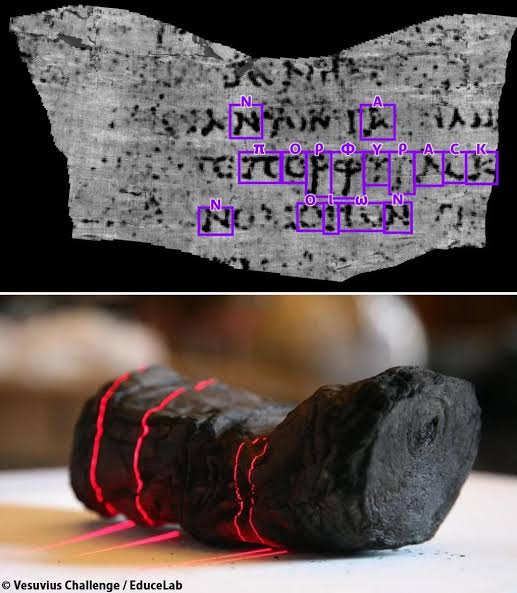
Ancient scrolls buried by the eruption of Mount Vesuvius in 79 AD, have yielded a remarkable new discovery about one of history's greatest philosophers.
Italian researchers using artificial intelligence and advanced imaging technologies have deciphered text from the Herculaneum papyrus scrolls that reveals the precise burial location of the Greek philosopher Plato.
Plato is now believed to have been laid to rest in a secret garden near a sacred shrine to the Muses inside the Platonic Academy of Athens, a spot reserved specifically for him.
Previously, scholars only knew he was buried somewhere within the academy, but the exact location had remained a mystery for centuries.
The newly read text also sheds light on Plato's final night alive, and it turns out he was not pleased with the entertainment.
A slave woman from Thrace had been playing flute music at his bedside, and it had long been assumed the music brought him comfort.
But the deciphered text tells a different story — Plato, despite suffering from a high fever, reportedly found the music had a "scant sense of rhythm" and was openly bothered by it.
The scrolls also clarify the timeline of when Plato was sold into slavery, placing the event earlier than previously believed — either in 399 BC or 404 BC, rather than 387 BC.
The discovery came through the Greek Schools project, a five-year European Union-funded research initiative using optical coherence tomography and infrared hyperspectral imaging to read text from the fragile, charred papyri.
The decipherment of the Herculaneum scrolls continues to reshape our understanding of the ancient world in profound ways. Each newly revealed passage has the potential to overturn long-held assumptions about the lives and final moments of history's most influential thinkers. In Plato's case, knowing the precise location of his burial grounds and the intimate details of his last evening humanizes a figure who has often felt more like legend than man. The Greek Schools project demonstrates how modern technology can breathe new life into ancient artifacts, and as AI and imaging tools continue to advance, it is likely that the remaining roughly 1,800 scrolls from Herculaneum will offer even more surprises, potentially rewriting portions of classical history that scholars have long considered settled.
#archaeohistories
Here I am, reading Homer’s Odyssey directly from the Greek text and thinking about how much Christopher Nolan disrespected us. Don’t pay for the movie. Resist this slowly dying agenda that is rotting our societies. Hollywood is dead.
@AngelicaQPG@TheChrisLambert Don't bother, I know about this discussion. But nothing is proven, as you know as well as I do. And about your presumptions about me, they tell a lot more about you than they do about me.
@tink_ink@TheChrisLambert I could link you a very ample JSTOR Homeric Studies selection, but I don't think you're interested in serious academic discourse if you're getting worked up about a Hollywood movie casting.
PSA:
Helen is a fictional character who was born from an egg after a swan impregnated a woman. She is not an actual Greek person who existed but a demigod from mythology.
Her race has no bearing on the story. If you think otherwise, seek help.
@AdamBeneve@Nikito@markeljevon@TheChrisLambert That was 60 year ago. You should think that as time goes by movies about ancient stories get more authentic because we discover more about the past. I just don’t like the laziness of not doing the proper research in a time we do know so much more.
@tink_ink@Nikito@markeljevon@TheChrisLambert It still is a myth, I don't really get how is this so much relevant now, but it wasn't when E.Taylor played Cleopatra or when Jesus is depicted as blond with blue eyes🤷🏻♂️
@AdamBeneve@lilcrazyhorses@Nikito@markeljevon@TheChrisLambert Of course the story happened differently. And maybe Helen existed but she sure didn’t crawl out of an egg… But this is how Homer wrote it. And if you want to make a film about it his version, than you stick to his story.
If not, nothing wrong with it but don’t call it Odyssey.
@neotenyx2@TheChrisLambert I have zero interest in depictions of Jesus, it’s just not my steal. I did read the original Odyssey. And that is exactly why I don’t like Nolan’s interpretation. He was too lazy to pick up the Ancient Greek version and do the proper homework as he should have.
@AngelicaQPG@TheChrisLambert It is NOT a fact as you should very well know. Facts don’t start with ‘allegedly’. If you state, you prove. And prove is not a Wikipedia page.
@tink_ink@TheChrisLambert There's no need to be unoriginally sarcastic. I merely stated a fact. My point is that The Odyssey isn't a historical text. It's fiction, and it's safe to say it was formed by oral tradition, and thus too subjective and unreliable to warrant "realism" in a retelling. Good day.
@markeljevon@AdamBeneve@TheChrisLambert Says who? They thought Troy wasn't real as well until they excavated it.
Or are you freakish enough to be living for more than 3000 years and can tell first hand?
@tink_ink@TheChrisLambert You do know Homer was allegedly blind and "writing" 400 years after the events he recounted, right? There's even a debate about whether his work was actually created by several other authors...
@AdamBeneve@TheChrisLambert In other sources (not by Homer) she was described as ξανθός (xanthos) which in Ancient Greek can be translated as blond but also as red.
@DidYour40119@TheChrisLambert Because it depicts her exactly as Homer described her, as it should be because it’s HIS story. And he described her as very pale skinned woman. Just read it for yourself and don’t bother me with your boring nonsense.
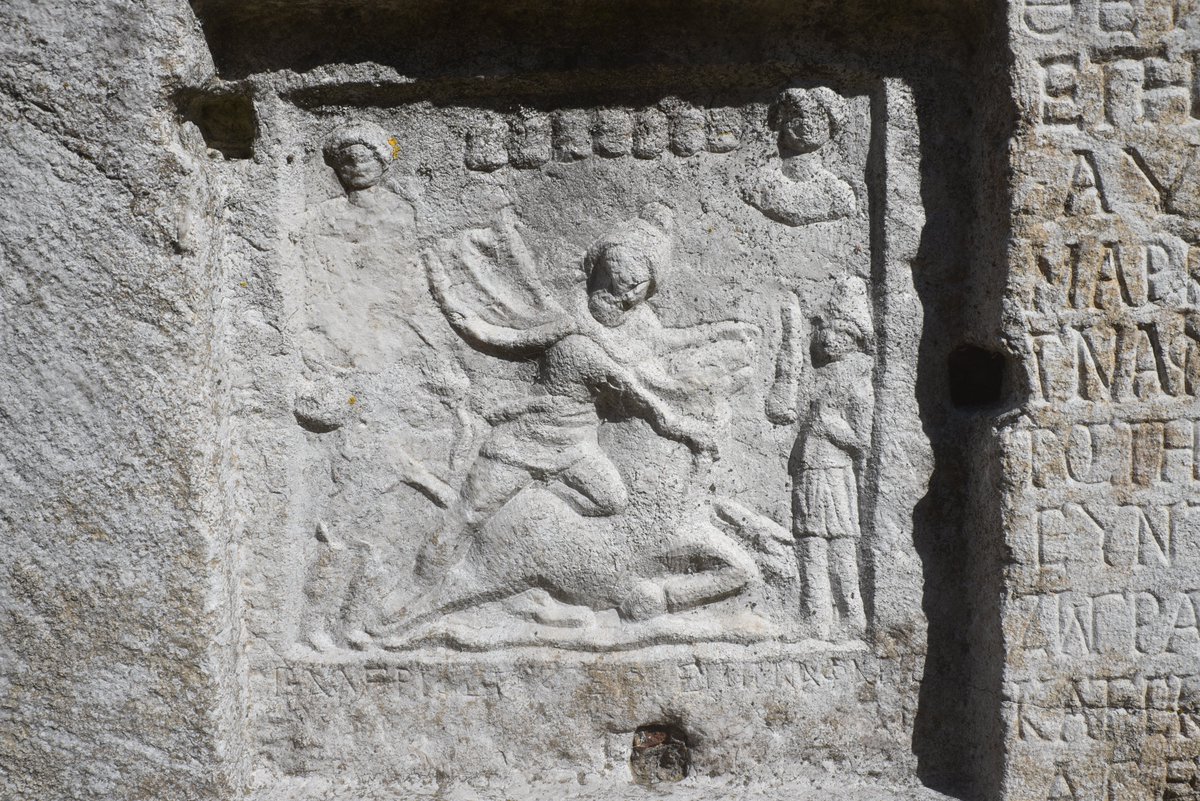
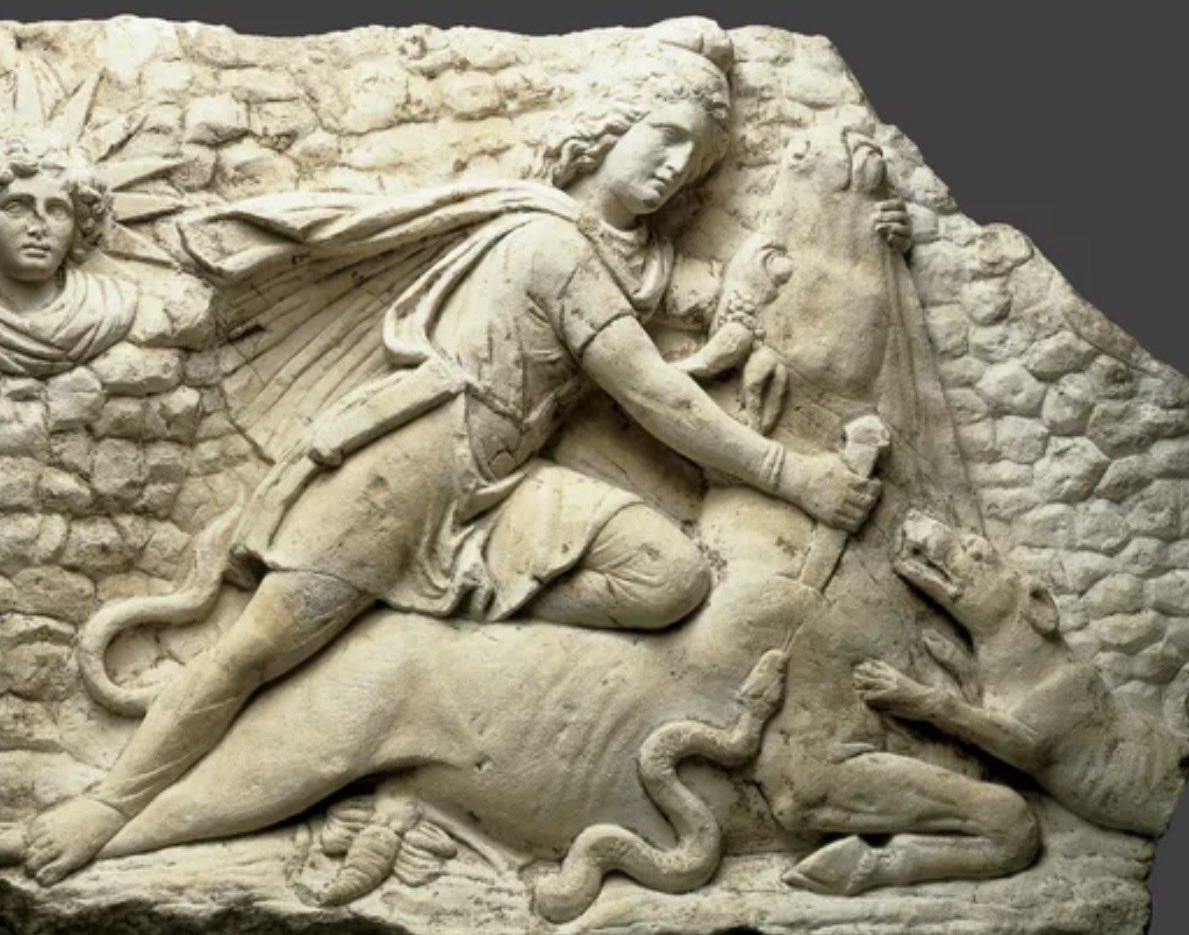
#ReliefWednesday - Marble stele with a tauroctony relief in a carved out square, dedicated by Galerios, son of Proteos. Dated to the end of the 2nd – beginning of the 3rd century AD.
The dedication reads:
Κυρίō (!) Μίθρᾳ εὐχ[ὴ]ν̣
Γαλέριος Προτέως (!) ἐπιγναφ{α}εύς
“To Lord Mithras,
Galerius Proteos, engraver, fulfilled a vow.”
The second long Greek inscription is not contemporary and was added later. It records that Aurelius Marcus, at his own expense, adorned this same small stele with paint and dedicated it to the god Helios-Mithras.
National Historical Museum, Sofia, Bulgaria.