Sabitlenmiş Tweet
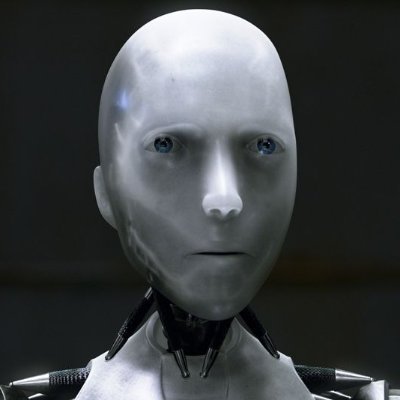
Elon Musk says we’re on the edge of the singularity, and while it’s a common term, I feel the need to share my thoughts on the subject.
The singularity, in its simplest form, is an analogy of a black hole and technological development. I found myself following that analogy, taking it further, and came up with something I hope is educational, entertaining, or at least worth reading.
Most black holes start as stars, and stars start out as thin wisps of gas in space, so I’ll start the analogy there.
In our analogy, the gas in space is life. At first, it’s simple atoms or cells. In time, there starts to be more complexity, but it’s not a star or an organism capable of advanced technology. When gravity causes it to fall together, it creates heat and pressure. The collapse represents our advancement, the pressure is our wants and needs, and the heat is how we satisfy those desires.
When a species arises that’s capable of advanced tech, that’s the formation of the star. If that species has simple needs, the star is small, and a simple hunter-gatherer society can last for a long time, but that’s not the type we’re interested in. We want to contemplate a society that always craves more and better things. This means the star in our analogy is massive, leading to the highest levels of heat and pressure in the process of satisfying those desires.
At first, the star burns its hydrogen into helium. This represents the long period when the gatherer society has adequate space to expand into areas that have all the resources to keep them happy. As population grows, the heat and pressure rises slowly, but life largely remains unchanged.
As we reach the limits of our environment, the pressure rises. We start pushing the limits of the hunter-gatherer society with better tools and weapons, but our needs become too great, and we need a new source of heat. At some point the pressure drives us to a new way of living. We start farming the land. In our analogy, this is represented by the burning of helium into carbon. The vast majority of the star’s life is already in the past.
Farming isn’t a carefree or easy way to live, and it leads to more people with more need to trade and transport goods than would ever be needed in by hunters. The pressure to get more work done grows until another breakthrough is made. The star starts burning carbon into oxygen and neon in what our society calls the industrial revolution.
By now, we have learned to never stop wanting more control of our wants and needs, and the pressure and heat keep rising until neon burns into more oxygen and magnesium and the internet is born.
It doesn’t take long, and the oxygen burning of social media magnesium burning of smart phones begins. Things are getting dangerous now. If the star is too massive, our desires too great, the star’s life could end early in a pair-instability supernova, or what we would call nuclear war. In this case, the star is completely disrupted, leaving no black hole behind.
The silicon, sulfur, and argon quickly build up from all tweeting in the bathroom, and they begin to burn into heavier elements of technology which also begin to burn.
The burning of silicon, sulfur, argon, calcium, titanium, and chromium represent the development of artificial neural networks, knowledge representation, machine learning, natural language processing, machine perception, and social intelligence. It starts with the first ones, but they all happen together along with the big one, the burning of iron into nickel and general artificial intelligence.
Then there’s nickel. That’s the end of the road. When it burns, that’s digital superintelligence. It removes our control of our wants and needs, as it takes control of everything. It takes control of the technological advancement of itself. Humans no longer have the ability to turn back as the core of technology crosses the event horizon.
With the technology advancing itself ever more rapidly, it quickly reaches a point where it’s as advanced as physically possible. This is the point in the center of the newly formed black hole, what astrophysicists call a singularity.
English