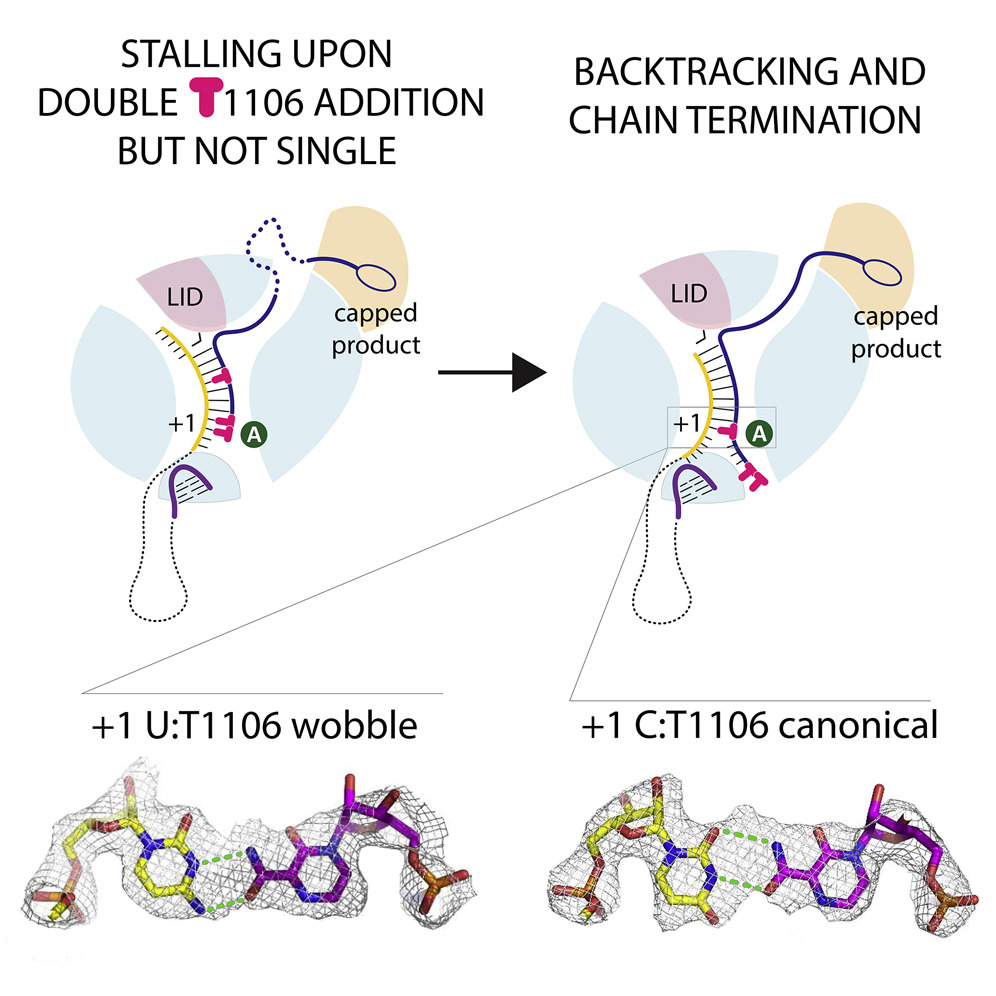
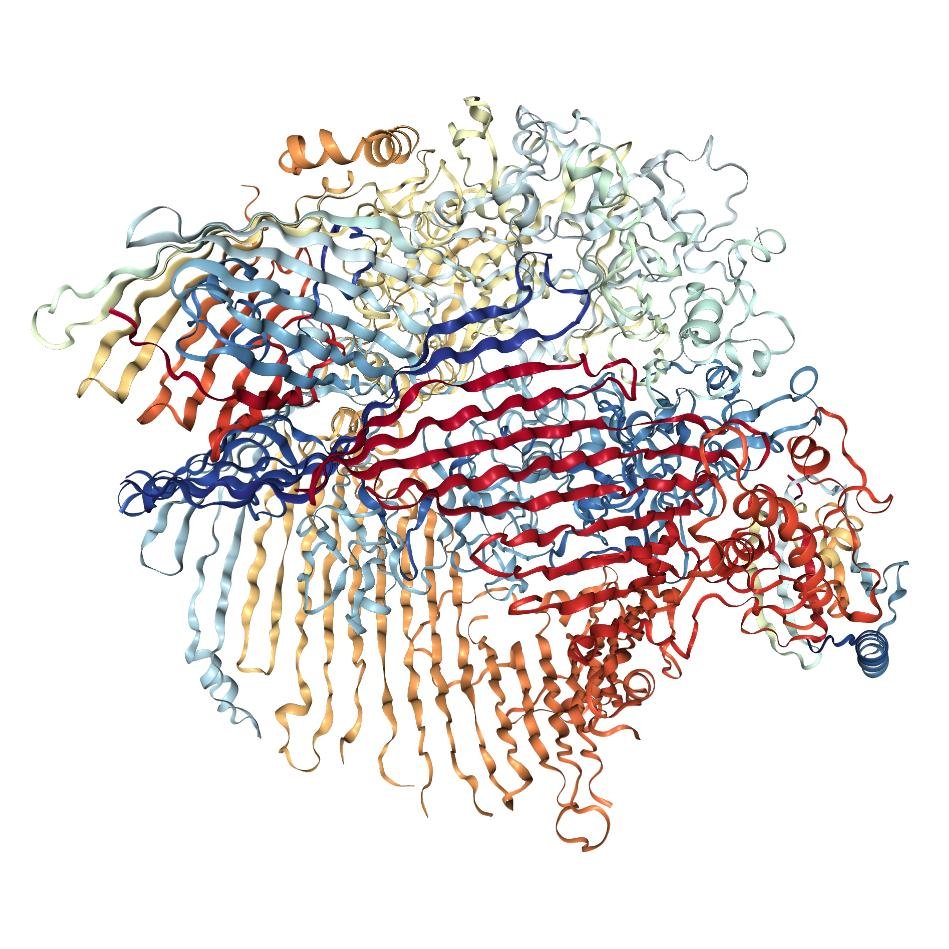
One of the main challenges of contemporary medicine is posed by the resistance of pathogens to antibiotics. An important step in countering it has now been made by @tm_kouba and colleagues from @IOCBPrague, in collaboration with researchers led by Libor Krásný from the Institute of Microbiology and Jan Dohnálek of @IBT_CAS @CzechAcademy. Leveraging advanced #cryoEM and biochemical methods, they have managed to describe how mycobacteria defend themselves against the antibiotic #rifampicin. One key component that allows a bacterium to dodge the action of the antibiotic rifampicin is a protein called HelD. It effectively protects bacterial #RNApolymerase, which is the enzyme taking care of the transcription of genetic information from DNA to RNA, a process that is crucial for the survival of all bacteria. The HelD protein acts as a cellular bodyguard. Whenever there's a snag during the transcription of DNA, HelD comes to the rescue, and this is also what happens after the administration of rifampicin, the role of which is to inhibit RNA polymerase. Without HelD, the whole process would grind to a halt and the bacterium would perish. HelD does not yield even to such a powerful antibiotic as rifampicin, which is used, for example, to treat tuberculosis or severe pneumonia. Until recently, researchers had assumed that HelD played a crucial role in antibiotic resistance. However, they have found that it is even more important for bacteria than it seemed. The HelD protein not only sets RNA polymerase free from the effects of the antibiotic but also ensures the ‘recycling’ of this enzyme, which is crucial for the functioning of every organism. It achieves this by actually moving RNA polymerase to the transcription initiation site on DNA, allowing it to resume transcription. The bacterium can thus start multiplying again. 📜 Read the original @NatureComms study: doi.org/10.1038/s41467… 📰 Read more about the study: uochb.cz/en/news/656/sc…