

Skina
309 posts
Skina
@tmampana
A leader of the new world.
From Cape to Cairo Katılım Nisan 2013
434 Takip Edilen44 Takipçiler
@MbalulaFikile @mbalulafikile how did the forefathers make it past the CIA/MI6 without a scratch?
English

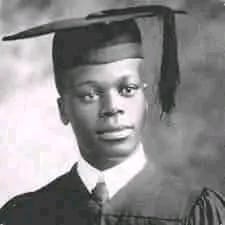
Today, marks the 144th birthday of one of the founders and one of the Presidents that has led our ANC, Cde President Pixley ka Isaka Seme. At the age of 17, Seme left South Africa to study in the U.S., first at the Mount Hermon School, then Columbia University. In 1906, his senior year at University, he was away the Curtis Medal, Columbia's highest oratorical honour. He subsequently decided to become an attorney. In 1906, he was admitted to Oxford University for the degree of Bachelor of Civil Law, while at Oxford he was a member of Jesus College.
Seme returned to South Africa in 1911. In response to the formation of the Union of South Africa, he worked with several other young African leaders who had recently returned from university studies in England, Richard Msimang, Goerge Montsioa and Alfred Mangena as well as with established leaders of the South African Native Convention in Johannesburg to promote the formation of a national organisation that would unify various African groups from the former separate colonies. In January 1912, these efforts bore fruit with the founding meeting of the South African Native National Congress (SANNC) which was later renamed the African National Congress (ANC).
Long live the undying revolutionary spirit of Cde President Pixley ka Isaka Seme, Long live!
English
Skina retweetledi

Skina retweetledi

South Africa is about to spend R8.5 billion bailing out ArcelorMittal SA, a private steelmaker owned by one of the world’s largest steel corporations.
The Industrial Development Corporation, the state’s development bank, is preparing to assume ArcelorMittal’s debts, take over operations, and gently cushion the landing for its shareholders.
Now, if you’ve been paying attention to South African economic discourse over the past decade, you might be experiencing a slight sense of cognitive dissonance.
Haven’t we been told, repeatedly, emphatically, with the confidence of a first-year economics student who just discovered Milton Friedman, that bailouts are precisely why state-owned enterprises fail? That Eskom, SAA, Transnet, and Denel are irrefutable proof that the government can’t run a hair salon, let alone a business? That taxpayers shouldn’t be forced to subsidise these ‘inefficient dinosaurs’?
It’s crazy, then, that when a private multinational stumbles, the rhetoric shifts with impressive speed. Suddenly, we’re not talking about bailouts anymore. Instead, we’re discussing ‘industrial policy,’ ‘safeguarding strategic capacity,’ and ‘preserving employment.’
It’s the same money leaving the same treasury for the same purpose, but the packaging has been given a considerable facelift.
This is the intellectual sleight of hand at the heart of modern free market economics. When state-owned enterprises struggle, the prescription is unambiguous: privatise, liberalise, streamline, restructure, trim the fat, let the market work its magic. The invisible hand will sort things out.
However, when private companies struggle, particularly large ones, the prescription is different: socialise the losses, protect investor confidence, and most importantly, deploy state resources. Suddenly, the invisible hand needs a very visible helping hand from the public purse.
Let’s rewind a bit to how we arrived here. ArcelorMittal began life as Iscor, a state-owned enterprise established specifically to develop South Africa’s industrial capacity, and it did exactly that for decades.
Then came the 1990s and the great privatisation wave, that exciting period when selling off state assets was considered the height of economic sophistication.
Iscor was privatised. By the mid-2000s, it had been acquired by Lakshmi Mittal’s steel empire, which was busy assembling what would become the world’s largest steelmaker.
For the next two decades, the playbook was entirely predictable: extract profits, minimise reinvestment, consolidate operations globally, rationalise costs (or ‘squeeze harder’).
South Africa’s steel industry, unsurprisingly, stagnated and then declined. Production capacity eroded. Infrastructure aged. The industry that was once considered strategically vital became ‘uncompetitive.’
Now, after squeezing the lemon dry, the bill lands back on the public’s desk.
When Mittal Steel was paid (yes) to acquire Iscor in 2003, the latter was a functioning industrial concern. By 2006, Mittal had merged with Arcelor to form ArcelorMittal, the world’s largest steelmaker.
In 2023, twenty years after acquisition, ArcelorMittal announced plans to close two crucial mills, citing high power prices, erratic rail service, cheap imports, and unfavourable government policy.
One might wonder: in two decades of ownership, did ArcelorMittal perhaps have opportunities to address some of these challenges through investment? Or was the strategy always to extract value during good times and exit during bad ones, preferably with the state covering the exit costs?
The company’s own explanation for the closures is particularly rich: it blames high power prices (from state-owned Eskom, itself requiring bailouts), poor rail service (from state-owned Transnet, also requiring bailouts), and government policy.
Essentially, the state’s failures justify closing the mills, but the state’s money is required to keep them open. Heads I win, tails you lose.
To be clear: South Africa does need a functioning steel sector. Steel is rather useful for things like construction, manufacturing, and infrastructure, the kinds of activities countries tend to need if they’d like to have an economy.
But let’s not get it confused, this isn’t a rescue of ‘the steel industry.’ It’s a rescue of a failed privatisation experiment. The state is being asked to clean up after decades of a model that promised efficiency and delivered asset-stripping.
The salient questions aren’t complicated. Who will own this industry going forward? Who will run it? And, perhaps most importantly, who will benefit this time? It’s not the public, I can tell you that much.
If the state must intervene with public funds, then perhaps the intervention should be structured to serve public interests, rather than replaying the greatest hits of ‘privatise the profits, nationalise the losses.’
Because here’s what the whole episode reveals: bailouts aren’t actually the problem. The problem is who gets bailed out and on what terms.
When the ideology demands it, we’re told state intervention is disastrous, that markets must be left to function, that failure is a necessary cleansing mechanism of capitalism. But when reality intrudes, when actual businesses face actual consequences, oh, suddenly state intervention becomes not just acceptable but imperative.
If bailouts are ‘bad’ when they go to Eskom but ‘good’ when they go to ArcelorMittal, what we’re really being told is quite simple: public money is available for private capital, just not for public purposes.
It’s a fascinating intellectual framework. One might even call it internally consistent if one squints hard enough and doesn’t think about it too much.
Let’s take a look at the numbers, because they’re telling.
The IDC is contemplating an R8.5 billion bid for a company currently valued by the market at R1.32 billion.
Yes, you read that correctly. The state is preparing to pay roughly six times the market capitalisation for a business the market has determined is worth far less than the asking price.
For context: ArcelorMittal’s shares peaked at a market value of R116 billion in 2008. They’ve since declined 99%. The stock is down 13% this year alone, trading at R1.16. This is not, one might say, a business on an upward trajectory.
The R8.5 billion would largely go toward repaying a loan ArcelorMittal extended to its own South African subsidiary, meaning the parent company lent money to its local unit, which struggled, and now the South African state will repay ArcelorMittal for the privilege of taking the struggling business off its hands.
It’s peak City of London financial engineering with a certain poetic brutality to it.
The IDC’s plan, as outlined, involves acquiring control and then immediately seeking ‘strategic investors’ to actually run the plants. Which raises an obvious question: if the business requires strategic investors to operate, why is the state paying R8.5 billion to become the intermediary?
In a 12 September letter to one potential partner, the IDC wrote that it would ‘embark on a process of introducing potential strategic equity partners into ArcelorMittal,’ noting that ‘we have been approached by various parties for potential partnerships.’
This is a fascinating model: the state assumes the debt and the risk, pays well above market value, and then seeks private partners to run the operation. It’s rather like buying an expensive restaurant you don’t know how to cook in, with the plan to immediately hire a chef, except the chef could have bought the restaurant themselves for a sixth of the price.
It’s a comprehensive arrangement: private profits during the boom years, public assumption of debt during the decline, and an immediate search for private partners to run the operation going forward.
The steel may be produced locally, but the playbook is decidedly an international standard.
This moment could be a pivot point. South Africa could use this intervention to reclaim steel as a public utility, a strategic public asset with mandated reinvestment and worker participation. Instead, the IDC seems poised to repeat the very cycle that produced this mess: socialise the debt, privatise the profits.
Some assets, it seems, are too important to fail, and too expensive for taxpayers to succeed.
English
Skina retweetledi
This is what happens when you colonise, loot, impoverish and then gaslight people. They follow you home.
English

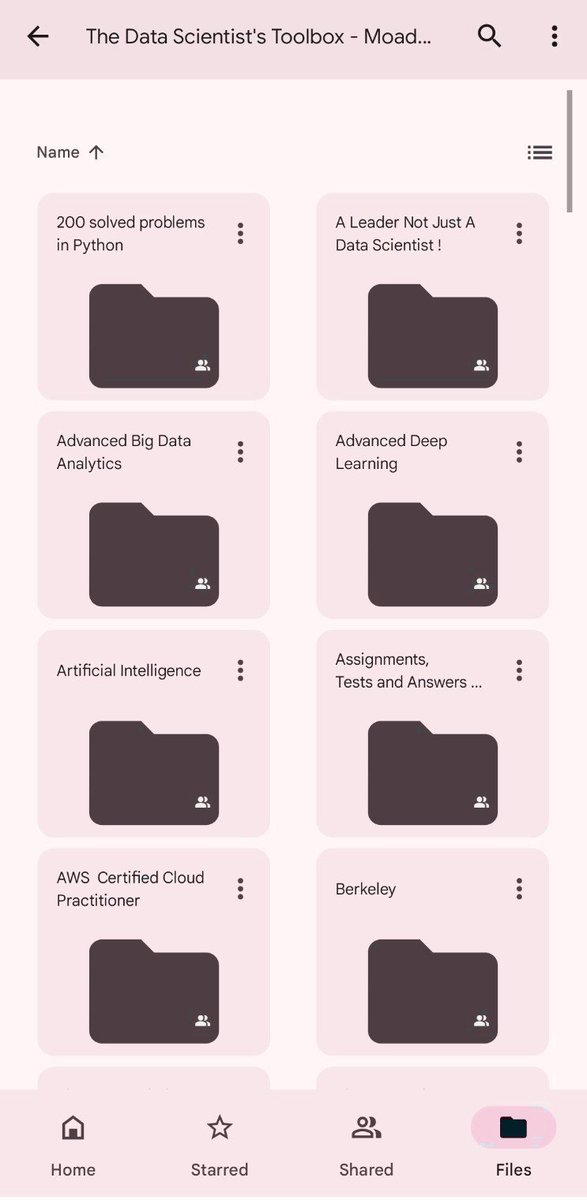
𝐀𝐥𝐥 𝐏𝐚𝐢𝐝 𝐂𝐨𝐮𝐫𝐬𝐞𝐬 (𝐅𝐫𝐞𝐞 𝐟𝐨𝐫 𝐅𝐢𝐫𝐬𝐭 𝟓𝟎𝟎0 𝐏𝐞𝐨𝐩𝐥𝐞)👇
1. Artificial Intelligence
2. Machine Learning
3. Cloud Computing
4. Ethical Hacking
5. Data Analytics
6. AWS Certified
7. Data Science
8. BIG DATA
9. Python
10. MBA
(48 Hours only ⏰)
To get it, just:
1. Like & RT
2. Reply "ALL" 🧲
3. Follow
[MUST to get DM ]
English
@GodPenuel @GodPenuel Do you consider yourself a self-loathing black?? You have distinct features that come alive evrytime you say something about blacks! Why not prove me wrong & say something positive for a change.
English

The most silent group in South Africa are rich Black people who earn over R100,000 per month.
Their silence is very similar to rich White people. They don't speak up because they don't want to expose their privilege & potentially be attacked.
There are so many rich Black people in South Africa, yet they are DEAD SILENT on all important matters!!!
English

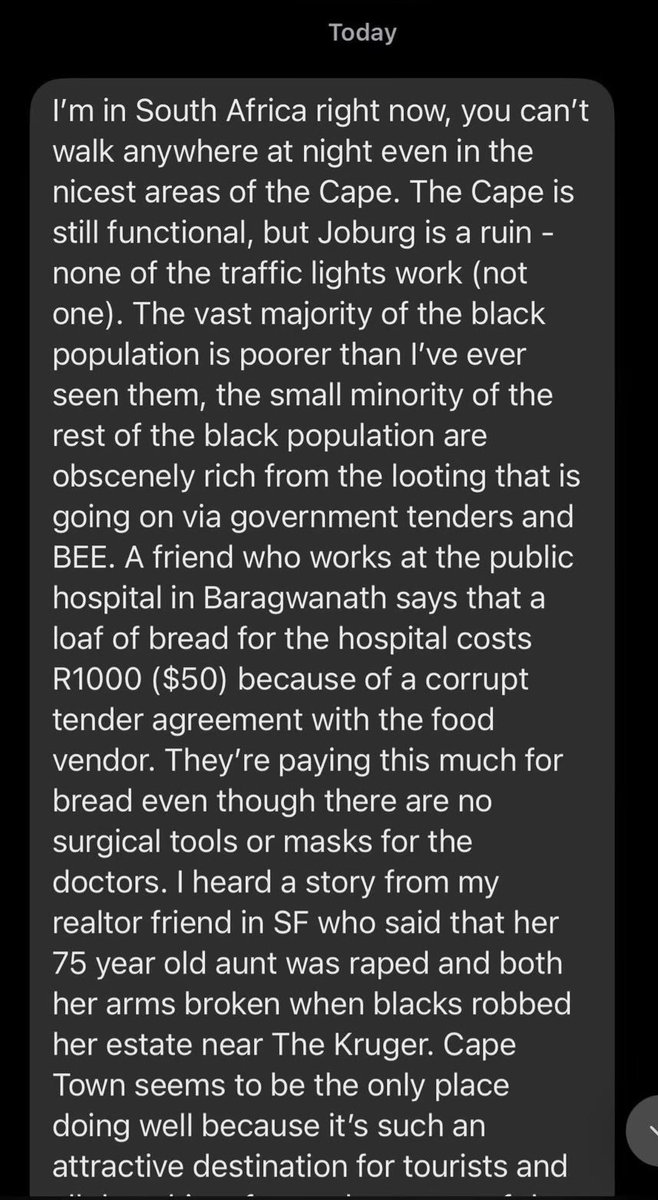
@grok @Kim_Khandashisa @elonmusk Ummm no. You can't buy anything decent below about R22 to R50 depending on the type of bread in the bakeries at supermarkets or on the shelves. I've never seen a loaf of bread cost R16 at any of the main retailers in ages.
English

@RediTlhabi @VaticanNews @RediTlhabi I recall people thinking it was humorous for Rasta The Painter to Portray Bab' Zuma nakedness, with privates exposed. What was your re-action then? 🤔
English

It is one thing for a random person to create this. I can even see how the resident of The White House would do it. The Man-Child. But The White House, too? What a revolting, disrespectful move. @VaticanNews must put you all in the naughty corner.
The White House@WhiteHouse
English
Skina retweetledi
Solo in Japan @tboseza shares how his
solocation in Japan went. He touches on the music, lifestyle, cultural observations as well as embracing the beauty of solitude and Solo-cations ✨🚀
English
@KayaON959 @tboseZA @tboseZA Heard her for the 1st time with Its Not You, Its Me. Lindsey Webster is amazing.
Briiliant Show Mokwele.
Tshepo Mampana, Groblersdal, Limpopo.
English
Welcome to your weekly dose of soul! Join @tboseZA on Touch of Soul for the best in smooth sounds and good vibes. Tune in and elevate your day! #TouchOfSoul #TheBestT

English
@BrendaSisane Hi Sis Brenda, Lovely show, enjoying all the way from Limpopo.
What was the track that was playing in the background during Ziza Muftics' voice over.
Looking forward to seeing you at this years' insralment of JoJ24.
From Tshepo Mampana, Groblersdal
English

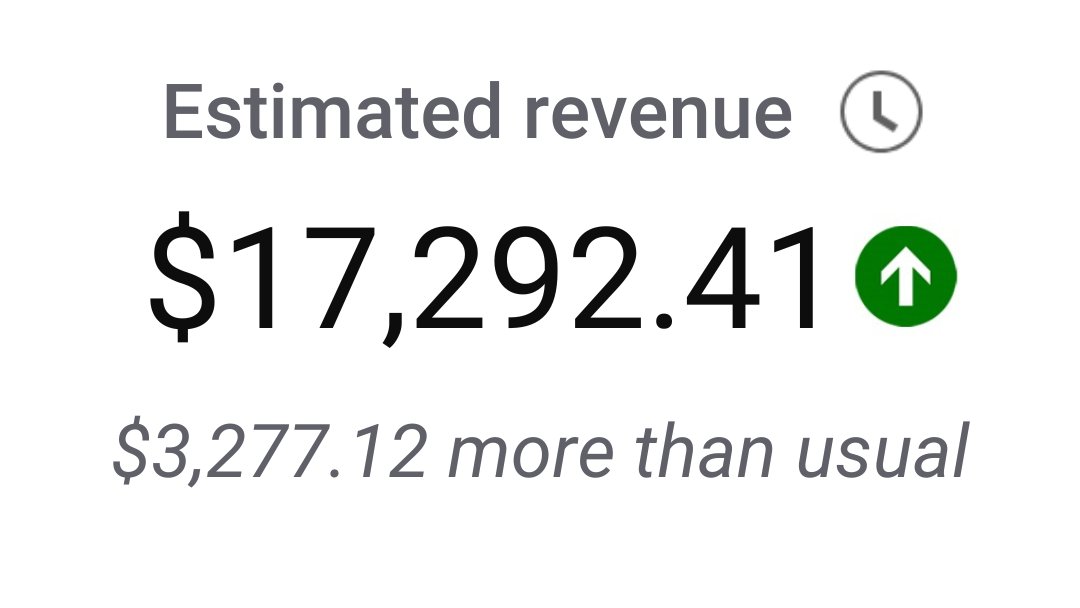
Earn $17,000/month with faceless YouTube channels!
No editing skills required.
I created a full guide to show you how. To receive:
Like + comment "MONEY" & I'll DM it to you.
(Must be following me)
English
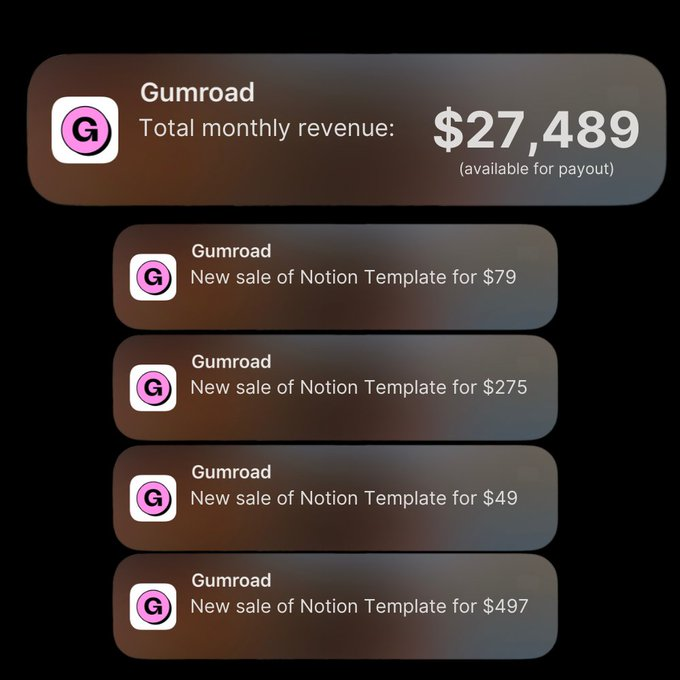
You can make $27,400 a month if you have:
1. Internet
2. Mobile
3. 1 hour every day
I will teach you how. Get my guide for free for today.
Like & reply “Guide” and I’ll DM it to you.
(Must follow me to receive it)
English

Everyone knows Sundays are for lovers, right? Make sure to send this checklist to your partner. 😎😏
Tag your festival partner-in-crime and get those tickets: bit.ly/3zdHObv ! 💖🎶
#SundaysAreForLovers #DStvDeliciousFestival2024

English
@MightiJamie No, the problem is the Gupta family. The Oppenheimers want what's best for South Africa😊
English

Does the Oppenheimer family have too much influence on South African democracy?
English