🚨 Italy Just Humiliated America in Front of the Whole World 🔥
Italy refused to let a US military plane land on its territory.
Their response was ice-cold:
“We’re not your aircraft carrier.”
This makes Italy the **first NATO member** to openly close its airspace to American military aircraft.
And the cherry on top? The US Ambassador to Italy — who happens to be **Jill Biden’s sister** — got completely owned.
Europe is starting to push back hard.
The era of America treating NATO countries like colonies is officially cracking.
Who’s next? 👀
Drop your thoughts below 🔥
U.S. world-famous author Stephen King:
“Trump is a tumor in America’s veins. A tyrant who does not hesitate to set a country on fire for his narcissistic ego. No horror story I’ve written could be as terrifying as this man.”
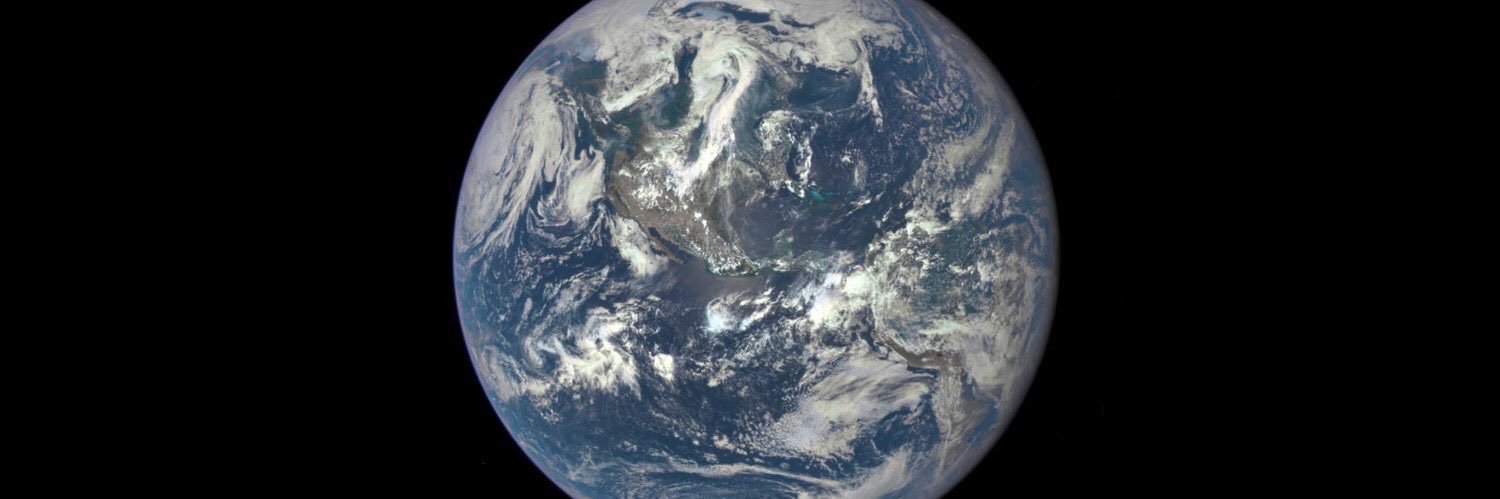
A man who spent months in space returned to Earth saying that humans are living a lie…
Former NASA astronaut Ron Garan spent 178 days aboard the International Space Station, orbiting the globe nearly 3,000 times.
During this mission, he experienced the Overview Effect, a profound cognitive shift that occurs when viewing Earth from space.
From his vantage point, the political boundaries and economic systems that dominate human discourse were invisible. Instead, he saw a singular, iridescent biosphere protected only by a gossamer-thin atmosphere, highlighting the extreme vulnerability of the only home humanity has ever known.
Garan now warns that our perceived separation from nature is a dangerous illusion. He argues that issues like climate change and habitat loss are not separate problems but symptoms of a failure to recognize Earth as an interconnected system.
Since returning to the surface, his mission has shifted to promoting a planet-first mentality. By viewing the world as a shared vessel rather than a collection of competing territories, Garan believes we can better protect the delicate balance that sustains life within our paper-thin atmosphere.
source: Garan, R. (2015). The Orbital Perspective: Lessons in Seeing the Big Picture from a Journey of 71 Million Miles. Berrett-Koehler Publishers.
The best workout of the day happens before you even get out of bed. 🏋️♂️✨
Morning wood is high-octane fuel. Use that intensity to run a "Vitality Circuit":
Focus: Open the Vanesa Vault for a quick 4K discovery session.
Contract: 5-second Kegel holds against the natural tension.
Control: Practice mindful breathing to circulate that energy.
Build the engine now, and it’ll perform better when it counts later
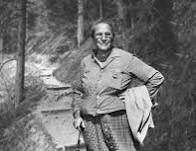
In the spring of 1955, a 67-year-old grandmother from Ohio told her children she was going for a walk.
She didn’t say how far. She didn’t say why. She simply kissed them goodbye, packed a cloth bag with the barest essentials, and vanished into the Georgia wilderness.
Her name was Emma Rowena Gatewood — and she was about to do something no woman had ever done before.
For three decades, Emma had endured unspeakable violence in her Ohio farmhouse. Beatings that broke her ribs, blackened her eyes, and nearly broke her spirit. She had raised eleven children on that farm. She had finally escaped her husband in 1941, but the invisible scars ran deeper than any wound.
Then one quiet afternoon, she read an article in National Geographic about the Appalachian Trail — more than 2,000 miles of rugged paths stretching from Georgia to Maine. The writer made it sound peaceful. Achievable. Beautiful.
Emma thought: If men can walk it, so can I.
But she knew what would happen if she told anyone. Her children would worry. Friends would call her foolish. A grandmother, alone in the wilderness? Impossible. Dangerous. So she kept her plan silent as a prayer.
She sewed a simple denim bag and filled it with the absolute basics: a blanket, a plastic shower curtain, a first-aid kit, bouillon cubes. No tent. No sleeping bag. No proper hiking boots — just a pair of Keds sneakers and a cotton dress.
On May 3, 1955, she boarded a bus to Georgia and began walking north from Mount Oglethorpe. Alone.
The trail was nothing like the magazine promised. It was merciless. Roots caught her feet. Rocks sliced through her thin shoes. Rain turned the path to mud. Insects swarmed relentlessly. At night, she slept on bare ground in abandoned shelters, sometimes shivering too violently to rest.
She got lost. She fell, twisting her ankle so severely she could barely stand. Sitting on that rock, pain shooting through her leg, she wondered if this was where her journey would end. But after catching her breath, she wrapped her ankle tight and kept moving. Always moving.
Hikers who passed her didn’t know what to make of the small, gray-haired woman in a dress and sneakers, carrying a homemade sack. Some thought she was lost. Others assumed she was crazy. A few offered food or shelter. She thanked them graciously, then continued on.
When strangers asked why she was walking, she’d smile softly and say she wanted to see the country. But anyone who looked into her eyes could see something deeper burning there. This wasn’t recreation. This was reclamation. Every mile was a mile farther from the life that had tried to destroy her. Every step was proof she was still here, still strong, still capable of extraordinary things.
Weeks became months. Her feet bled. Her back ached. The sun burned her skin raw. But she never stopped.
On September 25, 1955, Emma Gatewood stood on the summit of Mount Katahdin in Maine. She had walked 2,168 miles in 146 days. She was the first woman to hike the entire Appalachian Trail alone in a single season.
When word spread, reporters flooded in. Newspapers nationwide ran her story. Overnight, she became “Grandma Gatewood,” a household name. Everyone wanted to know how a 67-year-old woman with no training and minimal gear had accomplished what seasoned hikers failed to do.
Emma smiled and said it wasn’t that complicated. She mentioned the trail needed better maintenance — too many rocks, not enough signs. She spoke as casually as if discussing her garden, not surviving one of America’s most grueling challenges.
But she wasn’t finished. In 1957, she walked the trail again. Then in 1964, at 76 years old, she became the first person ever — man or woman — to complete the Appalachian Trail three times. Each journey with almost nothing. Each journey proving that true strength doesn’t come from equipment or training. It comes from refusing to surrender.