Bhaumik Gowande@bhaumikgowande
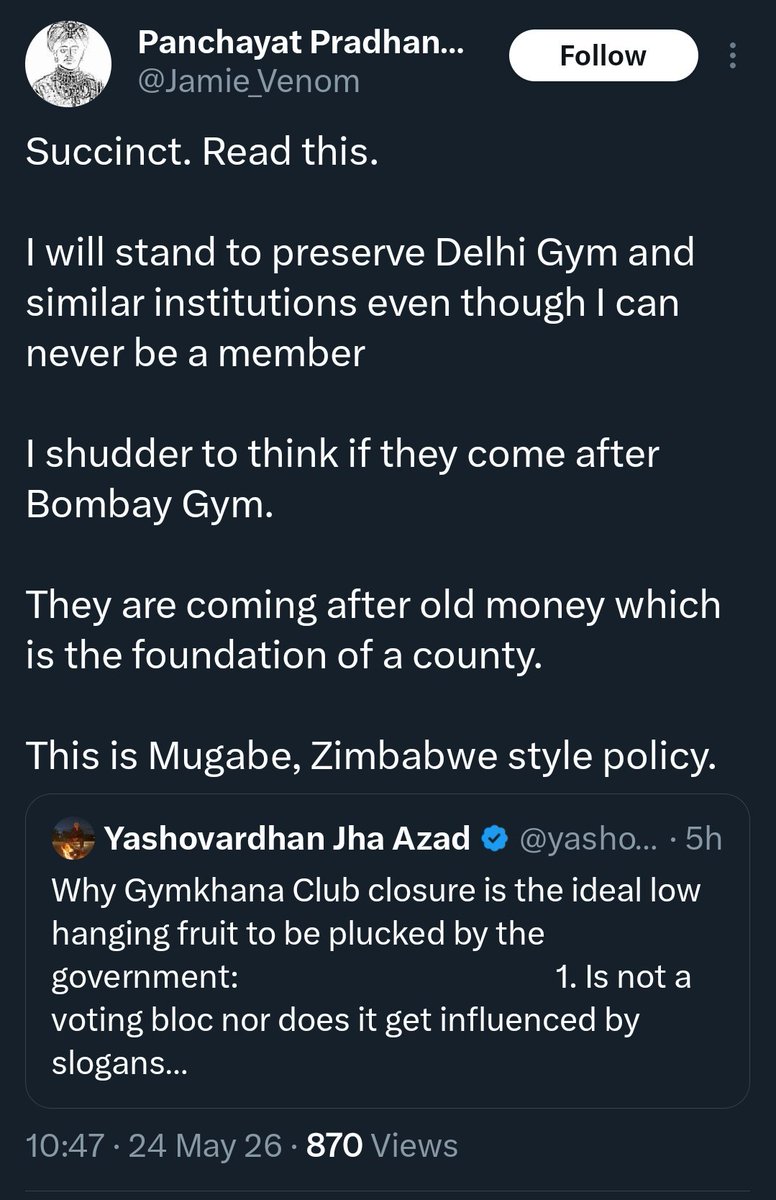
Much of the hate and support against the Delhi Gymkhana comes from the resentment towards the fact that the rich still have access to quiet, clean, well-managed spaces insulated from the everyday collapse of public infrastructure in Indian cities.
Private clubs became symbols of privilege because the city governments across India failed to build public institutions with the same standards of safety, maintenance, culture, courteous mannerisms and dignity. When public parks and green spaces disappeared, everything gets concretised, there is zero respect for public behaviour and etiquettes in shared spaces and civic spaces become dysfunctional, exclusivity itself becomes aspirational.
The real issue is not that private clubs exist. The issue is that India has failed to create equally aspirational public spaces for everyone else. Destroying exclusivity will not create excellence; but building better public institutions might...