
jason ross
5.2K posts
jason ross
@trainoutpain
Chiropractor/StrengthCoach/therapist looking for the answers to High Performance in Sport and Life.
Grand Rapids, MI Katılım Kasım 2012
831 Takip Edilen965 Takipçiler
jason ross retweetledi

From @grok
The image and text you provided refer to the vault, a fascinating and somewhat mysterious structure in cell biology. Here’s a detailed breakdown based on my knowledge:
What is the Vault?
Vaults are large, barrel-shaped ribonucleoprotein complexes found in the cytoplasm of nearly all eukaryotic cells, including those of animals, plants, and fungi. They were first discovered in the 1980s (hence the “40 years since discovery” mentioned in your image, aligning with a discovery around 1985). The name “vault” comes from their arched, cathedral-like structure, which resembles the vaults in architecture.
Structure of Vaults
•Size and Shape: Vaults are massive for cellular structures, measuring about 40 nanometers in length and 20 nanometers in width—three times larger than a ribosome. They have a distinctive barrel-like shape with a hollow interior.
•Composition: They are made up of proteins and RNA. The primary protein component is the Major Vault Protein (MVP), which makes up about 70-75% of the vault’s mass. There are also minor vault proteins (VPARP and TEP1) and a small RNA molecule called vault RNA (vRNA).
•Hollow Interior: As the text mentions, vaults are “half-empty.” They have a large internal cavity, which has led to much speculation about their function.
Discovery and Research Timeline
Vaults were first identified in 1986 by Nancy Kedersha and Leonard Rome while they were studying coated vesicles in rat liver cells. Using electron microscopy, they noticed these large, symmetrical structures that didn’t fit the profile of any known organelle. Since then, vaults have been a subject of intrigue because their exact function remains elusive, despite their ubiquity across eukaryotic organisms.
Possible Functions of Vaults
While the precise role of vaults is still not fully understood, several hypotheses have been proposed:
1Cellular Transport: The hollow structure suggests vaults might act as transport vehicles, shuttling molecules like mRNA, proteins, or even drugs between the nucleus and cytoplasm. Their size and shape support this idea, as they could encapsulate large cargos.
2Drug Resistance: Vaults have been linked to multidrug resistance in cancer cells. Higher levels of vault proteins (especially MVP) are often found in cancer cells that resist chemotherapy, suggesting vaults might sequester drugs away from their targets or help expel them from cells.
3Cellular Signaling and Repair: Some studies suggest vaults might play a role in DNA damage repair or signaling pathways, particularly in response to stress or infection. They may interact with signaling molecules to help cells respond to environmental changes.
4Immune Response: There’s evidence that vaults might be involved in innate immunity, potentially helping cells respond to viral infections by interacting with immune signaling pathways.
Why Are They “Enigmatic”?
•Ubiquity vs. Function: Vaults are found in nearly every eukaryotic cell, yet their function isn’t clear. Knockout studies in mice (where vault proteins are removed) show no obvious defects, suggesting vaults might not be essential for basic survival but could play a role in specific conditions like stress or disease.
•Hollow Interior Mystery: The large, empty cavity inside vaults is puzzling. It’s unclear what they store or transport, if anything. Some researchers think this space could be used to sequester toxic substances or protect important molecules.
•Lack of Attention in Textbooks: As the text mentions, vaults are often omitted from science textbooks. This is likely because their function isn’t fully understood, and they don’t fit neatly into the standard curriculum of well-characterized organelles like the nucleus, mitochondria, or ribosomes.
Fun Facts About Vaults
•Evolutionary Conservation: Vaults are highly conserved across species, from humans to sea urchins, indicating they likely serve an important, ancient role in eukaryotic cells.
English
@realjoelgreene Would adding dark chocolate be another synergyst?
English

This combo - walnuts and blueberries: why?
This combo addresses both the gut and vasculature synergistically. Blueberries feed the commensal bacteria Akkermansia and bifidobacteria. They also preserve key mechanisms of the vasculature. They also impact key ratios of several very important hormones. Walnuts are highly synergistic with blueberries. They provide L-homoarginine. L-homoarginine levels are strongly associates with cardiovascular health and the health of the endothelium, or vasculature. They also contain several unique peptides like LPF, GVYY, and APTLW, that downregulate pro inflammatory mediators in the vasculature. #walnuts #blueberries #vascularhealth
English
jason ross retweetledi

🚨🚨if you are into metabolism PLEASE STOP everything you do and check this seminal article that will change how we understand CHO metabolism forever…
Dr. George Brooks and his colleagues have demonstrated the final pathway of CHO oxidation with the completion of the mitochondrial lactate oxidation complex (mLOC).
Furthermore, a huge finding is the representation of mitochondrial reticulum (see video in post #2) in 3-D through colocalization of pyruvate and lactate transporters (mPC and mMCT) in fixed mouse skeletal muscle. Please visualize this mind-blowing video in order to understand better CHO metabolism.
This is SEMINAL discovery that will open significant doors to understand carbohydrate metabolism in health and disease!
Nobel Prize worth work by Brooks and his lab with the brilliant @RGLEIJA007 leading the article🙌
journals.physiology.org/doi/abs/10.115…
English
jason ross retweetledi

“The #Saints haven’t been this down bad since Jesus died”
LMFAOOOOO 😭😂😭😭😭
Annie Agar@AnnieAgar
NFL meeting week 17
English
jason ross retweetledi


#Browns Jameis Winston on fans cheering Deshaun Watson while he was down on the field with his season-ending torn Achilles
English
jason ross retweetledi

Two of the greatest things I’ve ever heard on @CollGameDay!!!
1. Transformational Leadership > Transactional Leadership
Transformational —someone who players could emulate/who cares about their benefit not yours as the coach
Transactional Leadership—it’s all about winning
2. Negative experiences without teaching—kills moral
Coach Nick Saban
Awful Announcing@awfulannouncing
"I think you have a greater chance to lose your team when you're transactional as a leader. Which is the way I was until 1998. In other words, everything was about winning or losing... Negative experiences without teaching kills morale..." - Nick Saban
English
NFL is unwatchable when starting QBs are hurt or don’t have a legitimate starter.
English
jason ross retweetledi

🇺🇸 Three years after the disappointment of scratching from the Tokyo Olympics right before his race due to an injury, Yared Nuguse gets his first Olympic medal with a bronze medal finish in the men’s 1500m final. Took a 3:27.80 personal best. 🥉
Here’s what he told reporters after that epic race:
“I know the Americans are super good in the 1500 right now and I saw it firsthand when Cole (Hocker) beat me at the Trials. I knew we could do something really crazy, and just to have him there encourages you a little bit to keep going with him.”
“At that last 200, I was like, ‘I know it’s right in front of me,’ and that was really just a moment of digging down really deep and getting it done. To come away with one-three is so crazy and I’m so happy to come away with bronze.”
#Paris2024 #Olympics #Athletics

English
jason ross retweetledi

That’s great. The 🇺🇸 Method 🏃🏽🏃🏻♀️🏃🏻♂️
Jason Karp, PhD, MBA@DrJasonKarp
Perhaps now the running world will stop talking about the "Norwegian Method" and start talking about the "American Method." Americans 1-3-5 at 1,500 meters!
English
jason ross retweetledi


jason ross retweetledi

Life is profoundly amazing
Moved by the flow of energy, the same genetic information and biological building blocks are used to create such different organisms and dynamic states
English
jason ross retweetledi
The Bobby Kennedy video Meta doesn’t want you to see, narrated by Woody Harrelson.
English
jason ross retweetledi

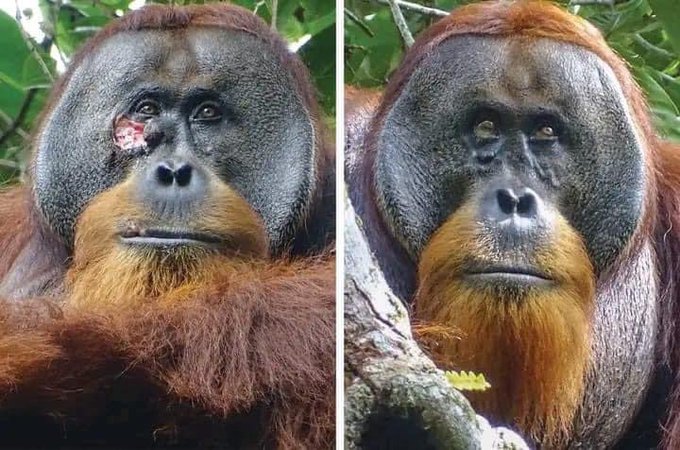
This male sumatran orangutan is Raku: he got a wound on his right cheek. Scientists were surprised to spot him applying a medicinal plant on his face: akar kuning (Fibranaurea tinctoria), a type of climbing vine that acts as an analgesic.
After about 8 days he applied the chewed stems and leaves of the plant, the wound began to heal and in approximately a month he completely recovered.
This series of observations undoubtedly constitutes the conclusive proof of the level of ingenuity that these majestic animals have.
English
jason ross retweetledi

jason ross retweetledi
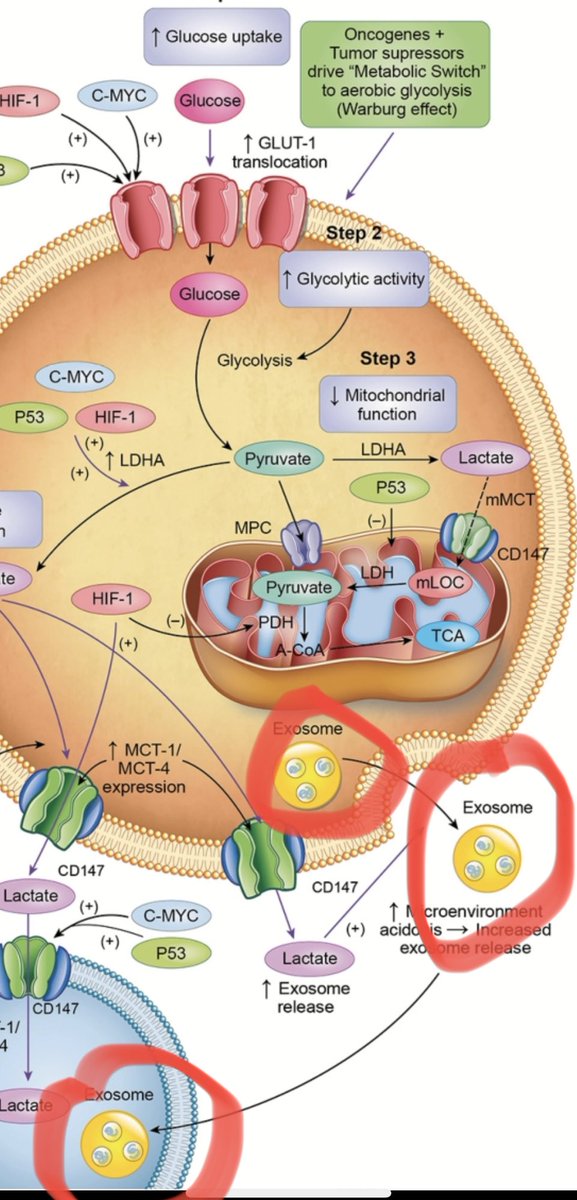
A possible hypothesis that I have behind the benefits of exercise in cancer patients:
Exercise increases mitochondrial function and oxidative capacity in skeletal muscle, the largest organ in the body.
Exosomes are small vesicles secreted by organs containing genetic material and proteins “representing” that organ.
In Cancer, exosomes play a significant role in the process of metastasis. They are like genetically engineered molecules secreted by cancer cells released to the circulation on route towards candidate organs.
Cancer-derived exosomes can penetrate other organs and release their genetic material from the primary tumor, transforming a normal cell into a cancer cell in a distant organ.
Skeletal muscle also releases exosomes. If metabolically fit, muscles will have a great oxidative capacity (opposite to cancer’s glycolytic phenotype). It could be possible that muscle-derived exosomes could counteract cancer exosomes…
Still, so much to learn and so little room to finance new ideas or approaches…
English
How is ESPN not telling us the distance in the Boston marathon?
English