

Joey Z
659 posts
Joey Z
@txjudo
Retweets, likes, shares or follows do not imply endorsements or agreement.
Katılım Mayıs 2010
1K Takip Edilen113 Takipçiler


Trump's first post after Iran peace talks broke down:
English


CARNEYNOMICS:
"The days of our military sending 70 cents of every dollar to the United States are over."
Stay connected, follow @MOSSADil.
English
Joey Z retweetledi

Old school Judo training regimes were some of the most hardcore in all of the Combat Sports world.
Even the toughest martial artists wouldn’t do it.
English
@dale_dsll @vcdgf555 Some things are non-negotiable. It appears in this instance the non-negotiable for both countries is the same. A nuclear Iran.
English

@vcdgf555 When you go to a negotiation and you don’t negotiate.
English







Lockheed in January discussed a target of increasing annual PAC-3 interceptor production from approximately 600 to 2,000 over a span of seven years. defensenews.com/industry/techw…
English
Exactly. “As a basis for negotiations” does not mean the U.S. accepted Iran’s 10-point plan as the deal. It only means the plan could be used as an opening framework for talks. It leaves open the possibility that any or all of the terms are changed, watered down, or discarded entirely. Trump coul theoretically demand the return of the Shaw and a Nuremberg style war tribunal.
English

Let’s be real: there's basically zero chance the U.S. actually accepts Iran’s terms to end this. At best, we're looking at a temporary pause, not a resolution.
The Americans have pretty much already trashed that 10-point plan. Showing up just to "listen to them" is mandatory protocol at this point, but honestly, it feels like a total waste of time for everyone involved really.
English

We will certainly demand full reparations for all damages caused, as well as blood money for the martyrs and compensation for the war's wounded.
English
Calling it a “basis for negotiations” does not mean Trump accepted Iran’s 10-point plan as the deal itself. It only means the plan could serve as the opening framework for talks. Saying they will be used as a basis leaves open the possibility that any or all of them will be changed, watered down, or discarded. Trump could demand a return of the Shaw and Nuremberg style war crimes tribunal for the IRGC. It means absolutely nothing.
English
Calling it a “basis for negotiations” does not mean Trump accepted Iran’s 10-point plan as the deal itself. It only means the plan could serve as the opening framework for talks. A true Iranian win would be Trump agreeing to all 10 points as written and making them the final terms. Saying they were used only as a basis leaves open the possibility that any or all of them were changed, watered down, or discarded. Trump could demand a return of the Shaw and Nuremberg style war crimes tribunal for the IRGC. It means absolutely nothing.
English
Somewhat difficult to frame the 10-point plan as any kind of US victory. Yes, the US armed forces (and Israeli ones) beat their Iranian counterparts in an impressive display of military prowess, but the US and aligned countries are worse of now than they were prior to the war.
Institute for the Study of War@TheStudyofWar
MORE: President Trump described Iran’s 10-point counterproposal that it sent to the US on April 5 as “a workable basis on which to negotiate.” ⬇️ Iran’s demands included a permanent end to the war with guarantees that the United States or Israel will not attack Iran again. Iran also demanded the lifting of all primary and secondary sanctions on Iran, the termination of all UN Security Council and International Atomic Energy Agency (IAEA) Board of Governors resolutions against Iran, the payment of reparations to Iran, the withdrawal of US forces from the region, and the cessation of war on all fronts, including Israeli operations against Hezbollah in Lebanon. Iran also reportedly stated that it will charge vessels transiting the Strait of Hormuz a fee of up to $2 million US dollars, the revenue from which it will split with Oman and use for post-war reconstruction. Iran’s proposal to charge vessels that transit the Strait of Hormuz highlights Iran’s attempt to use the strait as a point of leverage and for its financial gain.
English


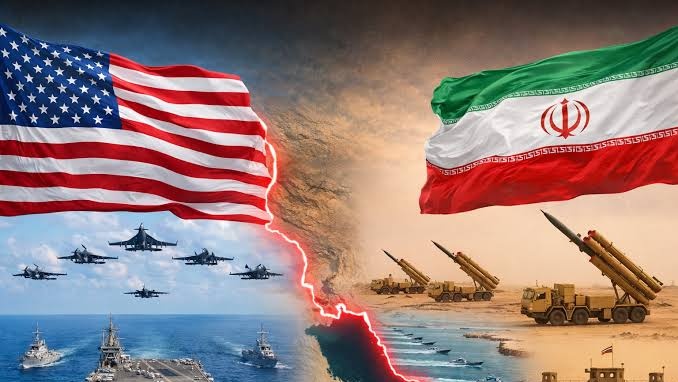
⚡️⚡️⚡️BREAKING
Iran says the United States has agreed to Tehran's proposal to end the War:
- No future aggression
- Iran keeps control of the Strait of Hormuz
- Acceptance of uranium enrichment
- All sanctions lifted
- U.S. forces withdraw from the region
- Compensation paid to Iran
- War ends on all fronts
English
@DianaVilliers1 Reminds me of Bill Clinton and NATO….Hypocrites.
washingtonpost.com/archive/politi…
English

They must definitely not war crimes. At all.
Have you been accusing Ukraine of war crimes? They’ve been bombing power plants and bridges controlled by the Russians for some time now.
Edward Feser@FeserEdward
These are war crimes. Dear U.S. Catholic bishops, politicians, and opinion makers, if you all spoke out loudly en masse, you might just possibly deter the president from committing this evil against the Iranian people and staining the honor of our country. Please do your duty! @USCCB
English
@barnes_law @scrowder @ClayTravis Reminds me of Bill Clinton and NATO….Hypocrites.
washingtonpost.com/archive/politi…
English

Unless you're as legally illiterate as @scrowder or @ClayTravis you know Trump's threatened action if followed violates established war crimes law. Every soldier & official involved in it could be prosecuted.
Mario Nawfal@MarioNawfal
🇺🇸🇮🇷 TRUMP’S INFRASTRUCTURE WAR AND THE LAW HE’S DARING TO BREAK So here we are, watching a literal countdown to 8pm, with Trump threatening to wipe out Iran’s bridges and energy system if it doesn’t fall into line on schedule. Trump even went as far as to threaten: “A whole civilisation will die tonight.” That’s less a policy statement, more something you’d expect from a Bond villain, except this one comes with carrier strike groups and legal exposure. And that’s really the point. This isn’t just escalation theatre, it’s a direct collision with the rules that are supposed to govern how wars are fought, and whether they can be fought at all. Because the targets being floated aren’t military formations or missile sites. They’re bridges, power plants, transmission networks, the connective tissue of civilian life. The stuff that keeps hospitals running, water clean, food refrigerated, and cities functioning. International humanitarian law is not subtle about this. Civilian infrastructure is protected unless it makes an effective and concrete contribution to military action, and even then, any strike has to pass the tests of distinction and proportionality. In plain English: you don’t get to shut off a country’s electricity because it might inconvenience its government. And that’s where this threat starts to look less like hard-nosed strategy and more like collective punishment. Because when you deliberately target an energy grid, you’re not just hitting wires and transformers, you’re knowingly cascading harm across an entire civilian population. What makes the situation even more precarious is that we’re not talking about a clean slate. There’s already been a steady drift toward infrastructure targeting. Recent strikes in Iran have hit transport links and bridges, including the Karaj B1 bridge, with civilian casualties reported. The line between “military objective” and “everything that keeps a society running” is already being blurred in practice, not just rhetoric. That matters, because the legal justification gets thinner every time that line is crossed. “Dual-use” infrastructure, electricity, roads, ports, has become the favorite loophole of modern warfare. Yes, power grids support military operations. They also support literally everything else. The law doesn’t ignore that, it centers it. If the foreseeable civilian harm is massive and systemic, you don’t get to wave it away as collateral damage. You chose the target knowing exactly what it sustains. Which is why legal experts and international observers are already using the phrase “war crime” without much hesitation. Not as a rhetorical flourish, but as a straightforward reading of the rules. And even that isn’t the whole legal problem. Because before you get to how a war is fought, you have to ask whether it’s lawful to fight it at all. Under the UN Charter, the use of force is tightly constrained, self-defense against an imminent attack or authorization from the Security Council. An ultimatum to “comply by 8pm or we dismantle your infrastructure” sits uncomfortably outside both categories. Put those two layers together and the picture gets stark: a potential violation of the rules governing the use of force, stacked on top of a potential violation of the rules governing conduct in war. It’s not just pushing the boundaries of international law, it’s stress-testing whether those boundaries still exist. And then there’s the strategic irony. Infrastructure warfare doesn’t stay contained. Iran has already signaled it would respond in kind, targeting energy systems across the region. That’s the logic of escalation once these norms erode: if one side can switch off cities, so can the other. At that point, the debate over legality becomes almost secondary to the reality it produces. Power grids become targets everywhere. Civilian systems become leverage everywhere. The distinction between battlefield and society collapses entirely. Which is why this moment matters beyond the immediate crisis. If the U.S openly embraces the idea that civilian infrastructure is fair game, it doesn’t just bend the rules, it rewrites them. And not in a way that can be selectively applied. Because once you normalize turning off someone else’s country, you’ve implicitly signed off on the possibility that someone else will try to turn off yours. When you take into account that Chinese-linked hackers have already breached U.S critical infrastructure, including water treatment systems, as part of a broader strategy to pre-position for a future conflict, that possibility becomes all the more real. So when the clock hits 8pm, the real question isn’t just whether the strikes happen. It’s whether the last thin line between warfighting and societal destruction gets rubbed out completely, and whether anyone can still pretend, after that, that the law of war is anything more than a suggestion.
English
@realSergeLuke @barnes_law @scrowder @ClayTravis Reminds me of Bill Clinton and NATO….Hypocrites.
washingtonpost.com/archive/politi…
English

@barnes_law @scrowder @ClayTravis Just like Clinton and NATO were prosecuted for 1999 war crimes against bridges and power plants.
English
@AaronDraven Reminds me of Bill Clinton and NATO….Hypocrites.
washingtonpost.com/archive/politi…
English

I want to go on record.
If Trump blows up bridges & power plants tonight, I hope every single sitting member of the senate & house is tried for war crimes too.
Democrats. Republicans. Independents. Every. Single. One.
You could have stopped this. But you're fucking cowards.
English
@james_pag @EdKrassen Reminds me of Bill Clinton and NATO….Hypocrites.
washingtonpost.com/archive/politi…
English

@EdKrassen I dont remember reading about dems calling out FDR and Truman for bombing Dresden and other cities. And destroying Japanese cities mostly civilians with the atomic bombs. We must have bombed thousands of bridges and power plants during WW2. No war crimes. They hate Trump. Simple
English

BREAKING: Greta Thunberg just eviscerated Trump for his comments about wiping out an entire civilization, dropping multiple F-bombs in the process.
"The President of the United States just said that a whole civilization will die tonight and never to be brought back again and no one is reacting. This speaks for itself, what the f--k is anyone even doing at this point? We have normalized genocide, total annihilation of entire people, the systematic destruction of the biosphere which we are all depending on to survive, and that corrupt racist war criminals can act with complete impunity. But even though we have allowed far too much so far, it is not too late to say 'stop!' If we don’t, we shouldn’t f--king be able to call ourselves human"
English
@OrlandoMuldoon @JDVance_News Reminds me of Bill Clinton and NATO….Hypocrites.
washingtonpost.com/archive/politi…
English

@JDVance_News Civilian power plants and bridges are not Military targets, jdjerkoff.
Can you say WAR CRIMES, jdjerkwad? Impeachment and trial for these Crimes will look good on YOU and Drump. 😆

English

🚨 #BREAKING: Iran is now using children as human shields around power plants and bridges — hoping to protect their military targets from U.S. strikes.
This is pure evil!
The same regime that screams “Death to America” is willing to sacrifice its own kids to shield its weapons.
President Trump made it clear:
A whole civilization may die tonight… but after 47 years of extortion, corruption, and death, the Iranian people might finally be freed.
No more hiding behind children.
No more playing games with human lives.
The regime is run by vile animals.
America will not be blackmailed by terrorists using kids as shields.
Pray for the innocent.
Pray for the fall of this evil regime 🇺🇸
#USA #IranWar #Trump
English
@ABDonEtsy @GiacomoUSA @aj_inapi @NobodymrRobert Reminds me of Bill Clinton and NATO….Hypocrites.
washingtonpost.com/archive/politi…
English

@GiacomoUSA @aj_inapi @NobodymrRobert Yes, they absolutely do meet the definition of war crimes. You cannot destroy civillian infrastructure, power plants, desalination plants. He also murdered 165 children and teachers at a girls school. That’s a war crime.
English

This is not a human shield.
A real human shield is when you stand inside the power plant.
At the first sound of fighter jets, they will all run for their lives.
This is all a skit until shit gets real.
I don't see the Iranian President 😁
English