Toadnail
761 posts

Toadnail
@tyler007b
I like space weather.










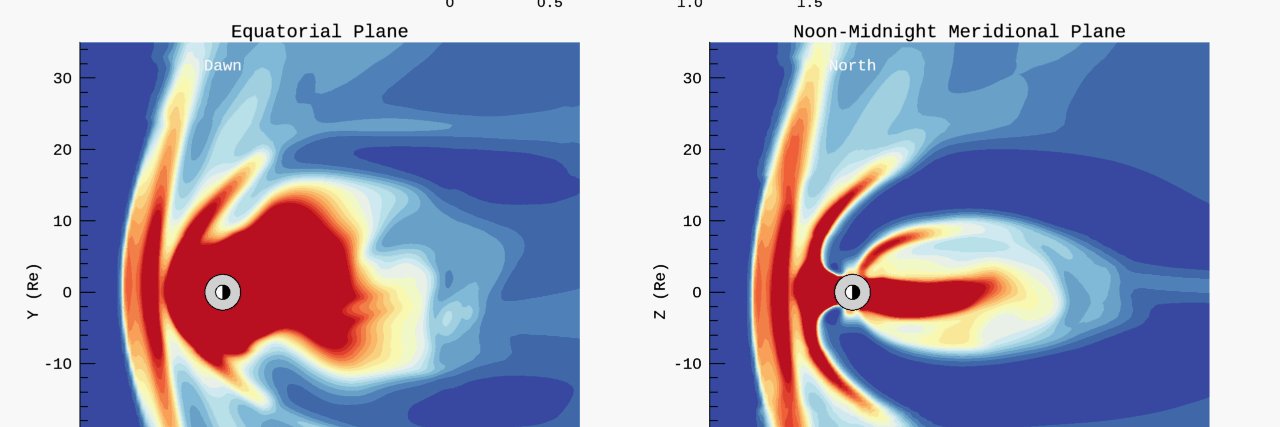
Some day - maybe in Solar Cycle 25 or in 50 or more years - we will see a CME like this directed at us. This is the 23 July 2012 'perfect solar storm' CME. Launch speed: ~3400 km/s. Speed at Earth: ~2300 km/s. Bt = 109 nT (the strongest ever measured). Bz (min) = ~-50 nT. Had it hit the Earth it would have caused a storm with DSTmin = -700 to -1200 nT. Carrington level. If you are keeping count this is at least the third far-side CME with 3000+ km/s since 2012. It is about equally likely or unlikely that we'd have had all three launched directly our way. Super lucky (or unlucky).
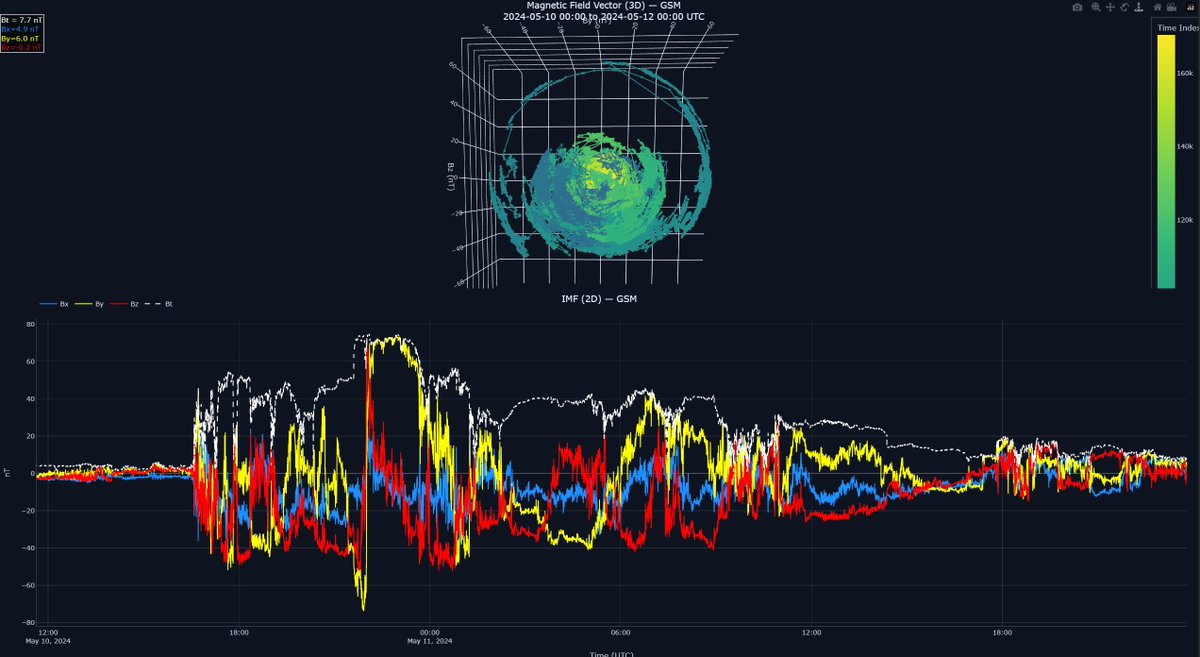
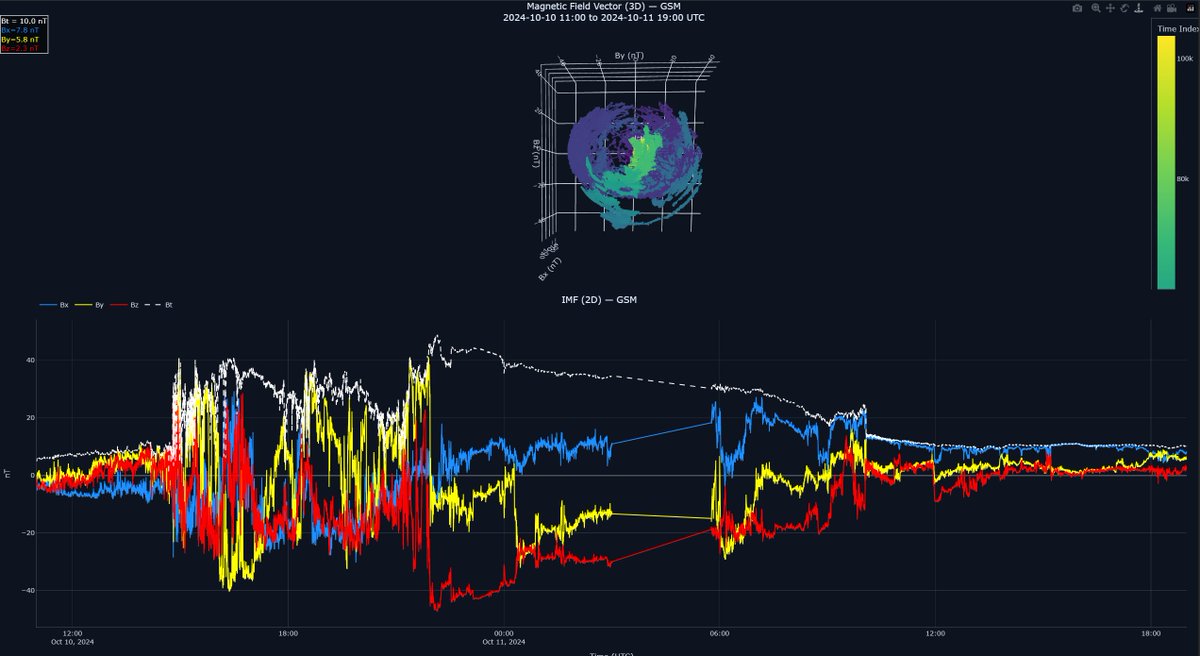
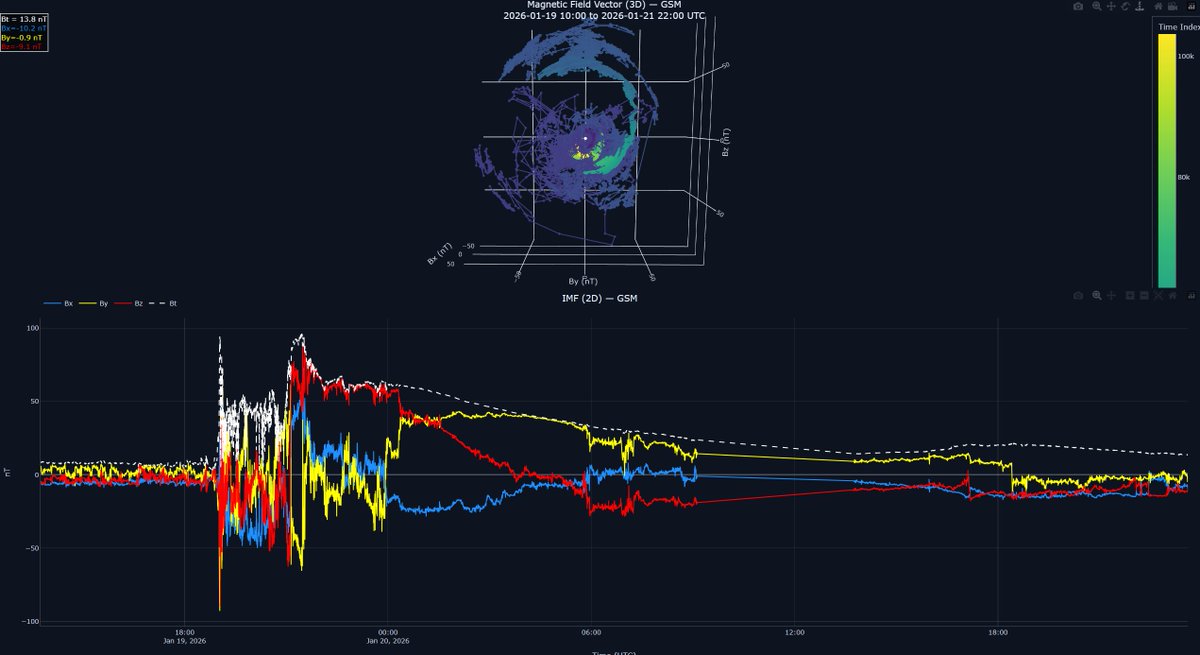
Why this was a truly high-end CME (a near Carrington event if you will). The solar wind speed was extreme - the shock front going at about 1200-1300 km/s, crossing the distance between L1 and the Earth in only about 20 minutes. This is exceptional, we have not seen such a CME hit the Earth in two decades. But the most exceptional is the IMF (Bt/Bz). Bt peaked at a whopping 91 nT (21:24 UTC) in the late part of the sheath or early part of the flux rope. This is more than during the 10-11 May 2024 G5 Gannon storm (74 nT), 10-11 October 2024 G4 storm (46 nT) and also more than during the 2003 Halloween storms (63 nT & 40 nT). Unfortunately, Bz remained strongly positive, up to 81 nT. It only turned negative after 5h UTC, but never reached below -26 nT. Imagine if the Bz curve was inverted or equal to -Bt. This would have resulted in Bz in -50 to -70 nT range for up to 5 hours. Bz was strongly negative, in the -30 to -50 nT range for about 5 hours during the 10-11 May 2024 G5 storm, with periods of positive Bz during this period. Solar wind speed at this time was 700-750 km/s, far lower than last night. It reached -47 nT and was below -35 nT for about two hours during the 10-11 October 2024 G4 storm, while solar wind speed reached 700 km/s. These two events were lower-speed, but strong and persistent Bt and -Bz. The 2003 Halloween storms, two G5 storms in two days, were caused by super fast CMEs with less favourable Bt/Bz. The first storm reached G5 during a short (15 min) dip to -54 nT in the sheath region, but a solar wind speed likely close to 2000 km/s. The second reached G5 during a 3-hour dip below -20 nT down to -35 nT in the flux rope, with solar wind speed likely in the 1200-1300 km/s range. The big CME last night combined both extreme solar wind speed and extreme Bt. There is little doubt in my mind that had Bz been strongly negative in the CME flux rope last night, we would have seen a G5 storm significantly stronger than the Gannon storm or the 2003 Halloween storms. Likely the strongest since at least the 13 March 1989 G5 event. Alas we got a taste of what a brutally strong & persistent Bz is like. Ugh.

A full animation of the impressive (but NOT Earth-directed) CME's yesterday. The first CME that launched southeast was a very large, slow filament CME -- given its position/orientation we can reasonably estimate the speed using the earth radii rings -- it takes approximately 135 minutes to go from the 5 to 10 rings, which gives us ~440 km/s, with perhaps a moderate margin for error given the data cadence. The second one had a much more southward trajectory and was a bit faster -- It traversed the same distance in 60-75 (call it 67?) minutes which ends up giving us a respectable 865 km/s, give or take. Speeds calculated like this are also only baseline minimum speeds, as with a single viewpoint we can only measure velocity perpendicular to the view line between CCOR-1 and the sun. Any movement towards-away from CCOR-1 will go unmeasured, and will only add to the speed measured this way. First CME outlined in orange, second in pink.

Feeling good about Solar Cycle 25 lately? Here's the Top 10 geomagnetic storms of Solar Cycle 23 list. Can we do a bit more of SC23?