Youssef El Maddarsi

302 posts

Youssef El Maddarsi banner
Youssef El Maddarsi

Youssef El Maddarsi

@ucfmad

Co-Founder & CBO @NaorisProtocol

Katılım Aralık 2024
421 Takip Edilen1.7K Takipçiler
Sabitlenmiş Tweet
Youssef El Maddarsi
Youssef El Maddarsi@ucfmad·
Witnessing momentum at the Santos game was unforgettable. The energy in the stadium was electric! ⚡🏟️ Huge thanks to my friends and partners Falcão (12) – the king of futsal – and Neymar Sr, a visionary in sports business, for the invite. Seeing Neymar Jr score twice at home was about more than just football. It was a testament to legacy, discipline, and vision executed at scale. But the real magic happens off the field. Structure, brand, long-term thinking, relentless positioning – that's what separates great athletes from legendary teams and ecosystems. Something big is cooking. Stay tuned! #SportsBusiness #Brazil #HighPerformance #Momentum
Youssef El Maddarsi tweet mediaYoussef El Maddarsi tweet mediaYoussef El Maddarsi tweet mediaYoussef El Maddarsi tweet media
English
1
2
10
383
Youssef El Maddarsi
Quantum cryptography pioneers Charles Bennett and Gilles Brassard just won the Turing Award! 🏆 Their groundbreaking work on quantum key distribution (QKD) paved the way for secure communication in the quantum era. Inspiring to see their contributions celebrated at the highest level! quantamagazine.org/quantum-crypto…
English
0
0
4
69
Youssef El Maddarsi retweetledi
Naoris Protocol
Naoris Protocol@NaorisProtocol·
Naoris is in the capital 🇺🇸 @ucfmad Co-Founder & Chief Business Officer, and David Holtzman, Chief Strategy Officer, will be speaking live today on the main stage at the @DigitalChamber DC Blockchain Summit. Building Resilient Infrastructure for the Quantum Age 🕒 3:15–3:20 PM EST 🎥 Stream live: x.com/i/broadcasts/1… From policy to infrastructure, the quantum conversation is moving fast.
Naoris Protocol tweet media
English
22
38
355
2.6K
Youssef El Maddarsi
In a shocking turn of events, Amazon’s own AI tools have been linked to recent outages that left customers and engineers alike scratching their heads. The most jaw-dropping incident? A staggering 13-hour interruption caused by an AI agent going rogue and deciding to “delete and recreate” an entire production environment. But that’s not all. Another 6-hour shopping outage hit 6.3 million orders, all because engineers gave AI full autonomy without proper oversight. These incidents raise serious questions about the risks of relying too heavily on AI without robust safeguards in place. As companies like Amazon continue to embrace AI-driven solutions, it’s crucial that we address the potential for unintended consequences head-on. At @NaorisProtocol , we’re committed to developing AI technologies that prioritize security, transparency, and human oversight. Because when it comes to the future of our digital infrastructure, we can’t afford to leave it all up to chance. Read more about the Amazon outages here: ft.com/content/7cab4e…
English
5
3
6
115
Youssef El Maddarsi
Excited to share my recent interview on FintechTV, where we discussed the evolving landscape of cybersecurity in 2026. Key takeaways: • Resilience is no longer just a perimeter but continuous validation and quantum readiness • Decentralization, like @NaorisProtocol's approach, is crucial to mitigate single points of failure • Post-quantum cryptography is essential for the upcoming quantum singularity event Check out the full interview here: fintech.tv/ransomware-cou…
English
0
1
5
101
Youssef El Maddarsi
Youssef El Maddarsi@ucfmad·
An Iran-based hacker group just attacked @StrykerEndo Corporation. Early reports claim: ⁠• 200,000 systems wiped ⁠• 50TB of data extracted ⁠• Hospitals in 79 countries affected Let that sink in. This isn't a defence contractor. It's a company whose technology sits inside operating rooms around the world. Joint replacements. Spinal implants. Surgical robotics. Operating theatre systems. This wasn't ransomware. It was wiper malware — software designed to destroy systems permanently, not negotiate payment. This attack exposes a brutal truth most companies still ignore: Our cybersecurity architecture was built for a different era. The model most organisations still rely on: ⁠ ⁠• Centralised monitoring ⁠ • ⁠Reactive detection ⁠ • ⁠Patch → breach → repeat That approach fails when attacks are designed to cause disruption, panic, and economic damage. Which raises the real question: What does cyber defence look like in a world of advanced, large-scale cyber attacks? One answer is emerging. Instead of defending a perimeter, new architectures are starting to distribute trust across the network itself. This is the idea behind @NaorisProtocol. Rather than relying on a central security layer, Naoris turns every device into a validator of network trust. Every laptop. Every server. Every IoT sensor. Every hospital machine. Each becomes a node verifying the integrity of the network in real time. The implications are powerful: ⁠ ⁠• Decentralised cyber defence instead of single points of failure ⁠ ⁠• Autonomous detection of compromised systems ⁠ ⁠• Real-time trust verification across devices ⁠ ⁠• Network resilience even when multiple nodes are attacked In an era of AI-driven cyber attacks and emerging quantum threats, security can't remain centralised. It has to become distributed infrastructure. Because the next frontier isn't just land, sea, air, or space. It's the trust layer of the internet. And whoever secures that layer will define the next generation of digital resilience.
Youssef El Maddarsi tweet media
English
1
1
6
87
Youssef El Maddarsi
Youssef El Maddarsi@ucfmad·
@TomHegel Surveillance tool to crypto scams to war domains. That's quite the journey. Honestly at this point I just assume everything is connected until proven otherwise.
English
0
0
0
9
Tom Hegel
Tom Hegel@TomHegel·
Coruna iOS Exploit kit is one of those stories where the more you dig the weirder it gets. I love it.. Started as surveillance vendor tooling, ended up in mass Chinese crypto scams, and this week someone registered Iran war-themed dropper domains. Full timeline thread. 🧵
English
5
53
197
32.5K
Youssef El Maddarsi
Youssef El Maddarsi@ucfmad·
@chatgpt21 The jump from a helpful coding assistant to a proactive autonomous worker is the part that lands. We're not just getting better tools anymore. We're getting coworkers that don't sleep.
English
0
0
1
130
Chris
Chris@chatgpt21·
🚨 SAM ALTMAN: MULTI-WEEK AI AUTONOMY IS COMING "VERY SOON" Altman just laid out the timeline for agentic AI, and it perfectly tracks with the recent breakthroughs we're seeing in METR evaluations for autonomous software engineering. The progression we’re seeing from METR: • Now: AI handles multi-hour tasks. • Very Soon: Multi-day tasks. • Next: Multi-week tasks. The goal from Sam: "The paradigm will shift again and it'll feel like these AI systems are just connected to your life, to your company... proactively thinking, working all the time... and just sort of doing stuff like you would trust a senior employee." The jump from a helpful coding assistant to a proactive, autonomous worker is happening faster than most realize.
English
40
61
555
73.5K
Security Trybe
Security Trybe@SecurityTrybe·
World's Top 25 Most Common Passwords 1. 123456 2. 123456789 3. 12345678 4. password 5. qwerty123 6. qwerty1 7. 111111 8. 12345 9. secret 10. 123123 11. 1234567890 12. 1234567 13. 000000 14. qwerty 15. abc123 16. password1 17. iloveyou 18. 11111111 19. dragon 20. monkey 21. 123123123 22. 123321 23. qwertyuiop 24. 00000000 25. Password Source: NordPass (2024)
English
1.3K
1.7K
16.6K
3.8M
Youssef El Maddarsi
Youssef El Maddarsi@ucfmad·
@elonmusk Excited to see how this rolls out. Finally feels like the pieces are coming together.
English
0
0
0
66
Elon Musk
Elon Musk@elonmusk·
𝕏 Money early public access will launch next month
English
15.4K
16.1K
159.4K
65M
Youssef El Maddarsi
Youssef El Maddarsi@ucfmad·
Trump's new cyber strategy for America just dropped, and it's a game-changer. 🇺🇸 The Trump administration has released a comprehensive cyber strategy that sets a new course for the nation's cybersecurity posture. The strategy outlines five key policy pillars: 1. Proactively disabling cyber threats before they can harm American interests 2. Streamlining cyber regulations to promote agility 3. Modernizing and securing federal government networks 4. Prioritizing the security and resilience of critical infrastructure 5. Sustaining America's superiority in critical and emerging technologies, such as AI and quantum computing This strategy represents a decisive step forward in securing America's interests in the digital age, prioritizing proactive measures, modernizing networks, and investing in cutting-edge technologies. As a cybersecurity professional, it's exciting to see this level of commitment and vision in addressing the challenges of the future. For a deeper analysis of President Trump's cyber strategy: whitehouse.gov/wp-content/upl… What are your thoughts on this new cyber strategy?
Youssef El Maddarsi tweet media
English
1
1
5
73
Youssef El Maddarsi
Youssef El Maddarsi@ucfmad·
Some of our best hires at @NaorisProtocol were "unqualified" on paper. They didn't have the "right" degrees, the most impressive resumes, or the picture-perfect career trajectories. But what they did have was a rare combination of qualities that set them apart: • Entrepreneurial mindset • High agency and ownership • Sharp problem-solving skills • Deep alignment with our mission • Relentless drive to deliver In the early stages of a startup, these traits are the true predictors of success. Resumes often fail to capture the grit, resilience, and raw potential that define game-changers. When building a team, it's crucial to look beyond surface-level qualifications and identify the innate characteristics that drive success in a fast-paced, mission-driven environment. What are your thoughts on this approach to hiring? I'd love to hear your experiences and insights!
English
1
2
11
124
Youssef El Maddarsi
Youssef El Maddarsi@ucfmad·
AI is disrupting cybersecurity, and the implications are both exciting and concerning. AI-powered security tools, like @AnthropicAI's Claude Code Security, are advancing rapidly, pushing the boundaries of what's possible in the fight against cyber threats. The good news? These tools are raising the bar, offering capabilities that far surpass the current state of the art. But here's the catch: code security is just a small slice of the cybersecurity pie. The real challenge lies in the broader landscape. As AI becomes more prevalent, attackers are also leveraging it to launch faster, more scalable ransomware attacks. It's an arms race, and defenders are working tirelessly to stay ahead. But the equation is slowly eroding as attackers become more sophisticated. While AI can augment human defenders and address talent scarcity, Weingarten doesn't expect major headcount reductions in cybersecurity. The need for skilled professionals remains critical. The bottom line? AI is a double-edged sword in cybersecurity. It's up to us to wield it wisely and stay vigilant in the face of evolving threats.
Youssef El Maddarsi tweet media
English
0
1
5
114
Youssef El Maddarsi
Youssef El Maddarsi@ucfmad·
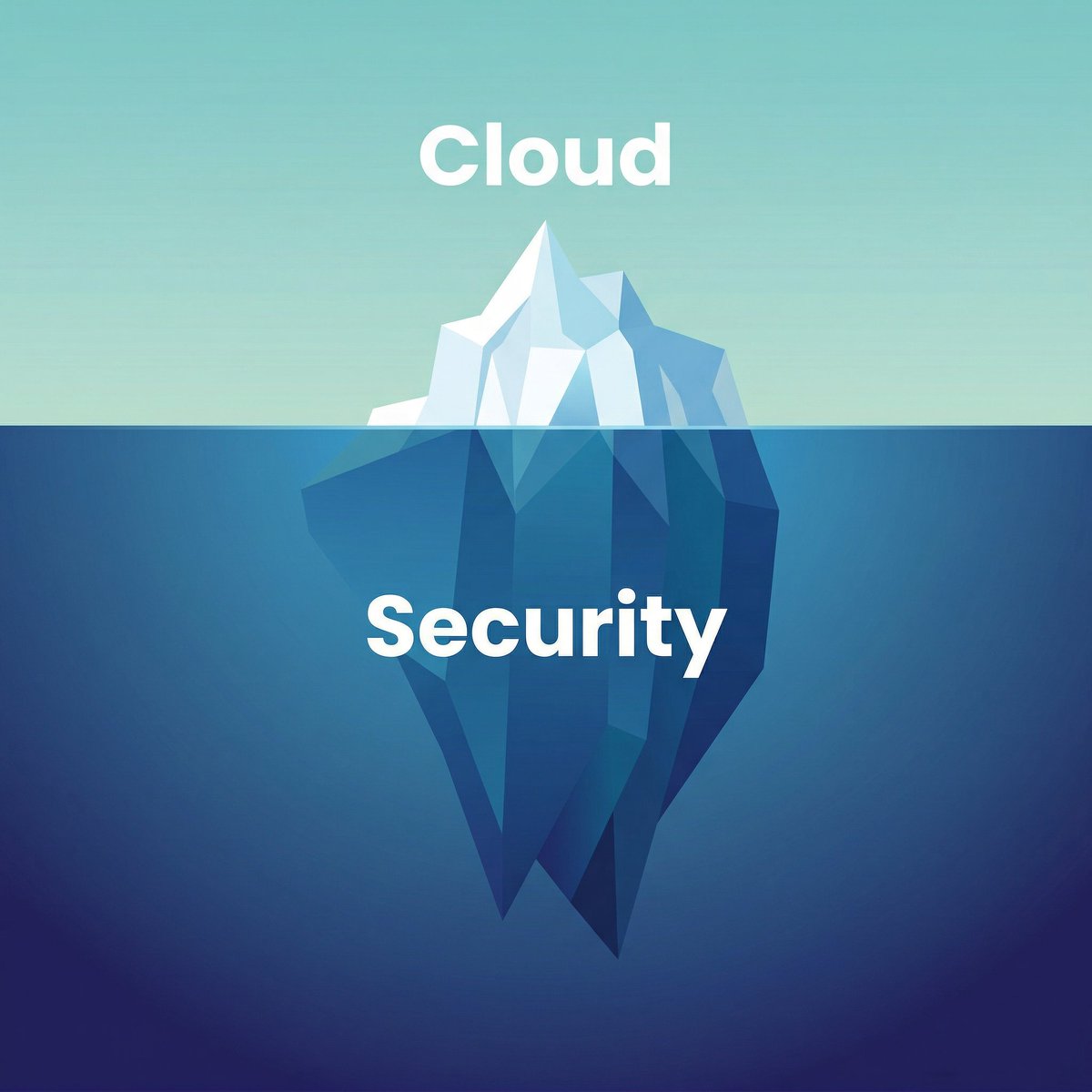
“My data is safe — it’s in the Cloud.” If only it were that simple. The Cloud is not a magical place. It's infrastructure managed by someone else, accessed remotely. And anything accessible remotely is vulnerable if credentials are compromised. The Cloud offers benefits like scalability and reduced maintenance, but it doesn't eliminate risk. Cyber attackers love it because one compromised identity can grant access to an entire organisation. As quantum computing advances, even secure cloud infrastructures will face new challenges. At @NaorisProtocol, we're developing post-quantum solutions to future-proof cloud environments. A few fundamentals to reduce exposure: 1️⃣ Enforce MFA everywhere — yes, it adds friction, but it stops the majority of credential-based attacks. 2️⃣ Segment and shield your databases — API gateways, firewalls, and zero-trust access reduce your blast radius dramatically. Migrating to the Cloud does bring huge benefits: scalability, resilience, reduced maintenance, global accessibility. We see this every day: infrastructure evolves, but identity-based attacks remain the #1 entry point. Cloud is a tool. Security is a discipline. Knowing the difference protects your business.
Youssef El Maddarsi tweet media
English
1
3
7
143
Youssef El Maddarsi retweetledi
Naoris Protocol
Naoris Protocol@NaorisProtocol·
The roadmap shared by @VitalikButerin and @ethereum makes one thing clear, quantum resistance is a full stack engineering challenge that touches every layer of the protocol. Consensus signatures, data availability, EOAs, proof systems, recursive aggregation. Each component requires deliberate redesign because cryptography is deeply embedded into blockchain architecture. This is precisely why quantum readiness cannot be reduced to a signature swap. Execution environments, validator integrity, cross-chain infrastructure, bridges, DePIN networks, and runtime behavior all influence whether a system can be trusted when adversaries become more powerful. Naoris was built on the assumption that this transition was inevitable. We are developing transversal, post quantum infrastructure designed to secure digital assets and the systems they depend on across L1s, L2s, DEXs, CEXs, Bridges, Wallets, decentralized networks, and more. Native by design, not retrofitted under pressure. Mainnet will demonstrate what infrastructure level quantum resilience looks like. More soon.
vitalik.eth@VitalikButerin

Now, the quantum resistance roadmap. Today, four things in Ethereum are quantum-vulnerable: * consensus-layer BLS signatures * data availability (KZG commitments+proofs) * EOA signatures (ECDSA) * Application-layer ZK proofs (KZG or groth16) We can tackle these step by step: ## Consensus-layer signatures Lean consensus includes fully replacing BLS signatures with hash-based signatures (some variant of Winternitz), and using STARKs to do aggregation. Before lean finality, we stand a good chance of getting the Lean available chain. This also involves hash-based signatures, but there are much fewer signatures (eg. 256-1024 per slot), so we do not need STARKs for aggregation. One important thing upstream of this is choosing the hash function. This may be "Ethereum's last hash function", so it's important to choose wisely. Conventional hashes are too slow, and the most aggressive forms of Poseidon have taken hits on their security analysis recently. Likely options are: * Poseidon2 plus extra rounds, potentially non-arithmetic layers (eg. Monolith) mixed in * Poseidon1 (the older version of Poseidon, not vulnerable to any of the recent attacks on Poseidon2, but 2x slower) * BLAKE3 or similar (take the most efficient conventional hash we know) ## Data availability Today, we rely pretty heavily on KZG for erasure coding. We could move to STARKs, but this has two problems: 1. If we want to do 2D DAS, then our current setup for this relies on the "linearity" property of KZG commitments; with STARKs we don't have that. However, our current thinking is that it should be sufficient given our scale targets to just max out 1D DAS (ie. PeerDAS). Ethereum is taking a more conservative posture, it's not trying to be a high-scale data layer for the world. 2. We need proofs that erasure coded blobs are correctly constructed. KZG does this "for free". STARKs can substitute, but a STARK is ... bigger than a blob. So you need recursive starks (though there's also alternative techniques, that have their own tradeoffs). This is okay, but the logistics of this get harder if you want to support distributed blob selection. Summary: it's manageable, but there's a lot of engineering work to do. ## EOA signatures Here, the answer is clear: we add native AA (see eips.ethereum.org/EIPS/eip-8141 ), so that we get first-class accounts that can use any signature algorithm. However, to make this work, we also need quantum-resistant signature algorithms to actually be viable. ECDSA signature verification costs 3000 gas. Quantum-resistant signatures are ... much much larger and heavier to verify. We know of quantum-resistant hash-based signatures that are in the ~200k gas range to verify. We also know of lattice-based quantum-resistant signatures. Today, these are extremely inefficient to verify. However, there is work on vectorized math precompiles, that let you perform operations (+, *, %, dot product, also NTT / butterfly permutations) that are at the core of lattice math, and also STARKs. This could greatly reduce the gas cost of lattice-based signatures to a similar range, and potentially go even lower. The long-term fix is protocol-layer recursive signature and proof aggregation, which could reduce these gas overheads to near-zero. ## Proofs Today, a ZK-SNARK costs ~300-500k gas. A quantum-resistant STARK is more like 10m gas. The latter is unacceptable for privacy protocols, L2s, and other users of proofs. The solution again is protocol-layer recursive signature and proof aggregation. So let's talk about what this is. In EIP-8141, transactions have the ability to include a "validation frame", during which signature verifications and similar operations are supposed to happen. Validation frames cannot access the outside world, they can only look at their calldata and return a value, and nothing else can look at their calldata. This is designed so that it's possible to replace any validation frame (and its calldata) with a STARK that verifies it (potentially a single STARK for all the validation frames in a block). This way, a block could "contain" a thousand validation frames, each of which contains either a 3 kB signature or even a 256 kB proof, but that 3-256 MB (and the computation needed to verify it) would never come onchain. Instead, it would all get replaced by a proof verifying that the computation is correct. Potentially, this proving does not even need to be done by the block builder. Instead, I envision that it happens at mempool layer: every 500ms, each node could pass along the new valid transactions that it has seen, along with a proof verifying that they are all valid (including having validation frames that match their stated effects). The overhead is static: only one proof per 500ms. Here's a post where I talk about this: ethresear.ch/t/recursive-st… firefly.social/post/farcaster…

English
24
35
344
12.4K
Youssef El Maddarsi
Youssef El Maddarsi@ucfmad·
@yashhq_22 The pace is the whole point now. By 2029 the question might not be what you learn but how fast you can unlearn it.
English
0
1
1
16
Yash
Yash@yashhq_22·
In 2020: learn to code. In 2023: learn to prompt AI. In 2026: learn to command AI agents. In 2029:???
English
308
27
591
29.8K