
Sabitlenmiş Tweet
Roots
1.1K posts

Roots
@unplugwithroots
The app that helps you break your phone addiction. Try Roots free ⬇️
Katılım Mart 2022
57 Takip Edilen2.6K Takipçiler
Roots retweetledi

Roots retweetledi

After beating my phone addiction I can tell you life is better on the other side.
Two best ways to start:
1) Grayscale
2) @unplugwithroots
Native Apple screen time is too easy to ignore, screen time apps like Roos keep you accountable.
Sahil Bloom@SahilBloom
I broke my phone addiction in 30 days. • Screen Time down ~70% • Phone pickups down ~50% I reclaimed 4 hours 30 minutes per day. That's 1,635 hours across a full year. 68 days of life from a single behavior change. Here's exactly what I did (save this): 1. Grayscale Mode Put your phone on Grayscale Mode for the entire day. Grayscale Mode removes the colors to make your phone immediately less appealing and addicting. It takes 30 seconds to set up. If you have an iPhone, follow these steps: • Settings • Accessibility • Display & Text Size • Color Filters -> On • Grayscale Next, create a simple shortcut: • Settings • Accessibility • Accessibility Shortcut • Color Filters Now, if you triple-click the side button, you'll be able to toggle it on and off. For non-iPhone users, you can find instructions with a simple search. I kept my phone on Grayscale at all times and only removed it for specific reasons (like posting something that required me to see the color, looking at photos, etc.). It made me less interested in grabbing my phone for the random "just checks" during the day. 2. No-Phone Zones Set specific locations, times, and events where you won't have your phone on you. I called them No-Phone Zones: • Downstairs (kitchen, living room) • Creative flow time (from ~5-8am) • Family flow time (from ~5-7pm) • Family gatherings During these windows, my phone would be in a lock box or in a drawer in my office. If we were out at a family gathering, I would leave it in the car or in my wife's bag where I couldn't feel it. Specifically listing out these No-Phone Zones had the benefit of making it a clear rule that I could cement in my mind. Create your list of No-Phone Zones. Write it down if you need to. 3. Strategic Friction Even with the Grayscale Mode and No-Phone Zones, my phone addiction intervention would have been difficult to execute without this final piece of the puzzle. Motivation and discipline are never enough when you're trying to crack a deeply entrenched behavior. There's a theory in cognitive science called Choice Architecture, which is the idea that you can design your environment to make good choices easier and bad choices harder. Basically, I wanted to add strategic friction to make it much easier to adhere to my rules (and much more difficult to break them). Three primary ways I did that: 1. I locked my phone in a lock box during my morning creative flow (5-8am) and evening family flow (5-7pm). It was a timed lock so I couldn’t get it without emailing the company. 2. I left my phone far away from where I was going to be working. If I wanted to get it, I'd have to walk to the other side of the house or down a few flights of stairs to get it. 3. I added really low screen time restrictions to social apps. If I wanted to overuse them, I'd have to keep approving more time, which felt like letting myself down when I did it. Breaking the addiction is going to be difficult at first. Create strategic friction that helps you stick to the change. Make it difficult to make a bad choice. The Life Impact I'm not going to sugarcoat it at all: This was the single most powerful behavior change I've ever made in terms of the tangible impact and ripple effects on my life. That is not an exaggeration. I was more present, less stressed, and able to connect on an entirely different level. In short, I showed up more aligned with how my ideal self would. My capacity for deep work expanded significantly from simply placing my phone in another room or a lock box. I got more done, faster, at a higher quality bar. It was like the holy trinity of productivity improvement, with no fancy productivity tool required. Reviewing the research, this isn't surprising: There is clear scientific evidence that even having your phone in your pocket or on your desk reduces your cognitive capacity. I felt happier and less stressed immediately upon making the change. So, just keeping score... This was a single, zero cost behavior change that had the net effect of: • Improving my relationships • Improving my work • Improving my happiness To be completely transparent, just a few days in, the only negative thought I had related to the intervention was simple: Why didn't I do this sooner? I hope this is the push you need to make this change in your life. Start small and stick to it. Aim for a 10-20% screen time reduction week-over-week. Keep yourself accountable with a friend. Having now gone through it, I can guarantee you'll see and feel the positive impact immediately. Onward and upward.
English
Roots was built to help you restrict your phone usage without needing to go cold turkey.
Our average user saves 2 hours per day by setting better boundaries.
Clint Jarvis@clinjar
A Heidelberg University study restricted phone use for just 72 hours. Brain scans before. Brain scans after. The researchers were stunned by what they found. Here's what 3 days without your phone actually does to your brain:
English
True.
But, if you need a less extreme option:
Try Roots.
beeple@beeple
HOW TO FIX YOUR ENTIRE LIFE IN 1 DAY
English
Roots retweetledi

We recently got featured with @unplugwithroots on one of UK's largest show @thismorning as part of the growing conversation around healthier technology.
Most apps don’t have users, they have hostages.
Every swipe, every notification, and the weird moments when you open an app without knowing why..
None of this is accidental by the way.
Most products quietly choose addiction because it's easier, makes more money, and it's the industry's default playbook.
The pattern is familiar, especially with content feeds:
Infinite scroll → No stopping cues → Constant cheap dopamine → You feel overstimulated and drained
It's now 2026 and people are starting to push back for real.
A recent global trends report highlights the rise of tech-free zones, quiet parks, and digital detox experiences.
Not because all tech is bad and that we should refuse technology altogether, but because so much is designed without boundaries and it's gone too far.
There’s a name for the alternative called "Guardian Tech" which very much is our design philosophy at Roots
1. Technology built to protect people, not extract from them
2. To support clarity over compulsion
3. To put people back in control
Most design for dopamine hits and to spend more time.
We design for clarity and want you to spend your time better.
Experiences that people crave now isn’t louder, more digital, or stuffed with tokens – it’s calmer, more intentional and human.
And this is why we're building Roots.
Check out Roots in the comment below and give it a try to reduce your doomscrolling
English
Roots retweetledi
7 signs you have brain rot (& don't even realize it):
1. You idle-grab
English
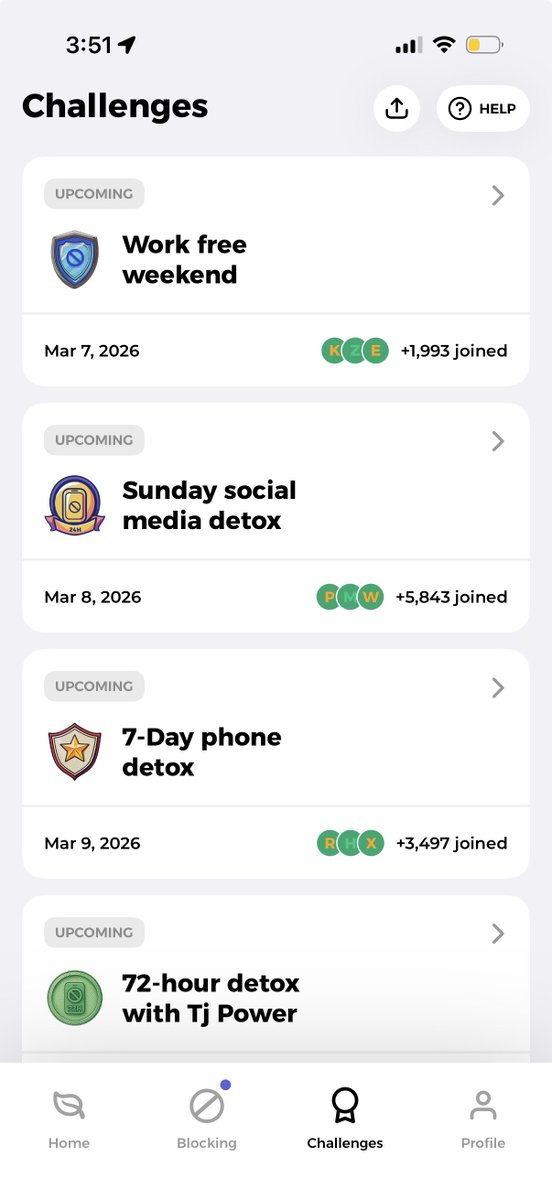
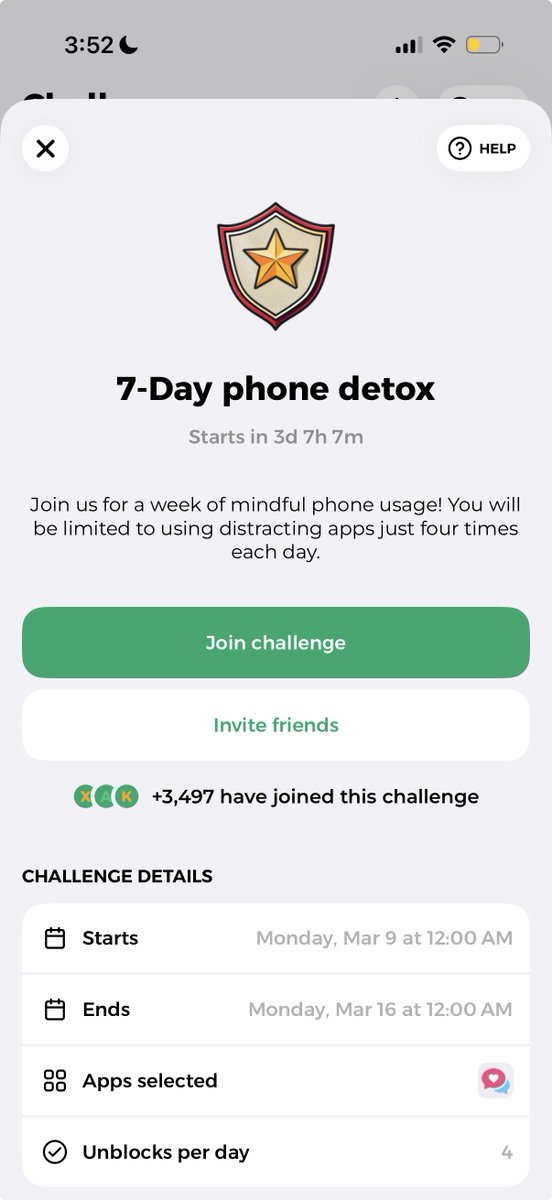
A seven day social media fast can change your life.
We host a monthly 7-day challenge in the app.
Join today: getroots.app/challenges
Bryan Johnson@bryan_johnson
Finished a seven day social media fast. It feels like the most effective longevity therapy I've done. Everything got better: mood, sleep, energy, presence, judgment, relationships, and optimism. Evidence shows a seven day fast produces a reduction of anxiety (16%), depression (25%) and insomnia (15%). The effects felt bigger. Conversely, dipping back in, I can viscerally feel that my body metabolizes social media similarly to a fast food meal, corrosive relationship, hangover, and sleep deprivation. My body hates it. After the previous fasts (40/hr and 70hr), I wrote that social media is pollution. Not a vice or guilty pleasure. It’s closer to water toxins, air pollution and microplastics. This time, the major insight was that social media is a form of intoxication. Alcohol is honest intoxication. It clearly tells you what it's taking from you. Social media on the other hand does not disclose itself as an intoxicant. It produces the sensation of being informed, engaged, and connected while quietly evacuating your capacity for depth and independent thought. You don’t feel drunk, you feel current. But evidence shows that it causes your brain to shrink. The impairment is real by you can't feel it. Making it the more dangerous type. If you haven't tried it, I strongly encourage you to try a social media fast. Even if for one day.
English
Video/ Image credits:
• What is a popcorn brain? | The Diary of a CEO Shorts
• Movistar
• Why You Can't Focus Anymore! | Shane Melaugh
• Neuroscientist: How To Focus In 30 Seconds | Andrew Huberman
• Why Tom Holland Quit Social Media |F-PODCAST
• PHONE ADDICTION || ANIMATION | DNL FUN
• How To Stay Focused | How To Stay Focused
English
If you want to get your brain back:
Setting boundaries with your phone is key.
Start with a screen time app like Roots.
Here's a link to try it free:
getroots.link/aNqv9fK
English
