

AK
31.3K posts

AK
@unsekoolar
Hindu | Bharatiya | Aversion to Secularism, Feminism, Journalism, Gandhism, Sab Ka Vishwasism | | धर्मो रक्षति रक्षितः |
Bengaluru, India Katılım Kasım 2011
377 Takip Edilen314 Takipçiler


Instead of forcing that cameraman into dark spaces and suffocating him, why not use multiple drones to shoot khikhikhi? How hard is that?
Roshan Rai@RoshanKrRaii
Just imagine where the camera person had to hide for this shot 😭
English
AK retweetledi
Civilisations survive not by inheritance alone, but by deliberate acts of re-foundation. On this auspicious occasion of Adi Sankaracharya Jayanti (Vaisakha Shukla Panchami), I share a brief reflection from one of my forthcoming books. Read on: 👇
Adi Sankaracharya and the Institutional Armour of Hindu Civilisation
If Vyasa furnished Hindu civilisation with its metaphysical and narrative foundations, Adi Sankaracharya supplied the institutional structures that enabled those foundations to endure. His appearance in the early medieval period coincided with a moment of acute internal vulnerability. Ritual communities had grown provincial, sectarian rivalries were intensifying, philosophical schools were drifting into isolation, and the civilisation’s intellectual unity was weakening. Though external invasions had not yet reached their full force, Hindu civilisation was losing its internal cohesion and, with it, its long-term resilience. Adi Sankaracharya’s intervention must therefore be understood not as routine philosophical innovation, but as a response to an emerging civilisational crisis.
His achievement was not confined to the articulation of Advaita Vedanta. His lasting contribution lay in constructing a decentralised yet coherent institutional framework capable of transmitting doctrine, disciplining monastic life, coordinating scholastic authority, and knitting together the diverse ritual and philosophical worlds Hindu civilisation contained. Without such institutional consolidation, Vyasa’s textual and metaphysical architecture might have diffused, rendering it susceptible to erosion.
What follows analyses Sankara’s intervention in sequential layers: first, the metaphysical adjudication that established his authority; second, the reconstitution of Hindu monastic institutions; third, the integration of martial preparedness into ascetic life; and finally, the endurance of these structures under centuries of political catastrophe.
1. Internal Fragmentation and the Limits of Philosophical Pluralism
Sankara recognised that ideas do not survive without institutions to guard, interpret, and transmit them. Philosophy cannot protect itself from political disruption; scriptures cannot defend their own continuity; metaphysics cannot withstand organised external aggression. By the time of his emergence, Hindu philosophical life—though intellectually rich—had become dangerously dispersed. Competing schools developed in relative isolation, ritual communities hardened into localisms, and monastic authority was increasingly fragmented. The problem was not diversity as such, but the absence of a unifying metaphysical and institutional centre capable of integrating plurality without dissolving coherence. For Hindu civilisation to be institutionally rebuilt, its intellectual authority first had to be decisively clarified.
2. Sankara and the Philosophical Resolution of the Buddhist Challenge
One of Sankara’s most consequential yet insufficiently theorised civilisational interventions lay in his systematic engagement with Buddhism at the level of first principles. By the early medieval period, Buddhist traditions had achieved significant regional and institutional prominence, supported in part by royal patronage and monastic networks. Yet this prominence remained circumscribed and did not translate into civilisational primacy. Its pramāṇa-theory and dialectical methods, though influential within specific scholastic settings, remained comparatively limited in scope, while the Hindu śāstric traditions preserved a more comprehensive and enduring metaphysical and epistemic framework. The deeper structures of civilisational continuity—ritual practice, social organisation, and scriptural transmission—continued to be anchored in the Vedic order. Buddhism’s visibility within elite circles thus coexisted with, rather than displaced, the broader and more resilient foundations of Hindu civilisation.
Sankara’s engagement with Buddhism proceeded not through sectarian polemic, but through disciplined philosophical reasoning within the shared framework of śāstric debate (vāda). Accepting the demands of pramāṇa-consistency, inferential rigor, and dialectical accountability, he addressed central Buddhist positions—articulated across diverse schools such as Madhyamaka and Yogācāra—on their own terms. His method was not merely refutational but diagnostic: he examined whether the epistemic and soteriological ambitions of these systems could be coherently sustained within their own ontological commitments.
A central point of tension arises at the level of epistemology. If all cognitions are strictly momentary (kṣaṇika) and no enduring knower (pramātṛ) is admitted, the continuity required for memory (smṛti), recognition (pratyabhijñā), and cumulative knowledge becomes difficult to account for. Buddhist attempts to address this through causal continuity (santāna) explain succession but do not fully secure identity across time, leaving unresolved the basis upon which knowledge can be said to persist, accumulate, or belong to a subject in any robust sense.
Related tensions appear at the level of ontology. The denial of enduring selfhood (anātman) and the critique of intrinsic reality (niḥsvabhāvatā), while philosophically powerful in dismantling naïve essentialism, complicate the grounding of agency, moral responsibility, and liberation. If the subject is reducible to a transient aggregate (skandha), the coherence of bondage and release becomes difficult to stabilise; if all phenomena are devoid of intrinsic reality, the status of knowledge as disclosing anything determinate becomes philosophically delicate. In this respect, the internal ambitions of Buddhist thought—to secure valid knowledge, ethical continuity, and liberation—press against the limits imposed by its own foundational theses.
Sankara’s Advaita Vedanta responds to these tensions by systematically articulating—on the basis of the Upanishads—a non-dual framework that integrates epistemology and ontology. Without abandoning the discipline of pramāṇa, it posits a non-dual substratum (Brahman) as the necessary condition for the possibility of knowledge, continuity, and liberation. The empirical world (vyavahāra) is neither dismissed nor absolutised; it is situated within a dependent order whose intelligibility is grounded in an underlying non-dual reality. This allows Advaita to preserve the validity of cognition, the coherence of ethical life, and the meaningfulness of liberation, while avoiding the instabilities that arise when these are grounded in strictly momentary or non-substantial ontologies.
Sankara engaged Buddhism at the level of first principles by exposing tensions within its epistemological and metaphysical commitments. His critique did not eliminate Buddhism as a historical tradition, but it significantly destabilised its standing within the shared śāstric arena by undermining its ability to coherently ground knowledge, agency, and liberation on its own terms. This intellectual destabilisation rendered the tradition structurally vulnerable, diminishing its capacity to withstand subsequent socio-political shocks. It is within this context of weakened philosophical and institutional resilience that the later processes of decline must be situated.
Buddhism’s subsequent decline in India was not monocausal but arose from a conjunction of internal attenuation and external coercion. Within the shared śāstric intellectual arena, it progressively forfeited philosophical authority and competitive vitality, thereby eroding its institutional coherence and social embeddedness. Externally, its normative commitment to pacific ahiṃsā did not translate into durable structures of political sovereignty or organised military defence. Consequently, during the protracted centuries of Islamic invasions and rule—marked by systematic iconoclasm and the destruction of monastic centres—Buddhist institutions and populations proved especially vulnerable. Monasteries were destroyed, and Buddhists were either converted to Islam or eliminated under conditions of sustained coercion and violence. Although Hindu communities suffered in equal measure, their philosophical traditions did not absolutise pacific ahiṃsā; rather, they sanctioned the legitimacy of force and violence in the protection of self, society, and dharma. This, in conjunction with a comparatively broader social base and a decentralised institutional fabric, enabled more effective resistance and greater civilisational continuity. The residual survival of Buddhism in India was entirely contingent upon the protection and patronage extended within Hindu society.
With the reaffirmation of Vedic philosophical authority in a coherent and systematic form, the conditions were created for the reconstitution of Hindu monastic and pedagogical authority under Sankara’s leadership.
3. The Reconstitution of Hindu Monastic Authority: Mathas and the Dasanami Order
Sankara translated metaphysical clarity into institutional form. His four monastic centres—Sringeri, Puri, Dwaraka, and Jyotirmath—were not merely theological schools but civilisational anchors. Their geographic distribution created a four-cornered civilisational grid through which no region was left outside the ambit of a shared intellectual core.
These Mathas stabilised monastic training, formalised lineage transmission, coordinated scholastic authority, and prevented Hindu philosophical life from disintegrating into mutually isolated provincial traditions. Each Matha developed regional affinities and pedagogical specialisations, yet all remained united by a common doctrinal foundation. In this respect, Sankara did institutionally what Vyasa had done textually: he created unity without suppressing genuine plurality.
One of his most decisive contributions was the organisation of the Dasanami order. By codifying ten monastic appellations and formalising rules of conduct, initiation, and hierarchy, he gave Hindu monasticism a stable internal identity recognisable across the subcontinent. The Dasanamis became custodians of metaphysical lineage, guardians of ritual continuity, and repositories of canonical authority—providing a civilisational backbone without which Hindu intellectual life might have remained fragmented and vulnerable.
4. Śāstra (शास्त्र) and Śastra (शस्त्र): Akhadas and the Militarisation of Ascetic Defence
By institutionalising the fusion of śāstra (authoritative knowledge) and śastra (disciplined martial force), Sankara ensured that Hindu ascetic institutions would not remain philosophically refined yet materially defenceless. Equally significant was his role in reorganising the Akhadas—martial orders of ascetics combining spiritual discipline with military training. In the centuries marked by Islamic iconoclasm and political upheaval, these Akhadas formed the most important indigenous defensive network available to Hindu civilisation. They protected temples, defended pilgrimage routes, accompanied merchant caravans, and safeguarded sacred sites.
Their existence reflects Sankaracharya’s clear understanding that spiritual authority and physical security cannot be separated. A civilisation whose institutions cannot defend themselves will eventually lose both their knowledge systems and their freedom. By institutionalising the fusion of śāstra and śastra—wisdom and disciplined power—Sankara ensured that Hindu civilisation would not remain intellectually sophisticated yet militarily defenceless.
5. Institutional Survival Under Political Catastrophe
Sankara’s broader civilisational mission extended beyond philosophy and monastic order. Through extensive travels, public debates, reconciliation of sectarian rivalries, and reorganisation of ritual practice, he forged among disparate Hindu communities a shared consciousness of belonging to a single civilisation defined not by political borders but by a unified metaphysical tradition. This civilisational self-recognition later formed the psychological foundation of resistance to external conquest.
During the long era of Islamic invasions, iconoclasm, systematic violence and demographic destruction, Hindu civilisation survived through two parallel forms of resilience. Hindu kingdoms—Rajput, Chola, Hoysala, Kakatiya, Vijayanagara, Ahom, Gajapati, Maratha, and all others—fought sustained wars that prevented complete demographic erasure across vast regions. Yet political power alone was never sufficient. When kingdoms fell or borders collapsed, it was the non-territorial institutional network consolidated by Sankara—Mathas, Akhadas, temples, and scholarly lineages—that preserved texts, rituals, sacred spaces, and civilisational memory.
Together, armed resistance by Hindu polities and the institutional durability supplied by Sankara’s reforms enabled Hindu civilisation to withstand pressures that annihilated many other ancient civilisations, preserving it as a living organism rather than an archaeological memory.
6. Adi Sankaracharya as the Second Architect of Hindu Civilisation
Through Sankara, Hindu civilisation gained not only philosophical clarity but geographic articulation, institutional durability, martial preparedness, and a sense of collective embodiment. His reforms were not merely intellectual; they were technologies of civilisational survival. In the long arc of Hindu history, few figures contributed more to preserving the civilisation as a living, self-reproducing order.
In this sense, Vyasa and Sankaracharya stand as complementary architects. Vyasa articulated the metaphysical foundations; Sankara built the institutional armature. Vyasa gave Hindu civilisation its mind; Sankaracharya gave it the organisational body capable of withstanding centuries of upheaval.
Happy #adishankaracharyajayanti.
#ShankaraJayanti
#SankaraJayanti

English
AK retweetledi

The blue whale (Balaenoptera musculus) produces milk so rich and thick it resembles flowing cream… perfectly adapted so her calf can feed underwater without it dispersing. A quiet, powerful reminder that every detail in nature is crafted with astonishing precision. Nature is magical 💙
English
AK retweetledi

Seriously? He made himself dark in TN to get votes?? He is real Raja Babu 😂😂
English
AK retweetledi

@ggganeshh Majority of the educational institutions are owned by politicians in India.
Forget kicking them out. Loot is going to increase.
The only way is home schooling/online courses if they get recognition for Jobs by private companies.
English

AK retweetledi

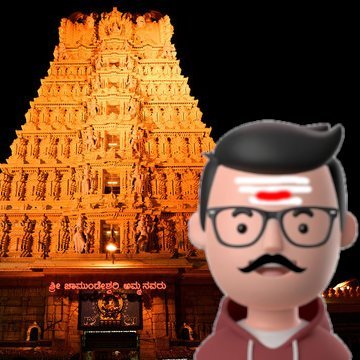
ಶಂಕರ ಜಯಂತಿಯ ಶುಭಾಶಯಗಳು. ಆಚಾರ್ಯತ್ರಯರಲ್ಲಿ ಮೊದಲು ಬಂದವರು ಶಂಕರಾಚಾರ್ಯರು. ಅದ್ವೈತ ಸಿದ್ಧಾಂತವನ್ನು ಸಮಾಜಕ್ಕೆ ಕೊಟ್ಟ ಗುರುಗಳು. ಕಶ್ಮೀರ, ಪಾಕಿಸ್ತಾನದ ಗಡಿಯಲ್ಲಿಯೂ (ಅಂದಿನ ಪರಿಕಲ್ಪನೆಯ ಭರತ ಖಂಡ) ಪೀಠವನ್ನು ಸ್ಥಾಪಿಸಿದ ಕೀರ್ತಿ ಅವರದು.

ಕನ್ನಡ
AK retweetledi

INSANE: A Chinese mayor allegedly stacked $4.5 BILLION…
Authorities say they found 13.5 TONS of gold and 23 TONS of cash inside his properties
This wasn’t hidden wealth… this was a full-blown empire
He’s now been sentenced to death…
Thoughts? ⬇️ 🇺🇸
English
AK retweetledi
These are not Mutts. They are “Dukans” run by wheeler-dealers masquerading as “Gurus” in saffron robes. To promote their business, they actively court corrupt politicians, much like showrooms hiring starlets for inaugurations.
Far from protecting Sanatana Adharma (Hindutva), these fake Ashrams and Mutts promote the de-Hinduisation and deracination of Hindu society. They peddle syncretism and “Sarva Dharma Sambhava” or “All Religions are Same” propaganda that deliberately collapses vital Hindu doctrinal boundaries, weakening identity, self-confidence, and civilisational resilience.
This mental disarmament leaves Hindus vulnerable to aggressive proselytisation by Christian missionaries and Islamic dawah networks, accelerating conversion and demographic erosion.
MediaCrooks@mediacrooks
This is how Hindus destroy their own religion, own community & value for their beliefs.. Who gets some Muth inaugurated by a corrupt politician?.. It only makes it a mere "commercial human warehouse"... x.com/narendramodi/s…
English
AK retweetledi

No Khi Khi
No forced hugs
No unnecessary poses for picture
One Insta creator’s video fixed him. 😭
English
AK retweetledi

I had tweeted this as humour... but now many handles have found it serious enough to analyse whether Modi had "Dark-tanned" himself for Tamil Nadu.. If he did.. then its another Black Widow feather in his cap.. x.com/mediacrooks/st…
MediaCrooks@mediacrooks
Its very strange and funny... In all his TV and Tweet pics.. Modi looks fair like Sonia... But when he goes to Tamil Nadu.. he becomes dark like Kamaraj.. Is he deliberately putting up dark makeup?...
English
AK retweetledi


@mediacrooks @TrueCalling2 @narendramodi As it's said ..... You won't get tired if you do your work with passion and interest ...
Makup, Lying, Travelling on Tax payer's money. Photo op, blaming Nehru all day long ....... Bunch of joys !!!!!!!!
English
The only time @NarendraModi really works for 18 hours a day.. without sacrificing any of his LIES.. is during elections. Theres a DESPERATION for power.. thats all he really wants.. No matter how much he has to lie, do make up, do nautanki or go anywhere x.com/timesofindia/s…
The Times Of India@timesofindia
Prime Minister #NarendraModi accused the Trinamool Congress of opposing the #women's reservation bill, claiming the party worked against greater #political representation for Bengal's daughters. He asserted the BJP prioritizes women's #empowerment and #safety, promising improved welfare delivery if elected in the #state. More details 🔗 toi.in/AqMGxY14
English
AK retweetledi
That is not true.. The most regular feature of Modi's speeches is whining like a Black Widow.. and he was doing that for all the 29 minutes.. x.com/MediaHarshVT/s…
हर्ष वर्धन त्रिपाठी 🇮🇳Harsh Vardhan Tripathi@MediaHarshVT
कल रात 8:30 बजे के प्रधानमंत्री के बोलने में वह बात नहीं थी, जिसके लिए प्रधानमंत्री नरेंद्र मोदी जाने जाते हैं। भारतीय जनता पार्टी और प्रधानमंत्री नरेंद्र मोदी के लिए यह सबसे बड़ी चुनौती है।
English
AK retweetledi
@sidd_sharma01 Knowing Panauti's reputation, he has fixed nimbu-mirchi at the entrance. May he prosper well.
English
This is kidney & pancreas touching scene. Action, Lighting, camera angles and colour are all in perfect sync. 10/10 👏👏👏
English
@ggganeshh Hahaha why not, the stall is loaded with special materials by the PR team.
Don't underestimate mahamanav.
x.com/i/status/20458…
Mock_💜@MockInc2025
मैने इस फोटो में 3 जगह पर स्पॉट किया है। आप जब इसको खोलकर जब जूम करोगे तो दिख जाएगा। पहला - मिर्च लगी नींबू दूसरा - पूरी की पूरी बोतल भरी हुई तीसरा - पूरा पैकेट भी नया और भरा हुआ। कम से कम साहब दुकान नॉर्मल रहने देते सीधा सीधा पता चल रहा कि यह पहले से तय था। आप लोग देखकर बताओ कि क्या दुकान किसी का ऐसे देखा है?
English
AK retweetledi

मैने इस फोटो में 3 जगह पर स्पॉट किया है।
आप जब इसको खोलकर जब जूम करोगे तो दिख जाएगा।
पहला - मिर्च लगी नींबू
दूसरा - पूरी की पूरी बोतल भरी हुई
तीसरा - पूरा पैकेट भी नया और भरा हुआ।
कम से कम साहब दुकान नॉर्मल रहने देते सीधा सीधा पता चल रहा कि यह पहले से तय था।
आप लोग देखकर बताओ कि क्या दुकान किसी का ऐसे देखा है?

हिन्दी
AK retweetledi
Haha...Everything @NarendraModi does.. is a "CHOREOGRAPHED" FRAUD.. People should know that by now... x.com/MockInc2025/st…
Mock_💜@MockInc2025
मैने इस फोटो में 3 जगह पर स्पॉट किया है। आप जब इसको खोलकर जब जूम करोगे तो दिख जाएगा। पहला - मिर्च लगी नींबू दूसरा - पूरी की पूरी बोतल भरी हुई तीसरा - पूरा पैकेट भी नया और भरा हुआ। कम से कम साहब दुकान नॉर्मल रहने देते सीधा सीधा पता चल रहा कि यह पहले से तय था। आप लोग देखकर बताओ कि क्या दुकान किसी का ऐसे देखा है?
English
AK retweetledi
ನಿಧಿ ಬೇಟೆಗಾರರು / Treasure Hunters
One of the worst evils destroying our heritage today.
Their reckless digging and vandalism are damaging temples, inscriptions, veeragallu, and other archaeological remains across Karnataka. Sadly, this menace has spread so widely that hardly any district seems untouched.
Even more disturbing is the lack of fear of law and the absence of serious control.
If this continues, we will not just lose stones and structures — we will lose history itself.
Local bodies, especially Gram Panchayats, have a major role to play. Yet many still believe heritage preservation is not their responsibility and that everything belongs only to the Archaeology Department. This understanding is completely wrong.
The Archaeology Department must actively train revenue officials and village-level officers across every district so that endangered heritage is identified, protected, and acted upon in time.
#SaveHeritage #KarnatakaHeritage @osd_cmkarnataka @chiefsecy_gok @ChristinMP_ @KarArchaeology @HKPatilINC

English