
Bureau of Reclamation

11.7K posts

Bureau of Reclamation banner
Bureau of Reclamation

Bureau of Reclamation

@usbr

Delivering reliable water supplies for agriculture, renewable hydropower and municipal needs in an environmentally and economically sound manner.

Washington D.C. Katılım Aralık 2008
613 Takip Edilen12.8K Takipçiler
Bureau of Reclamation
Bartlett Dam, located northeast of Phoenix and built between 1936 and 1939, was the first concrete multiple‑arch buttress dam constructed by the U.S. Bureau of Reclamation, featuring 10 arches and 9 buttresses. The dam contains 182,000 cubic yards of concrete, and creates a 168,023 acre-foot capacity reservoir called Bartlett Lake, which is open to the public for boating, fishing, hiking, and camping. After it's completion it was the highest multiple‑arch dam in the world. Its design offered a cost‑effective, material‑saving solution during the Great Depression. A remarkable blend of innovation and efficiency, Bartlett Dam continues to play a vital role in the region today.
Bureau of Reclamation tweet media
English
2
5
14
367
Bureau of Reclamation
The Bureau of Reclamation is investing $889 million in critical water infrastructure across the West. The funding will strengthen canals, dams, pumping plants and conveyance systems in California, Idaho, North Dakota, South Dakota, Utah and Wyoming, helping ensure reliable, efficient water delivery for communities, agriculture and industry. These investments advance efforts to expand water supply, modernize aging infrastructure and improve resilience across the West. Watch the video to learn more.
Secretary Doug Burgum@SecretaryBurgum

Reliable water means strong farms and more stable food prices. Thanks to @POTUS’ One Big Beautiful Bill, we’re investing $889 million in Western water infrastructure to support agriculture and keep costs down. Watch how this is strengthening communities across the West:

English
0
2
6
605
Bureau of Reclamation
What did Reclamation discover beneath the future foundation of Yellowtail Dam? Before construction began in Bighorn Canyon, scientists needed to understand the geology that would support the structure. In the summers of 1947 and 1948, the Bureau of Reclamation partnered with the @USGS to map the canyon, study river terraces for construction materials and analyze the rock formations beneath the proposed dam site. In the early 1950s, Reclamation launched additional core drilling to determine how extensive the cavities were and how engineers could design around them. Then came an important discovery. · Geologists studied the faults and cave systems to assess the strength and rock properties of the rock formations of the proposed dam site. · Geologists performed detailed studies of faults, fractures, and fissures to assess the suitability and stability of the dam site. · Preconstruction investigations from the 1940’s to the 1960’s included detailed geologic mapping, exploratory tunnels, and hundreds of core holes to study the rock formations. · Geologists studied how reservoir water might travel through the rock, and how the forces of the massive concrete arch dam would interact with the canyon walls. · Geologists and engineers continue to apply state-of-the-art engineering practices to ensure the dam’s performance continues to meet the highest dam safety standards. Historic photos from the era show geologists scaling canyon walls and exploring tight rock openings with minimal protective gear. It’s a reminder of how much worksite safety has evolved since the late 1940s. Before the concrete. Before the turbines. There was science. Investigate first. Build second. Make it last. #Reclamation #Engineering #Geology #WaterInfrastructure
Bureau of Reclamation tweet mediaBureau of Reclamation tweet mediaBureau of Reclamation tweet media
English
1
6
9
368
Bureau of Reclamation
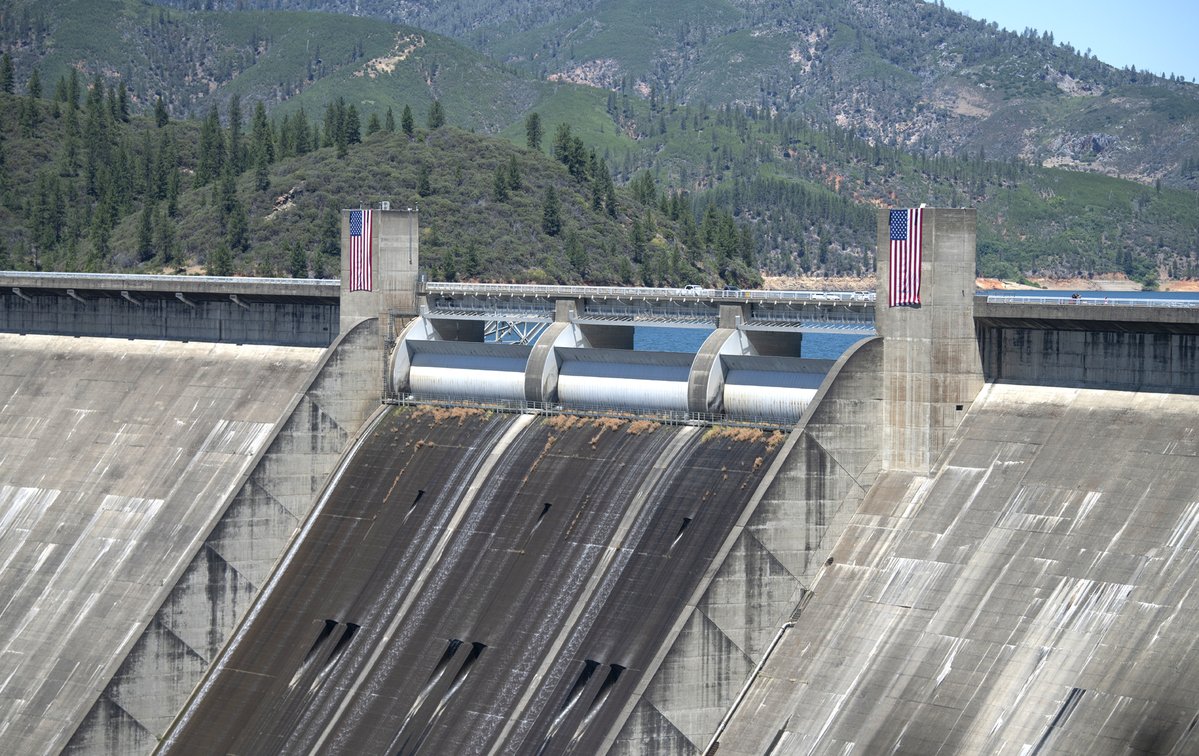
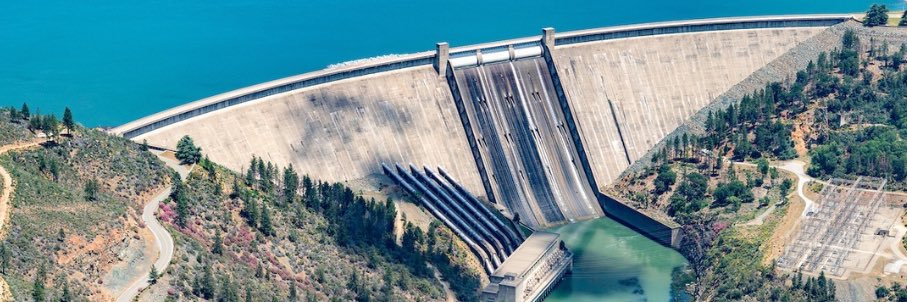
Happy St. Patrick’s Day from the Bureau of Reclamation! Today’s a perfect reminder of the vibrant landscapes and vital water resources that make the West thrive. Whether it’s lush green hillsides, sparkling reservoirs, or even the occasional rainbow over your favorite dam, we’re proud to help protect and manage these natural treasures for communities across the region. Wishing you a safe, bright, and lucky St. Patrick’s Day! 🌈💧🍀 #ShastaDam #StPatricksDay2026
Bureau of Reclamation tweet mediaBureau of Reclamation tweet media
English
1
2
22
519
Bureau of Reclamation
The 2024 Plex Fire burned 500 acres near the Boise River Diversion Dam. After containment, Reclamation launched a restoration effort in collaboration with Ada County and Idaho Fish and Game to protect land & water quality: ✅ 287 acres aerially seeded ✅ 300 live seedling sagebrush plants planted ✅ 4,300 pounds native seed ✅ Cultural clearance completed ✅ Project wrapped in 2025 Because protecting water starts with protecting the land. 🌊🌱
English
0
0
8
435
Bureau of Reclamation
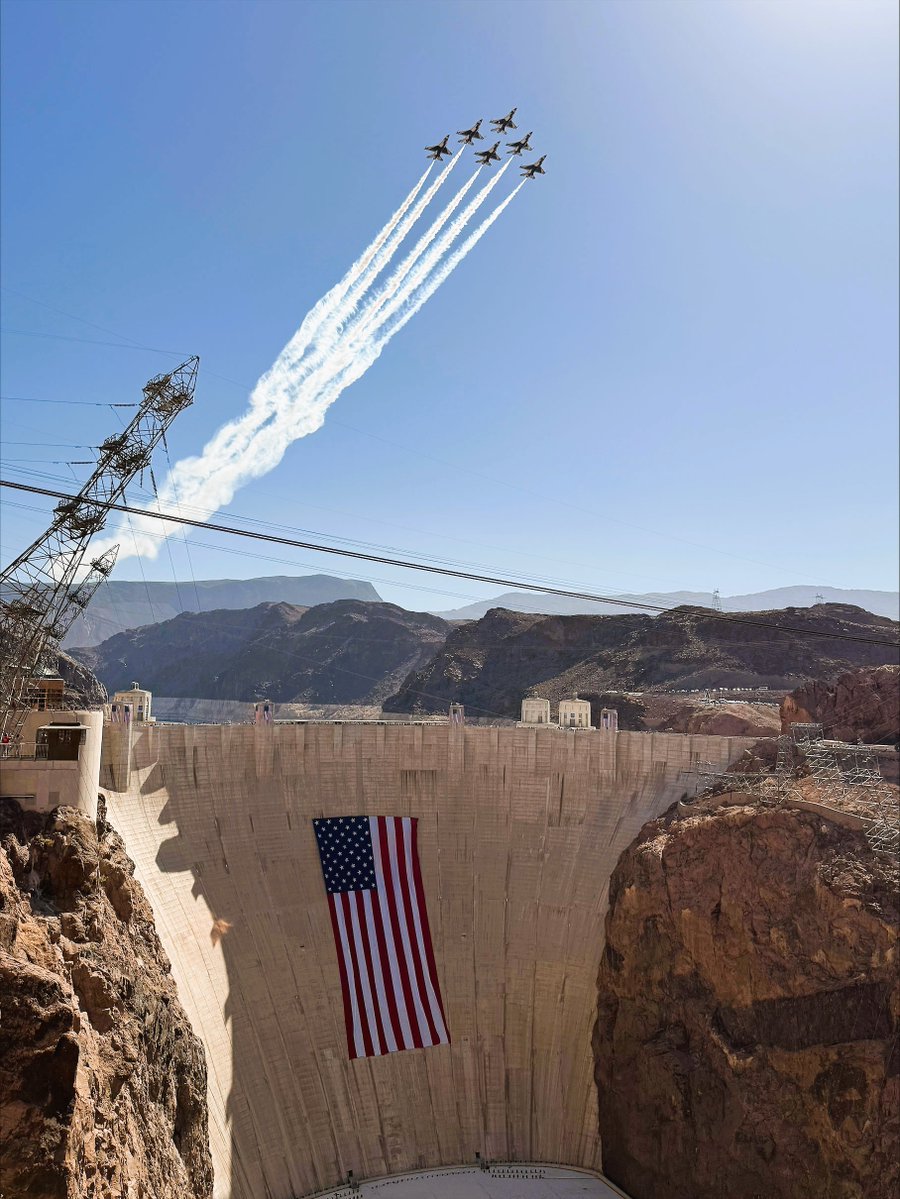
Feeling a little superstitious this Friday the 13th? 👀 Maybe you’re steering clear of black cats, crows, and even haircuts, but there’s one thing you don’t need to fear: the dark. As the sun sets each day, the Hoover Dam Power Plant truly shines by providing reliable hydropower that keeps the lights on for families across the Colorado River Basin. 💡
Bureau of Reclamation tweet media
English
0
2
13
324
Bureau of Reclamation
Hidden cracks beneath embankment dams could pose serious risks but they’re incredibly hard to detect. The Bureau of Reclamation is calling on innovators, technologists, and problem-solvers to help develop new ways to find these cracks. 💡 Think sensors, AI, geophysics, or something entirely new. 💰 Up to $400,000 in prizes available. Learn more and get involved: herox.com/CrackTheCase
Bureau of Reclamation tweet media
English
0
5
14
531
Bureau of Reclamation
Water in the Missouri Basin: Celebrating National Groundwater Awareness Week Did you know the Bureau of Reclamation’s Missouri Basin Region spans from southern Canada across 10 U.S. states and covers nearly one-sixth of the contiguous United States? While the Missouri River and its tributaries supply water to millions of people, groundwater plays a critical supporting role across the basin. Beneath the plains lies a vast network of aquifers made up of sand and gravel, glacial deposits, basin-fill systems, sandstone, limestone and dolomite. These underground water sources help support communities, agriculture and ecosystems throughout the region. During National Groundwater Awareness Week, it’s a reminder that the water beneath our feet is just as important as the water we see above ground. Learn more: ngwa.org/home #GroundwaterAwareness #WaterManagement #NationalGroundwaterWeek
Bureau of Reclamation tweet media
English
1
2
8
260
Bureau of Reclamation
Central Valley Project (CVP): Getting the Job Done As the season shifts, the Bureau of Reclamation is fully engaged. CVP facilities are delivering reliable water for farms, generating power and supporting the communities we serve. We’re focused, ready and committed to keeping water moving. Here’s to a productive season across the California-Great Basin Region. #CAWater #Reclamation
English
0
3
7
420
Bureau of Reclamation
It’s National Groundwater Awareness Week! We’re proud to spotlight the Odessa Groundwater Replacement Program, a leading example of sustainable water management in Washington’s Odessa Subarea. By transitioning farms from deep well groundwater to surface water from the Columbia Basin Project, OGWRP is helping protect aquifers, support agriculture, and support local communities. 💧 Responsible groundwater use matters—for our health, our communities, and our future. Learn more at usbr.gov/pn/programs/ei….
Bureau of Reclamation tweet mediaBureau of Reclamation tweet mediaBureau of Reclamation tweet media
English
0
1
6
301
Bureau of Reclamation
Rivers are constantly reshaping the landscape, and one fascinating process is the meander cutoff. Here’s how it happens: 🔹 Formation: As a river erodes outer banks and deposits sediment on inner banks, the neck of a meander narrows. During floods, the river cuts through this neck, creating a shorter, straighter path. 🔹 Result: The abandoned loop becomes a U-shaped oxbow lake—a calm, stagnant body of water. 🔹 Evolution: Over time, these lakes fill with sediment and vegetation, turning into marshes or leaving behind curved scars. 🔹 Significance: These features reveal a river’s past and help scientists understand floodplains, habitats, and river evolution. Nature’s engineering at its finest!
Bureau of Reclamation tweet media
English
0
3
8
383
Bureau of Reclamation
Eighty years after construction began on the Alva B. Adams Tunnel, a piece of history resurfaced in an unexpected way. Brad Adams of Maryland contacted the Bureau of Reclamation after discovering a hard hat among his late father’s belongings bearing the name of Colorado Gov. John C. Vivian and labeled “Alva B. Adams Tunnel.” Though not related to Sen. Alva B. Adams, Adams reached out to return it. “When I found it, I knew it had a home it was missing from. It’s part of Colorado’s history and belongs to the people of Colorado,” he said. Thanks to his generosity, the hard hat will be displayed at Estes Powerplant, where it can inspire future generations. Reclamation thanks Adams for returning this important piece of history. #Reclamation #EstesPowerPlant #History
Bureau of Reclamation tweet mediaBureau of Reclamation tweet mediaBureau of Reclamation tweet media
English
0
2
10
408
Bureau of Reclamation
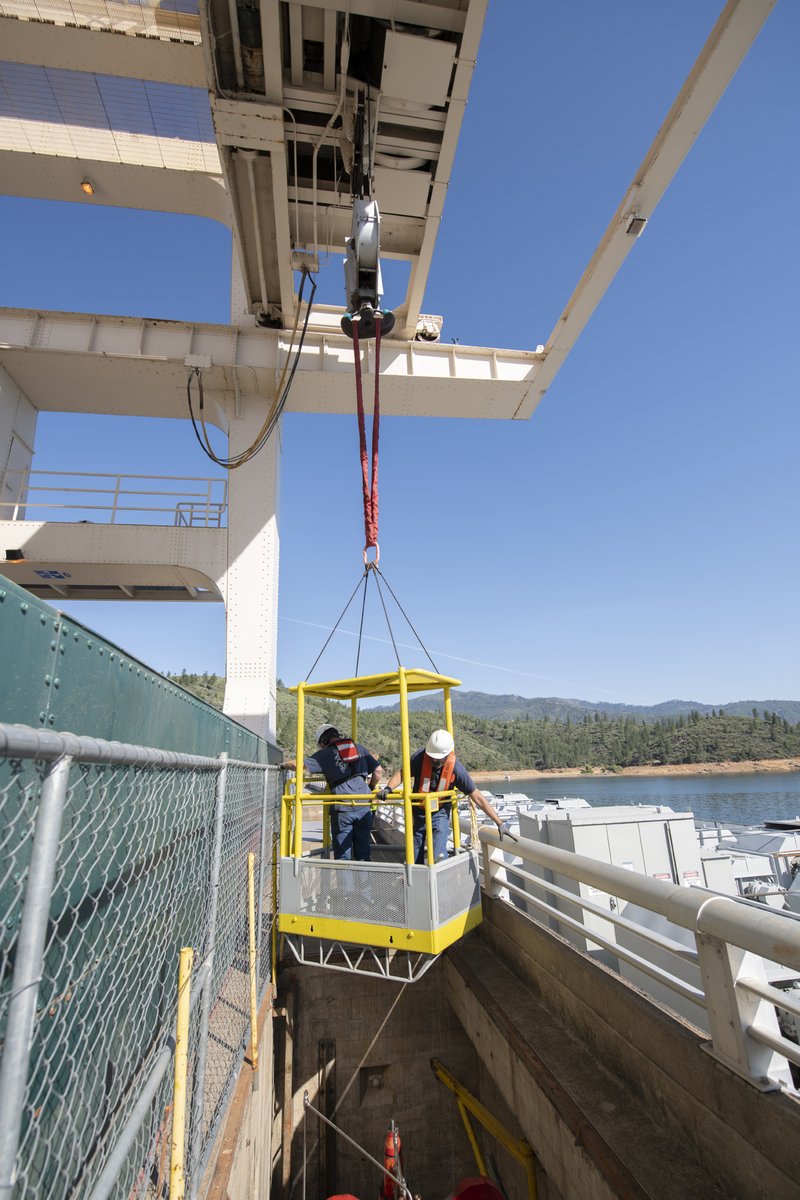
The team at the Bureau of Reclamation’s Northern California Area Office hosted @NOAA Assistant Administrator for Fisheries Eugenio Piñeiro Soler and his team for a tour of Shasta Dam. Soler and his team toured the dam and received an in-depth look at the Livingston Stone and Coleman National Fish Hatcheries. The group discussed collaboration to protect fisheries, improve forecast precision and manage water flows into the Sacramento River and Battle Creek. #Teamwork #Reclamation
Bureau of Reclamation tweet mediaBureau of Reclamation tweet mediaBureau of Reclamation tweet mediaBureau of Reclamation tweet media
English
0
0
3
257
Bureau of Reclamation
Bureau of Reclamation@usbr·
#TSCFunFactFriday: Reclamation’s Technical Service Center serves as the bureau’s preferred provider for science and engineering services. Rooted in integrity, TSC partners with federal, state and private entities and shares technical expertise globally to advance water and power solutions worldwide. #Reclamation
Bureau of Reclamation tweet media
English
0
0
5
221
Bureau of Reclamation
Bureau of Reclamation@usbr·
New Prize Challenge Alert! We are excited to announce the Halt the Hitchhiker: Invasive Species Challenge, a three-phase prize competition designed to identify innovative solutions that stop aquatic invasive species from spreading through watercraft ballast compartments. Aquatic invasive species such as quagga, zebra and golden mussels can travel between waterbodies in small amounts of water trapped in ballast systems, threatening water delivery and hydropower infrastructure across the West. While current watercraft inspection and decontamination programs are effective, they are time- and labor-intensive during peak boating seasons. The challenge offers: • Phase 1: Up to six awards of up to $25,000 each • Phase 2: Up to three awards of up to $50,000 each • Phase 3: First prize up to $125,000, second prize up to $75,000 and third prize up to $50,000 The competition is open to solutions from all technical fields and industries. Learn more, including eligibility and deadlines: haltthehitchhiker.yet2.com
Bureau of Reclamation tweet mediaBureau of Reclamation tweet mediaBureau of Reclamation tweet media
English
0
2
2
253
Bureau of Reclamation
Bureau of Reclamation@usbr·
🦦 Otto Otter’s #Freedom250 Road Trip — Stop #4 Completed in1966, Glen Canyon Dam in northern Arizona helps provide water storage, hydropower, and recreation across the West. 🌊⚡️#EnergyDominance
Bureau of Reclamation tweet media
English
4
1
4
772
Bureau of Reclamation retweetledi
ACWA
ACWA@ACWAWater·
Second day of DC Conference is underway! Thanks to Deputy Assistant Secretary for Water and Science Sherer for speaking to us about @usbr infrastructure funding, project streamlining, and USGS water data tools. #CAWater
ACWA tweet media
English
0
1
4
287