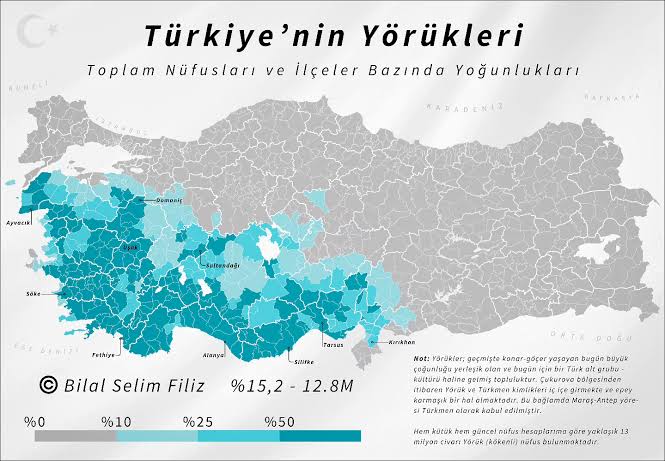
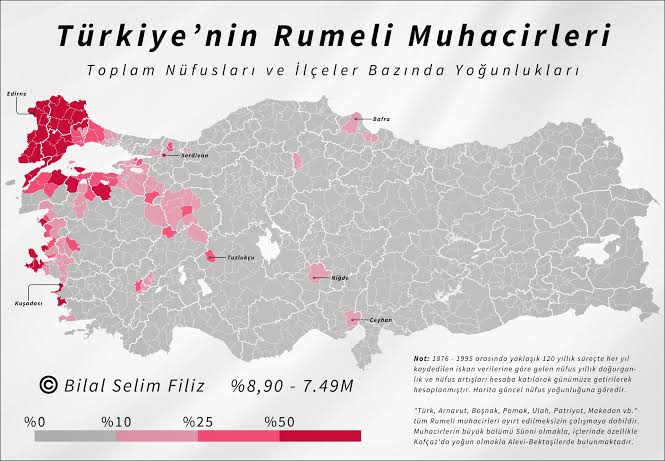
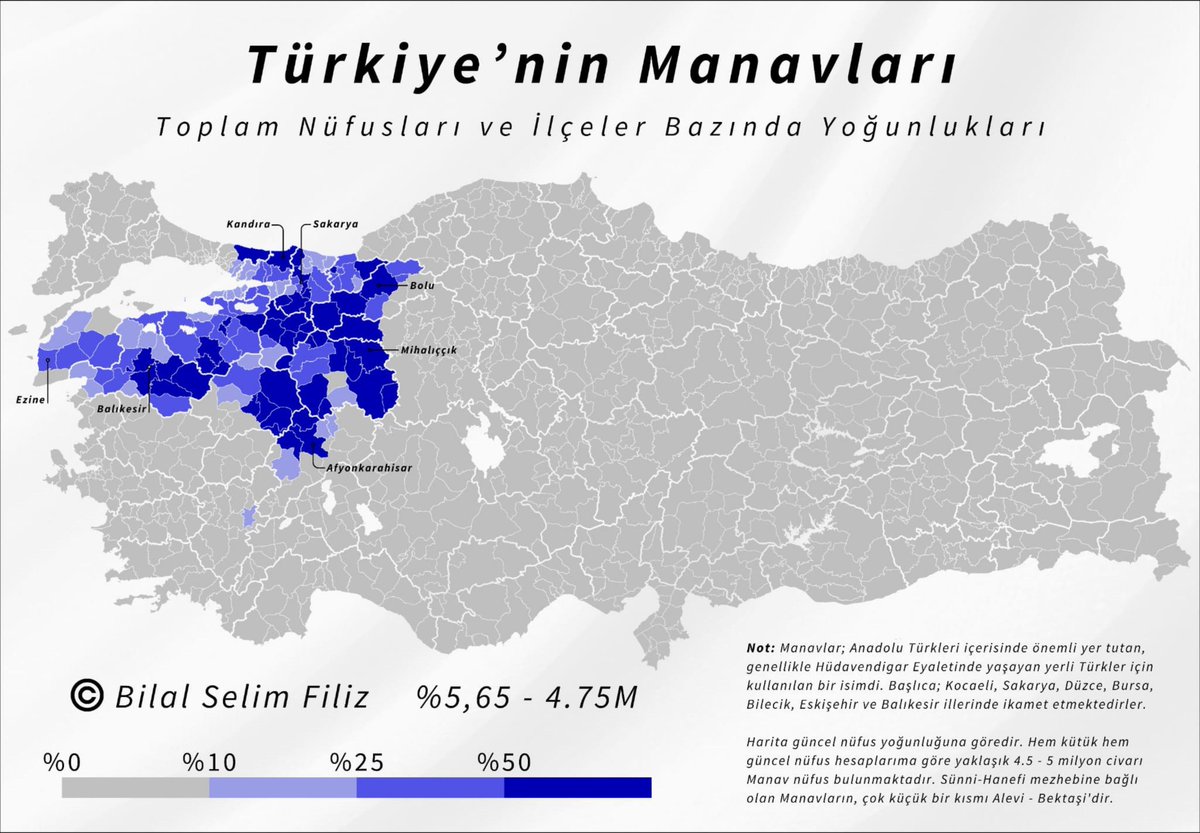
@Docoplat Hama-humus hattı heterojen bir bölge. Bu açıdan maraş-malatya-sivas'a da benziyor. Ama tribal sorunlar da var orada.
Türkçe
Republique
690 posts



Türkiye’de eğer sekülerler daha çok çocuk yapıyor olsaydı şuanda AKP çoktan devrilmişti. Demografi her şeydir


Türkiye hariç Türk Dünyasının en kalabalık 10 şehri: 1- Taşkent 3,935,793 2- Almatı 2,367,611 3- Bakü 1,977,897 4- Tebriz 1,713,390 5- Bişkek 1,343,048 6- Çimkent 1,184,337 7- Astana 1,065,387 8- Aşkabat 960,880 9- Namangan 947,465 10- Semerkant 932,219


Türkiye’de eğer sekülerler daha çok çocuk yapıyor olsaydı şuanda AKP çoktan devrilmişti. Demografi her şeydir




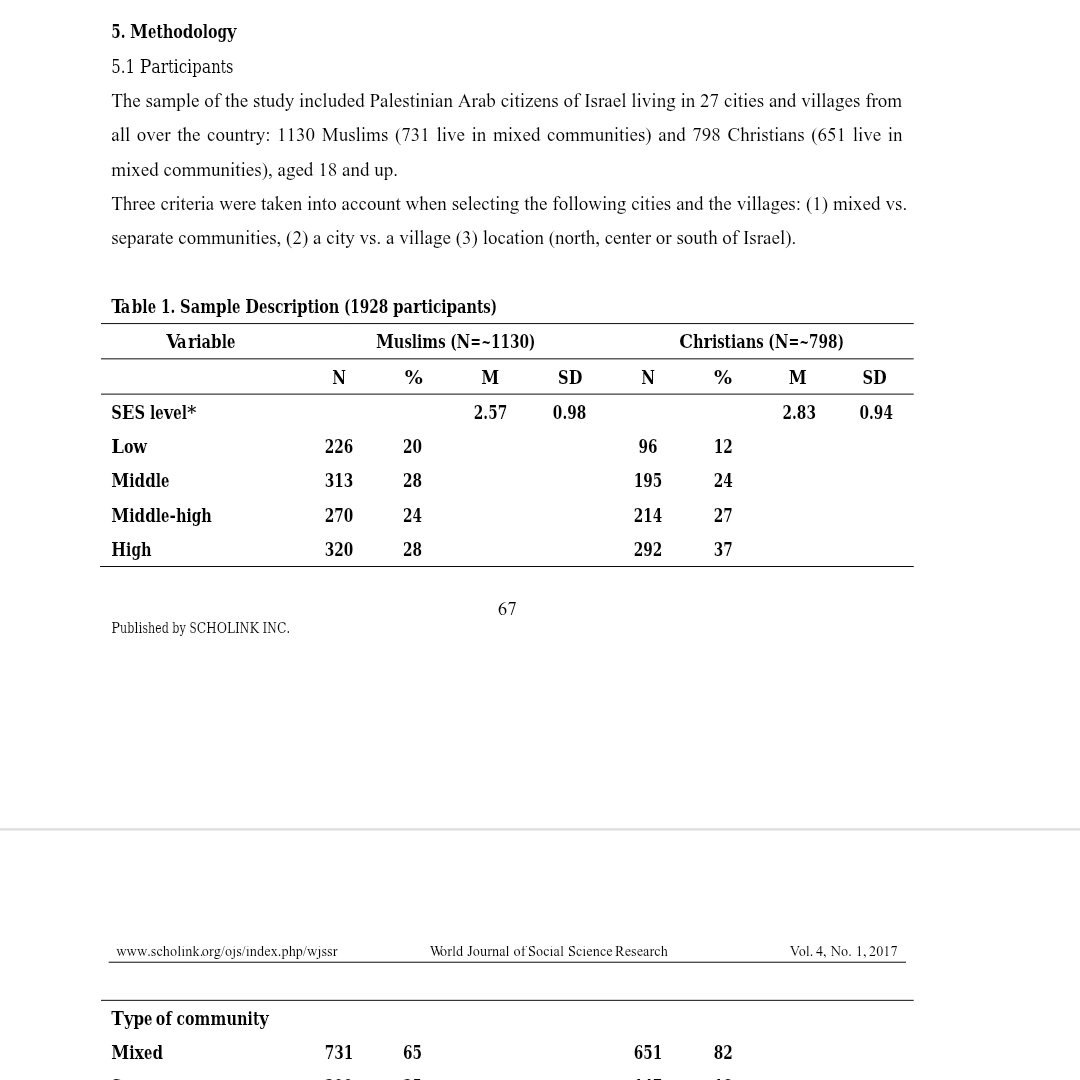
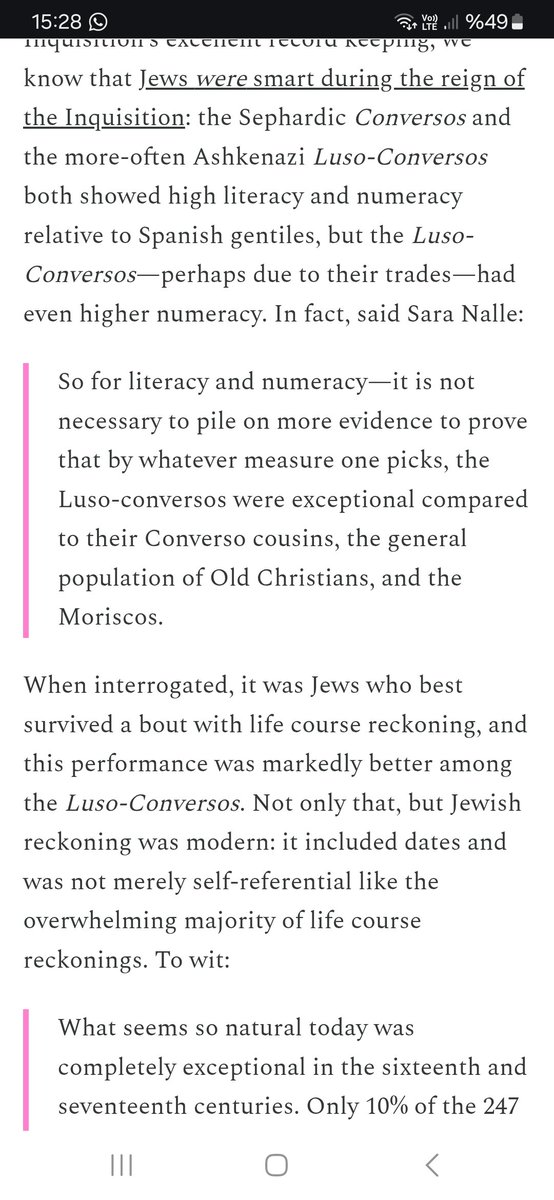
Islam is a hilarious religion. It taxed religious minorities. So poor Christian and Jews who couldn’t afford it joined Islam, making sure those that remained minorities were smarter. Muslims therefore became the dumbest people wherever they ruled. All time great self-own.

Suriye gruptan çıkmayı garantilemiş, Afganistan'ın mutlak 3 puana ihtiyacı var, akhilere söyleyelim de maça yedeklerle çıksınlar. Diyobendiler alsın bu maçı.


I remember reading a similar post by @cremieuxrecueil in which he makes a similar argument: Jizya (Islamic taxation on Christians and Jews) made poor non-Muslims convert, while the rich retained their faith, and that's why today they outperform the others. This is a very silly reading of Islamic history And it misses one obvious fact: Until not so long ago, think the end of the 19th century, the aristocratic elite in most Muslim countries was Sunni Muslim. The argument incorrectly identifies minority groups as stable elites, or at least, those who were filtered out due to jizya. I don't contest that these groups (Jews, Copts, Maronites, etc.) on average outperform Muslims, sometimes by shockingly wide margins today (even though it's closing). But until recently (19th c.), the elite of Egypt were the Cairo urbanites, the elite of Lebanon were the Sunnis of Beirut, the elite of Morocco were the Fez and Rabat Muslim Andalusians/Moriscos, and so on. In the 19th century, things changed. You still had this Sunni elite but also those minority groups that started to urbanize and outperform them. So what happened? Simply put: access to missionary and/or Western education. I'll illustrate this with three groups: North African Jews, Egyptian Copts, and Lebanese Christians. As I mentioned, urban Sunni Muslims were the elite, they had access to education, as rudimentary as it was. The majority of Muslims, however, were rural, and did not. The situation of Jews in North Africa tells a similar story. While urban Jews (usually of Sephardic descent) were often doing well, rural Jews were not. There are writings by Ashkenazi French Jews about the condition of Jews in French Algeria that describe their synagogues in rather harsh terms, likening them to horse stables. French Jews were shocked to find that Algerian Jews and Algerian Muslims were indistinguishable in their misery. (If you understand French, I'd suggest watching this amazing interview by Joel Sebban, a historian of Jews and Judaism in France : youtube.com/watch?v=tDyPq7…) That's the context in which the Alliance Israélite Universelle emerged. The Alliance Israélite Universelle, founded in Paris in 1860, systematically established French-language schools across the Ottoman Empire and North Africa. Its explicit mission was to "civilize" and modernize Oriental Jewish communities, which the Parisian Jewish elite viewed as backwards. Before the AIU schools, the gap between urban Jews and rural or lower-class Jews was enormous, similar to the gap between urban Sunnis and rural Sunnis, or between urban Sunnis and rural Jews for that matter. The AIU introduced secular French-language education, vocational training, and European cultural norms. Within a generation or two, this produced a class of French-speaking, professionally trained Jews who could integrate into colonial administrative posts. Urban Sunnis also had access to modern schools, often built by late Ottoman reformers like Kheireddine Pacha in Tunis, but because they carried nationalist claims favoring independence, they were naturally viewed with suspicion by the colonial administration. The Crémieux Decree of 1870 is the other half of the story, at least for Algeria. It granted French citizenship en masse to Algerian Jews, immediately giving them access to the French public school system, French universities, and the colonial civil service. Algerian Muslims were offered nothing of equivalent scale (and would have refused it if they were). So by the early 20th century, the gap between Algerian Jews and Algerian Muslims was not some residue of medieval jizya filtering, because prior to French Algeria, no such gap had existed between Jews and Muslims of the same lifestyle (urban / rural). There are even records of Jews in eastern Algeria living as nomadic Bedouins. The gap was the product of roughly 5 decades of differential access to French/Western education institutions. Now let's turn to Lebanese Christians, namely the Maronites, whose case is loosely similar. The Maronites began as a monastic community formed around the Saint Maron. Established in Mount Lebanon, roughly around the Bsharré/Ehden area by Saint John Maron, this community gradually converted the mountain dwellers, already living there, to their faith. The Maronite case is distinctive and deserves its own treatment, because it's the one where the "merit" argument has the most legitimacy, but even here, it is inseparable from structural access to education, and has nothing to do with jizya filtering. The community's relative isolation, surrounded by Muslims, was disrupted during the Crusader period. The Maronites had maintained ties with Rome since then, and these were formalized with the establishment of the Maronite College in Rome in 1584. This is extraordinarily early. It meant that a small but consistent stream of Maronite clergy and intellectuals was being trained in European institutions centuries before the modern missionary wave. Figures like Istifan al-Duwayhi and the Assemani family, who became Vatican librarians, are products of this pipeline for example. So there is a genuine case that the Maronite community had a head start in institutionalized education that most other communities in the region simply didn't have. In the 19th century, French Jesuit and Lazarist missions dramatically expanded educational access for Maronites and other Christians, in Mount Lebanon and beyond. The Université Saint-Joseph, founded in Beirut in 1875, is the landmark institution here. American Protestant missionaries did the same: the Syrian Protestant College (later AUB, founded back in 1866) had a mixed but disproportionately Christian student body. These institutions created a bilingual, professionally educated Christian class at a time when comparable Muslim institutions quite simply didn't exist at scale. The Ottoman education system was not producing graduates equipped to navigate a modernizing, increasingly European-dominated economy or modern administration. The Maronites weren't an elite in a traditional aristocratic sense, but they were ready to fill the needs of a new state, and so they moved into banking, finance, and administration within the institutions France inaugurated in Lebanon. They were, in short, a readily available French-speaking professional class that was far more educated than other major groups as a whole. The Coptic case in Egypt follows a similar logic, if at a smaller scale. And they, of course, deserve a lot of credit. Like Maronites, Copts were a somewhat isolated group. Also a community with strong monastic traditions, they lived mostly in Upper Egypt (=Southern Egypt/the Sa'id) The driving figure behind Coptic upward mobility is Cyril IV, the Coptic patriarch from 1854 to 1861, sometimes called the "Father of Reform." He established modern Coptic schools with secular curricula, invited European teachers, and pushed for the education of both boys and girls, a conscious community-level decision to modernize through education. He was also under pressure which Protestant missionaries were exerting on the community. Alongside this, the Church Missionary Society and other Protestant missions opened schools in Upper Egypt that served Copts, sometimes converting them, sometimes simply educating them. By the late 19th and early 20th century, Copts had disproportionate access to modern education relative to the rural Muslim majority, which translated directly into overrepresentation in the civil service and the professions. Before Western education reshaped things, the elite, in a traditional aristocratic sense, was verifiably Sunni Muslim in most places. You did have merchant middlemen and rising commercial/mercantile families in certain communities, like Armenians in Ottoman Turkey, for instance, or the then-new bourgeoisie of Beirut composed of Greek Orthodox families like the Bustros, Sursuk, and Tuwayni (whose origins seem to trace back to Cyprus and Anatolia, at least per traditional accounts, genetics can shed light unto that) or commercial families like Abillama and Mudawwar families among the Greek Catholic Melkites in Beirut. That said, the elites were not always locals/natives. There was always a local element, but the ruling classes of Tunis, Morocco, Algiers, and Cairo were, more often than not, Andalusian or Ottoman-derived, Turks, Georgians, Greeks. In Cairo, Albanians (like Muhammad Ali) and Circassians were disproportionately prominent. And most of these were not elite by origin either: many had actually entered as slaves, but rose through the ranks precisely because they were the backbone of authority. Governments preferred them to locals, because empowering local tribes risked giving them leverage, whereas men with no ties or loyalties beyond the state were far more convenient. Both the Sunni Muslim elite and the minority nouvelles bourgeoisies demonstrate that there is nothing static about elite groups in MENA. Access to the right institutions, in the span of just a few decades, can change everything about a group or a country.




Genuinely wtf how did one side of the Cold War just completely die without any mass violence or anything Like I know the whole historical context but it’s still WILD to me that the Soviet Union and entire Eastern Bloc just peacefully died