Vlad Chubakov

256 posts

Vlad Chubakov banner
Vlad Chubakov

Vlad Chubakov

@v_chubakov

Associate Director, Programmatic at Delve Deeper. Curious about everything AdTech/Programmatic related. Author of @101programmatic

Katılım Şubat 2024
644 Takip Edilen281 Takipçiler
Vlad Chubakov retweetledi

Vlad Chubakov (@Programmatic 101)
Vlad Chubakov (@Programmatic 101)@101Programmatic·
Do You Think Audio Can’t Drive Performance? The Data Says Otherwise One thing I still don’t see discussed much in programmatic is audio - at least not as something that can meaningfully affect performance. [THREAD] 👇
English
1
1
1
279
Vlad Chubakov retweetledi
Vlad Chubakov (@Programmatic 101)
Vlad Chubakov (@Programmatic 101)@101Programmatic·
Amazon vs TTD - who’s winning? I think a lot of people would agree that one of the biggest themes this year (aside from AI) has been the battle of the DSPs - Amazon vs. The Trade Desk. It’s also funny how quickly everyone seems to have forgotten about DV360 (and Google overall). I’ve said it a few times already, but this is probably the most packed year we’ve ever had in terms of new features and major announcements. What are the main changes? 1. Amazon announced lower PG fees - Amazon DSP accelerated its Partner program use in late 2025, allowing lower minimum spends and reduced DSP fees for participating managed service partners. 2. TTD OpenAds and PubDesk - In October 2025, The Trade Desk officially launched OpenAds, its auction wrapper platform designed to ensure greater transparency, independent verification, and protection against supply chain manipulation. With OpenAds, TTD also introduced PubDesk, a dedicated platform for publishers. It automates insights on advertiser demand and suggests optimizations based on the auction signals most valued by TTD, driving improved revenue strategies for publishers 3. Amazon Ads Agent - This AI-powered feature acts as a campaign co-pilot by translating natural language commands into actions and complex SQL queries for Amazon Marketing Cloud and DSP. 4. TTD Audience Unlimited - New agentic adaptive trading modes. These leverage Koa’s AI to dynamically adjust audience segments and bidding in real time, increasing campaign flexibility and effectiveness for buyers 5. Amazon Unified Campaign Manager - Unified Campaign Manager: Amazon merged the Amazon Advertising Console (Sponsored Ads) and Amazon DSP into a single interface. This unified platform allows advertisers to manage Sponsored Ads and DSP campaigns in one place, removing fragmentation and streamlining workflow 6. TTD Deal Desk - feature aimed at supporting forward-market buying and modernizing legacy Upfront structures, helping advertisers plan campaigns with more predictability. 7. Amazon & Roku - Amazon Ads and Roku announced an exclusive partnership that will provide advertisers access to the largest authenticated CTVfootprint in the U.S. through Amazon DSP. On top of that, there have been countless smaller updates across inventory partnerships, UI/UX improvements, and quality-of-life enhancements. So who’s winning this battle? Buyers. This year’s competition has been genuinely exciting, and all of these updates ultimately benefit brands, agencies, and traders - giving them more control, more transparency, greater efficiency, better inventory quality, and in some cases, lower costs. Hopefully 2026 keeps up the same pace of innovation. What’s also interesting is how clearly DV360 has fallen out of the DSP race. Industry observers have been expecting this for a while, but this year made it even more obvious: DV360, and Google’s display business overall, simply isn’t an area of strategic focus for Google.
English
6
2
38
4K
Vlad Chubakov retweetledi
Vlad Chubakov (@Programmatic 101)
Vlad Chubakov (@Programmatic 101)@101Programmatic·
How UTM conversion lift study in TTD can show programmatic incrementality (and how you can use it to calculate iCPA/iROAS) Programmatic is usually the first channel to cut. But that’s not always the right move - it actually drives value. The problem is, many of those conversions get attributed to other channels. So what is a cross-channel conversion lift study? It’s a study that helps you understand how your programmatic efforts impact the performance of other channels. It doesn’t show your real incremental conversions, but it definitely helps explain why your client doesn’t see programmatic conversions in GA4 - they’re simply attributed elsewhere. There are limitations though. It’s not ID-free - you need some kind of identifier to match impression and conversion data across devices. And it doesn’t show the full picture, it’s more directional. How this usually works: You implement pixels that capture traffic for each channel using UTM parameters - direct, organic, paid search, paid social, email, etc. Then you contact your DSP rep (or use a built-in feature) to set up the study. The test will capture users exposed to your ads, match them with conversion data, and show the source/medium that drove the conversion. The output typically includes a few key tables: total population, converters, and format (Video, CTV, Display, or any mix of campaigns). What you see afterwards is each channel and channel mix (Video, Display, CTV, Video+Display+CTV, etc.) combined with UTM sources (direct, paid search, etc.), showing the number of conversions with and without programmatic exposure. That difference gives you a sense of where programmatic actually contributes. Using raw data from this report, I built (using chatGPT, of course) a deterministic model/tool that calculates iROAS and iCPA. For incremental conversions, it only counts low-to-moderate increases in baseline CVR - because that’s where real lift comes from. When baseline CVR is already high (for example, email + programmatic retargeting), it assumes those users would’ve converted anyway. With this data, you can get iCPA/iROAS by channel and for programmatic overall, showing how your campaigns impact total incremental performance. It’s not the most advanced or precise way to prove incrementality, but it’s one of the fastest and most accessible. And it helps you explain what really happens when clients think “programmatic doesn’t drive conversions.” It does - you just have to know where to look.
English
3
1
8
749
Vlad Chubakov retweetledi
Vlad Chubakov (@Programmatic 101)
Vlad Chubakov (@Programmatic 101)@101Programmatic·
Amazon UnBoxed - what does it all mean for Amazon DSP? Amazon’s unBoxed 2025 keynote was all about AI, simplification, and unification. Amazon Ads wants to collapse its ecosystem into one place and make running full-funnel campaigns simpler. [THREAD] 👇
Vlad Chubakov (@Programmatic 101) tweet media
English
2
1
6
1K
Vlad Chubakov retweetledi
Vlad Chubakov (@Programmatic 101)
Vlad Chubakov (@Programmatic 101)@101Programmatic·
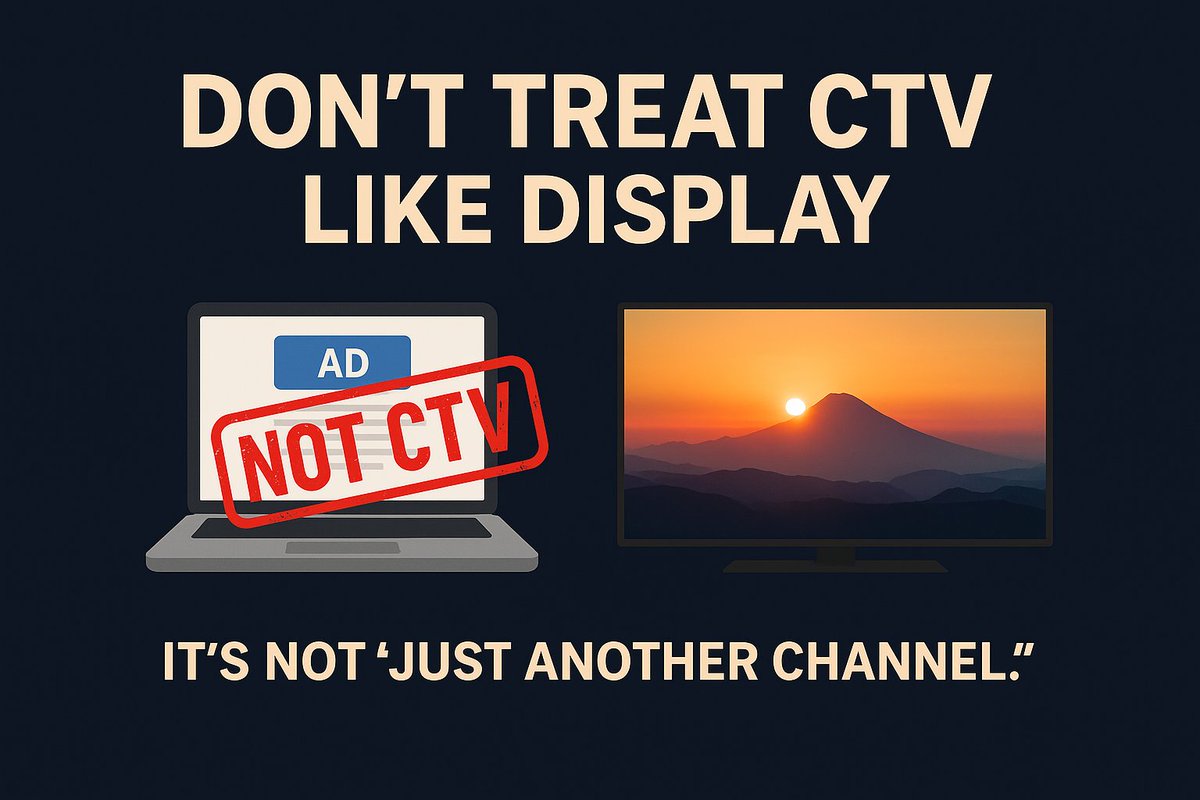
Don't treat CTV as a standard display/video web campaign. When activating CTV, many people make mistakes - especially those with a PPC background. 1. Running an open-market campaign - if you target the open market, you’ll likely end up serving ads on FAST channels with massive supply (their share vs. premium channels will be dramatic). To avoid that, at minimum, whitelist the inventory you want to run on — but even better, run PMP or PG deals directly with the inventory provider. 2. Measuring the wrong KPIs - metrics like Cost per Completed View or Completion Rate don’t tell you much. CPCV is just a proxy for CPM, and completion rate will almost always be 99.99%. Some marketers use it to show they’re “meeting KPIs,” but it’s meaningless for optimizing performance or quality. Choose KPIs based on your campaign goal - I usually focus on conversion lift or cross-channel conversion lift (e.g., running a cross-channel lift analysis). Depending on the case, it could also be brand lift, search lift, or geo lift. 3. Creative - using the same creative as your online video campaign is a common mistake. CTV is very sensitive to creative quality and requires a true TV-style format - strong storytelling, high-quality audio, cinematic framing, and larger text. Before running a CTV campaign, invest in creative and make sure it checks all the boxes: great sound, clear brand mention, readable text, and a cohesive story. 4. Web-based measurement doesn’t apply - it sounds obvious, but you don’t get clicks from CTV (you’re showing ads on TV devices). So you can’t measure bounce rate, CTR, or CPC. Instead, use TV-specific metrics and measurement frameworks. Main recommendation: CTV isn’t “just another channel” to test - it’s a fundamentally different environment that requires a specific skill set and a solid understanding of the ecosystem. Focus on PMPs/PGs (where you can also tailor contextual targeting), measure CTV’s impact on revenue using conversion or geo-lift studies (plus an always-on brand lift study), invest in creative, and educate yourself on CTV metrics - they differ completely from standard web-based advertising.
Vlad Chubakov (@Programmatic 101) tweet media
English
1
2
12
824
Vlad Chubakov retweetledi
Vlad Chubakov (@Programmatic 101)
Vlad Chubakov (@Programmatic 101)@101Programmatic·
The introduction of ADCP comes just as everyone’s saying the open web is dead. I’ve been diving deep into it, researching every source I can find to really understand this new protocol - and it’s genuinely exciting. I’ve been looking at it mostly through the RTB lens, trying to figure out how, as an industry, we could onboard this solution to make RTB more effective for both publishers and buyers. But so far, it looks like a long road - a lot of publishers would need to onboard, and a full infrastructure would have to be built around it. In the meantime though, ADCP could be a great replacement for classical programmatic direct. No long email chains or endless back-and-forth - just agents talking to each other, making reservations, and trafficking campaigns automatically. I don’t know if it will ever fully replace RTB, but I think there are some pretty interesting use cases in the meantime. And maybe the industry really does move in circles and we’re going back to direct IOs, just more efficient ones, instead of open RTB?
English
1
2
7
1.1K
Vlad Chubakov retweetledi
Vlad Chubakov (@Programmatic 101)
Vlad Chubakov (@Programmatic 101)@101Programmatic·
🔻 Why Blind CPM Optimization Is Killing Your Campaign Performance The logic sounds simple: Buy more impressions -> reach more people -> get better outcomes. That’s the mindset behind cheap CPM buying. And it’s wrong. Low CPM doesn’t mean efficiency. It just means you’re buying cheaper inventory - often non-viewable, reseller-heavy, and disconnected from your real audience. When you tell the DSP to optimize for CPM, here’s what happens: 1. You get more impressions, but not more attention/high quality placements (so LESS 'real' people see your ads). 2. You train the algo to chase cheap supply instead of quality. 3. You fill your campaigns with bad signals that looks efficient in platform but performs worse (in terms of outcomes - because it is not reaching real people). 4. *If you are buying video - most likely, you'll end up buying muted out-stream (vs in-stream). 5. *If you run CTV - you'll end up buying FAST only channels So what should you optimize toward? - High quality inventory (not always premium. Just high quality inventory, using signals like A2CR, ad density, number of video ad players on the page and etc). - Clean supply paths (i.e limit resellers, limit the number of SSPs) - Not rely solely on platform conversions (run different studies, experiments, measuring advertising impact).
English
0
1
2
371
Vlad Chubakov retweetledi
Vlad Chubakov (@Programmatic 101)
Vlad Chubakov (@Programmatic 101)@101Programmatic·
LALs ≠ new customers. Most platform-generated LALs + 3rd-party audiences show the lowest incrementality in prospecting. Algorithms chase easy conversions - often your own customers. Broad/contextual > “precise” LALs if your goal is net new conversions.
English
0
1
5
660
Vlad Chubakov retweetledi
Vlad Chubakov (@Programmatic 101)
Vlad Chubakov (@Programmatic 101)@101Programmatic·
Be careful with LALs and 3rd-party audiences. I’ve checked incrementality across dozens of prospecting tactics - and platform-generated LALs usually perform the worst. Great platform CPA ≠ incremental growth. Most of those “new” users are your existing customers.
English
2
1
9
1.1K
Vlad Chubakov retweetledi
Vlad Chubakov (@Programmatic 101)
Vlad Chubakov (@Programmatic 101)@101Programmatic·
Be careful with LALs and 3rd-party audiences in your prospecting campaigns. I check incrementality across all prospecting tactics, and what I usually see in the data is that platform-generated LALs and 3rd-party audiences show the lowest incrementality compared to broader tactics - like contextual or PMPs. Platform algorithms prioritize impressions most likely to convert. So when you feed them a narrow audience (e.g., a LAL built on converters’ data), they often end up prioritizing your existing customers - even if you’ve technically excluded them. That’s just the reality of a fragmented identity ecosystem. What you see in the incrementality data is that these tactics mostly touch users who are already in your customer base. For example, for one of our clients we saw that some tactics were driving 70% of conversions from existing customers - and their platform CPA looked great. But when we compared incremental CPA to broader tactics (which had a higher platform CPA but better incrementality), those broader tactics actually performed better - their iCPA was lower. I’m not saying you shouldn’t run LALs. But be careful - and budget this tactic accordingly if your goal is to attract new customers. Otherwise, you’ll just end up spending your budget on people who would’ve converted anyway.
English
0
1
2
461
Vlad Chubakov retweetledi
Vlad Chubakov (@Programmatic 101)
Vlad Chubakov (@Programmatic 101)@101Programmatic·
Is AI Going to Replace Marketers by the End of 2025? At the beginning of the year, many people claimed that AI would replace marketers and automate their jobs. [THREAD]
English
2
1
4
408
Vlad Chubakov retweetledi
Vlad Chubakov (@Programmatic 101)
Vlad Chubakov (@Programmatic 101)@101Programmatic·
If you’re still running display only - this post is for you. Display can be a strong format and drive incremental revenue for brands. But long-term, you should run multiple formats. - I just don’t believe in display alone. And while I don’t think the open internet will die (completely), it’s clearly not where people spend most of their time anymore. As marketers, we should follow time spent, not just available inventory. - Running multiple formats consistently increases CVR. In every study I’ve run, when video or audio appeared in the conversion path, CVR went up. - Video grabs attention - and that’s what we need. It’s easier to communicate your message with sound and motion on a big screen than with a static banner most people scroll past without noticing. - Audio is another underused format. People spend hours in podcasts and music apps, but ad dollars still don’t match that attention. That’s where the opportunity is - less competition, more efficiency, and a real way to stand out.
English
0
1
10
985
Vlad Chubakov retweetledi
Vlad Chubakov (@Programmatic 101)
Vlad Chubakov (@Programmatic 101)@101Programmatic·
OpenAds: The Trade Desk’s Next Logical Step Analyzing the recent TTD trajectory - it now seems like an inevitable decision (OpenPass, OpenPath, Sincera, TID, etc). As an active industry observer and practitioner on the buying side, I appreciate this move because it creates (*if successful) a healthier ecosystem with healthier incentives for publishers and (again, if successful) higher-quality inventory for buyers. Right now, adtech is still too complex - too many players and middlemen just applying their fee and reselling the same inventory, audiences, and data. Ultimately, it led to a lack of trust in the open web (and I get that - execution is so complex and nuanced that you need to apply a lot of guardrails and hope it helps avoid MFA, low-quality inventory, bots, etc). Because of that, brands don’t really invest a lot in the open web anymore (except for CTV, which, by the way, is mostly executed via PGs). In general, I appreciate the effort to make the whole thing better. I think it’s insane that in 2025 we’re still dealing with the same old issues - brand safety, low-quality inventory, and shady players trying to squeeze every dollar. I hope (even though I’m losing optimism about the open internet probably every day) that this helps the ecosystem get better - with the biggest independent platform directing dollars toward high-quality inventory, and high-quality publishers finally understanding how to attract more demand by using Sincera and PubDesk. As I said - my POV focuses on the buying side. What do people from the sell side think?
English
2
2
19
1.8K
Vlad Chubakov retweetledi
Vlad Chubakov (@Programmatic 101)
Vlad Chubakov (@Programmatic 101)@101Programmatic·
I pulled an inventory availability report for mobile devices in the U.S. Here’s how your inventory will look if you target mobile without an allowlist or limiting mobile apps: - 42% of the potential impressions - android apps (including puzzle games and etc) - 58% of the potential impressions - sites, but it is hard to call them 'premium' or 'high-quality'. What happens in real campaigns? Buyers see high CTR, lots of clicks and sessions, and assume they’re reaching engaged users. In reality, much of that can be bot traffic, accidental taps, or low-quality placements. Apply an allowlist on every campaign. Otherwise you’ll end up on MFA/low-quality sites and random apps.
Vlad Chubakov (@Programmatic 101) tweet media
English
12
4
21
1.9K
Vlad Chubakov retweetledi
Vlad Chubakov (@Programmatic 101)
Vlad Chubakov (@Programmatic 101)@101Programmatic·
Q4 is here. Here are 5 things that can help you survive it: 0 - Prospecting/Awareness Prospecting should be evergreen - not something you start in Q4 when advertisers have the highest budgets. If you push all your spend just for Q4, you’re limiting growth. Smarter competitors invest in TOF before Q4, not during it. 1 - Retargeting Pool September and early October can be the hardest months for marketers. Budgets grow, but performance doesn’t - and it’s easy to panic when you don’t see immediate results. Stay your course and keep investing, without shifting all your budget to BOF campaigns just to show “quick wins.” You’ll break your long-term strategy and lose the chance to capitalize in Nov/Dec. Also, keep RTG frequency capped - you don’t want to exhaust your audience before key tentpole dates. 2 - Regular QA QA during Q4 should happen every week. There are tons of new campaigns and creatives launching, so schedule regular checks - for example, Landing Page reports - to catch issues early. And always get a second pair of eyes on your work. It’s Q4; mistakes happen. 3 - Conversion Lookback Windows Know your conversion lookback window - and don’t rush into optimizations or hygiene tasks. It depends on the product, but optimizing too early means acting on statistically insignificant data. 4 - Book PGs earlier Book PGs in advance. Honestly, it might already be late - so take this as a reminder for next year. Negotiations should start in Q2/Q3 because by Q4, most publishers are already locked in. 5 - Creatives Don’t forget your creatives. Refresh them or, better yet, launch new ones. The brands that plan, test, and stay patient win. Keep your strategy steady, stay close to data, and don’t let short-term pressure ruin long-term results.
Vlad Chubakov (@Programmatic 101) tweet media
English
0
2
3
578
Vlad Chubakov retweetledi
Vlad Chubakov (@Programmatic 101)
Vlad Chubakov (@Programmatic 101)@101Programmatic·
It turns out that creating content helped me learn faster. When I started the Programmatic 101 X account, my learning curve looked like a hockey stick. Sharing posts forced me to understand the ecosystem better, explore new vendors, pick up best practices, and quickly test them in real campaigns. That speed made a big difference in my career and gave me a wider view of both programmatic and marketing overall. The main reason, I think, is that before you put something out, you have to organize it in your own head. Writing content pushes you to systemize your thoughts. And if you want people to actually engage, you also need to consume a lot of industry content to understand what resonates. I’d love to see more buyers doing the same. Right now, most of my LinkedIn audience is senior adtech people (which is great), but not many hands-on buyers share their experience publicly. That’s a missed opportunity. My advice: start posting your insights. It’ll help you grow faster, open up new career opportunities, and connect you with some amazing people along the way. Looking back, this has been one of the best career decisions I’ve made so far.
English
0
1
13
761
Vlad Chubakov retweetledi
Vlad Chubakov (@Programmatic 101)
Vlad Chubakov (@Programmatic 101)@101Programmatic·
Want to give credit to Amazon - what they’re doing this year with their DSP is impressive. Just this week they launched a new agentic AI creative tool that can build entire campaigns end-to-end: research, concepts, storyboards, video, audio, and display. It’s free to use with an Amazon Ads account, taps into shopping data for personalization, and early adopters are already reporting stronger results. And that’s only one part of the story. Amazon has been steadily expanding inventory and features across the platform: -ROKU partnership opening up more opportunities for CTV campaigns -Netflix partnership bringing even more premium supply -SiriusXM partnership adding audio inventory -DRAX integration providing direct access to Disney inventory On the feature side: -Bid adjustments to better manage bid weights across targeting parameters -AI creative capabilities - the first of the major DSPs to roll this out -New interactive formats, like shoppable CTV and others I think this push is largely driven by competition with TTD. As a buyer, I’d love to see more of this from all platforms (looking at you, DV360). More features, more transparency, more inventory integrations - all of this helps deliver stronger results for advertisers. Honestly, I don’t remember another year when DSP competition felt this hot. (Adtech veterans: I would love your perspective in the comments - I only started watching closely after 2018.)
English
2
4
46
8.4K
Vlad Chubakov retweetledi
Vlad Chubakov (@Programmatic 101)
Vlad Chubakov (@Programmatic 101)@101Programmatic·
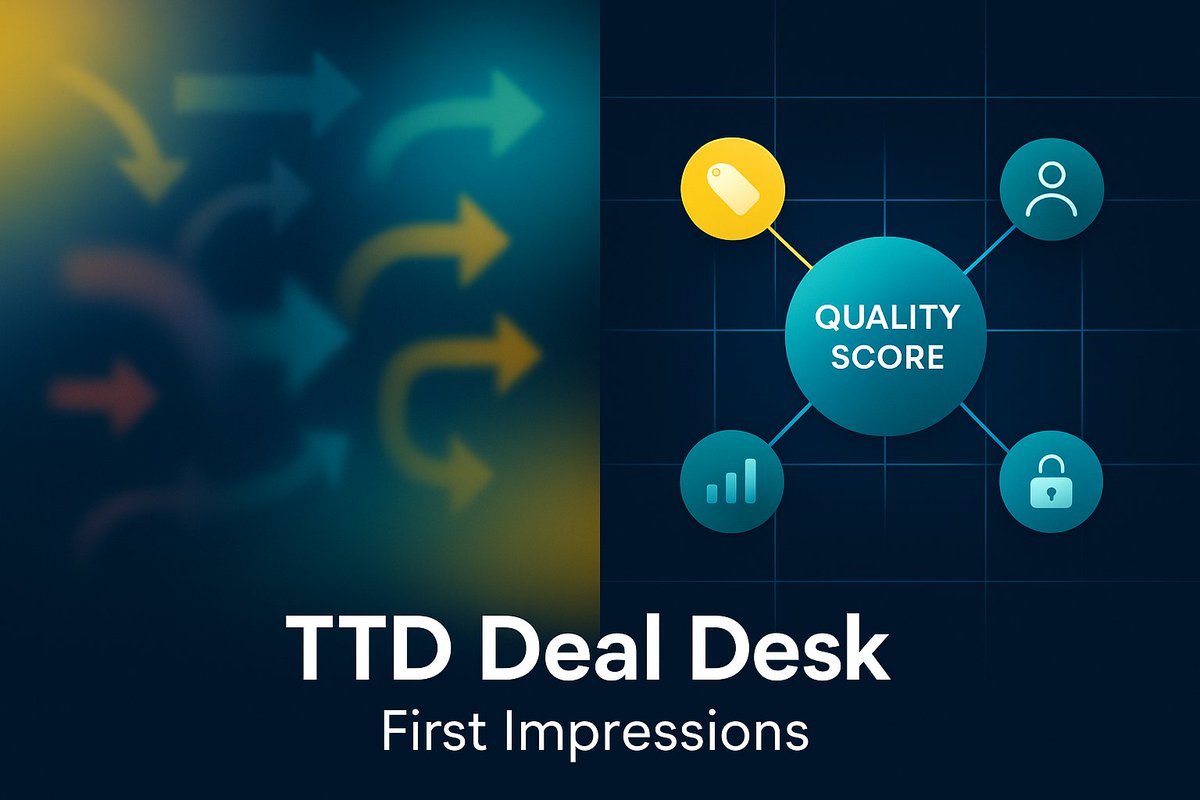
TTD Deal Desk - What This Update Is About (and My First Impressions) I just got access to Deal Desk, and it looks like a really solid update that changes how PMPs and PGs are managed in the platform. Before diving into what Deal Desk is, let’s take a quick step back and look at how deal management worked before. Previously, it was pretty straightforward - and I’d say common across DSPs. You could see all deals, their avails, actual CPM, floors, create new deals, etc. Now, Deal Desk introduces a few new features: - Introduction of “Endeavors” and “Commitments” deals - I’m not fully sure I get this yet, since it seems like everyone will still use PMP/PG instead of the new terms. Maybe I’m missing the bigger idea here. - Direct messaging with sellers - You can now message sellers to request changes. But you can no longer edit or create deals yourself. TTD says this shift is to improve transparency and simplify workflows by moving all deal edits to sellers. - Quality Score - This is the biggest and most valuable update in my opinion. Quality Score is designed to help buyers understand whether a deal offers better value or access than buying the same inventory through marketplace options like the open market or SP500+ The score is based on four signals: 1. Price competitiveness - compares the deal’s CPM to what you typically pay for similar inventory through marketplace options. 2. Addressability - shows what proportion of avails in the deal can be linked to a user or household ID in an identity graph. 3. Signal fidelity - measures how much detail the deal provides about its inventory. 4. Inventory exclusivity - measures how much of the inventory is exclusive to the deal. This actually gives buyers more visibility into what they’re really buying. For example: if a seller claims to offer unique inventory, but the deal shows 0 exclusivity (meaning you can buy the same inventory everywhere else), that’s a red flag and a sign to look elsewhere. It’s worth noting that not every low score means bad inventory. For example, if you’re working with contextual or audience providers, scores like exclusivity and price competitiveness might come in low - but that doesn’t mean those deals aren’t valuable. The data needs to be interpreted in context, based on the seller and your specific goals. Overall, I really like this update. It brings more clarity, transparency, and buyer power into the deal-making process.
Vlad Chubakov (@Programmatic 101) tweet media
English
4
4
30
3.8K