Vlad Chubakov (@Programmatic 101)

3.4K posts

Vlad Chubakov (@Programmatic 101) banner
Vlad Chubakov (@Programmatic 101)

Vlad Chubakov (@Programmatic 101)

@101Programmatic

Exploring the world of #programmatic advertising

Katılım Kasım 2022
168 Takip Edilen2.4K Takipçiler
Vlad Chubakov (@Programmatic 101) retweetledi
Ad Tech Explained
Ad Tech Explained@AdTechExplained·
Can Transaction ID become the missing piece for cleaner CTV supply paths? Ad Tech Explained explores how it helps DSPs identify duplicate inventory, improve supply path optimization, and why challenges like metadata enrichment and inventory sharing are slowing broader adoption.
English
1
1
1
242
Srikanth Ramachandra
Srikanth Ramachandra@MovingSri·
@101Programmatic The CPM gap holding up while attention quality didn't drop is the interesting part — usually assume cheaper means a quality tradeoff somewhere. Will be interesting to see the CPA/ROAS breakdown.
English
1
0
1
47
Eric Tilbury - Programmatic
Eric Tilbury - Programmatic@EricTilbury_RTB·
Most don’t want to hear this. Your lowest deterministic ID-based CPA tactic is probably not very incremental. You’re probably overinvesting there and optimizing away from a tactic that’s doing the actual hard work. I’ll repeat this because I’ve said it before. ANY tactic that needs a signal from your site or current converters will index toward what you’re already getting. REMEMBER: Outcomes = make more money by serving ads than you would have without serving ads.
English
4
0
18
1.1K
Dwayne Stewart
Dwayne Stewart@dwaynestewart·
@101Programmatic Been working through OpenPath delivery data with clients recently and encouraged to see similar trends to what you highlight. Excited to read the article
English
1
0
1
39
Eric Tilbury - Programmatic
Eric Tilbury - Programmatic@EricTilbury_RTB·
The disconnect I see between people at the very top talking about the industry and what is actually done by hands-on keyboard buyers is so large.
English
15
6
55
3.5K
Gareth Hates AdTech
Gareth Hates AdTech@HatesAdtech·
@101Programmatic If it has great viewability, if it has low ad density, if it has high conversion rates, why don't we like it again?
English
1
0
2
159
Vlad Chubakov (@Programmatic 101)
The thing is that AI slop can have pretty strong metrics (viewability, ad density, etc.), which makes it harder to detect. Legacy verification tools are also not very good at identifying it.
Trishla Ostwal@trishlaostwal

NEWS: AI slop is fooling the ad verification tools built to catch it. AI sites are beating real publishers on the metrics advertisers trust and now make up to 2.4% of open web programmatic spend, with TAG's CEO saying billions of dollars could be at stake. adweek.it/4pFOomc

English
2
0
3
855
Vlad Chubakov (@Programmatic 101)
definitely a good move in the right direction, but it still doesn’t give you much control over other properties. The algorithm still decides what percentage of the budget is allocated between Search, YouTube, Gmail, and so on
Vlad Chubakov (@Programmatic 101) tweet media
English
0
0
3
447
Vlad Chubakov (@Programmatic 101)
really curious how all these new features will improve the platform’s immediate conversions (I’m assuming not much, since people aren’t massively using ChatGPT to buy stuff?). so far, all marketers I’ve spoken with say that conversion performance is extremely low, and it’s more of a consideration channel with a longer purchase window
English
1
0
1
301
Eric Seufert
Eric Seufert@eric_seufert·
OpenAI introduces conversion optimization, app install attribution, and advanced matching “This new set of features represents a substantial update to OpenAI’s self-serve advertising platform, and it materially closes the functionality gap between OpenAI’s offering and those of other, leading scaled platforms — but especially Meta’s. To my mind, the three most meaningful new features enumerated here are oCPC conversion optimization, mobile measurement partner integrations, and automated advanced matching.” mobiledevmemo.com/openai-introdu…
Eric Seufert tweet media
English
5
5
37
5.5K
Olivia Kory
Olivia Kory@oliviaakory·
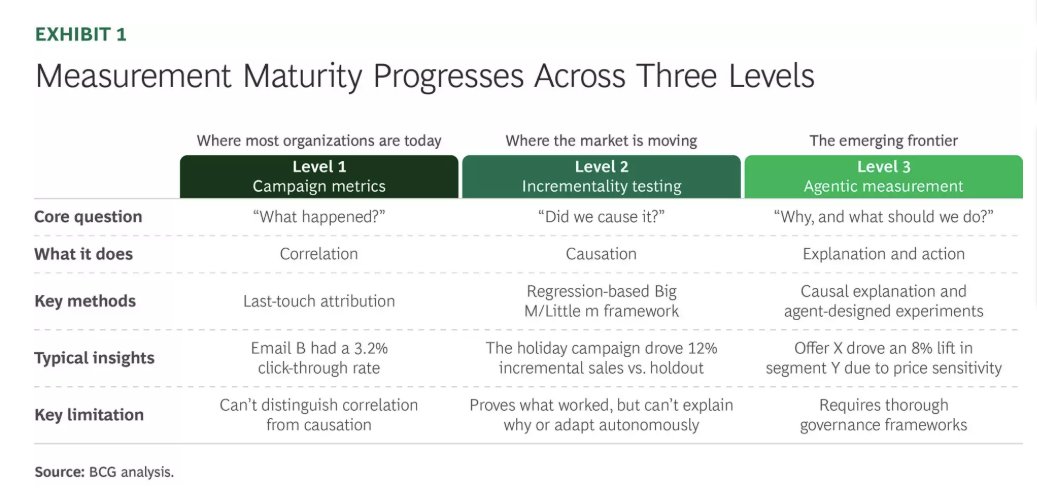
Incredible read from BCG on what is necessary to enable agentic marketing. "Most organizations’ measurement capabilities focus on campaign metrics, while a few have progressed to incrementality testing. Eventually, the best will adopt agentic measurement. The progression yields better tools and more data, but it also entails a fundamental shift in the questions that measurement seeks to answer." More in 🧵
Olivia Kory tweet media
English
6
7
80
9.3K
Vlad Chubakov (@Programmatic 101)
great insights. I think a lot of marketers fail even at level 1 - to use last-touch data, it has to be really clean. I've seen plenty of campaigns where ads weren't just viewable but carried a lot of attributed last-touch post-view conversions, and the real impact was close to zero.
English
1
0
1
163
Eric Tilbury - Programmatic
Eric Tilbury - Programmatic@EricTilbury_RTB·
How long until excel spreadsheet knowledge is useless? Or are we pretty much already there?
English
10
0
7
1.7K
Vlad Chubakov (@Programmatic 101)
Not a lot of people talking about this. Really great work by Haus team. The finding that stuck with me: noisy experiments left teams worse off than doing nothing 38% of the time.
Olivia Kory@oliviaakory

We simulated a year of marketing decisions 36 million times, and we are now sharing everything we found. I thought about not posting this on a Saturday but no need to pretend that we aren't thinking about causal inference 7 days a week over here at Haus... First, why do we invest so much in our estimators and improving experiment precision at Haus? Because an experiment doesn't create value just because it produces a lift estimate. It creates value when that estimate leads to a better decision – scale the channel, pull back, hold, retest. If the signal behind those decisions is noisy, doing more of them doesn't average you toward the truth, it means you make more wrong turns, faster. We've watched this play out anecdotally for years. But anecdotes aren't numbers. So Patrick Hillery built a simulation that modeled a full year of experiment-driven budget decisions, varying only the two levers a team actually controls: how precise their measurement is, and how often they test. What we found: - Acting on noisy results left the business worse off than doing nothing 38% of the time, more than twice as often as the precise approaches. - You can't test your way out of noisy signals with higher testing volume. Brands running noisy experiments finished ahead no more often at 15 tests a year than at 6. - A strong experimentation program is worth double digits. The precise, high-cadence approach delivered a 13.2% average revenue lift, more than double the noisy approach's payoff (5.6%) at the same cadence and limit. - A tight confidence interval can be manufactured. Some methods look precise by hand-picking a few well-matched markets, but the result only holds for those markets. In these cases, precise results aren’t necessarily accurate ones. I'm linking in thread the full article, methodology walkthrough and companion spreadsheet we are calling Monte Carlo, and we are making it available to all.

English
1
1
6
1.8K
Vlad Chubakov (@Programmatic 101) retweetledi
Marketecture
Marketecture@marketecturetv·
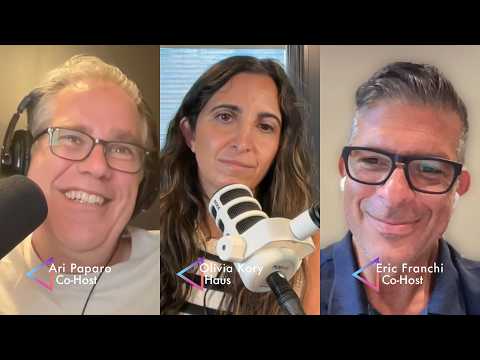
Host @aripap and co-host @ericfranchi welcome @oliviaakory, Chief Marketing Strategy Officer at Haus, to discuss incrementality, AppLovin, AI-driven media buying, Google, OpenAI, and the future of ad measurement. youtu.be/scf7yqDokWE
YouTube video
YouTube
English
1
5
16
9.1K
Vlad Chubakov (@Programmatic 101)
Vlad Chubakov (@Programmatic 101)@101Programmatic·
applovin is basically an easy button - set up a campaign, get a ton of post click conversions (or for their core business specifically, installs). Open web is way more fragmented for that. Audio, ctv, dooh - none of that is clickable, so post click doesn't even apply. standard display is more top of funnel too (outside of feed-based retargeting plays like criteo), so you need more bells and whistles to prove it's working. that's what makes it harder to sell to smbs/performance advertisers vs just post click
English
2
0
5
586
Joe Zappa
Joe Zappa@joe_zappa·
Why is there no AppLovin of the open internet? Will AI allow an existing company or startup to build a $100B performance advertising juggernaut on the open web?
English
11
0
9
2.5K
Vlad Chubakov (@Programmatic 101)
Vlad Chubakov (@Programmatic 101)@101Programmatic·
yeah that makes sense, especially if they can eliminate fragmentation - like right now if you don't have a seat you're finding a ttd reseller, then an amazon reseller, then dv360, or signing contract with some smaller dsp just for access and at the same time actually drive value - propose campaign structure based on the goals, run optimizations, consolidate reporting, etc.
English
1
0
1
107
Eric Franchi
Eric Franchi@ericfranchi·
Yes, that.... and! Specific example, we are seeing companies creating a layer on top of API accessible media platforms, adding AI workflow and creative and optimization layers while removing costs at the same time. Its sort of like what BOK was talking about with agentic being the portfolio manager to programmatic's trader financial analogy. What is this? Is it a DSP or post-DSP? What happens if this becomes the system of record?
English
1
0
4
224
Eric Franchi
Eric Franchi@ericfranchi·
2007 is known as the year the adtech 1.0 chessboard was set (DCLK -> Google, Acquantive/AdECN -> MSFT, RM -> Yahoo). ... crucially, it was also the founding year of Appnexus, Rubicon Project (Magnite), Mediamath/Invite Media, BlueKai and others, which established programmatic... ... which then led to DV, TTD and the Lumascape. There is absolutely that level of new-company and -category formation energy happening right now in 2026. I can't believe we are getting to run it back. We will all look back on this time similarly.
English
6
3
31
2.3K