Valentin Iljaž

178 posts

Valentin Iljaž banner
Valentin Iljaž

Valentin Iljaž

@valentiniljaz

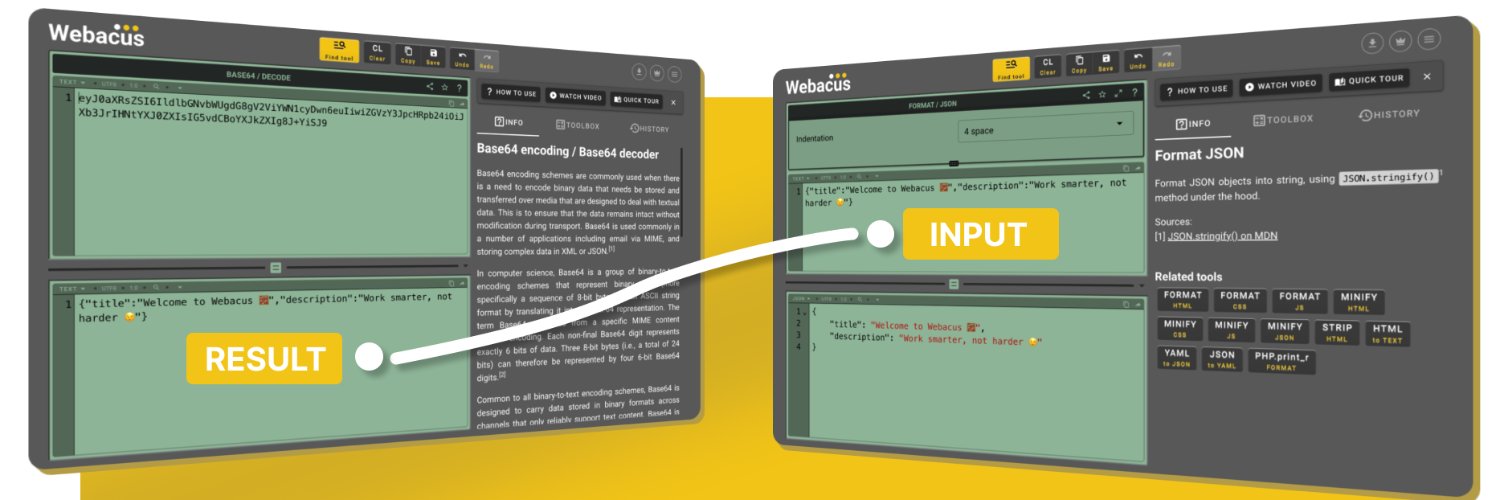
Tired of scattered dev tools? I built https://t.co/m5widbq7Vd: a single web app with all the micro-tools you need. 🚀

Ljubljana, Slovenia Katılım Eylül 2010
427 Takip Edilen60 Takipçiler
Valentin Iljaž retweetledi
Andrej Karpathy
Andrej Karpathy@karpathy·
💯 "If you build it, they will come." :) ~Every business you go to is still so used to giving you instructions over legacy interfaces. They expect you to navigate to web pages, click buttons, they give out instructions for where to click and what to enter here or there. This suddenly feels rude - why are you telling me what to do? Please give me the thing I can copy paste to my agent.
Andrej Karpathy tweet media
English
110
189
2.3K
149.3K
Valentin Iljaž
Valentin Iljaž@valentiniljaz·
Forget toggling between tabs — handle math, hex, files, and more in one clean workspace built for real coding flow. Try it once, and you'll wonder how you lived without it. #CodingProductivity #DeveloperTools
Valentin Iljaž tweet media
English
0
0
0
8
Valentin Iljaž retweetledi
Donald J. Trump
Donald J. Trump@realDonaldTrump·
Now that Obama’s poll numbers are in tailspin – watch for him to launch a strike in Libya or Iran. He is desperate.
English
3K
44.5K
63.7K
0
Valentin Iljaž
Valentin Iljaž@valentiniljaz·
Too many tabs, countless tools, and endless copy-paste? Not anymore. Meet the all-in-one dev toolkit that thinks like you do. Simplify your workflow, chain your tools, and let creativity—not chaos—lead the way. 🚀 #DevTools #Productivity
Valentin Iljaž tweet media
English
1
0
1
8
Valentin Iljaž
Valentin Iljaž@valentiniljaz·
Stop hunting for the right tool — create your own. Webacus brings all your developer utilities into one intuitive workspace designed to keep you in flow. Minimal effort, maximum output. #Webacus #DevTools
Valentin Iljaž tweet media
English
0
0
0
8
Valentin Iljaž
Valentin Iljaž@valentiniljaz·
Skip the endless tabs and copy-paste chaos. Webacus brings all your favorite dev utilities into one clean workspace — lightning-fast, minimalist, and built in Slovenia with ❤️☕️. #Webacus #DevTools
Valentin Iljaž tweet media
English
0
0
0
5
Valentin Iljaž
Valentin Iljaž@valentiniljaz·
Skip the downloads, skip the clutter — get every dev tool you need, all in one clean workspace. Webacus makes encoding, hashing, and editing feel effortless. Try it once, and you’ll never go back to searching Google again. #DevTools #Webacus
Valentin Iljaž tweet media
English
0
0
0
4
Valentin Iljaž
Valentin Iljaž@valentiniljaz·
Stop juggling between ten different tabs. Our unified tools let you code, convert, and calculate — all in one focused space. Built for developers who value speed and simplicity. #DevTools #Productivity
Valentin Iljaž tweet media
English
0
0
0
7
Valentin Iljaž
Valentin Iljaž@valentiniljaz·
Why juggle dozens of dev tools when one simple browser tab can do it all? Edit, convert, hash, and analyze with ease—directly online. #DevTools #WebDev
Valentin Iljaž tweet media
English
0
0
0
2
Valentin Iljaž retweetledi
Vince Langman
Vince Langman@LangmanVince·
The Japanese Trump is hilarious 😂
English
1.7K
5.9K
36.8K
3.7M
Valentin Iljaž retweetledi
Andrej Karpathy
Andrej Karpathy@karpathy·
I think it must be a very interesting time to be in programming languages and formal methods because LLMs change the whole constraints landscape of software completely. Hints of this can already be seen, e.g. in the rising momentum behind porting C to Rust or the growing interest in upgrading legacy code bases in COBOL or etc. In particular, LLMs are *especially* good at translation compared to de-novo generation because 1) the original code base acts as a kind of highly detailed prompt, and 2) as a reference to write concrete tests with respect to. That said, even Rust is nowhere near optimal for LLMs as a target language. What kind of language is optimal? What concessions (if any) are still carved out for humans? Incredibly interesting new questions and opportunities. It feels likely that we'll end up re-writing large fractions of all software ever written many times over.
Thomas Wolf@Thom_Wolf

Shifting structures in a software world dominated by AI. Some first-order reflections (TL;DR at the end): Reducing software supply chains, the return of software monoliths – When rewriting code and understanding large foreign codebases becomes cheap, the incentive to rely on deep dependency trees collapses. Writing from scratch ¹ or extracting the relevant parts from another library is far easier when you can simply ask a code agent to handle it, rather than spending countless nights diving into an unfamiliar codebase. The reasons to reduce dependencies are compelling: a smaller attack surface for supply chain threats, smaller packaged software, improved performance, and faster boot times. By leveraging the tireless stamina of LLMs, the dream of coding an entire app from bare-metal considerations all the way up is becoming realistic. End of the Lindy effect – The Lindy effect holds that things which have been around for a long time are there for good reason and will likely continue to persist. It's related to Chesterton's fence: before removing something, you should first understand why it exists, which means removal always carries a cost. But in a world where software can be developed from first principles and understood by a tireless agent, this logic weakens. Older codebases can be explored at will; long-standing software can be replaced with far less friction. A codebase can be fully rewritten in a new language. ² Legacy software can be carefully studied and updated in situations where humans would have given up long ago. The catch: unknown unknowns remain unknown. The true extent of AI's impact will hinge on whether complete coverage of testing, edge cases, and formal verification is achievable. In an AI-dominated world, formal verification isn't optional—it's essential. The case for strongly typed languages – Historically, programming language adoption has been driven largely by human psychology and social dynamics. A language's success depended on a mix of factors: individual considerations like being easy to learn and simple to write correctly; community effects like how active and welcoming a community was, which in turn shaped how fast its ecosystem would grow; and fundamental properties like provable correctness, formal verification, and striking the right balance between dynamic and static checks—between the freedom to write anything and the discipline of guarding against edge cases and attacks. As the human factor diminishes, these dynamics will shift. Less dependence on human psychology will favor strongly typed, formally verifiable and/or high performance languages.³ These are often harder for humans to learn, but they're far better suited to LLMs, which thrive on formal verification and reinforcement learning environments. Expect this to reshape which languages dominate. Economic restructuring of open source – For decades, open-source communities have been built around humans finding connection through writing, learning, and using code together. In a world where most code is written—and perhaps more importantly, read—by machines, these incentives will start to break down.⁴ Communities of AIs building libraries and codebases together will likely emerge as a replacement, but such communities will lack the fundamentally human motivations that have driven open source until now. If the future of open-source development becomes largely devoid of humans, alignment of AI models won't just matter—it will be decisive. The future of new languages – Will AI agents face the same tradeoffs we do when developing or adopting new programming languages? Expressiveness vs. simplicity, safety vs. control, performance vs. abstraction, compile time vs. runtime, explicitness vs. conciseness. It's unclear that they will. In the long term, the reasons to create a new programming language will likely diverge significantly from the human-driven motivations of the past. There may well be an optimal programming language for LLMs—and there's no reason to assume it will resemble the ones humans have converged on. TL; DR: - Monoliths return – cheap rewriting kills dependency trees; smaller attack surface, better performance, bare-metal becomes realistic - Lindy effect weakens – legacy code loses its moat, but unknown unknowns persist; formal verification becomes essential - Strongly typed languages rise – human psychology mattered for adoption; now formal verification and RL environments favor types over ergonomics - Open source restructures – human connection drove the community; AI-written/read code breaks those incentives; alignment becomes decisive - New languages diverge – AI may not share our tradeoffs; optimal LLM programming languages may look nothing like what humans converged on ¹ x.com/mntruell/statu… ² x.com/anthropicai/st… ³ wesmckinney.com/blog/agent-erg…#issuecomment-3717222957" target="_blank" rel="nofollow noopener">github.com/tailwindlabs/t…

English
699
653
8.1K
1.2M
Valentin Iljaž
Valentin Iljaž@valentiniljaz·
Tired of juggling endless tabs and half-finished scripts? Simplify your workflow with tools that think like you do. From HEX to hash, every conversion and edit—done instantly. #Productivity #Workflow
Valentin Iljaž tweet media
English
0
0
0
3
Valentin Iljaž
Valentin Iljaž@valentiniljaz·
From quick HEX edits to smart calculations — Webacus keeps your dev flow uninterrupted. It’s more than a toolbox; it’s your daily sidekick for building better, faster, and cleaner. 🚀 #Webacus #DevTools
Valentin Iljaž tweet media
English
0
0
0
5
Valentin Iljaž
Valentin Iljaž@valentiniljaz·
Switch from searching for tools to actually building. Webacus brings everything you need—hex editing, file conversions, hashing, and more—into one smart workspace. One tab, endless possibilities. #CodingTools #Webacus
English
0
0
0
6
Valentin Iljaž
Valentin Iljaž@valentiniljaz·
I've used many online tools, but Webacus is the one I keep coming back to. It's fast, reliable and has a lot of tools." - Micheal G. ✨ Discover why developers love us! Get started today: webacus.dev #Webacus #DevTools
Valentin Iljaž tweet media
English
0
0
0
4
Valentin Iljaž
Valentin Iljaž@valentiniljaz·
Mastering bitwise operations (AND, OR, XOR, NOT, shift) is crucial for many dev tasks. 🧠 Webacus provides direct tools for these, helping you manipulate data at its most granular level! Level up your skills: webacus.dev #BitwiseOps #Programming
Valentin Iljaž tweet media
English
0
0
0
2