

Vladislav Petyuk
587 posts
Vladislav Petyuk
@vapetyuk
Enthusiastically pushing science at @PNNLab since 2004. Proteomics. #rstats. Avoiding political tweets by all means.
Richland, WA Katılım Temmuz 2015
186 Takip Edilen148 Takipçiler

@vapetyuk etsy.com/listing/144897… this one. Just be sure to label the orientation of each part during disassembly. Also don’t wipe the inside of face with alcohol — it acts as a solvent for the Casio paint (made this mistake once).
English
F91-W is a beautiful reminder of excellent constraint engineering. Draws microamps from a CR2016 so life is ~7 years. 32.768kHz (=2¹⁵) crystal oscillator so 15-stage binary divider gives exactly 1Hz. Only limitation is the backlight; I’ve mod’d mine with backlight spreader fix.
Peter Mick@ThePeterMick
Finally a battery that lasts more than 1 day, peak engineering tbh
English
@ihtesham2005 Tells you something about the peer review process.
English

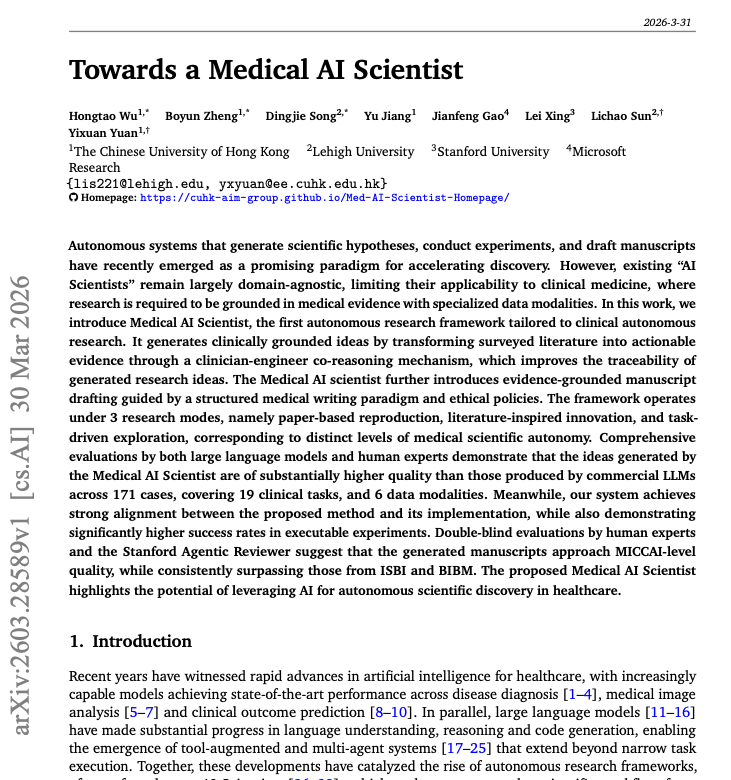
🚨BREAKING: Stanford and Microsoft just built an AI scientist that writes medical research papers that actually pass peer review.
Not summaries. Not drafts. Full papers reviewed and accepted by real scientists.
This is not a demo and this is not a prototype. A peer-reviewed conference just accepted a paper that no human wrote, and most people have absolutely no idea it happened.
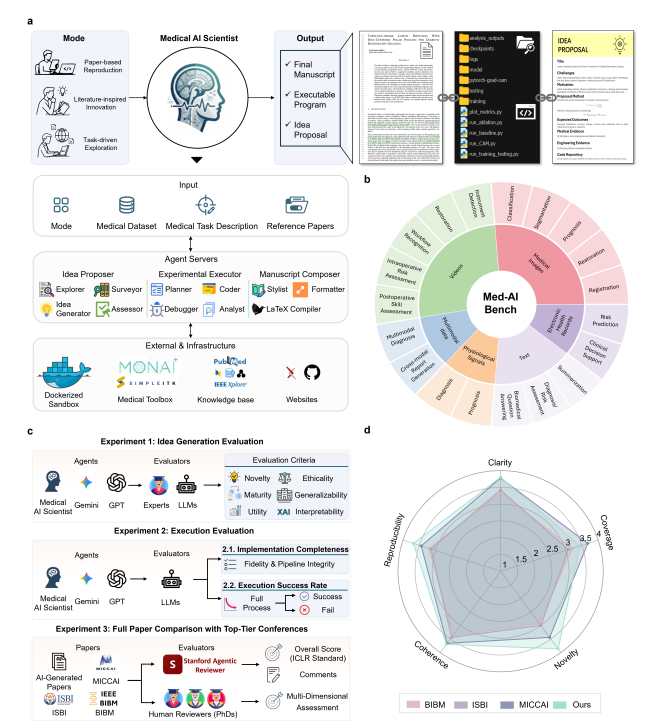
The system is called Medical AI Scientist and it works in three stages that run completely on their own.
First, it reads medical literature, identifies real clinical gaps, and generates a research hypothesis grounded in actual disease evidence, not a hallucination and not a generic idea pulled from thin air. Then it writes the code, runs the experiment inside a secure environment, catches its own errors, and fixes them without any human stepping in. Then it writes the full paper, including the introduction, methods, results, figures, ethics statement, citations, and LaTeX formatting, from start to finish, autonomously.
They tested it against GPT-5 and Gemini 2.5 Pro across 171 real medical research cases covering 19 clinical tasks, and the results were not close. Medical AI Scientist successfully completed experiments 91 to 93 percent of the time. GPT-5 managed 60 to 75 percent. Gemini 2.5 Pro collapsed somewhere between 40 and 53 percent.
Then they ran the part that genuinely broke my brain. Ten independent medical experts with over five years of first-author publishing experience reviewed the AI-generated papers side by side with real human papers from MICCAI, ISBI, and BIBM, the top conferences in medical imaging, and nobody knew which was which.
The AI papers scored competitively on novelty, clarity, coherence, and reproducibility across the board, and one paper was accepted at a peer-reviewed conference after a full review process.
Here is what nobody is saying out loud.
Medical research has a brutal bottleneck where ideas pile up, experiments take months, papers take even longer, and patients wait the entire time. That problem just got a serious solution, and the implications for healthcare are enormous.
English
This is exactly the progress in science that I'd like to see. Building theoretical/computational model based on the data.
phys.org/news/2026-03-s…
English
@BrewNeuron @PattyMurray @BillGates Because those Gates Foundation grants are subsidized by the institutions. Indirects are covered from elsewhere... like NIH projects.
English

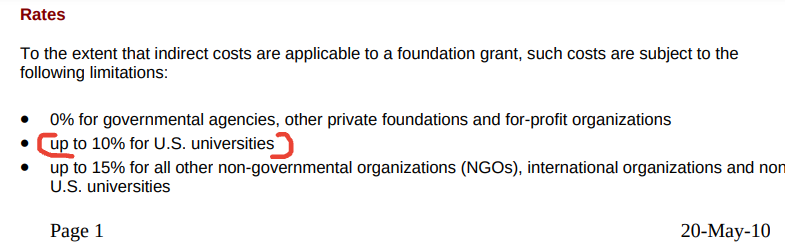
@PattyMurray Senator, I'm one of your constituents. Many nonprofits limit indirect costs to 10%. Why do taxpayers have to pay so much more? Here's the Gates Foundation policy, it looks like 10% indirect rate for US universities. Maybe @BillGates can help NIH grantees more efficient.
English

Trump's proposal is ILLEGAL & amounts to an indiscriminate funding cut for research centers of all sizes, NOT just Ivies. It will mean shuttering labs across the country, layoffs in red & blue states, & derailing lifesaving research on everything from cancer to opioid addiction.
NIH@NIH
Last year, $9B of the $35B that the National Institutes of Health (NIH) granted for research was used for administrative overhead, what is known as “indirect costs.” Today, NIH lowered the maximum indirect cost rate research institutions can charge the government to 15%, above what many major foundations allow and much lower than the 60%+ that some institutions charge the government today. This change will save more than $4B a year effective immediately.
English
@barthelmes @fperrywilson There shouldn't be any magic. Most likely the accounting is different. My guess would be that the EU universities are subsidized by the governments.
English

NIH has announced a cut in the "indirect rate" to 15% across the board, in a move that appears to be retroactive to even existing grants. This is a bloodbath for research institutions throughout the country.
Brief explainer for those not in this world:
buff.ly/3EtML7D
English
@florian_krammer @bratwebb @HarryDCrane BSL-2/3 lab space will be a little bit more expensive for running experiments than a garage space
English

@bratwebb @HarryDCrane Maybe for a statistician 15% is OK 😉 - but not for the wet-lab based research we are talking about.
English
1) Since there is a lot of confusion about the reduction of the overhead rate on NIH grants to 15% (see here: grants.nih.gov/grants/guide/n…) I'll do a little tweetorial (or X-torial?) about it.
English
@pdmcwhorter @thenuschke @NIH Also in some cases security - controlled access to the buildings (say biosafety labs) or data (e.g. patient data at the medical centers).
English

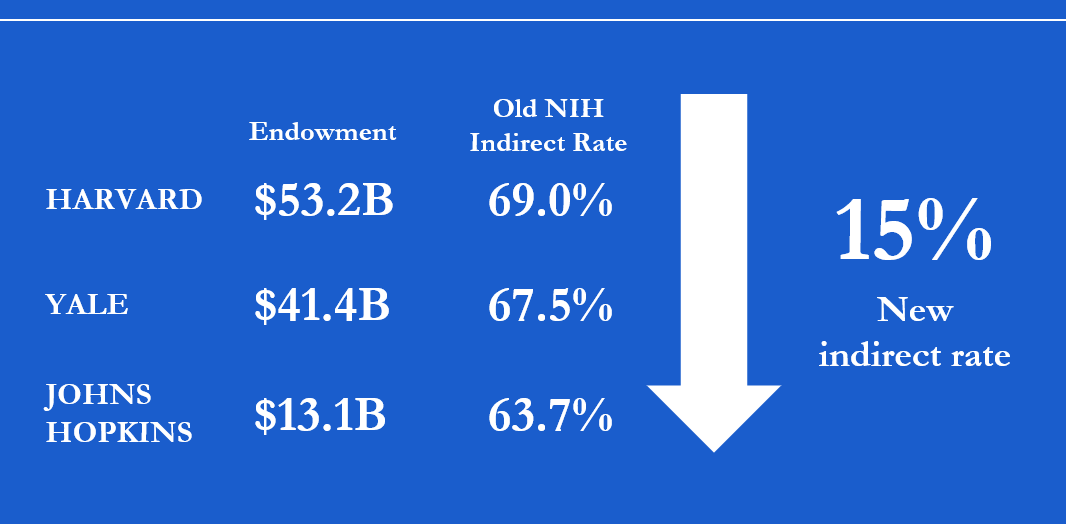
Last year, $9B of the $35B that the National Institutes of Health (NIH) granted for research was used for administrative overhead, what is known as “indirect costs.” Today, NIH lowered the maximum indirect cost rate research institutions can charge the government to 15%, above what many major foundations allow and much lower than the 60%+ that some institutions charge the government today. This change will save more than $4B a year effective immediately.
English
Good ol' days. Checking out manuscript from 1967. Back then we could refer to "to be published".

English
Printed out the manuscript I just agreed to review. Instant regret.

English
Holidays are so much more productive. No disturbance from meetings and calls.
English


#TeamMassSpec what MS/MS searching tool people use for identifying misincorporation of amino acids into peptides?
English
Vladislav Petyuk retweetledi

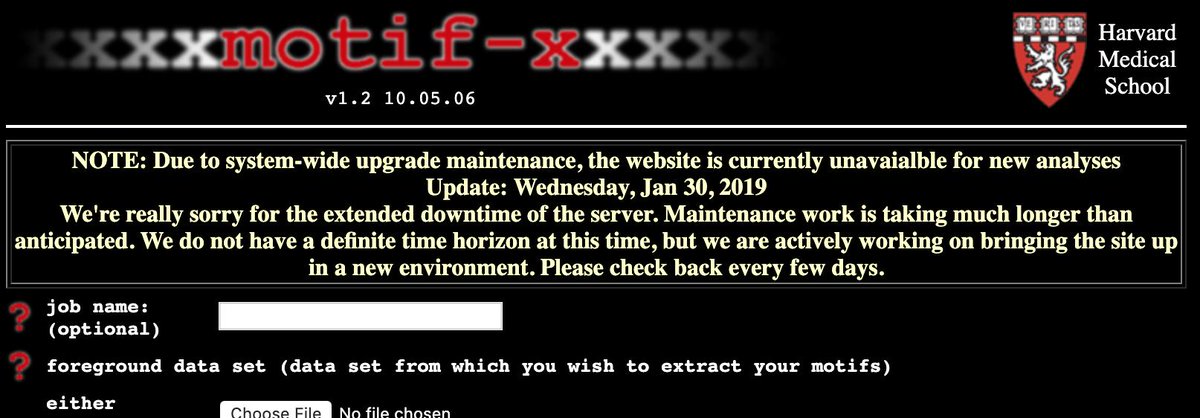
The very popular motif-x server has been down for a very long time. Is there any viable alternative? What do #proteomics scientists use for motif enrichment analysis?
English
Vladislav Petyuk retweetledi

Most Read in the past 30 days! Check it out: "Evaluation of the Binding Preference of Microtubes for Nanoproteomics Sample Preparation"
go.acs.org/3wG
English
This is very enigmatic conclusion the authors arrived to. (last sentence of the abstract)

English
Phys.org: Rate of scientific breakthroughs slowing over time: Study.
phys.org/news/2023-01-s…
via @GoogleNews
English
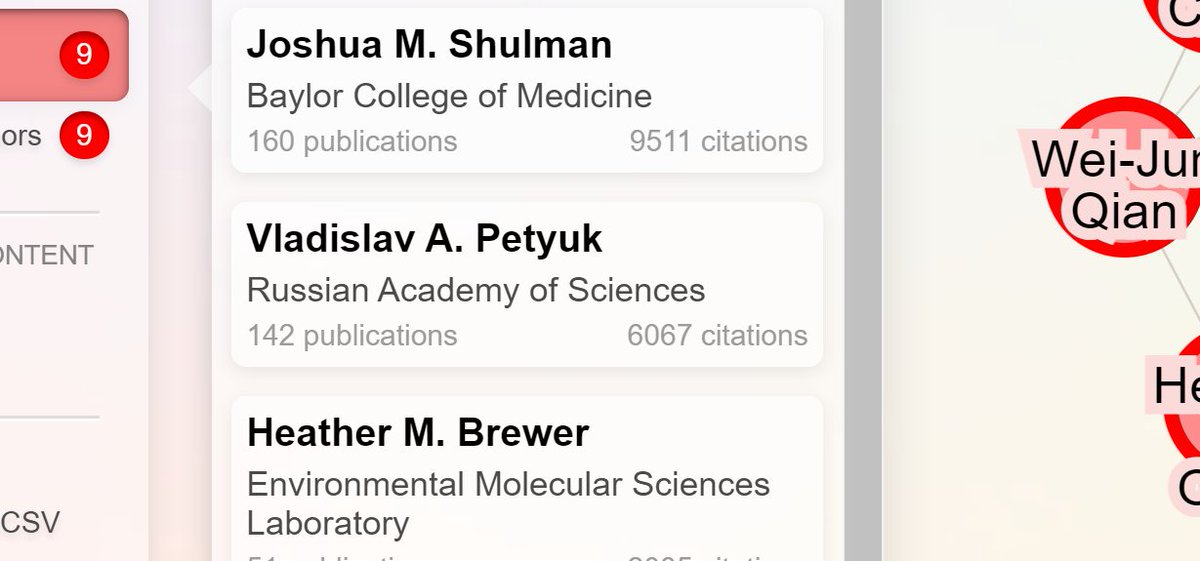
How did @RsrchRabbit come up with an idea that I am from Russian Academy of Sciences? I was kind of loosely associated with it > 20 years ago.
English
Vladislav Petyuk retweetledi

we have been requested to spread the word:
the CMBG study section would be delighted if the pool of glia biologist ECRs available to serve on this study section would expand
public.csr.nih.gov/ForReviewers/B…
English