Varish | DXB Care
899 posts

Varish | DXB Care
@varishbajaj
Building @DXBcare for all your concierge needs! member @superteamAE
Dubai/ Bengaluru Katılım Temmuz 2021
610 Takip Edilen484 Takipçiler

hi friends! quick update
we have a series of big announcements coming out for @formacity next week.
we're going long on: the internet, irl, community, building (with AI) and of course long @solana
also dropping our first product this week!
2026 is gonna be so forma coded.
English

Looking for someone who can rebuild a landing page (tho code) in less than 48 hours.
We already have a clear idea, just need a designer to make it the more beautiful (converting) landing page.
Dm or intro welcome 🙌🏼
English
Chelsea vs Manchester United - April 18, Stamford Bridge
2 tickets, Short Side Upper Tier
Can't make it anymore 😔 DM if interested.
English
English

I've joined @ionet
I'll be leading Strategic Sales & Supply. GPU infrastructure, AI compute, and making io.net the default GPU for enterprises & users.
Massive thanks to @Gaurav_ionet, @Basem_IO & Dustin for having me. Couldn't be more fired up.
English
This is one of the more interesting AI product visions I’ve seen in a while.
Not just faster output. Better orientation, better memory, better workflows.
Huge idea.
Divya Ranjan@divyaranjan_
"AI made you faster. Your brain didn't get bigger" @karpathy's recent post went viral for sharing how he uses LLMs to build personal knowledge bases. Interestingly, I've been building a more holistic version of what he described for the past few weeks. Introducing Pattrns, an AI interface crafted for deep parallel work, with a partner called Dots that just knows you and grows with you from day one. Why? A few months back, I realised I was working with so many tools / terminals / windows. AI had made me 10x faster, but to be efficient at all times required all my focus and constant attention/depth. AI was creating 100x more output daily than my brain could process, and the constant context switching and orienting myself again and again was killing me. Alsooo, why is every AI chat so linear? The entire experience of using AI was disorienting me. Another agent wasn't the solution for me but an entire interface that connected all the dots for me automatically was. So I built Pattrns. Here's what it actually is: Pattrns is a visual environment to think and do more knowledge work with AI. It keeps you oriented at all times and uses visual threads, kind of like how our brain works (think your prefrontal cortex externalised). Your research, your references, and your thoughts for all your different threads all live side by side as context for AI. The interface gives you one view with infinite depth. You can run parallel sessions across projects, drop a massive question in one thread, and switch to another one to keep working. Focus when you want depth, expand when you want the big picture. My early version was actually an infinite canvas with chat, but using it daily became a bottleneck. Infinite canvases eventually just turn into noise especially for boards that keep evolving. Then there's Dots, the ambient intelligence underneath it all. It learns your taste and decisions by watching your actions. It pays attention to what you care about, what you curate, and what you engage with (also like how much, think pagerank). Over time, it just knows you. You never have to re-explain your thinking, your taste, or your decisions ever again. It does this by auto-organizing and constantly updating your memory graph into a board ("Me") for you to look at, edit, or chat with. You are also always fully aware of what it knows. The underlying rule is simple. Organization is Dots' job, but thinking and creating is yours. So every chat just feels like you're talking to someone who already gets you. This is how it feels to use: Day one: During onboarding, you import your past AI chats (Claude / ChatGPT) and data (Apple Notes, Notion, Evernote). Dots reads through everything, starts creating your Me board with your entire memory graph, auto resolves conflicts, and just knows you from the start. Week one: You're working across three projects. You drop research into one board, brainstorm in another, execute in a third. Switch between them instantly. The AI already knows what each board is about because it sees your cards, your structure, your context. No re-explaining. You can just start chatting anywhere and it stays updated at all times. Month one: Dots knows you and has seen what you've been creating and doing. What you build on vs what you explore and move on from. It's learned your taste through your actions, not your words, relative to the different boards. When you ask it to design something, it already knows you hate rounded corners in that exact project. When you're debugging, it remembers you prefer logs over breakpoints. Every correction you make teaches it. Every card you create sharpens its understanding. The result? You stop maintaining tools and start using them. No tagging. No filing. No "I should organize this later" guilt. Conversations are JSONL you can grep, Git tracks everything. Zero lock-in. Dots understands the context as the what and the conversations that led to it as the why. And also, there's a lot more under the hood Everything stays local (your brain is a folder you own). Privacy is a mission statement, nothing is stored online. You can literally just drop your entire Obsidian vault here and watch it get organized beautifully. It's powered by Anthropic's Agent SDK, so Dots is as capable and agentic as it gets. You can bring all your MCPs, and if an API or skill doesn't exist, just dump things and ask Dots to create it. Repeat something enough and Dots suggests turning it into a skill automatically. Every chat has reply threads (like Slack) so you can drill into any thought without losing the main conversation, and a TLDR button to catch up in seconds. Who is it for? I believe there are 2 kinds of people doing major work with AI: 1. Those who want fully autonomous agents that take a prompt and do everything. OpenClaw, AI chief of staff, that whole wave. 2. Those who sit with it, plan, execute step by step so their exact taste is translated into the output. Pattrns is for the latter! You will soon even be able to use the browser extension and Pattrns MCP to bring your own context to any chat agent you use daily, so it automatically starts thinking like you. Anyway Pattrns is a product I always wanted for myself and I deeply care about this cause. My ultimate mission is to eventually have an interface that is as intuitive as paper and pen along with an ambient AI that watches you and unifies everything you do in one place, constantly organizing your context so you keep coming back to it. What would that eventually feel like? That Pinterest image you keep going back to on your browser, it'll soon be auto-organized in a space for you. The early access for the beta is going live today (Invite only. Mac only for now). Reply with what you're building right now and I'd love to send you an invite soon! PS: There was no AI ever used while crafting this entire product experience, just pen and paper. Only used AI to build it. Taste is human :')
English
@abhitejxyz @Bentodotfun The feedback loop feels painful but that's literally what separates products that stick from ones that don't. Rooting for Bento
English

2026 so far @Bentodotfun:
Jan-Feb: Excitement to ship something new every day
March: Start aggressive testing with legit sports fans
Jump into harder problems: One-click tournament and market creations, Parlays, iOS app, user acq. funnels
Number steadily getting better:
> ~$10,000 traded in small ticket picks, 500+ sign up, 100+ have traded $5 or more
> First action time dropped from 70s to 43s
> Market/tournament creation reduced from several minutes to less than 30s
But won't lie waking up everyday to see dozens of feedback to improve feels like living in a loop
English
The demand side gap is so real. I've looked at crypto cards that seem great on paper due but then you get hit with transaction fees and high forex conversion charges that eat into whatever rewards you thought you were getting. Someone needed to make this transparent. LFG @madhursatija
Madhur Satija | Curat.money 💳@madhursatija
Introducing @curatmoney: The aggregation layer for crypto cards and neobanks. I have spent the last few months deeply immersed in the gap between payments infra and the everyday consumer. What I realized is this: as an industry, we are building incredible financial rails, but we are completely failing the end user at the distribution layer. The data is staggering. The crypto card market just quietly crossed $18 billion in annualized spend. Stablecoin transaction volume hit $33 trillion in 2025. The heavyweights know exactly what is coming. @stripe just bought @Stablecoin for $1.1B, and @Mastercard acquired @BVNKFinance for up to $1.8B. @0xPolygon is all in as well for everything payments. This creates a massive tailwind for everyone building in this space. Everyone is obsessively building the supply side. Very few are building the demand side. With over 100+ neobanks and over 300+ card programs live globally, the sheer volume of options is overwhelming. Currently, ~1K new cards are registered daily across the ecosystem. How are normal users supposed to navigate the best one for themselves! The key question is whether users and companies can truly create and sustain meaningful value for each other. Right now, neither can. Users are forced to rely on sponsored listicles that go stale in weeks, or fragmented advice across X and TG, while neobanks and card companies are stuck with users who don't provide enough volume to break even on customer acquisition costs. Without a single source of truth, consumers fall into aggressive marketing traps, facing opaque fee structures and hidden staking requirements. We are leaving users unprotected. Curat solves every problem in the middle. We have been building this product for the last three months, and we are already at 60,000 lines of code. We are building for scale. This segment is battle tested in the web2 ecosystem already. A user enters our ecosystem through our card aggregation layer. (We are live right now with over 155 cards listed from over 60 providers). We offer unified discovery with granular filtering so you can actually compare cards side by side. But more importantly, we are building a massive Trust and Community Defense layer. Every card on our platform is reviewed through a manual verification process, and we give users a community portal to report grievances and hold issuers accountable. From a business perspective, we are not really a comparison tool [that's just the entry point] ;) We have built a compounding six-flywheel ecosystem driven by an xCURAT loyalty retention loop, affiliate/volume commissions, a services marketplace, premium listings + a card launchpad, affiliate AEO for LLMs, and an incident data product including a credit score for each user. Every other mature financial product category, like insurance, mortgages, and traditional credit cards, eventually develops a dominant aggregation layer. Crypto cards are next. We are building the first interaction layer for the entire market. I will dive much deeper into this vision in the coming days as our core product launches. If you like what we are building, visit @curatmoney to keep track of everything happening in this ecosystem and discover specially curated card offers.
English
Varish | DXB Care retweetledi
Hi @HDFCBank_Cares @HDFC_Bank ,
Received emails and SMS asking to “validate email ID.” The sender domain appears slightly different from your official domain, which raises concern.
Can you please confirm if this is a legitimate communication or a phishing attempt?

English
@sanjaybuilds_ @calebrebelo_ That sky looks like it’s about to drop a plot twist in a horror movie.
English



Building a stable future for everyone 🌎
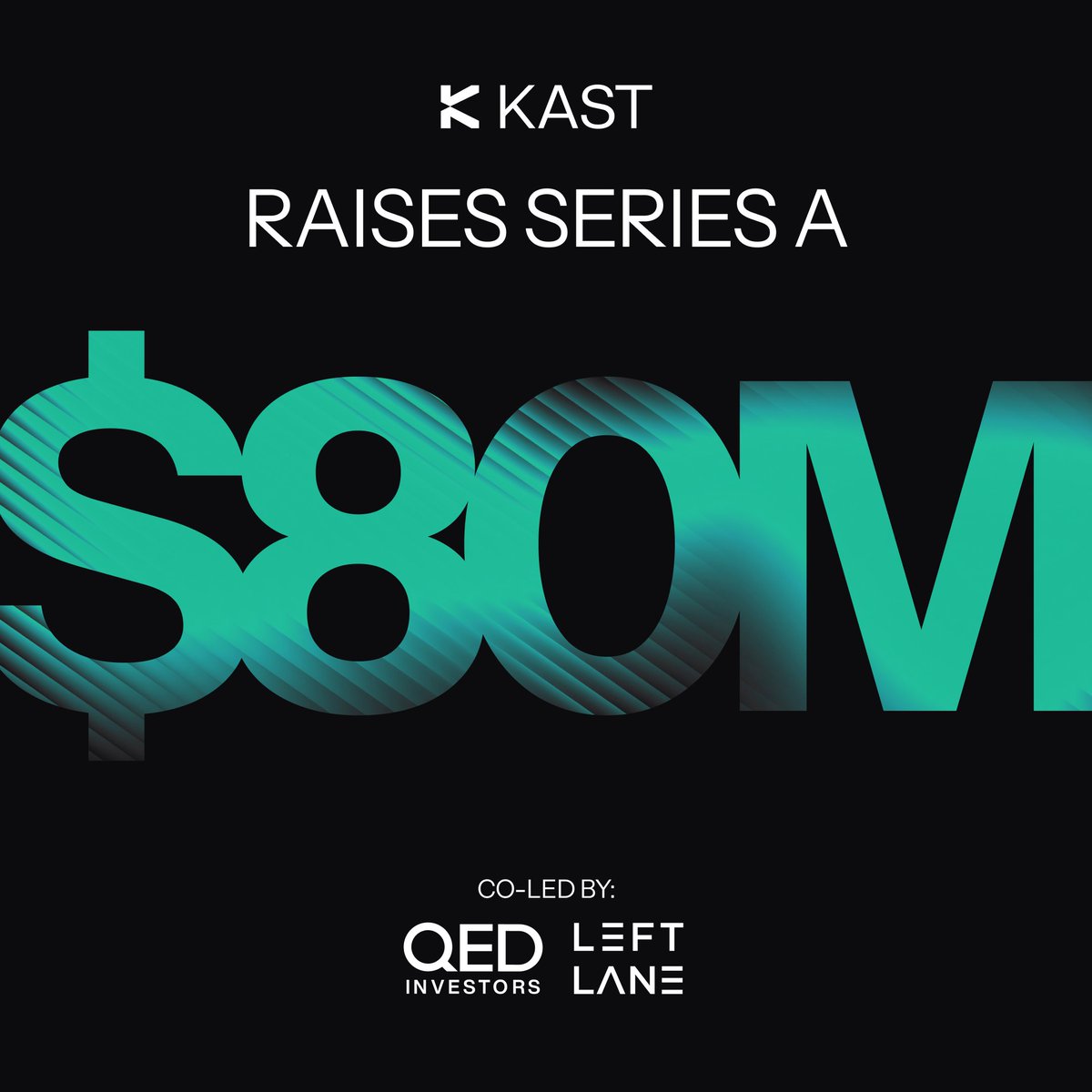
We've raised a historic $80M Series A to give everyone access to stablecoin-powered financial services.
Special thanks to @QEDInvestors and @leftlanecap for co-leading the round and to all our members for believing in our mission.
English
Huge thanks to the CISF security team @CISFAirport at Delhi Airport! I've traveled to multiple countries, but the security clearance here is top-notch! Fast, efficient, and super smooth. It's clear that the team is working hard to improve, and it's paying off.
Keep up the great work!
English
Just called the Indian Embassy for clarity on UAE → India flights. Shockingly, they had zero information to share—no advisory, no guidance, no next steps, not even basic reassurance for citizens.
People are stuck and stressed. Indians in the UAE deserve clear communication now. Please publish an official update and helpline guidance immediately.
@IndembAbuDhabi @MEAIndia @DrSJaishankar @moca_go @DGCAIndia
English
When all of Dubai is taking shelter…
but my guy is still planning morning padel.

English

Meanwhile, my friends and family refuse to clear splitwise
Deepinder Goyal@deepigoyal
Temple has raised its first round. Friends and family. $54m. Post-money valuation of ~$190m. Every investor in this round is a founder friend or early-stage Zomato investor who wanted in, whether or not Temple ever makes it to market. But here's what gives me goosebumps – more than 30 Temple employees participated in the round, at par valuation. No discount. Their own money. That's the kind of belief you can't buy. We are assembling a dream team to build the ultimate wearable for elite performance athletes. Want in? Look up my last post.
English

A lot of people ask if we hold their money after conversion.
We do not.
Your USDC sits in your wallet until you scan a QR code. The second you hit "send", we convert and send the payment in one go.
10 seconds later, the merchant receives the local currency and you have a receipt.
At no point does SurfCash hold your funds. That is the whole point. 🏄
English

SEZ will have a Merch store! 🛍️
Community decides the products 🧠
Which one you buying? 👇

English