Vedant Chandra

725 posts

Vedant Chandra banner
Vedant Chandra

Vedant Chandra

@vedantchandra

proto-astronomer @Harvard @CenterForAstro @mpi_astro | previously @JohnsHopkins @STScI |

Cambridge, MA Katılım Ocak 2009
507 Takip Edilen554 Takipçiler
Sabitlenmiş Tweet
Vedant Chandra
Vedant Chandra@vedantchandra·
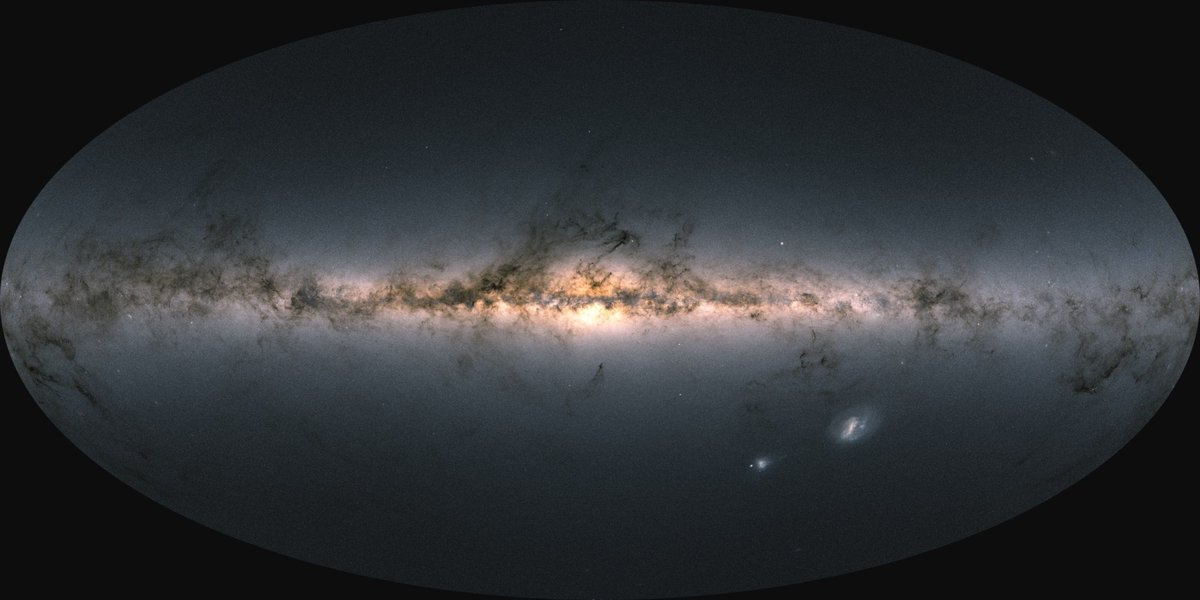
Paper day! A central result from our survey of the Milky Way's outskirts: "All-Sky Kinematics of the Distant Halo: The Reflex Response to the LMC" arxiv.org/abs/2406.01676
Vedant Chandra tweet media
English
5
6
47
3.5K
Vedant Chandra retweetledi
James Bullock
James Bullock@jbprime·
One particularly interesting result from Wheeler et al is that surface brightness detection limits can affect dynamical mass estimates pretty significantly - has implications for the use of UDF’s for testing, dark matter models.
Coral Wheeler@coralrosew

while biasing mass estimates too high. Left: Wolf+ 2010 mass estimates compared to NFW profiles. Right: mass estimates for the *same galaxies* if outer stars below a certain effective surface brightness are removed. The galaxies are incorrectly placed in more massive halos. (3/6)

English
0
2
13
613
Vedant Chandra retweetledi
Claire Lamman
Claire Lamman@ClaireLamman·
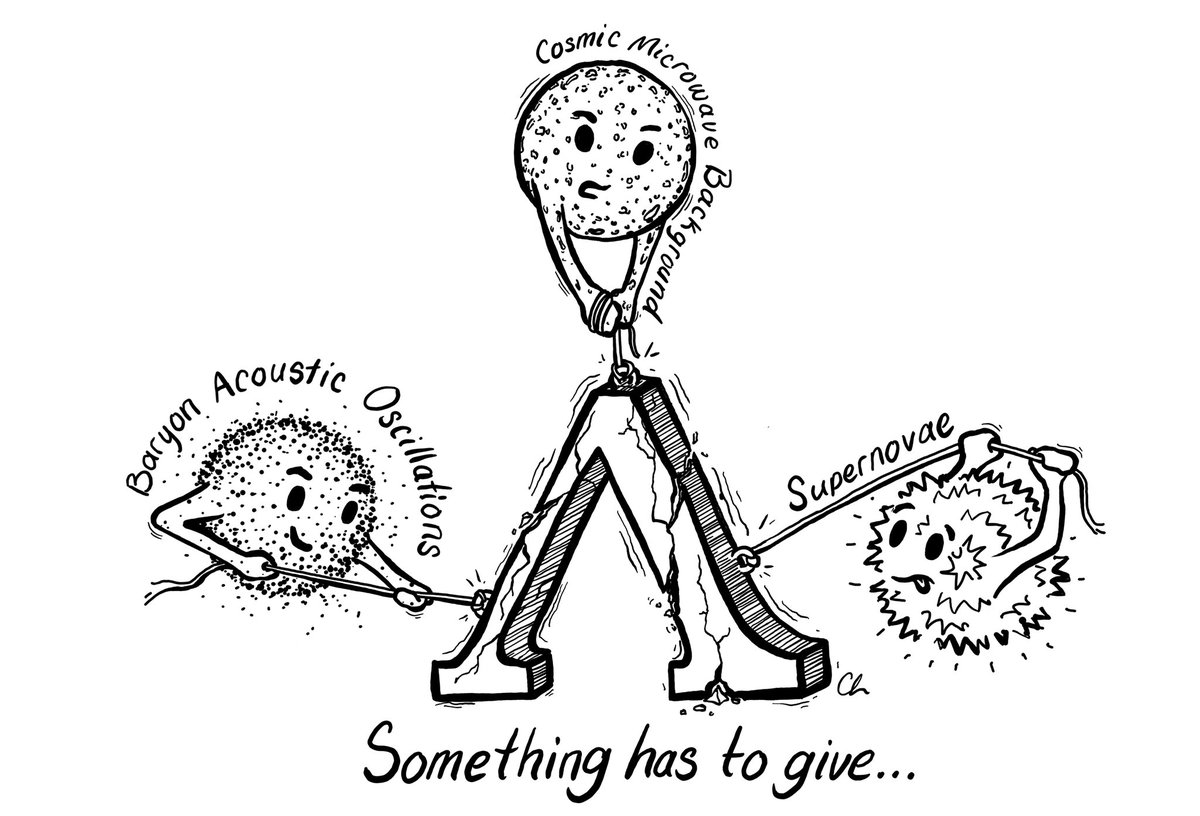
DESI's DR2 BAO results are out!! TL;DR... 1/n @desisurvey
Claire Lamman tweet media
English
19
128
663
91.7K
Vedant Chandra retweetledi
Rohan Naidu
Rohan Naidu@Rohan_Naidu·
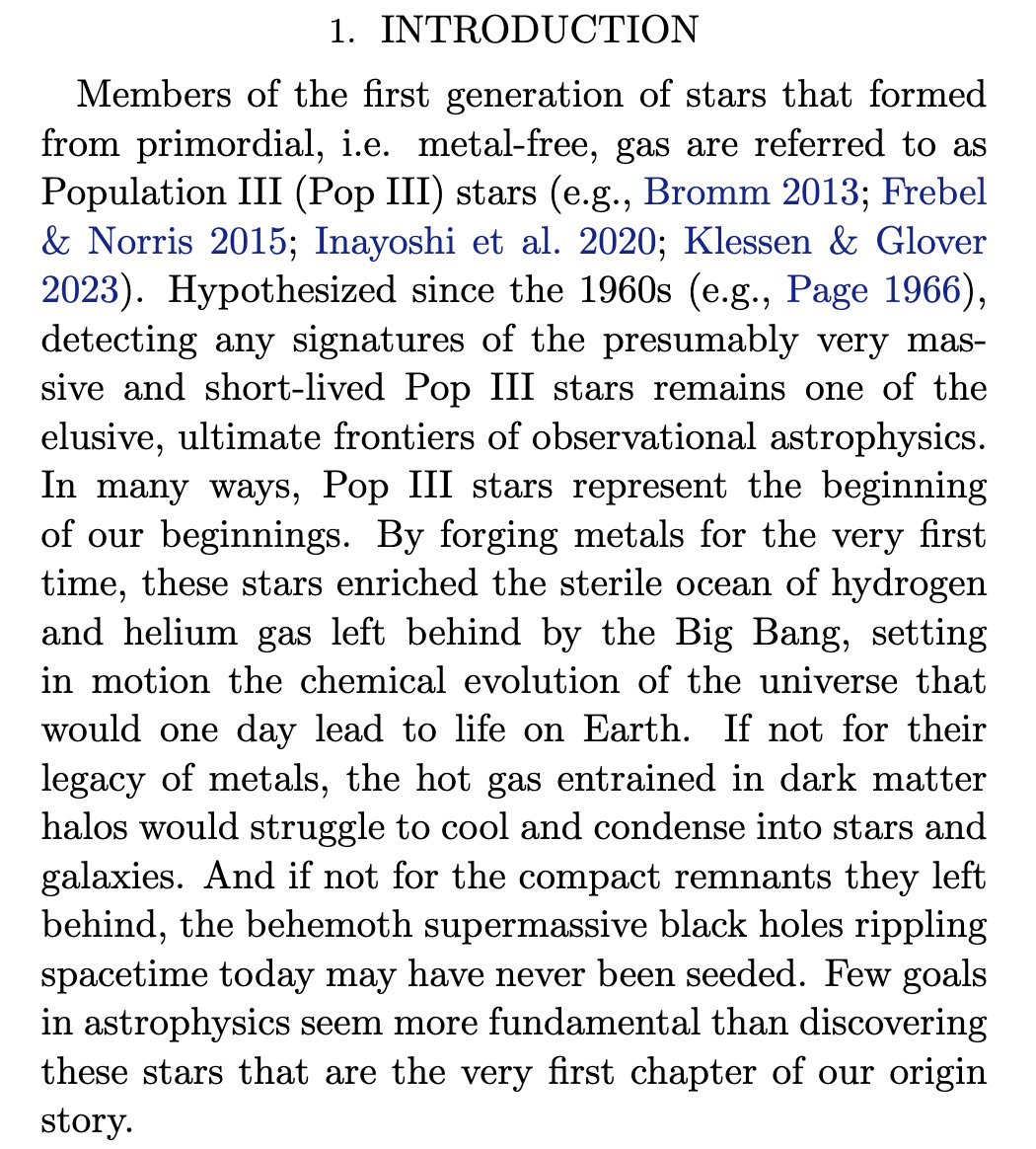
Paper day! We report a compelling candidate for a Pop 3 galaxy! Pop 3 here refers to the very first generation of stars formed out of primordial material left over after the Big Bang. arxiv.org/abs/2501.11678
Rohan Naidu tweet media
Seiji Fujimoto@sfseiji

Detecting the first stars (PopIII) is a long-held dream for astronomers. We developed a novel technique, applied it to JWST legacy data, and discovered a promising PopIII galaxy candidate at z=6.5 in GLIMPSE!

English
3
10
56
4.1K
Vedant Chandra retweetledi
Northwestern
Northwestern@NorthwesternU·
Northwestern has joined the Giant Magellan Telescope's international consortium 🔭 Launching in the 2030s, @giantmagellan will be the world’s most powerful optical telescope—exploring the distant universe, including the search for Earth-like planets. spr.ly/6012QiSTO
Northwestern tweet media
English
2
10
27
4.1K
Vedant Chandra retweetledi
KIPAC
KIPAC@KIPAC1·
Exciting news! With support from @KavliFoundation, @RisaWechsler and @suzIQUV are leading the Via Project from KIPAC’s end to develop and deploy new observing equipment for an in-depth study of the Milky Way, from detecting dark matter halos to mapping the cold gas in our galaxy!
Stanford, CA 🇺🇸 English
0
1
17
821
Vedant Chandra retweetledi
Nature Astronomy
Nature Astronomy@NatureAstronomy·
The Milky Way contains an extremely long-lived stellar disk component that formed, according to Xiang et al., more than 13 billion years ago. Such longevity is due to the exceptionally quiescent dynamical history of the Galaxy. nature.com/articles/s4155…
Nature Astronomy tweet media
English
1
8
35
2.7K
Vedant Chandra retweetledi
Jorryt Matthee
Jorryt Matthee@jorryt_m·
Today on the arXiv: All the Little Things in the Abell 2744 field: ~1600 redshifts measured with our Cycle 2 NIRCam grism program, and much, much more, showcasing the discovery space of this instrument Among these 1600: 1) An analog of the Milky Way + local group 12.7 Gyr ago
Jorryt Matthee tweet media
English
2
8
57
4.1K
Vedant Chandra retweetledi
William (Will) Cerny
William (Will) Cerny@wcerny_astro·
I'm back with another new Milky Way satellite galaxy from the DELVE survey! Introducing Aquarius III: arxiv.org/abs/2410.00981. We argue it's interesting because of its cold velocity dispersion + orbit which keeps it far from the disk plane --> formed in a very-low-mass DM halo?
English
1
9
21
1.5K
Vedant Chandra retweetledi
Akshara Viswanathan
Akshara Viswanathan@astroakshara·
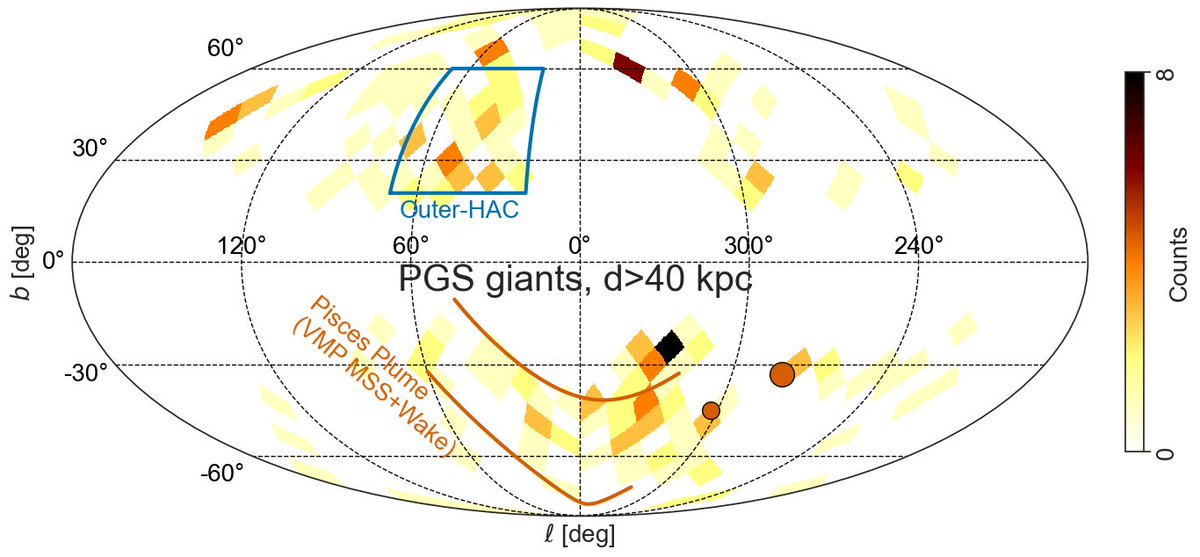
The outer halo is made up of many substructures, one of my favourites being the Pisces Plume, part of which could be tentatively associated to the Magellanic stellar stream. PS these are all very metal-poor, [Fe/H]<-2.5. Stay tuned for more updates from our Gemini/GHOST follow-up
Akshara Viswanathan tweet mediaAkshara Viswanathan tweet media
English
1
1
3
205
Vedant Chandra retweetledi
Akshara Viswanathan
Akshara Viswanathan@astroakshara·
Paper summary!!! On Monday, @astrobystrom and I put out this cool work: arxiv.org/abs/2408.17250 selecting red giants stars out to 100 kpc using the Pristine survey's data release 1 and Gaia XP catalogues. Here is a short summary of this long (sorry!) paper 🥳
English
2
5
40
2.6K
Vedant Chandra retweetledi
Kareem El-Badry
Kareem El-Badry@kjb_astro·
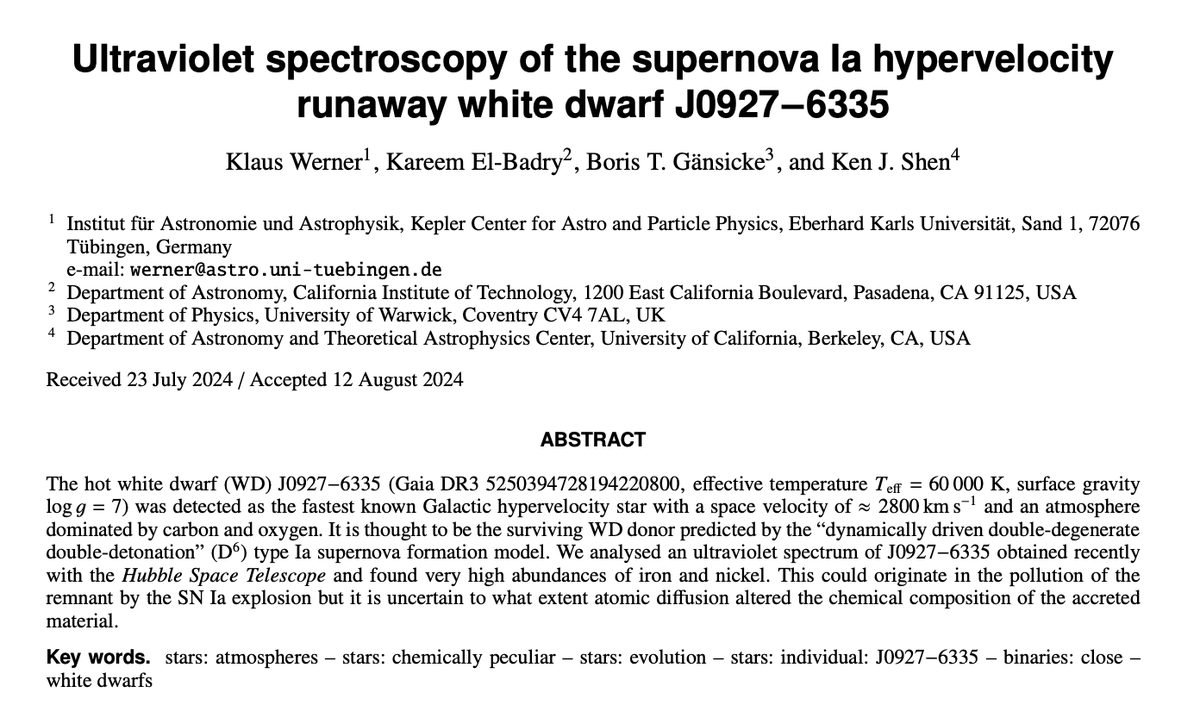
New paper, led by Klaus Werner: we show that the fastest star in the Galaxy, a white dwarf ejected from a type Ia supernova, is strongly enriched in iron and nickel! arxiv.org/abs/2408.08397 1/n
Kareem El-Badry tweet media
English
3
6
68
2.7K
Vedant Chandra retweetledi
James Bullock
James Bullock@jbprime·
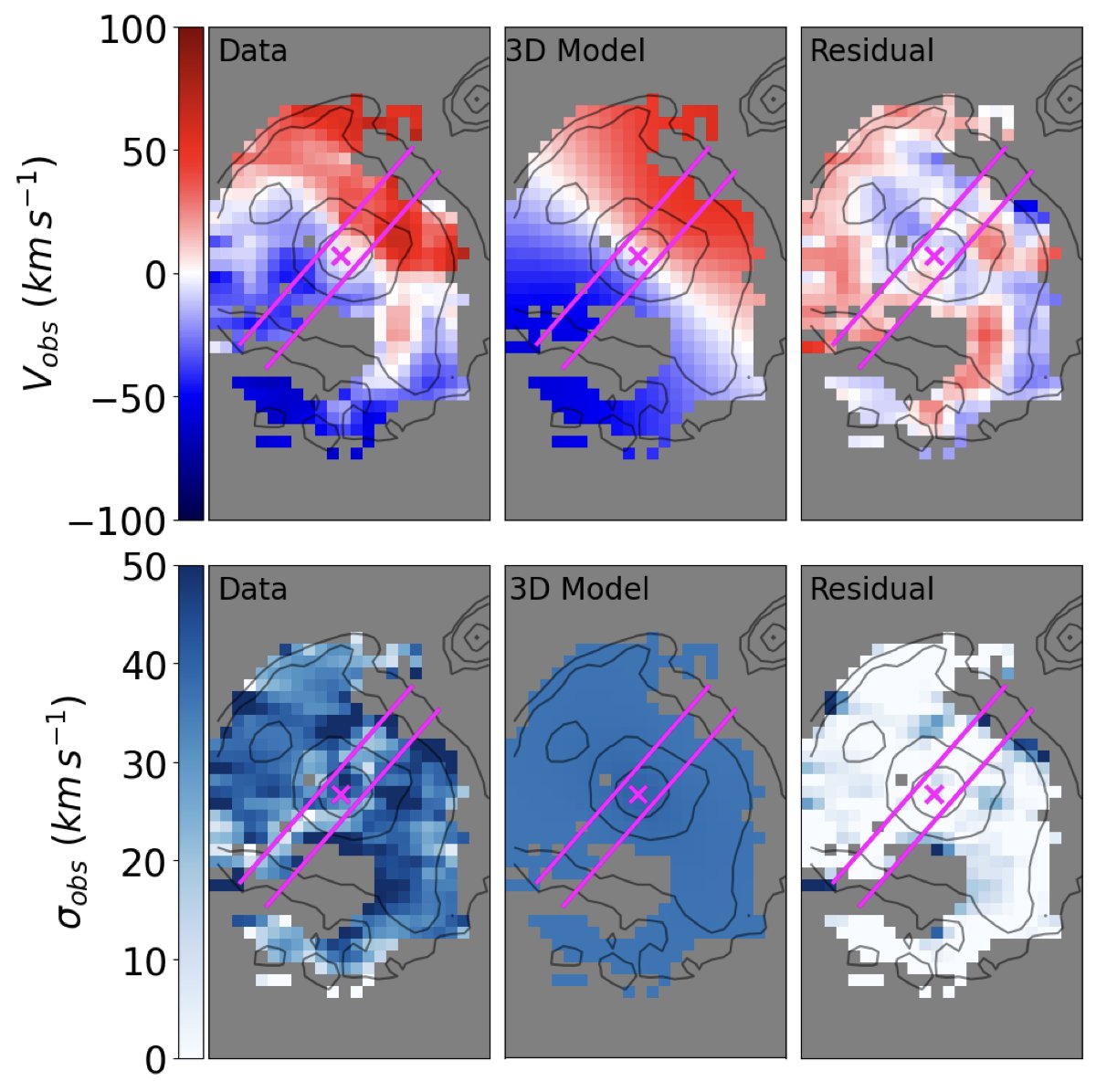
Ivana Barisic & T. Jones et al. @ucdavis introduce MSA-3D JWST program to produce IFS data cubes for 43 star-forming galaxies at z~1. Aim is to study emergence of thin-disk galaxies. Shown example: a cold, V/sig=8, nearly face-on spiral disk at z=1. arxiv.org/abs/2408.08350
James Bullock tweet media
English
2
4
14
896
Vedant Chandra retweetledi
Kiersten Boley
Kiersten Boley@KierstenBoley·
My new paper is on arxiv! We surveyed ~110K stars and found a metallicity "cliff" in super-Earth formation. This one has been in the works for a while. Check it out here: arxiv.org/pdf/2407.13821
English
3
22
110
19K
Vedant Chandra retweetledi
Dr Joanna Sakowska
Dr Joanna Sakowska@joannasakowska·
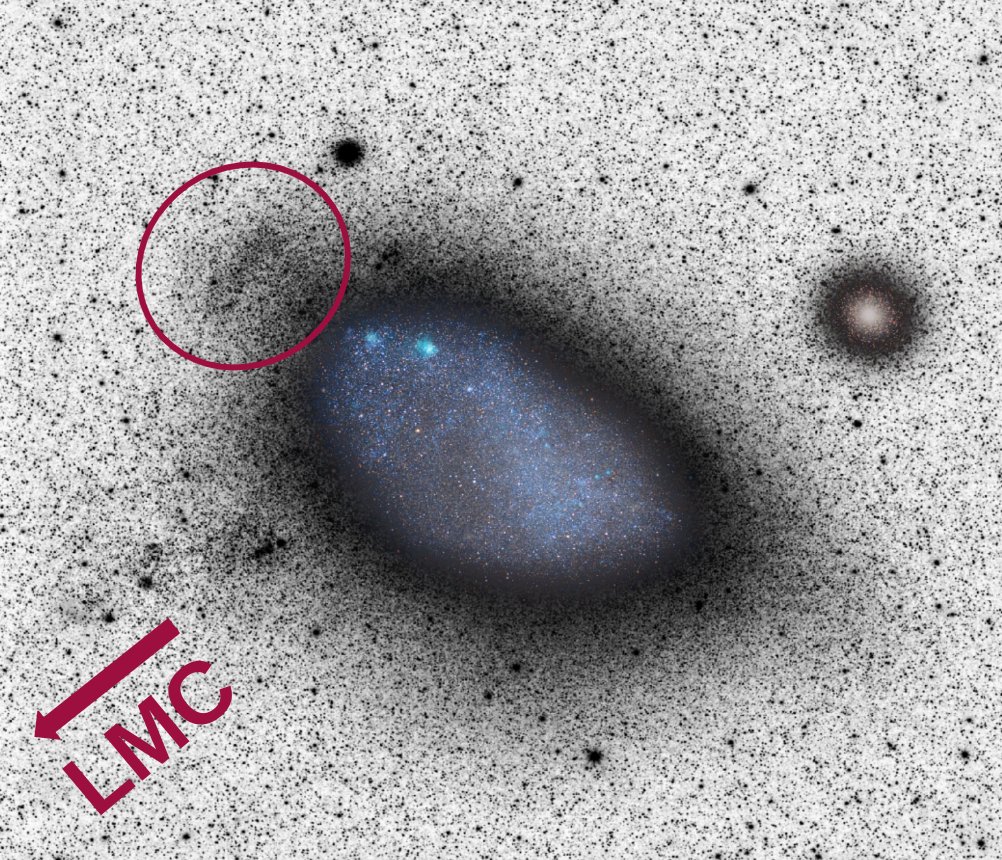
Paper day! arxiv.org/pdf/2407.13876 We find that the "shell" of young stars in the northeastern SMC formed due to ram pressure stripping as the SMC travelled through 1. the LMC's bowshock and 2. the Milky Way's circumgalactic medium (edited image from @astro_delgad 2019) (1/7)
Dr Joanna Sakowska tweet media
English
2
21
86
6K
Vedant Chandra retweetledi
Pieter van Dokkum
Pieter van Dokkum@DokkumPieter·
A new paper on the initial mass function (IMF), with Charlie Conroy. Fiddling with the IMF is an attractive way to explain "universe breaking" high z massive galaxies that JWST has found. We try to simultaneously explain observations at low z and high z. arxiv.org/abs/2407.06281
English
3
18
61
5.4K
Vedant Chandra retweetledi
Johns Hopkins University
Johns Hopkins University@JohnsHopkins·
Beginning in the fall of 2024, Johns Hopkins University will provide tuition-free Medical School for most medical students and expand aid for future nurses and public health pioneers. Learn more: bit.ly/45SW76F
English
77
602
2.5K
1.7M
Vedant Chandra retweetledi
Ken Shen (also bsky.social and astrodon.social)
1/ New paper thread (well, new last week)! We find that most white dwarfs are born ready to explode. They just need something to hit them hard enough, which should happen when they merge with other white dwarfs. Read on for details! arxiv.org/abs/2405.19417
English
2
6
27
3.2K
Vedant Chandra retweetledi
Rohan Naidu
Rohan Naidu@Rohan_Naidu·
Really exciting paper led by @vedantchandra! The entire Milky Way is traveling towards the Magellanic Clouds! The two tiny blobs on the bottom-right have just arrived, are not so tiny after all, and our whole Galaxy is rising to greet them.
Rohan Naidu tweet media
Vedant Chandra@vedantchandra

Putting everything together, we can use the full kinematics of our sample to infer the motion of the inner MW relative to the outer halo: the Milky Way is lurching towards a recent location along the LMC's orbit at over 40 kilometers per second!
English
2
5
31
3.6K