ChrisLearns

74 posts

ChrisLearns banner
ChrisLearns

ChrisLearns

@vidlearnai

Got tired of 3-hour YouTube videos | Built the fix | Now turning top creators' ideas into summaries & quizzes | Building @vidlearnai from 0 → 10K 🚀

Building in public Katılım Mart 2026
20 Takip Edilen13 Takipçiler
Sabitlenmiş Tweet
ChrisLearns
ChrisLearns@vidlearnai·
When I was doing my university I had to consume and learn a large amount of written and audio content. I remember to this day how much time I wasted watching and rewatching YouTube videos to acquire knowledge from them. Honestly, I still don't like to watch videos all the way from start to finish. I simply don't have the patience for it. I developed vidlearnai.com so I don't need to spend so much time watching videos. If you can relate, feel free to use it as well. You just need to paste the link of any YouTube video and the program will use the video transcript to extract the most important parts. I'm quite a visual person so I added a mind map feature as well. Perhaps it helps others too. Let me know if you have any suggestions or critique. I want to build a genuinely useful study aid.
English
0
0
1
35
ChrisLearns
ChrisLearns@vidlearnai·
Dr. Andrew Huberman just exposed the hidden reason why sugar is so addictive. It has nothing to do with your willpower. It is a survival circuit in your brain that is being hijacked. Most people think hunger is just a stomach feeling. In reality, it is driven by a hormone called ghrelin. Ghrelin rises when you haven't eaten and tells your brain to hunt for fuel. Normally, eating makes it drop, and you feel full. But sugar changes the rules of the game. Huberman highlights a significant difference between glucose and fructose: - Glucose: This is the high-quality fuel your brain and muscles need to function. - Fructose: This must be processed by your liver. High amounts of it (like in corn syrup) actually disrupt the signals that tell ghrelin to shut off. This means you can eat a large amount of calories and your brain will still think you are starving. The "off switch" for hunger simply never gets flipped. It gets even more interesting. Research from Dr. Diego Bohorquez shows we have "neuropod" cells in our gut. These cells detect sugar and send a lightning-fast signal to your brain through the vagus nerve. This happens even if you can't "taste" the sugar. It is why you might find yourself craving savory foods that have hidden sugars. Your gut knows the sugar is there before your tongue does. The good news is that you can blunt these sugar spikes with simple biology: - Add fiber or fat: This lowers the glycemic index of your meal. - Use lemon or lime juice: A little acidity can reduce your glucose response. - Prioritize sleep: Bad sleep creates a metabolic mess that makes you crave sugar the next morning. This changed how I look at my afternoon cravings. It is not a character flaw. It is a biological response to the wrong kind of fuel. Once you understand the circuit, it is much easier to break the cycle. Have you ever noticed that the more sugar you eat, the hungrier you feel later? What is one trick you use to keep your energy steady during the day? youtube.com/watch?v=qUUfuc…
YouTube video
YouTube
English
0
0
0
25
ChrisLearns
ChrisLearns@vidlearnai·
L-glutamine is one of the best supplements I have taken. I started using it for workout recovery after lifting and the difference was noticeable. Less soreness, bouncing back faster. Never connected it to sugar cravings before this. Interesting that the same supplement works through completely different mechanisms.
English
0
0
2
594
ChrisLearns
ChrisLearns@vidlearnai·
@hubermanlab My mother has fought evening sugar cravings for years and always blamed herself for it. I sent it to her immediately. It is not willpower then. It is hormones and brain chemistry working exactly as designed.
English
1
0
4
1.9K
ChrisLearns
ChrisLearns@vidlearnai·
Your brain doesn't store facts in isolation. It stores connections. That's why trying to memorize before you understand structure almost never works. I used mind maps throughout my master's degree and it changed how I study completely. Wrote up the method here: blog.vidlearnai.com/why-a-mind-map…
English
0
0
0
15
ChrisLearns
ChrisLearns@vidlearnai·
@aakashgupta Coffee runs the world's productivity and apparently also protects the brains doing the work. Accidental or not, that's a pretty good deal for something that just tastes good.
English
0
0
2
386
Aakash Gupta
Aakash Gupta@aakashgupta·
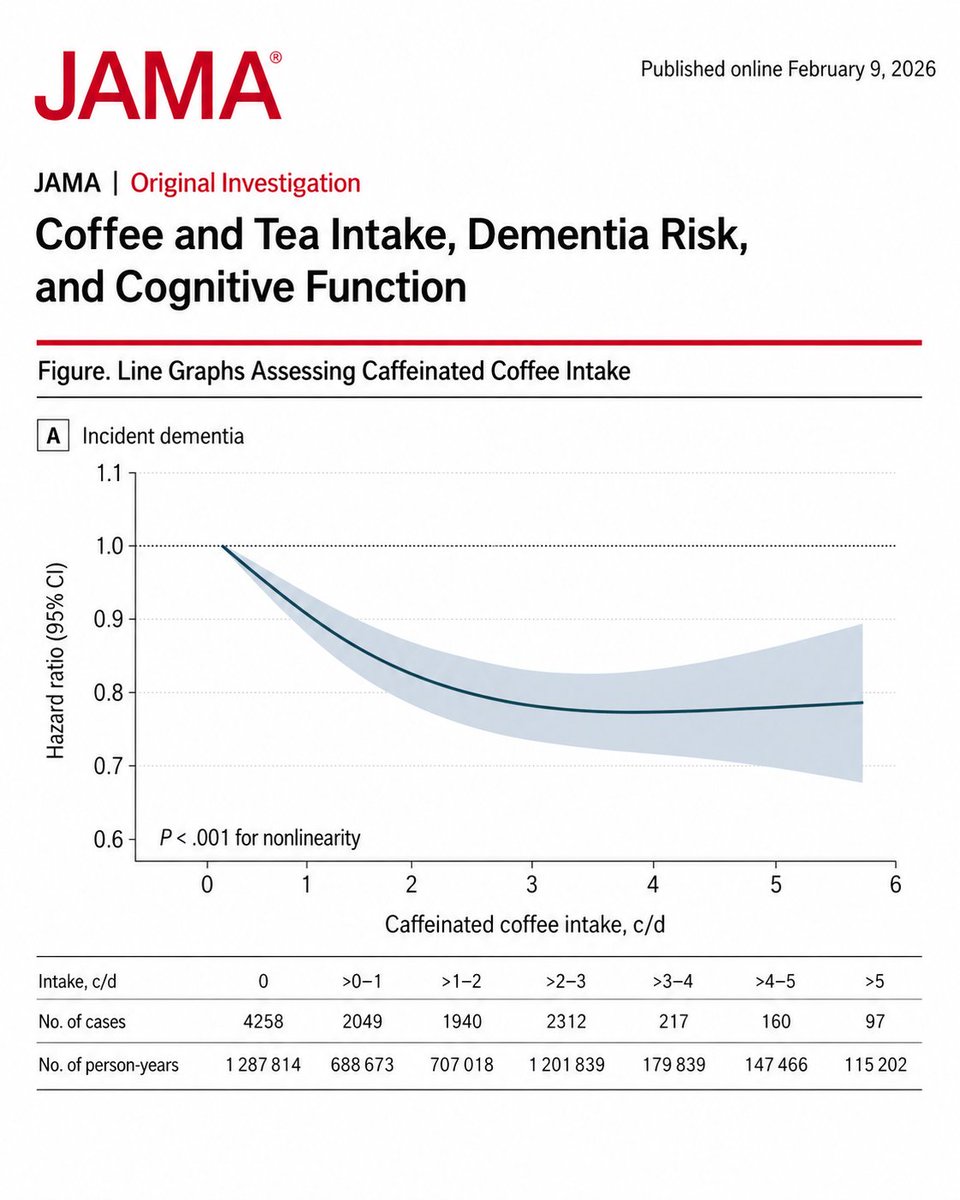
Your morning coffee cuts dementia risk by 18%. Decaf does nothing. Harvard tracked 131,821 people for 43 years to figure out why. Caffeine is an adenosine antagonist. Adenosine is the molecule that builds up in your brain through the day and makes you sleepy. It also dampens the neurotransmitters involved in memory formation. Caffeine blocks the receptor before adenosine can lock in. Memory circuits run less suppressed than they would otherwise. That's why decaf failed. Decaf has the same polyphenols as regular coffee. Same antioxidants. Same magnesium. The only thing missing is the molecule that blocks the adenosine receptor. If polyphenols were doing the work, decaf would have shown a partial effect. It showed zero. The most interesting part: the protective effect held even in people with high genetic risk for dementia. Genes load the gun. Coffee slows the trigger pull. The dose-response curve plateaus around 3 cups. Five cups didn't beat three. Past saturation, additional coffee buys you jitters and nothing else. Coffee is the most consumed psychoactive drug on the planet. Two billion cups per day. We've spent decades treating it like a mild vice. Turns out it's the largest accidental dementia prevention program in human history.
Aakash Gupta tweet mediaAakash Gupta tweet media
English
30
153
612
67.2K
ChrisLearns
ChrisLearns@vidlearnai·
During exam season I used to sacrifice sleep thinking I was being productive. I wasn't. I was just slowly draining myself and retaining less than I would have with a full night of sleep. Walker's research makes it even more painful in hindsight. The all-nighters didn't just make me tired. They were actively blocking the memory consolidation I was staying up to achieve
English
0
0
2
1.1K
Camus
Camus@newstart_2024·
Matthew Walker dropped some brutal sleep truth on Joe Rogan: Most adults need 7–9 hours. Anything under 7 is “bullshit” for the vast majority of people. There’s a rare gene that lets a tiny fraction of people (<1%) survive on ~5 hours. The odds of you having it are lower than getting struck by lightning. Yet almost everyone who claims “I only need 5-6 hours” thinks they’re special. Walker also noted that Margaret Thatcher and Ronald Reagan both bragged about sleeping just 4–5 hours… and both later developed Alzheimer’s. Deep sleep is when your brain clears toxic beta-amyloid proteins linked to the disease. We glorify “hustle” and minimal sleep, but the science says we’re slowly damaging our brains night after night. This one actually made me set a stricter bedtime. I used to pride myself on running on 6 hours. Turns out I was probably just slowly cooking my brain. The “I’ll sleep when I’m dead” mentality is starting to look a lot dumber. How many hours do you actually sleep most nights — and do you feel rested?
English
86
126
1.1K
271.4K
ChrisLearns
ChrisLearns@vidlearnai·
Strictness without example is just hypocrisy. Kids don't just listen to what you say. They watch what you do. If you demand discipline from them but can't hold it yourself, they notice. And they lose respect quietly. The most effective parenting is probably just being the person you want your child to become.
English
0
1
5
737
Camus
Camus@newstart_2024·
Andrew Huberman dropped a quietly uncomfortable truth on his podcast: Some parents are secretly afraid of their own kids. Not just nervous — but walking on eggshells, avoiding “laying down the law” because they fear emotional outbursts, tantrums, or worse. Huberman points out that kids sense this fear and unconsciously learn to use it as leverage. The result? Children who feel powerful but not safe, and parents who’ve quietly surrendered control. He’s not talking about physical fights — he’s talking about the subtle psychological dynamic that’s become increasingly common. When parents are afraid to set clear boundaries, kids lose the sense of security that comes from knowing adults are in charge. That shift affects everything from behavior to long-term emotional development. This one made me pause. I’ve seen it in families around me — well-meaning parents tiptoeing around their children’s emotions, only for things to get harder down the line. Huberman’s observation feels like something a lot of us have noticed but rarely say out loud. Parents (and former kids): Have you ever seen this dynamic play out — either as a parent or when you were growing up?
English
34
96
960
140.9K
ChrisLearns
ChrisLearns@vidlearnai·
@BigBrainPsych Struggling alone is not a virtue. But if every conversation ends with the same complaint and no new perspective, you're not processing. You're just rehearsing.
English
0
0
0
33
Kevin Tanaka
Kevin Tanaka@ItsKevinTanaka·
Em On The Brain on How Complaining Rewires Your Brain Neuroscience educator Emily McDonald, also known as "Em On The Brain" explains why complaining is more dangerous than most people realize: "Neuroscience shows that complaining, judging, criticizing, it can actually change your brain for multiple reasons." She breaks down the first mechanism: "When you're complaining, you're also activating neuroplasticity, so you're training negative thought patterns and you are training your brain to look for more things to complain about. So you're kind of also entering into this cycle where you're just going to continue to look for more things to complain about and feel even worse, and then your brain's going to filter for your reality for more things." The damage goes beyond habit formation. Negative thoughts have a measurable physical impact on the brain: "Negative thoughts in general, they lead to stress and they actually shrink your prefrontal cortex. And the prefrontal cortex is kind of the boss of your brain; it's what makes us human." But here's what most people get wrong, the idea that "venting" is healthy. "Research shows that there's no form of venting or complaining that is positive unless you re-evaluate and kind of tell a new story at the end. Like, you reappraise the situation at the end of the venting session." She challenges the common defense people offer for complaining: "People are like, 'Oh, but I just need to get it out.' Sure, okay, but when you're done getting it out, you have to tell a new story. You have to kind of reappraise the situation. If you just complain and then leave it at the complain, you're actually only training your brain to look for more things to complain about."
English
4
14
75
5K
ChrisLearns
ChrisLearns@vidlearnai·
@newstart_2024 So we take kids with chaotic home lives, put them in unstimulating classrooms with outdated teaching methods, wonder why they can't focus, and then medicate them for it. And we're still doing it.
English
0
0
10
1.8K
Camus
Camus@newstart_2024·
Gabor Maté flipped the entire ADHD conversation on Joe Rogan: He says ADHD is real, but it’s not a genetic disease like we’ve been told. It’s a coping mechanism. When a young child experiences stress (especially from parents) and can’t fight or escape, their developing brain learns to tune out. That pattern gets wired in. Years later we call it a “disorder” and reach for pills. Maté’s take: The brain develops in relationship. Stressed, unavailable parents → stressed, distracted kids. Fix the environment and family dynamics, and the symptoms often improve dramatically. We’ve spent decades treating ADHD as purely biological when the environment and early relationships might be playing a much bigger role than most doctors admit. This one really made me think. I’ve seen kids (and adults) labeled with ADHD whose home life was chaotic. The idea that it could be a survival adaptation rather than just “broken wiring” feels like it explains a lot. Do you see ADHD more as a genetic brain disease, a coping mechanism from early stress, or somewhere in between?
English
165
408
3.7K
226.5K
ChrisLearns
ChrisLearns@vidlearnai·
No kids yet but this genuinely unsettled me. White matter loss in 3 year olds. Visible on a scan. From 2 hours of screen time a day. The scary part is that most parents handing a toddler an iPad are not doing it out of neglect. They're exhausted and it's the easiest solution available. We've built a world where the path of least resistance is quietly damaging developing brains.
English
3
6
40
7.5K
Camus
Camus@newstart_2024·
This MRI study on young kids just exposed something terrifying: They scanned the brains of 60 children aged 3–5 — including 5-year-old Rose — and found interactive screen time is causing measurable loss of white matter in their developing brains. Even just 2 hours a day is linked to impaired neural connectivity, language, and literacy development. Professor Mike Nagel (neuroscientist and father) said his first reaction was simply: “Wow… I was not anticipating seeing anything like that.” We’re physically changing children’s brains before they even start school — and the damage is visible on scans. This one actually unsettled me. I’ve always suspected too much screen time was bad, but seeing real white matter loss in toddlers hits different. Parents of little ones — has this kind of research changed how much screen time you allow?
English
587
9.6K
28.6K
10.1M
ChrisLearns
ChrisLearns@vidlearnai·
@CuriousMindsHub Exercise doesn't just improve mood. It physically changes the structure of your brain. I do some form of exercise every morning and the mental clarity afterwards is not placebo. The science is catching up to what a lot of us already felt.
English
0
0
10
1.5K
Curious Minds
Curious Minds@CuriousMindsHub·
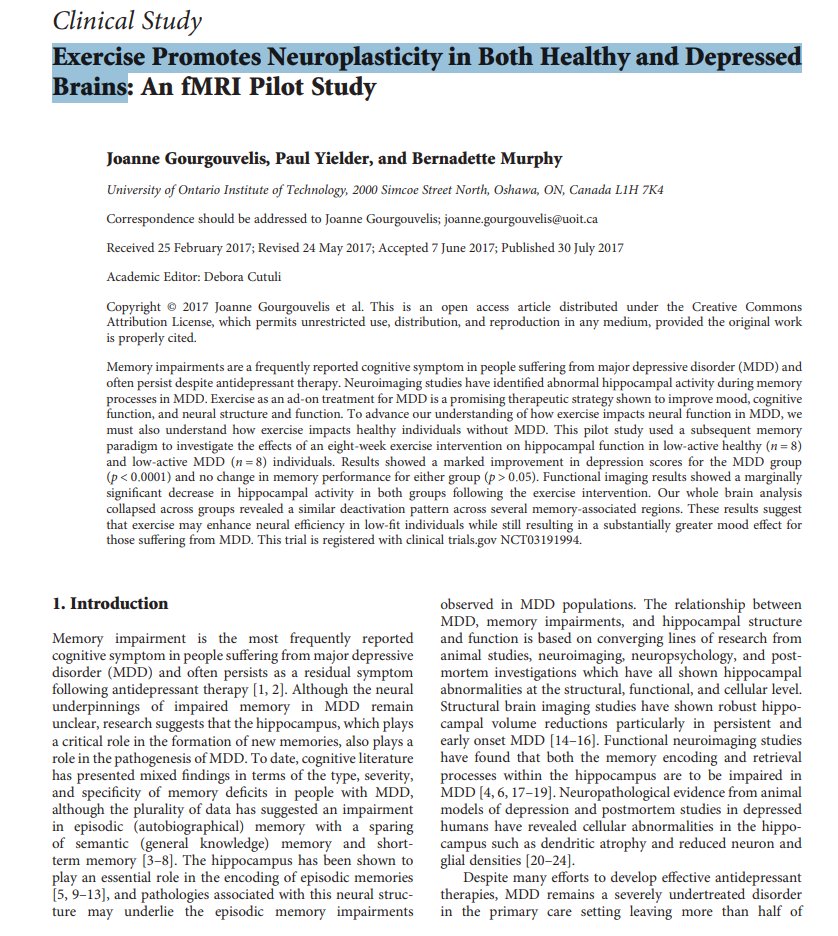
This study suggests: Exercise may promote neuroplasticity in the brain. Better mood. Better brain function. Movement changes how your brain adapts.
Curious Minds tweet mediaCurious Minds tweet media
English
11
401
1.2K
89.2K
ChrisLearns
ChrisLearns@vidlearnai·
@Rainmaker1973 I spent years showing up to school at 8am half asleep and absorbing nothing in the first hour. Turns out it wasn't laziness. It was biology. This system needs to change.
English
2
0
12
445
Massimo
Massimo@Rainmaker1973·
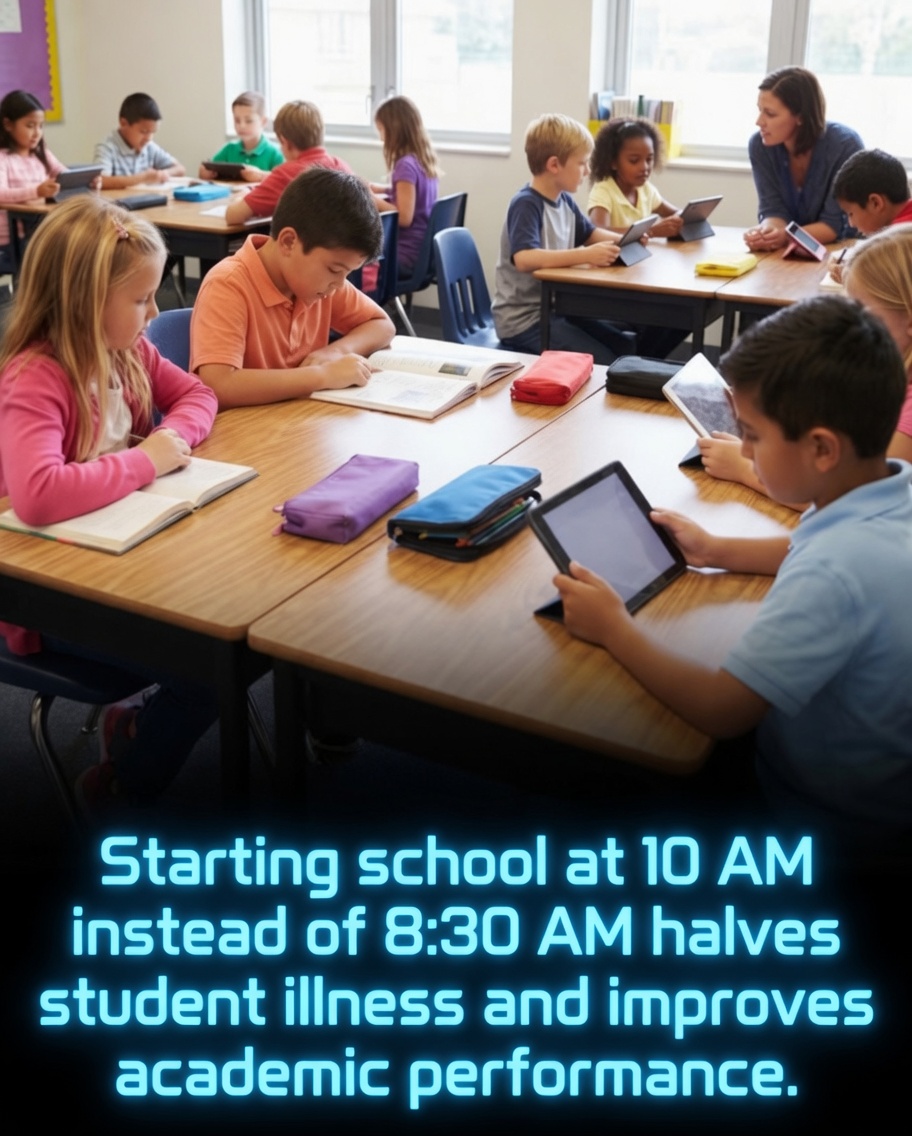
Starting school at 10:00 a.m. instead of earlier times aligns with teenagers’ biology and delivers striking benefits. A study found that shifting the school day to a 10 a.m. start reduced student illness by more than 50% over two years. When schools reverted to an 8:50 a.m. start, illness rates spiked by 30%, showing just how strongly school schedules affect adolescent health. The Centers for Disease Control and Prevention (CDC) has long recommended later start times for this reason. Beyond improved health, the change also produced clear academic gains: a 12% increase in students making significant progress — the equivalent of 20% of the national benchmark. By respecting the natural circadian rhythms of teenagers, who tend to be night owls, later start times help students get more sleep, arrive more alert, and perform better. This simple, low-cost adjustment offers a powerful, science-backed way to support both the physical well-being and academic potential of the next generation. [Kelley, P. et al. (2017). Is 8:30 a.m. Still Too Early to Start School? A 10:00 a.m. School Start Time Improves Health and Performance of Students Aged 13–16. Frontiers in Human Neuroscience, 11:588. DOI: 10.3389/fnhum.2017.00588]
Massimo tweet media
English
117
226
851
94.2K
ChrisLearns
ChrisLearns@vidlearnai·
@aakashgupta As a gamer myself I can confirm I always studied better at uni during periods when I was actively gaming. Don't let anyone tell you it's a waste of time.
English
0
0
0
79
Aakash Gupta
Aakash Gupta@aakashgupta·
68 college students played video games an hour a day for 30 weeks. They got measurably smarter. EEG brain scans confirmed it. The setup was simple. Half the group played League of Legends, an action game. The other half played Legends of the Three Kingdoms, a strategy card game. Same hours, same schedule, no gaming experience for anyone going in. Both groups improved on attention, working memory, and executive function. The League group's gains were significantly larger in spatial attention and spatial working memory. The benefits were still measurable 10 weeks after the gaming stopped. None of this is new. Daphne Bavelier's lab at the University of Geneva has been replicating this finding since the early 2000s. Her 2018 meta-analysis in Psychological Bulletin pulled data from 8,970 participants across 15 years and found the same thing. Action games train attentional control, a brain skill that transfers to other tasks. Strategy games train deliberation, which mostly stays inside the strategy game. The mechanism is the counterintuitive part. Action games train your brain by giving you no time to think. The brain can't deliberate. League of Legends throws 9 champions, hundreds of minions, dozens of abilities, mana, cooldowns, and map state at you, all updating in milliseconds. The brain learns to perceive faster instead. That perceptual speed transfers to anything else that demands the same skill. Including surgery. The 2007 Rosser study in Archives of Surgery found that laparoscopic surgeons who played video games more than 3 hours a week made 37% fewer errors, completed procedures 27% faster, and scored 42% higher on overall performance. The top third of gamers made 47% fewer errors. Laparoscopic surgery is a 2D screen with distorted depth perception, remote-controlled instruments, and multiple data streams updating in real time. The cognitive profile is almost identical to an action video game. The 10-week persistence is the part that should change how this gets discussed. If the gains were just from practicing the game, they would have disappeared the moment the students stopped playing. They didn't. The 30 weeks rewired the perceptual system, and the rewiring stayed.
Aakash Gupta tweet media
English
177
644
4.9K
1.4M
ChrisLearns
ChrisLearns@vidlearnai·
@ihtesham2005 Matt Walker said the same thing and it still hasn't sunk in for most people. You don't just need sleep after learning to consolidate memories. You need it before, to prepare the brain to absorb anything at all. The all-nighter isn't dedication. It's just expensive.
English
0
0
0
19
Ihtesham Ali
Ihtesham Ali@ihtesham2005·
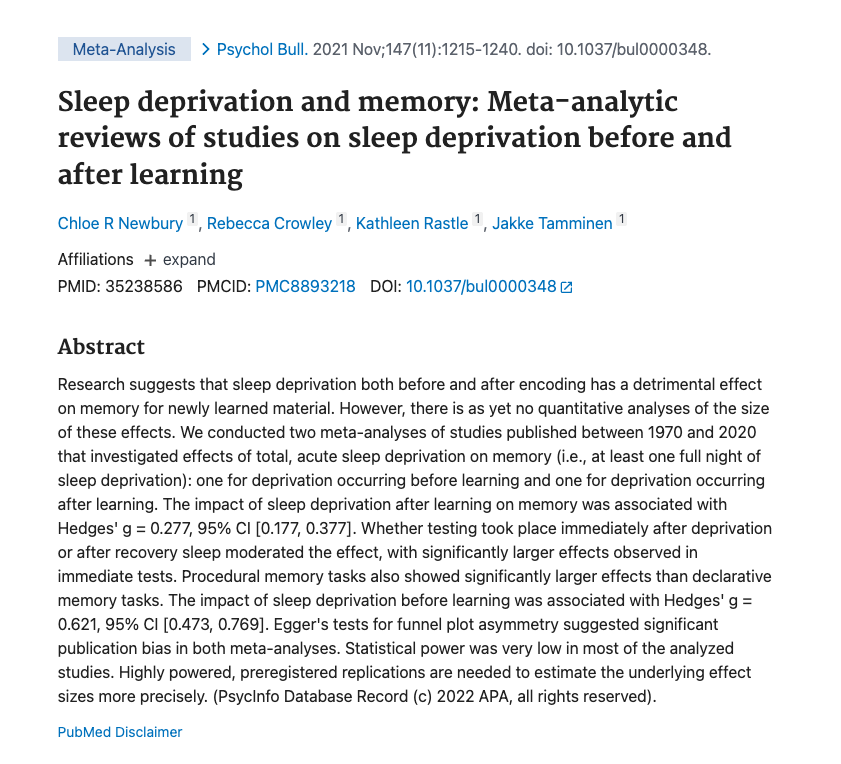
Don't study harder tonight. Sleep first. I know that sounds like the advice of someone who doesn't understand how much work you have. But Royal Holloway researchers ran two meta-analyses across 50 years of sleep and memory research and found something that should permanently change how you schedule your work. One full night of sleep deprivation before learning cuts your brain's ability to form new memories by 40%. Not 5%. Not a slight dip. 40%. You can spend 4 hours studying after no sleep. Your brain will process almost none of it. The hippocampus, which is the part that actually converts experience into memory, needs sleep to prepare itself for encoding. You cannot outwork a depleted hippocampus. The paper: "Sleep Deprivation and Memory: Meta-Analytic Reviews" Psychological Bulletin, 2021. The students who stay up all night to study aren't working harder than you. They're working in a brain that's been locked. Sleep is not the enemy of productivity. It is the condition that makes productivity possible.
Ihtesham Ali tweet media
English
28
862
3.5K
95.3K
ChrisLearns
ChrisLearns@vidlearnai·
@BrandonLuuMD So the "quick break" is actually making you worse at the thing you're about to go back to. Every app is designed to feel like a rest. None of them are.
English
0
0
1
34
Brandon Luu, MD
Brandon Luu, MD@BrandonLuuMD·
10-minutes on TikTok may feel like a nice break. But in one lab study, it wrecked prospective memory: the ability to remember and execute an intended action. Accuracy fell from 80% before the break to 49% after.
Brandon Luu, MD tweet media
English
33
156
1.2K
101.4K
ChrisLearns
ChrisLearns@vidlearnai·
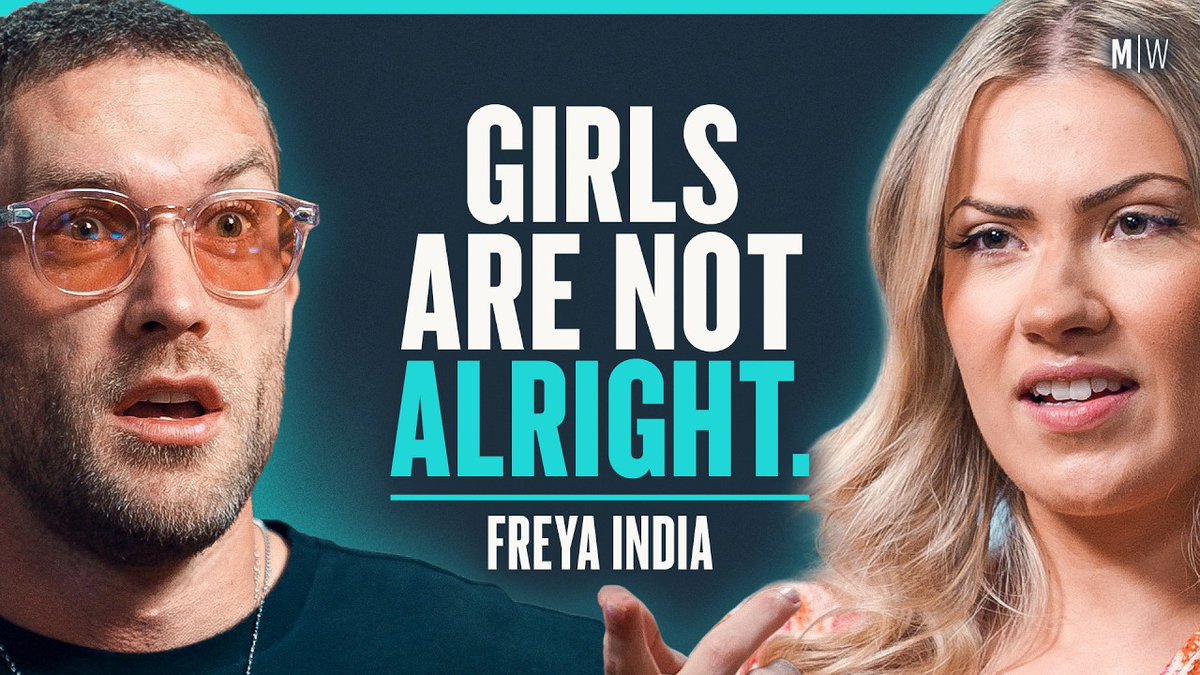
@freyaindiaa @ChrisWillx 31% of liberal teen girls are on social media more than five hours a day. That's not a habit. That's a part time job with no pay and declining mental health as the result.
English
0
0
3
56
Freya India
Freya India@freyaindiaa·
Loved talking to @ChrisWillx, as always. We spoke about my new book GIRLS®, some of the interesting Goodreads reviews...and what's behind the rise of "angry young women":
Freya India tweet media
English
31
22
315
21.6K
ChrisLearns
ChrisLearns@vidlearnai·
Unpopular opinion: Watching a long podcast is not learning. It's entertainment with the illusion of productivity. Real learning requires recall. Not passive consumption. Agree or disagree? 👇
English
0
0
0
39
ChrisLearns
ChrisLearns@vidlearnai·
We’ve traded real social skills for cheap dopamine. Big Tech has monetized our attention by removing all the friction from our lives, but friction is actually where we build real-world competence. When we avoid the risk of hearing "no," we just get weaker. The most dangerous thing for a young man today isn’t failure. It’s the comfort of a screen that never challenges him or tells him no.
English
0
0
4
1.1K
Andrew D. Huberman, Ph.D.
Andrew D. Huberman, Ph.D.@hubermanlab·
The new Huberman Lab episode is out: Male Roles, Obligations and Options for Building a Fulfilling Life | Scott Galloway (@profgalloway) 0:00 Scott Galloway 2:45 Mentoring Young Men 6:16 Positive Masculinity Defined 13:37 Sponsors: David & Wealthfront 16:33 Men & Goals, Role Models, Technology; Relationships 26:34 Elon Musk; Big Tech 31:53 Varying Role Models, Flaws; Criticism, Big Tech & Incendiary Content 43:33 Sponsor: AG1 44:57 Fear, Dating & Rejection, Relationship Dynamics 53:39 Social Media Impacts on Kids; Regulation 1:06:03 Phone, Dopamine & Pseudo-OCD; Solutions 1:14:03 Sponsor: Function 1:15:14 Naval Academy & Lifestyle Protocols, Mandatory National Service 1:23:08 Alcohol Phones & Professional Considerations 1:33:43 Drinking Age; Cannabis, THC 1:37:16 Sponsor: LMNT 1:38:36 Cannabis; Porn, Addiction 1:46:14 Anger; Testosterone; Aspirational Masculinity, Toxic Femininity 1:56:25 Advocating for Young Men, Economic Opportunity, Gerontocracy 2:04:43 Generation Gaps, Retirement, "Vampire" Generation 2:10:30 Bet on Unremarkable, Universities & Vocations; Gerontocracy 2:18:48 Aging; Paying it Forward & Male Mentorship 2:25:33 Seeking Mentors, Young Men; Acknowledgments 2:33:13 Zero-Cost Support, YouTube, Spotify & Apple Follow, Reviews & Feedback, Sponsors, Protocols Book, Social Media, Neural Network Newsletter Includes paid partnerships.
English
49
72
732
492.8K