As PM @narendramodi is enroute to Seychelles, watch the highlights of the close and strong India-Seychelles ties ⬇️ 🇮🇳 🇸🇨
Vikram Chandra
50K posts

@vikramchandra
Journalist, tech enthusiast, investor. Presenter of The India Story. Founded @editorji (acquired by RPSG in 2020). TV news anchor in an earlier avatar!

As PM @narendramodi is enroute to Seychelles, watch the highlights of the close and strong India-Seychelles ties ⬇️ 🇮🇳 🇸🇨


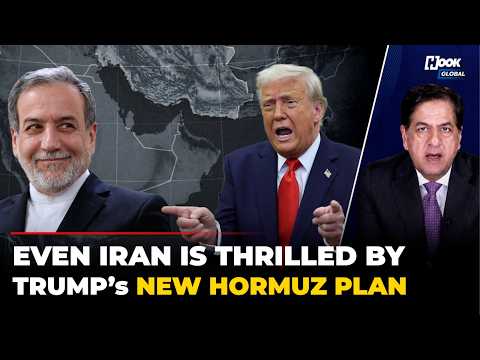
The Hormuz Strait is OPEN, and will remain OPEN, with or without Iran. We are reinstating the THE IRANIAN BLOCKADE, so named because it is only stopping Iran’s ships or customers from entering or leaving. All other countries will have fair and open use of the Strait. The U.S.A. will be, from this point forward, known as “THE GUARDIAN OF THE HORMUZ STRAIT,” but as such, and as a matter of FAIRNESS, will be reimbursed, at the rate of 20% on all cargo shipped, for any and all costs necessary to do the job of providing safety and security to this very volatile section of the World. The process and formation will begin immediately. Thank you for your attention to this matter! President DONALD J. TRUMP ( TS: Jul 13 2026, 10:16 AM ET )

Trump announces that the US will charge 20% fees on oil and gas passing through the Straits of Hormuz. The legality of this will, no doubt, have to be studied. The US has no locus standii here, so the only legal basis for this charge would presumably be a charge for ensuring the safety of each ship as it passes. Would that then mean that the US had to give a guarantee for the provision of those services, including damages in case the ship is struck? These are uncharted waters…

POTUS is absolutely right. Whoever provides secure and safe passage of commercial vessels through the Strait of Hormuz should be compensated for this service. Iran has always been the GUARDIAN of the Strait and will remain so FOREVER. 20% is of course too much. We will be fair

India rejected a quick trade agreement with the US in recent talks and is holding out for a better deal as Prime Minister Narendra Modi draws confidence from new trading partners, eased economic risks and political gains at home, officials and analysts said reut.rs/3RxD27d

Secretary of State Marco Rubio on the Strait of Hormuz: "No country is allowed to charge tolls or fees on an international waterway."


@Rainmaker1973 The map remains undefeated.

"𝐌𝐫 𝐉𝐮𝐝𝐢𝐜𝐢𝐚𝐥 𝐒𝐞𝐫𝐯𝐚𝐧𝐭, 𝐈 𝐨𝐫𝐝𝐞𝐫 𝐲𝐨𝐮"- 𝐀 𝐂𝐨𝐦𝐩𝐥𝐚𝐢𝐧𝐚𝐧𝐭 #WATCH- Supreme Court erupts in chaos: Complainant throws papers, hurls abuses during hearing, escorted out of courtroom. #SupremeCourt #BreakingNews #IndiaNews #CourtroomDrama #ViralVideo #Trending


This is almost certainly the way things will eventually turn out. There is no reason to pay a fortune to use Fable for routine tasks. Use low cost low token models for that. Use Fable or an equivalent only for tasks where superior capability and IQ is required. And an orchestra conductor (perhaps sitting in a hyperscaler) who manages the process for you.


would love a new desktop agent super app - lets me switch harnesses and models and multiplex across them - makes it easy to move memory and context - can orchestrate between models ( use Fable as a planner but a lower cost model for daily driver ) - can retroactively look at usage and optimize for cost / better results


Prime Minister Narendra Modi’s visit to Indonesia has delivered a major strategic breakthrough. India and Indonesia will jointly develop Sabang Port in Aceh, near the Strait of Malacca, one of the world’s busiest and most consequential maritime chokepoints. Together with the Great Nicobar Transshipment Port, this will significantly strengthen India’s strategic footprint in the Indo-Pacific and create powerful operational synergies across the region. The Strait of Malacca carries nearly one-third of global trade and serves as the principal maritime artery for East Asia, including the overwhelming majority of China’s energy imports and commercial shipping. A credible presence around this sea lane translates into enormous geopolitical and economic leverage. Contrast this with the Congress era. Despite India’s unmatched geographical advantage through the Andaman & Nicobar Islands, successive Congress governments failed to capitalise on this strategic opportunity. Instead of investing in world-class maritime infrastructure, strengthening India’s position around the Malacca Strait and leveraging geography into national power, decades were lost to strategic indecision and neglect. Today, India is charting a different course. From the Great Nicobar mega transshipment project and the strengthening of the Andaman & Nicobar Command, to SAGAR and now the joint development of Sabang Port with Indonesia, Prime Minister Modi has transformed India’s maritime outlook from passive observation to proactive leadership. For too long, India’s greatest strategic advantage lay underutilised. Today, it is being converted into a decisive geopolitical asset. Geography gave India an advantage. Prime Minister Modi is turning it into strategic power.