vinay srivastava

4.6K posts

vinay srivastava banner
vinay srivastava

vinay srivastava

@vinays71

Katılım Aralık 2021
101 Takip Edilen82 Takipçiler
vinay srivastava retweetledi

East Central Railway
#70वें_रेल_सप्ताह_समारोह के अवसर पर महाप्रबंधक श्री छत्रसाल सिंह ने उत्कृष्ट कार्य करने वाले अधिकारियों/कर्मचारियों को आज विशिष्ट रेल सेवा पुरस्कार से सम्मानित किया । समारोह का उद्घाटन महाप्रबंधक श्री छत्रसाल सिंह पूर्व मध्य रेल महिला कल्याण संगठन की अध्यक्षा श्रीमती सुनीता सिंह एवं अन्य गणमाण्य द्वारा किया गया ।
East Central Railway tweet media
हिन्दी
0
8
24
1.2K
vinay srivastava retweetledi
ashish bhatt
ashish bhatt@ashishb15531661·
#रामनवमी #लेखनी ठुमक चलत रामचंद्र बाजत पैजनियाँ. किलकि किलकि उठत धाय गिरत भूमि लटपटाय धाय मात गोद लेत दशरथकी रनियाँ. -तुलसीदास जी संगीत-हृदयनाथ मंगेशकर स्वर-लता मंगेशकर @AarTee33 @pareeknc7 @jaincp61 @Lekhni_ @SatishTangri
हिन्दी
6
95
255
8.8K
vinay srivastava retweetledi
SP Goyal
SP Goyal@spgoyal·
The Noida International AirPort, Jewar is finally ready for it’s Inauguration by the Hon’ble Prime Minister of India on 28-Mar-2026.
English
6
31
130
6.7K
vinay srivastava retweetledi
🌸🎵 Beautiful Melody 🎶💖
A legendary duet by Luciano Pavarotti and Tom Jones 🎶✨—an unforgettable performance where opera meets pop in perfect harmony, powerful and timeless! 🔥👏🎼
English
15
212
754
25.4K
vinay srivastava retweetledi
Goldenagehollywood
Goldenagehollywood@oldmovieactress·
Fred Astaire once said that Rita Hayworth was his favourite dance partner. You can see why..
English
516
4.9K
41K
2M
vinay srivastava retweetledi
Ministry of Railways
Ministry of Railways@RailMinIndia·
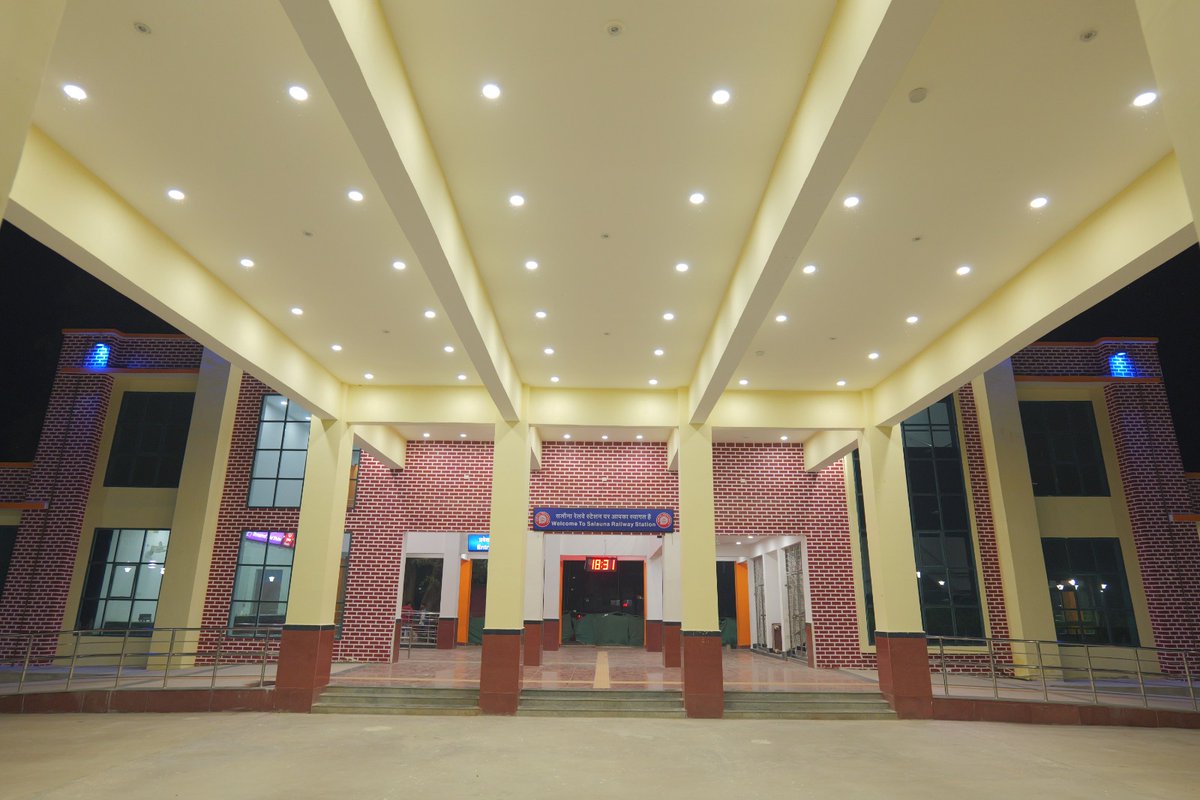
आधुनिकता और सुविधा की नई पहचान-बिहार का पुनर्विकसित सलौना रेलवे स्टेशन! -आधुनिक सुविधाओं से युक्त नवीन स्टेशन भवन -विशाल सर्कुलेटिंग एरिया,बेहतर साइनेज और लाइटिंग -अलग-अलग प्रवेश एवं निकास द्वार -वेटिंग एरिया एवं टिकट काउंटर #AmritStation
Ministry of Railways tweet mediaMinistry of Railways tweet mediaMinistry of Railways tweet mediaMinistry of Railways tweet media
हिन्दी
17
184
490
19K
vinay srivastava retweetledi
SirKazam {blu tik}
SirKazam {blu tik}@SirKazamJeevi·
Is Trump really talking with Iran as he claims? Trump is perhaps a follower of Nityananda and following this 👇
English
65
246
1.1K
181.4K
vinay srivastava retweetledi
Best Movie Moments 🍿
Best Movie Moments 🍿@BestMovieMom·
In the final scene of Throne of Blood (1957) director Akira Kurosawa used real archers to fire live arrows at Toshiro Mifune. The arrows were guided by thin wires to ensure they hit the wall inches from the actor's body.
English
23
378
5.1K
733.6K
vinay srivastava retweetledi
Vatsala Singh
Vatsala Singh@_vatsalasingh·
इस ट्यून को जब-जब सुनती हूँ, जी नहीं भरता। और इन्होंने तो कमाल ही बजाया है...
हिन्दी
21
283
1.1K
35.1K
vinay srivastava retweetledi
Amazing Physics
Amazing Physics@amazing_physics·
It is unsettling to realise that for decades we imagined Pluto as a distant blur, only to discover it was quietly holding landscapes no one had ever truly seen. When the images finally arrived after nine years and three billion miles, they did not just show a place, they revealed how much we had misunderstood. What appeared on the screen was not empty or lifeless. Towering frozen mountains stood in silence, shaped not by rock as we know it, but by water ice harder than steel at those temperatures. The surface felt both alien and strangely familiar, like a memory of Earth rewritten in a colder, quieter language. There is something deeply human in that journey. A small spacecraft travelling alone through darkness, carrying our questions without knowing what answers it would find. When it reached Pluto, it gave us more than images. It gave us a moment to pause and recognise how far curiosity can carry us when we choose to follow it. Scientists later noticed something subtle in the data. The mountains showed surprisingly few impact marks, hinting that Pluto’s surface may still be changing, still alive in ways we do not fully understand. For a world so distant and cold, it quietly challenges what we believe about where activity and change can exist. And so Pluto remains more than a destination reached. It becomes a reminder that even at the edge of our solar system, there are stories still unfolding, waiting in silence, asking how many other distant worlds are holding truths we have not yet learned to see.
Amazing Physics tweet media
English
4
223
2.3K
148.9K
vinay srivastava retweetledi
Superastar Raj 🇮🇳
Superastar Raj 🇮🇳@NagpurKaRajini·
Sonu Nigam Supremacy 🔥 Wait for SPB ❤️❤️❤️❤️
English
42
775
4.1K
54.8K
vinay srivastava retweetledi
The Rocket Media
The Rocket Media@TheRocketMediaX·
Meet Rajesh Gopakumar ! (IIT-JEE Rank 1, India’s top physicist) > Born and brought up in Bengal > Self-studied and secured AIR 1 in IIT-JEE'87 > Chose Physics over Computer Science at Indian Institute of Technology Kanpur > After IIT Kanpur, went to Princeton University for PhD > Did his PhD under Nobel Laureate David Gross > Went to Harvard University for postdoc > Did pathbreaking work in string theory & gauge theories > Published global theorems and papers with Cumrun Vafa > Could have lived a comfortable life at any top global university > But chose to return to India > Joined as Professor at Harish-Chandra Research Institute > Became Director of International Centre for Theoretical Sciences > Played a key role in building ICTS into a global hub for fundamental research > Recipient of prestigious honors like Shanti Swarup Bhatnagar Prize > Fellow of leading science academies in India Today, as a leading figure in India’s scientific ecosystem, he is driving cutting-edge research in fundamental physics and mentoring the next generation of scientists at ICTS-TIFR, helping position India at the forefront of global theoretical science.
The Rocket Media tweet media
English
47
495
3K
134.1K
vinay srivastava retweetledi
Massimo
Massimo@Rainmaker1973·
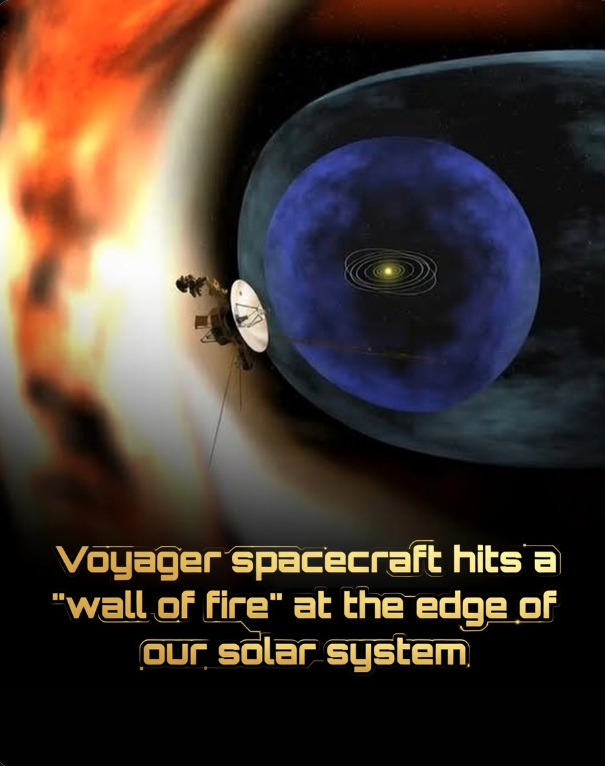
Voyager hit a 90,000°F wall at the solar system’s edge. NASA’s Voyager 1 spacecraft crossed one of the most dramatic frontiers in the cosmos: the heliopause, the tenuous boundary where the Sun’s influence finally gives way to interstellar space. What the probe discovered there was astonishing—a turbulent zone of superheated plasma with temperatures soaring between 30,000 and 90,000 °F (roughly 17,000–50,000 °C). This wasn’t a physical wall or barrier, but a dynamic transition region where the outward-flowing solar wind abruptly slows, compresses, and piles up against the incoming pressure of interstellar material. That compression converts kinetic energy into thermal energy, driving the plasma to extreme heat levels far beyond anything found inside the heliosphere. Remarkably, despite the blistering temperatures, this “wall of fire” would pose no danger to a hypothetical astronaut. The plasma is extraordinarily diffuse—far less dense than the best vacuums achievable in Earth laboratories—so there are simply too few particles to transfer meaningful heat. The region is hot in temperature but cold in practical effect. Voyager’s instruments captured clear signatures of the crossing: a sudden plunge in solar wind particles, a sharp rise in galactic cosmic rays, and faint plasma oscillations that revealed the density and temperature of this exotic boundary layer for the first time. These vibrations—analogous to ripples on an unseen sea—provided direct measurements of conditions in a realm previously known only through theory. The heliopause itself serves as a vital shield. The entire heliosphere—the vast bubble carved by the Sun—deflects most of the galaxy’s high-energy cosmic radiation, helping protect life on Earth from constant bombardment. Beyond this protective envelope lies the harsher, unfiltered radiation environment of the interstellar medium. Today, more than 15 billion miles (24 billion kilometers) from home, Voyager 1 remains the farthest human-made object ever sent into space. Still operational and transmitting precious data, it continues to reveal the secrets of this distant frontier. At the outer limit of our solar system, space is neither empty nor serene. It is a violent, glowing threshold—and humanity has only begun to map its mysteries.
Massimo tweet media
English
125
954
4.8K
261.1K
vinay srivastava retweetledi
Mr PitBull
Mr PitBull@MrPitbull07·
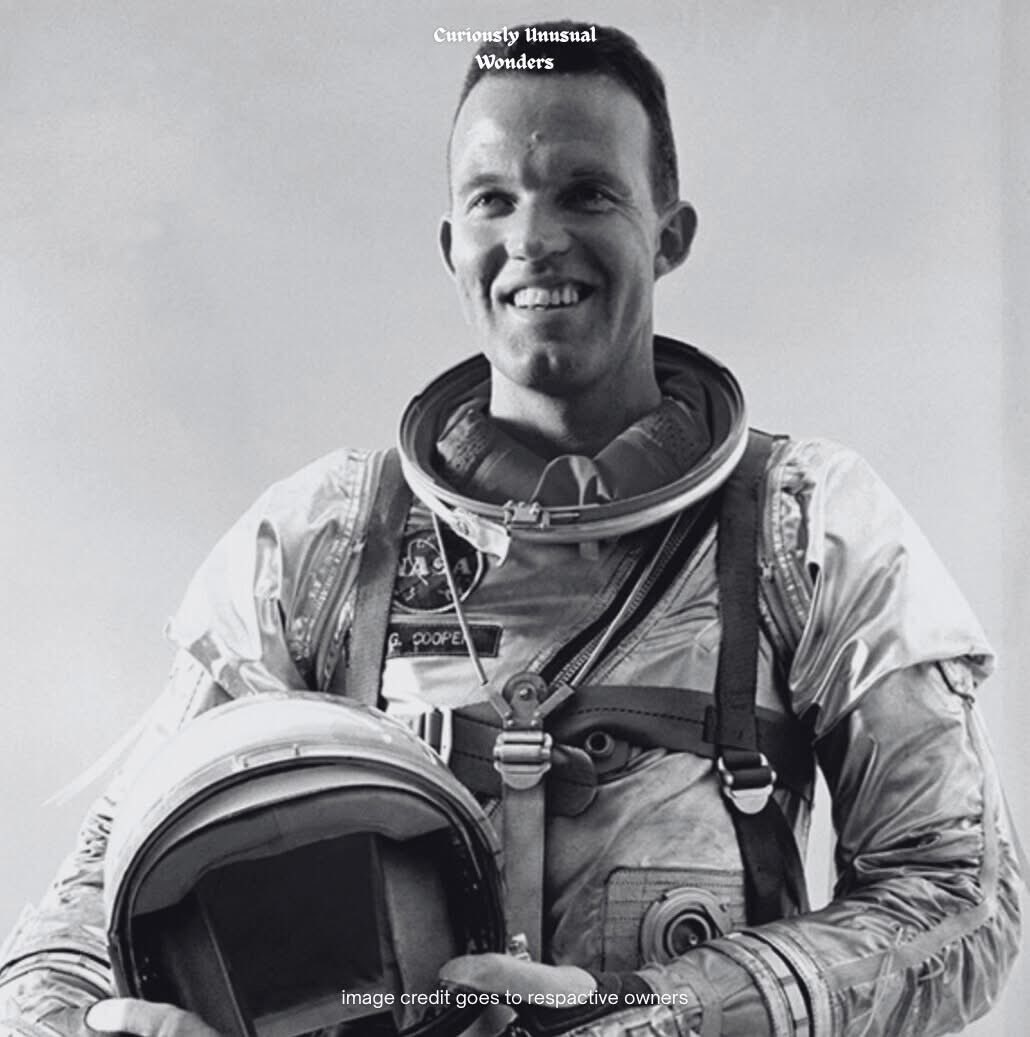
May 16, 1963. Gordon Cooper was orbiting Earth alone inside a capsule barely big enough to turn around in, moving at 17,500 miles per hour. He had been up there for over a day. Then the warnings started. First a faulty sensor screaming that the ship was falling — it wasn't. He switched it off. Then something far worse: a short circuit knocked out the entire automated guidance system. The one that kept the capsule steady. The one that was supposed to bring him home. Without it, reentry was nearly impossible. Too shallow an angle and the capsule would bounce off the atmosphere back into space. Too steep and it would incinerate. The margin for error was razor thin — and every computer that was supposed to hit that margin was dead. Down on the ground, NASA engineers watched the telemetry in silence. They could see everything going wrong. They could fix nothing. Cooper didn't panic. He uncapped a grease pencil and drew lines directly on the inside of his window to track the horizon. He looked up at the stars he had spent months memorizing and used their positions to orient the ship by eye. Then he set his wristwatch. Because when you have no computers left, you become the computer. At exactly the right moment — calculated in his head, confirmed by the stars outside — he fired the retrorockets. The capsule shook. The sky turned to fire. For several minutes, no one on Earth could reach him as plasma swallowed the ship whole. Then the parachutes opened. Faith 7 hit the water just four miles from the recovery ship — the single most accurate splashdown in the entire Mercury program. The man with a wristwatch and a few pencil marks on a window had outperformed every automated system NASA had. We talk a lot about technology saving us. And it often does. But Cooper's story is a quiet reminder that behind every machine, there still has to be a human being who can look out the window, think clearly under pressure, and decide what to do next. The final backup was never the software. It was him.
Mr PitBull tweet media
English
511
4K
16.7K
363.8K
James Lucas
James Lucas@JamesLucasIT·
In 1984 a German reporter in Paris explains how to cross Place de la Concorde: "Walk steadily across and never look at the drivers. If you do, they'll think you've seen them and won't stop."
English
328
1.6K
55.4K
3.5M
vinay srivastava retweetledi
Shah
Shah@Shahhoon1·
Undoubtedly most underrated Catch, Sachin sir with an incredible running one handed catch at deep mid off way back in 1990 Year.
English
41
303
3.4K
150.8K
vinay srivastava retweetledi
Gandalv
Gandalv@Microinteracti1·
🇯🇵 A brainless blob reproduced the Tokyo rail network in 26 hours. It was not trying to solve a transport problem. It was trying to eat oat flakes. Physarum polycephalum is, to be generous, a blob. Pale, damp, the size of a thumbnail, it has no brain, no nervous system, and no cells that could reasonably be accused of thinking. Scientists had studied it for years without feeling particularly threatened by it. Then someone put it in a maze. Within hours, Physarum had found the shortest route between entrance and exit. Not by wandering randomly. Not by luck. By something that had no name, because everyone had assumed it required a brain. This was interesting enough. What happened next was embarrassing. In 2010, a researcher named Toshiyuki Nakagaki and his team placed a piece of slime mold at the centre of a damp map of greater Tokyo. Around it, at the locations of 36 surrounding cities, they put small piles of oat flakes. Then they left the room. The organism did what it always does. It explored. Thin tendrils pushed outward in every direction, feeling for food. When a tendril found an oat flake, that connection strengthened. When a path led nowhere useful, it was quietly dismantled. The slime mold was not planning. It was simply following local chemistry, the same way it had been doing for 500 million years. After 26 hours, the exploration was over. What remained was a sparse, elegant network of tubes connecting all 36 cities to each other. Not a tangle. Not a web covering everything. A clean, efficient system with strong main corridors between the busiest points and lighter connections branching where they were needed. The team held it up next to the actual Tokyo rail map. The corridors matched. The branch lines matched. Even the redundant connections, the backup routes engineers had added so the system could survive a single failure, appeared in nearly the same places. The slime mold had not just found the cities. It had independently arrived at the same logic that Japanese railway engineers had spent decades refining. By some measures, its network was more robust than the one humans had built. There is no headquarters inside Physarum, no moment where anyone decides anything. The intelligence, if that is even the right word, lives entirely in one simple rule repeated across millions of connections: strengthen what works, abandon what doesn’t. That rule, applied blindly and without awareness, produces something that looks unnervingly like wisdom. The slime mold was not trying to redesign the Tokyo rail network. It was trying to eat breakfast. It just turns out that the most efficient way to eat breakfast, when your breakfast is scattered across a map of greater Tokyo, looks a great deal like good urban planning 😅 Gandalv / @Microinteracti1
English
24
112
598
204.9K
vinay srivastava retweetledi
Astronomy Vibes
Astronomy Vibes@AstronomyVibes·
🚨 Light Turned Into a “Solid”? Science Just Broke Reality as We Know It 😱 What sounds like pure science fiction just happened in real labs — and it’s real quantum physics. Scientists in Italy didn’t freeze light like ice cubes ❄️… but they did something even more mind-blowing. They made light behave like a solid. 🧊⚡ Here’s the crazy part: light itself can’t be frozen — it has no mass and can’t become solid. But researchers trapped light between tiny mirrors and forced it to interact with special materials. This created hybrid particles — part light, part matter — called polaritons. These strange particles started organizing themselves into ordered patterns, just like crystals in solid objects. 😮 So it’s not frozen light in the movie sense… it’s quantum light-matter magic — where light and matter blur into something completely new. Under extreme lab conditions, these particles form structures that look and behave like a solid, even though light alone could never do that. Why this matters? Because this discovery could reshape the future — ⚡ Ultra-fast computing 💡 Super-efficient energy systems 🧠 Quantum technologies 🚀 Next-gen photonic devices This isn’t fantasy. This is the universe showing us that light and matter are not as separate as we thought. At the quantum level, reality bends, rules blur, and the impossible becomes physics. What we’re witnessing isn’t frozen light… It’s the future of science being born. 🌌🔬
Astronomy Vibes tweet media
English
67
200
767
172.1K
vinay srivastava retweetledi
Signal.Archive.Lab
Signal.Archive.Lab@Signal_Archive·
Cool image, but small clarification: no, physicists didn't discover that present choices literally change the past. What actually happened (in recent delayed-choice / quantum eraser type experiments) is weirder and cooler → a photon's past "behavior" (wave or particle) only becomes definite after a future measurement is decided. It's not rewriting history, it's showing that in the quantum world "past" and "choice" aren't as fixed or separate as our intuition expects. Mind-bending, yes. Time travel? Not quite. Still one of the wildest things nature keeps showing us 😄
English
1
1
6
455