Valentinos ORPHANOS

26.9K posts

Valentinos ORPHANOS banner
Valentinos ORPHANOS

Valentinos ORPHANOS

@vip_cyp

Civil+Struct. Engineer▪️ Arbitrator▪️Mediator
Cyprus Katılım Kasım 2011
99.2K Takip Edilen191.9K Takipçiler
Valentinos ORPHANOS retweetledi
The Best
The Best@Thebestfigen·
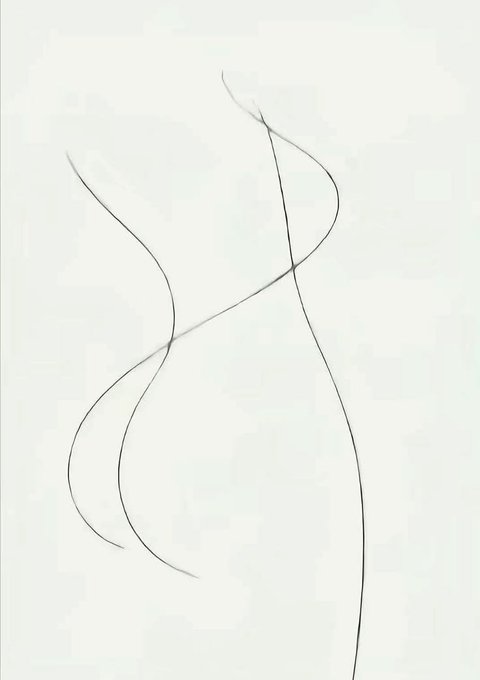
How 3 simple lines can captivate a man's mind...
The Best tweet media
English
449
2.8K
27K
602.5K
Valentinos ORPHANOS retweetledi
Learn Latin
Learn Latin@latinedisce·
Rēgiminis commūtātiō — “Regime change”
Learn Latin tweet media
Lietuvių
6
132
1.3K
18.3K
Valentinos ORPHANOS retweetledi
Ancient History Hub
Ancient History Hub@AncientHistorry·
In 458 BC, Rome was on the brink of collapse. An invading army had trapped the Roman consul and his legion in a mountain pass. Panic spread through the city. The Senate did the only thing they could think of: They sent messengers to find a 60-year-old farmer plowing his field. His name was Lucius Quinctius Cincinnatus. He had once been a senator, then lost his fortune paying his son's bail. Now he worked his own four-acre plot just to feed his family. When the Senate's envoys arrived, they found him sweating behind a plow. They asked him to put on his toga so they could deliver an official message. The message: Rome was making him dictator. Absolute power. Total command of the army. No checks. No oversight. No term limit. He accepted. Within 16 days, Cincinnatus had raised an army, marched out, surrounded the enemy, and forced their surrender. The republic was saved. He had legal authority to rule for six months. He could have stayed. He could have expanded his power. He could have done what every other ruler in human history did when handed unlimited control. Instead, he resigned on day 16. He took off the toga, walked back to his farm, and finished plowing the field he'd left half-done. Twenty years later, when Rome faced another crisis, they called him back. He was 80 years old. He took command, crushed the conspiracy, and resigned again, this time after just 21 days. He died poor. On his farm. 2,200 years later, when George Washington was offered a kingship after winning the American Revolution, he refused and went home to Mount Vernon. The reason he was hailed as "the American Cincinnatus" is because Europeans literally could not believe a man who had won would willingly give up power. King George III, on hearing Washington would resign rather than rule, said: "If he does that, he will be the greatest man in the world." The lesson isn't that Cincinnatus was humble. The lesson is that for most of human history, the people most qualified to lead were the ones who didn't want to. And the moment a society starts rewarding those who chase power instead of those who flee from it is the moment the republic begins to die. Cincinnati, Ohio is named after him. Most people who live there have no idea why.
Ancient History Hub tweet media
English
945
14.9K
49K
1.2M
Valentinos ORPHANOS retweetledi
LeoDaVinciWave
LeoDaVinciWave@LeoDaVinciWave·
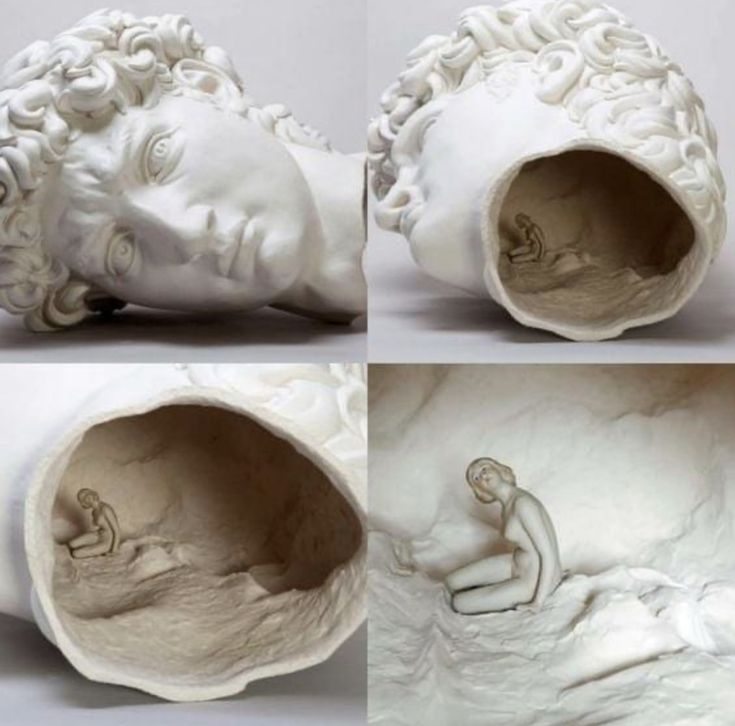
A 2016 ceramic and porcelain sculpture titled ‘Testone,’ created by Italian artist Andrea Salvatori.
LeoDaVinciWave tweet media
English
1
28
205
5.1K
Valentinos ORPHANOS retweetledi
Muse
Muse@xmuse_·
Carved in 2022 from a single block of marble by Jago. Detail from Ajax and Cassandra. Yes, marble!
Muse tweet media
English
94
913
9.9K
281.2K
The Husky
The Husky@Mr_Husky1·
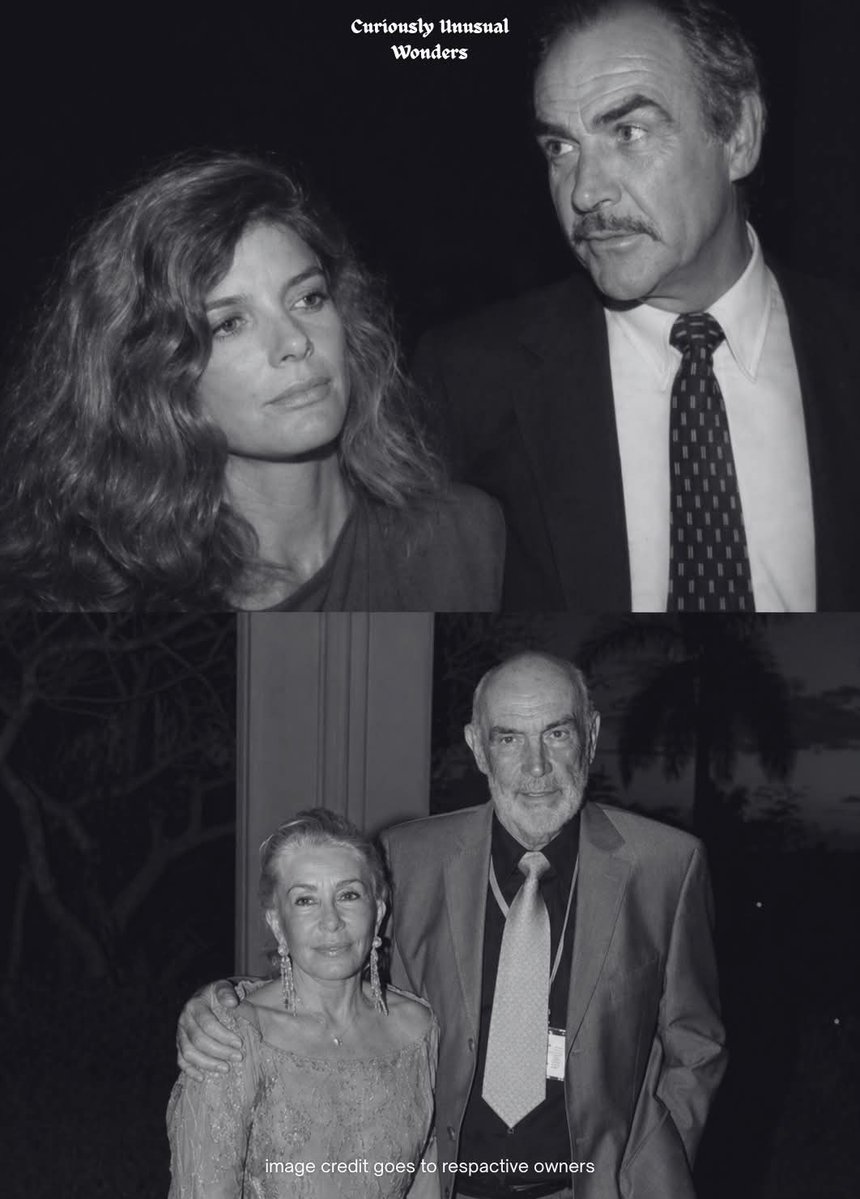
At 13, he polished coffins for pennies. At 32, he became James Bond. At 40, he met the woman who would love him for 45 years — and she had no idea who he was. Sean Connery was born in a tiny tenement flat in Edinburgh in 1930. His father drove a lorry. His mother scrubbed floors for a living. There was no money for extras. There was barely money for essentials. The family slept in one room, and young Sean learned early that life would not hand him anything. At 13, he left school. Not because he wanted to. Because his family needed every shilling he could earn. So he woke before sunrise and delivered milk on a horse-drawn cart through the cold Scottish streets. When that shift ended, another began. He laid bricks. He drove trucks. He cleaned swimming pools. And for a while, he polished coffins in a furniture maker's shop, surrounded by silence and the weight of other people's endings. To earn a few extra coins, he posed nude for art students at the Edinburgh College of Art. There was no glamour in any of it. Just a young man doing whatever honest work he could find. At 16, he joined the Royal Navy. He came home a few years later with stomach ulcers and a discharge, but also with something quieter growing inside him. A hunger. A sense that his life was meant to be bigger than the streets he came from. In 1953, on a strange impulse, he entered the Mr. Universe bodybuilding competition. He placed third. And there, in the locker room, another competitor mentioned a theater audition for a musical called South Pacific. Sean had never acted. He had no training. He could barely read a script. But he went anyway. That single decision changed everything. For nearly a decade, he scraped by with small roles. Television parts. Forgettable films. Casting directors told him his thick Scottish accent was a problem. Producers said he was too rough, too working-class, too unpolished for leading roles. He kept going. Then in 1962, a film called Dr. No was looking for an unknown to play a British spy named James Bond. The producers were unsure about Connery. But the director's wife watched him walk down the street from her window and said, "That man has it." He was cast. The film exploded. And the milkman from Edinburgh became the most famous spy in the world. Fame followed him everywhere after that. Awards. Magazine covers. Crowds. The boy who once polished coffins was now a global icon. But the most important moment of his life was still ahead. In 1970, at a golf tournament in Morocco, he met a French-Moroccan painter named Micheline Roquebrune. She saw a tall, charming man with kind eyes. She noticed the way he carried himself. She had no idea he was James Bond. She had never seen one of his films. To her, he was simply Sean. And maybe that was exactly what he had been searching for his whole life. They married in 1975 and stayed together for 45 years, until his final breath in 2020. In a world that worshipped him as a legend, she only ever saw the man. Sean Connery's life is not just a story about rising from poverty to stardom. It is a story about being truly seen. Because the deepest kind of love is not the love that finds you because of who the world says you are. It is the love that finds you in spite of all that noise — and stays for the soul underneath. Sometimes the greatest recognition in life does not come from millions of strangers. It comes from one person who looks at you and simply sees you.
The Husky tweet media
English
19
144
845
46K
Valentinos ORPHANOS retweetledi
C.P. Cavafy
C.P. Cavafy@CCavafy·
“Ithaca gave you the beautiful journey.” – C.P. Cavafy was born #OTD April 29, 1863. He died on his 70th birthday, April 29, 1933. “Ithaca”, translated by @DAMendelsohnNYC #poetry #cavafy
C.P. Cavafy tweet media
English
2
83
220
9.3K
Valentinos ORPHANOS retweetledi
Tansu Yegen
Tansu Yegen@TansuYegen·
One world record moment: 104 skydivers from 20 nations fell in perfect sync...
English
314
3.4K
13.2K
418.1K
Valentinos ORPHANOS
Valentinos ORPHANOS@vip_cyp·
The 🇪🇺 Continent awakens (at last)
GeoInsider@InsiderGeo

NEW: For the first time, a major Western leader has said out loud what many in Europe have been thinking privately: NATO's Article 5 the guarantee that an attack on one is an attack on all can no longer be taken for granted. And it wasn't an enemy that put it in doubt. It was Washington. There is now a doubt on Article 5 not put on the table by the Europeans, but by the US president," Macron said in Athens, standing next to the Greek Prime Minister. Macron is now pointing to something most people have never heard of Article 42.7, buried in the EU's Treaty of Lisbon and ignored for decades. It is the EU's own mutual defence clause: if a member state is attacked, all others are obligated to assist by all means in their power. Macron called it stronger than Article 5, with "no room for interpretation or ambiguity" and critically, it doesn't require Washington's blessing. It has already been used. When Cyprus came under threat in the opening days of the Iran war, France, Greece, Spain, Italy, the Netherlands and Portugal rushed military assets to the island the first real test of Article 42.7 in an actual crisis. Greek PM Mitsotakis called it "a gamechanger." He was honest about why it had been ignored before: "We never spoke about it because we thought NATO would always do the job." That assumption is gone. EU leaders are now building a formal handbook on how the clause works in practice. European Council president Costa confirmed it plainly: "We are designing the handbook on how to use this mutual assistance clause." Something that European politicians avoided for decades is now being debated openly.

English
0
0
0
254
Valentinos ORPHANOS retweetledi
Science girl
Science girl@sciencegirl·
Anthony Howe is an artist specializing in crafting kinetic sculptures that come to life through the power of wind.
English
165
1.8K
8K
754K
Valentinos ORPHANOS
Valentinos ORPHANOS@vip_cyp·
Όπως πολύ σωστά ελέγχονται τα οχήματα ανά διετία (ΜΟΤ κατά τη γλώσσα του καφενείου) κάτι ανάλογο θα μπορούσε να εφαρμοστεί και για τα κτίρια. Το ΕΤΕΚ θα μπορούσε να υποδείξει κατάλληλους Μηχανικούς και η βουλή να νομοθετήσει για την εφαρμογή του μέτρου. Μη συμμόρφωση = Διακοπή υπηρεσιών ΑΗΚ, Υδατοπρομήθειας κτλ
Ελληνικά
0
0
0
179
Valentinos ORPHANOS
Valentinos ORPHANOS@vip_cyp·
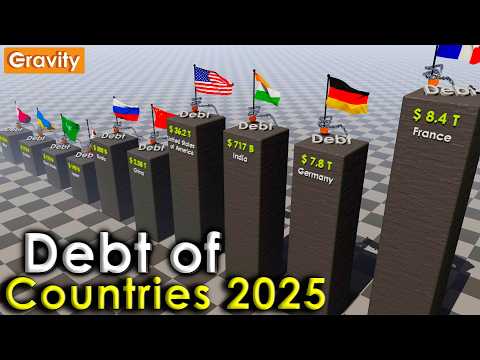
External Debt by Country, or our legacy (burden) for the next generations... (Note Cyprus 🇨🇾 debt almost equal to Russia's 🇷🇺 ...🧐) youtu.be/fLm4H4WeyMQ?is…
YouTube video
YouTube
English
0
0
1
302
Valentinos ORPHANOS retweetledi
Emi Kayserilioglu
Emi Kayserilioglu@eminations·
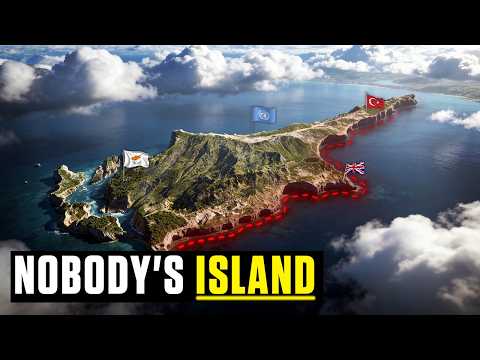
@vip_cyp Nobodys but everyones. The oxymoronic island. Divided but joined. The richness is its heritage that extremism works hard to erase. Our Beautiful #Cyprus
English
1
2
6
312