Vivek Menezes

28K posts

Vivek Menezes banner
Vivek Menezes

Vivek Menezes

@vmingoa

Goa Writer + Born-again Bombayite https://t.co/i3QaRQX18g

Goa Katılım Mart 2009
690 Takip Edilen3.7K Takipçiler
Vivek Menezes retweetledi
Nirupama Menon Rao 🇮🇳
There is a certain genre of writing that substitutes accusation for argument. It begins by assigning motive, then arranges facts,real, distorted, or imagined, to fit that conclusion. The recent commentary on my views on India-Pakistan relations follows that familiar script. Let me state the essentials clearly. To argue that India must combine deterrence with engagement is NOT to diminish the reality of terrorism, nor to excuse it. It is to recognise how serious nations manage adversaries. India has, across governments and decades, done precisely this, responding firmly to terror while retaining channels of communication where necessary to prevent escalation and miscalculation. This is not sentimentality. It is statecraft. The suggestion that engagement grants “impunity” rests on a false binary, that one must either talk or act. In practice, states do both. To collapse that complexity into a moral accusation may make for forceful prose, but it does not make for sound policy. The caricature of a women’s caucus is equally misplaced. It is not proposed as a substitute for national policy, nor as a solution to entrenched conflict. It is a modest Track II initiative, one of many possible avenues, to widen dialogue, reduce hostility, and explore areas where cooperation may still be possible. Such efforts do not require approval from those who see every form of engagement as capitulation. Invoking the suffering of victims of terrorism to argue against any form of dialogue is particularly troubling. Their loss demands seriousness, not rhetorical deployment. Accountability is not strengthened by narrowing the space for thought. The claim that an idea is discredited because it is welcomed by a Pakistani voice is also a curious standard. If the merit of an argument is to be judged by who agrees with it, then independent judgment itself is surrendered. Ideas must stand or fall on their own logic. Beyond the rhetoric lies a more fundamental question: what is India’s end game with Pakistan? If it is to reduce Pakistan to rubble, that is fantasy dressed up as toughness. It is not going to happen, and any attempt to move in that direction would risk catastrophe for the entire region, not least for India. Nuclear geography is a stern schoolmaster. It does not indulge chest-thumping. The real end game has to be containment, deterrence, internal strengthening, and selective engagement. In plain words: India’s objective should be to make Pakistan’s use of terror too costly to sustain, while preventing the relationship from sliding into permanent uncontrolled escalation. That means four things. First, raise the cost of terrorism. Through intelligence, border management, diplomatic isolation where warranted, calibrated military response when necessary, and relentless exposure of the infrastructure of proxy violence. No illusions there. Second, deny Pakistan veto power over India’s future. We should not let our growth, our diplomacy, our regional ambitions, or our internal confidence be held hostage by a single hostile neighbour. The greatest strategic answer to Pakistan is a stronger, more cohesive, more prosperous India. Third, manage the conflict, not romanticise it. There will be no grand reconciliation in the near term. But neither can every interaction be reduced to rage. Ceasefire mechanisms, back channels, water safeguards, crisis hotlines, and limited functional engagement are not signs of softness. They are instruments of control. Fourth, keep open the possibility of a different future without betting on it. That is where dialogue belongs. Not as wishful thinking, not as “aman ki asha” balloon releases, but as disciplined statecraft. You talk not because you trust, but because you must understand, signal, warn, probe, and occasionally de-escalate. So the end game is not rubble. It is a Pakistan that is deterred, constrained, denied easy success, and unable to derail India’s future. Fury is a mood. It is not a policy.
English
0
86
265
44.2K
Vivek Menezes retweetledi
Jostein Hauge
Jostein Hauge@haugejostein·
In 1980, China’s infant mortality rate was roughly five times that of the United States. Today, it is about half the US rate.
Jostein Hauge tweet media
English
63
735
2.9K
105.9K
Vivek Menezes retweetledi
Syed Ubaidur Rahman
Syed Ubaidur Rahman@syedurahman·
A very good story on Ahmedabad and how over the past few decades it has become the most segregated towns in India. But this is the story of almost all major and even medium cities. New laws being introduced will further this ghettoization. #IndianMuslims lemonde.fr/international/…
English
2
21
71
2.3K
Vivek Menezes retweetledi
Nick Cohen
Nick Cohen@NickCohen4·
Trump's second term really is the American Brexit. A catastrophic failure to understand the world fuelled by vanity, lies and nationalist delusion
English
237
1.9K
11.6K
154.5K
Vivek Menezes retweetledi
Cdr Abhilash Tomy KC, NM
Cdr Abhilash Tomy KC, NM@abhilashtomy·
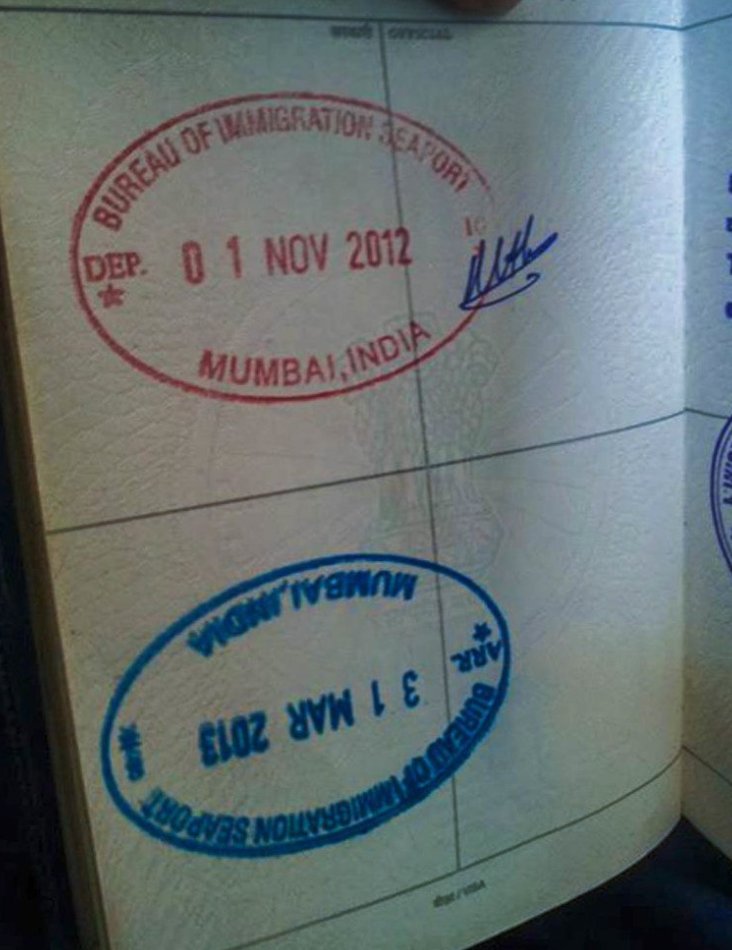
Naval HQ asked for my ETA at Mumbai when I was at Cape Horn. I wanted to tell them sailboats have destinations, not ETAs. I gave them a holiday instead. On 26 January, I was rounding the Horn, hoisting the tricolor just a mile south of that storied rock. Amidst the gale of congratulatory signals, Navy HQ sent a query only a bureaucrat could: What is your ETA? With half the globe still beneath my keel and the winds unpredictable, the salt in me wanted to write back, that sailboats had destinations, not ETAs. But my previous mails had already tested the headquarters' patience for humor and sarcasm. I decided a bold calculation was safer than a cheeky proverb. If the past was an indicator, my voyage was being steered by a celestial ledger. We had slipped moorings on Kerala Foundation Day, rounded Leeuwin on 12-12-12 (the Mayan apocalypse), passed New Zealand on Christmas, crossed the International Date Line on New Years and hit the Horn on Republic Day. By that logic, landfall had to be a holiday. I checked the charts and staked my reputation on Easter Sunday, with All Fools’ Day as the backup. The boat did not disappoint. I turned 34 years old at 34°W. The hull turned four years at 4°W. We crossed the Prime Meridian on Valentine’s Day, where a heavy swell put me in a poetic mood; remembering Pablo Neruda whose home I had once visited, I felt the ocean wanting to do to me what spring does to cherry trees. We rounded the Cape of Good Hope on Copernicus’ birthday, passed Mauritius on its National Day and crossed the Equator on the Equinox. Out of pure respect for the sun, I permitted it to cross the line ahead of me. Finally, as predicted, we made landfall on Easter Sunday. I was received by friends and naval brass in an intimate reception hosted onboard INS Delhi by the C-in-C Admiral Shekhar Sinha @shekhar19541, who shook hands in congratulations and uttered the words: You have created history out of geography. 151 days at sea had an emaciating effect on my sea-legs, so much so that two Admirals had to hoist me up the ladder of INS Delhi. By the time I stepped onto firm land, it was past midnight, All Fools’ Day. The irony was perfect. Before casting off, immigration officials at Yellow Gate had refused to stamp my passport because my destination was Mumbai. They claimed it made no sense to leave for where I already was. Yet I returned five months later, 20kg lighter, skin and hair bronzed by salt and sun. When I went to be stamped back into existence on the 1st of April, the official’s hands trembled as if seeing a resurrection. In his shock, he stamped my passport upside down. I had left Mumbai to find Mumbai, but found myself instead. I found that Melville was prescient, having foretold with the utmost clarity of a clairvoyant exactly what I would feel over a century and a half later: Here was a man some twenty thousand miles from home, by the way of Cape Horn that is... and yet he seemed entirely at his ease; preserving the utmost serenity; content with his own companionship; always equal to himself. Today, that story is exactly 13 years old. @indiannavy @CaptDKS
Cdr Abhilash Tomy KC, NM tweet media
English
54
125
676
43.1K
Vivek Menezes retweetledi
Stephen Wertheim
Stephen Wertheim@stephenwertheim·
I told @NewYorker: “The Iran war won't keep the United States from remaining the most powerful country in the world. But it could prove to be a turning point by laying bare the poor quality of American governance and the overstretched condition of America's military, which is now tasked with providing deterrence and defense in four regions with a one-war force."
English
5
42
160
13.7K
Vivek Menezes retweetledi
Vaishna Roy
Vaishna Roy@vaishnaroy·
Not sure why @NMenonRao was trolled for this abundantly reasonable suggestion. Using a women's caucus to ensure lasting peace is the way forward, perhaps the only way forward.
Nirupama Menon Rao 🇮🇳@NMenonRao

The women of India and Pakistan need to deploy our ingrained common sense and suggest ways forward in our relationship. We need a women’s caucus. Not to throw accusations against each other but to think calmly and sensibly about the future ahead. For the sake of our children. We need to bring in the counterpoint: without naming it, without sounding defensive, but making it impossible to dismiss. For decades, India–Pakistan engagement has been trapped in a single script: territory, terror, recrimination. We repeat it with ritual precision, but it yields diminishing returns. What if we widened the frame? In West Asia, especially the Gulf, our interests often run in parallel: energy security, diaspora welfare, maritime stability, crisis response. These are not abstractions since they affect millions of lives and the resilience of both economies. Engaging here need not dilute our positions, create false parity, or reopen familiar disputes. It can remain tightly bounded, issue-specific, and without prejudice to core differences. Skeptics will argue that Pakistan cannot compartmentalise, that any engagement risks being instrumentalised, and that peripheral cooperation has never altered core hostility. But the purpose here is not transformation, it is insulation. Not to resolve the conflict by other means, but to prevent it from defining all means. Some may also say Pakistan has found a “role” in the Iran crisis and India should not be seen as seeking one. But this is not about visibility or mediation. Our interests are structural not transitory. If anything, the moment underscores a larger truth: even adversarial states operate beyond their disputes when interests demand it. When the central track is blocked, responsible statecraft does not stand still. It explores parallel ones, carefully, deliberately, and on its own terms. Sometimes, widening the field is not weakness. It is strategy. The women must speak.

English
30
17
83
3.8K
Vivek Menezes retweetledi
naresh fernandes
naresh fernandes@tajmahalfoxtrot·
Raga Rock is off the wall.
naresh fernandes tweet media
English
0
2
36
934
Vivek Menezes retweetledi
Nirupama Menon Rao 🇮🇳
I am no stranger to criticism and have learnt, over time, to absorb it without losing focus. That is part of public life. What is harder to accept is the steady erosion of civility in our discourse. Disagreement is essential; derision and vituperative, personal slander is not. A confident society does not fear dialogue—it conducts it with balance, clarity, and respect. As for me, I follow the teaching of Sri Ramakrishna and his advice: “forbear, forbear, forbear.” That has guided me through my life’s journey.
English
0
436
2.1K
803.8K
Vivek Menezes retweetledi
Rana Dasgupta
Rana Dasgupta@byranadasgupta·
We live at the end of US hegemony, and its replacement by hostile imperial groupings, competing trading systems, and the evaporation of all values that are not military and statist. Stefan Zweig lived through the end of British hegemony, and a similar replacement. He described the experience thus: "Never ... has a generation fallen from such intellectual heights as ours to such moral depths ... All the bridges are broken between today, yesterday and the day before yesterday ... Before [the World Wars] I saw individual freedom at its zenith, after them I saw liberty at its lowest point in hundreds of years ... It was for our generation ... to see again wars without actual declarations of war, concentration camps, torture, mass theft and the bombing of defenceless cities ... We have constantly had to subordinate ourselves to the demands of the state, a prey to the most stupid of policies, we have had to adjust to the most fantastic of vicissitudes, we have always been chained to a common fate, bitterly as we might resent it; it swept us irresistibly away." - from "The World of Yesterday" (1940)
English
8
59
202
16.2K
Vivek Menezes
Vivek Menezes@vmingoa·
does anyone have an @ElectroluxGroup dishwasher in India, and can give me some honest feedback regarding service + general performance?
English
0
1
0
282
Vivek Menezes retweetledi
Nirupama Menon Rao 🇮🇳
@TVMohandasPai Dialogue is not delusion. It is how serious nations manage adversaries. To conflate engagement with complicity is very clever, so that the only position left is permanent refusal. Everything becomes binary: loyalty or betrayal. That’s not strategy. That’s theatre.
English
139
133
607
46.7K
Vivek Menezes retweetledi
Pope Leo XIV
Pope Leo XIV@Pontifex·
Christ, King of Peace, cries out again from his cross: God is love! Have mercy! Lay down your weapons! Remember that you are brothers and sisters!
English
327
1.3K
7.8K
261.9K
Vivek Menezes
Vivek Menezes@vmingoa·
❤️🙏🏾
Nirupama Menon Rao 🇮🇳@NMenonRao

The women of India and Pakistan need to deploy our ingrained common sense and suggest ways forward in our relationship. We need a women’s caucus. Not to throw accusations against each other but to think calmly and sensibly about the future ahead. For the sake of our children. We need to bring in the counterpoint: without naming it, without sounding defensive, but making it impossible to dismiss. For decades, India–Pakistan engagement has been trapped in a single script: territory, terror, recrimination. We repeat it with ritual precision, but it yields diminishing returns. What if we widened the frame? In West Asia, especially the Gulf, our interests often run in parallel: energy security, diaspora welfare, maritime stability, crisis response. These are not abstractions since they affect millions of lives and the resilience of both economies. Engaging here need not dilute our positions, create false parity, or reopen familiar disputes. It can remain tightly bounded, issue-specific, and without prejudice to core differences. Skeptics will argue that Pakistan cannot compartmentalise, that any engagement risks being instrumentalised, and that peripheral cooperation has never altered core hostility. But the purpose here is not transformation, it is insulation. Not to resolve the conflict by other means, but to prevent it from defining all means. Some may also say Pakistan has found a “role” in the Iran crisis and India should not be seen as seeking one. But this is not about visibility or mediation. Our interests are structural not transitory. If anything, the moment underscores a larger truth: even adversarial states operate beyond their disputes when interests demand it. When the central track is blocked, responsible statecraft does not stand still. It explores parallel ones, carefully, deliberately, and on its own terms. Sometimes, widening the field is not weakness. It is strategy. The women must speak.

ART
0
0
0
109