

@Paul_Reviews On the bright side, this was vibecoded over the weekend and didn't cost a million euro right. Right?
English
adamsobotka.eth
5K posts

@vorcigernix
Building @meiro_io Ex-Director of Product Engineering at Emplifi. Participating @developer_dao and @forefront__

.@vonderleyen "The European #AgeVerification app is technically ready. It respects the highest privacy standards in the world. It's open-source, so anyone can check the code..." I did. It didn't take long to find what looks like a serious #privacy issue. The app goes to great lengths to protect the AV data AFTER collection (is_over_18: true is AES-GCM'd); it does so pretty well. But, the source image used to collect that data is written to disk without encryption and not deleted correctly. For NFC biometric data: It pulls DG2 and writes a lossless PNG to the filesystem. It's only deleted on success. If it fails for any reason (user clicks back, scan fails & retries, app crashes etc), the full biometric image remains on the device in cache. This is protected with CE keys at the Android level, but the app makes no attempt to encrypt/protect them. For selfie pictures: Different scenario. These images are written to external storage in lossless PNG format, but they're never deleted. Not a cache... long-term storage. These are protected with DE keys at the Android level, but again, the app makes no attempt to encrypt/protect them. This is akin to taking a picture of your passport/government ID using the camera app and keeping it just in case. You can encrypt data taken from it until you're blue in the face... leaving the original image on disk is crazy & unnecessary. From a #GDPR standpoint: Biometric data collected is special category data. If there's no lawful basis to retain it after processing, that's potentially a material breach. youtube.com/watch?v=4VRRri…



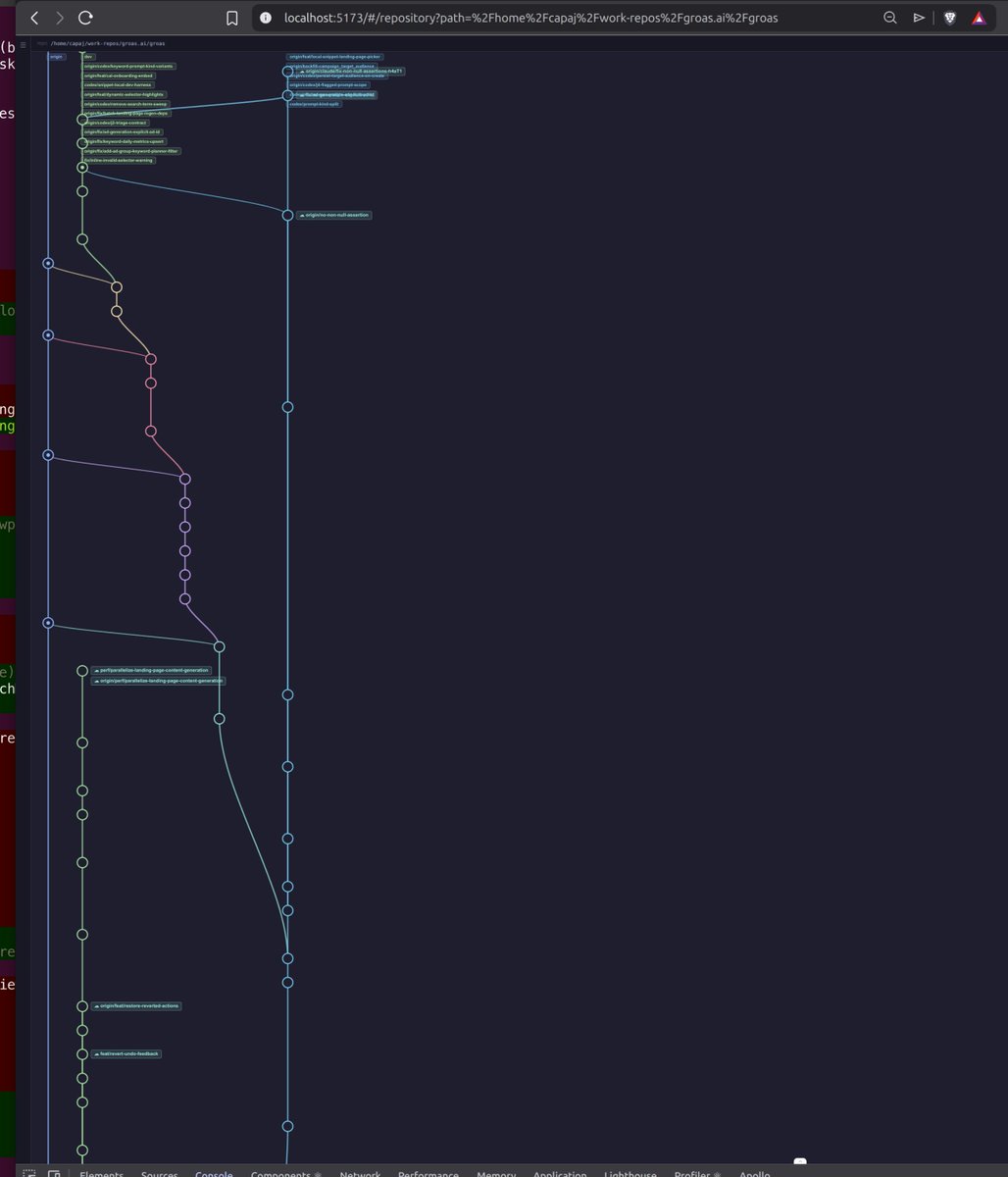







This is very exciting. It’s an open source version of Ramp’s Inspect. Will be digging into this - could be a much more powerful replacement for Symphony




"THE UNITED STATES OF AMERICA WILL NEVER ALLOW A RADICAL LEFT, WOKE COMPANY TO DICTATE HOW OUR GREAT MILITARY FIGHTS AND WINS WARS! That decision belongs to YOUR COMMANDER-IN-CHIEF, and the tremendous leaders I appoint to run our Military. The Leftwing nut jobs at Anthropic have made a DISASTROUS MISTAKE..." - President Donald J. Trump
The Logos tech ecosystem is analogous to a Linux os distribution: a minimal microkernel at the base, a privacy-preserving networking stack above it, and pluggable modules for storage, messaging, and blockchain on top. At the core is the Logos Kernel (via liblogos). It follows the microkernel architecture model: manage module lifecycle, handle inter-process communication (IPC) and orchestration. It doesn’t handle networking, store files, or validate blocks. Those are done by modules. Modules run independently and communicate through IPC. A storage bug can’t crash messaging. A blockchain upgrade doesn’t require rebuilding the kernel. Each component can be developed, tested, and shipped by itself. Above the kernel sits the networking layer. It delivers peer discovery, connection management, and a libp2p-based mixnet for privacy-preserving routing. Capability discovery replaces central registries. Three core modules ship with Logos: • Storage – CID-based decentralised file storage • Messaging – Delivery and Chat • Blockchain – Private Proof of Stake (PPos) + Logos Execution Zone (public & private state) All are independent and pluggable. The blockchain module uses Cryptarchia and the Blend network for PPoS. Validator identities and stake remain hidden. LEZ adds programmable execution with unified public and private accounts. Privacy is enforced at the protocol layer. Users choose their privacy level, same code is used. User modules are first-class. The logos-module library and CLI let developers build and load custom modules into the same IPC framework. The kernel manages them like systemd manages daemons on Linux. The Basecamp app is a distribution that bundles the kernel, default modules, and UI for a complete end-to-end experience. Or, run a headless Logos Node. It offers the same stack without a UI for operators, making it easy to run a node on Logos Testnet v0.1. Learn more about Logos Core:
