

@Belive_Kinuthia In this photo where is matiang'i?
Still happening in current regime.
English
Gitau Wanyina Gitau
1.8K posts
















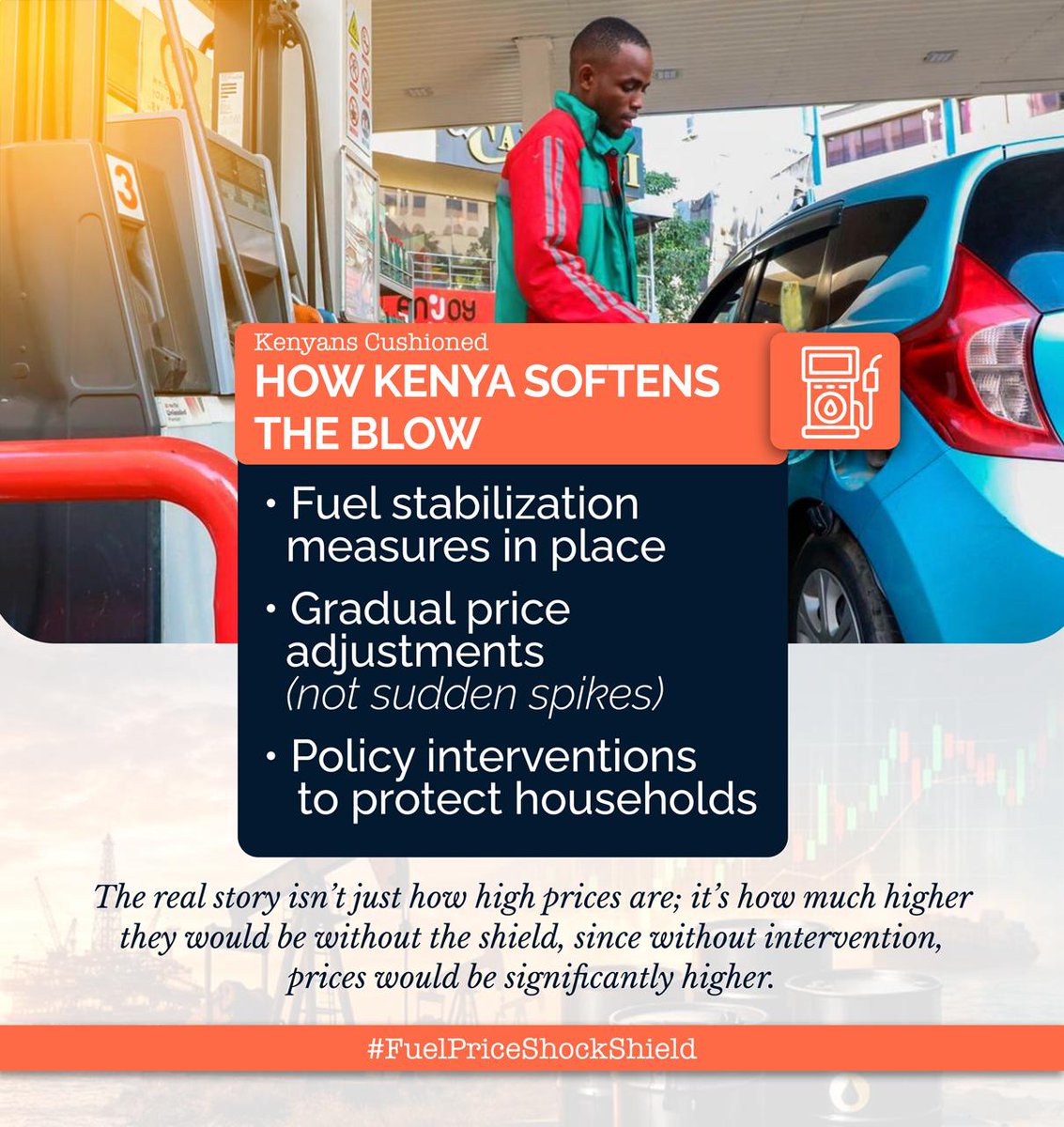


Even in Uganda, which imports and transports its fuel through Kenya, the pump price is currently lower than what Kenyan consumers are paying. Now, let’s look at the global context. In recent times, global crude oil prices have hovered at roughly $80–90 per barrel. Contrast that with March 2022, at the height of the Russia–Ukraine War shock, when prices spiked to about $120–140 per barrel. Let’s also look at the landed cost, which we are told is the key factor in determining the pump price in Kenya. In July 2022, Kenya’s landed cost of imported Super Petrol stood at about $1,042.85 per cubic metre. As of March 2026, that figure is approximately $823.87 per cubic metre. In short, global prices are lower and landed costs are lower. Yet in 2022, pump prices were around Ksh 158 per litre (about KSh 178 without subsidy). Today, we are paying Ksh 206 per litre, even with a so called smoothening of prices (subsidy) in place. Now, if it costs less to buy and bring the fuel than it did in 2022, why are Kenyans paying more at the pump?
