Ron Loveland

34.1K posts

Ron Loveland

Ron Loveland

@welshronald

Ex Energy adviser to Welsh Gov/FInstP/Hon.Prof Swansea Uni College of Eng/Visiting Scientist CSIRO NSW/ Buddhist. Full profile on Linkedin. Now freelance

Cardiff, Wales/ Newcastle NSW Katılım Mart 2010
1K Takip Edilen1.2K Takipçiler
Ron Loveland retweetledi
Shanaka Anslem Perera ⚡
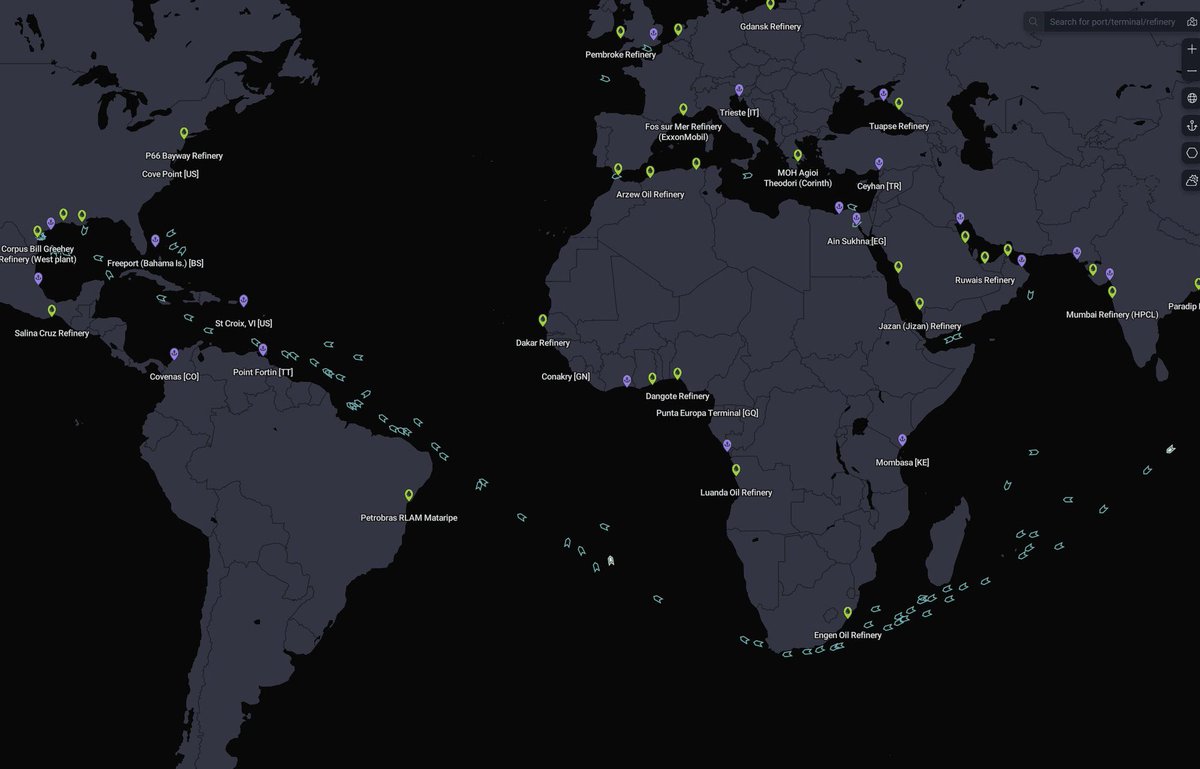
JUST IN: Sixty-eight empty supertankers are sailing toward the US Gulf Coast right now. Each one carries approximately two million barrels of capacity. They are coming from Asia. They are coming from Europe. They are coming because 20 percent of the world’s seaborne oil and LNG is trapped behind a strait full of mines that Iran cannot find and tolls that Iran will not stop collecting. US Gulf Coast crude exports are on track to average 4.9 million barrels per day in April, a record. That is up 23 percent from March and 30 percent from February. For May, 28 supertankers have already been booked at a point in the month when the typical number is five. Bloomberg projects May exports will exceed 5 million barrels per day for the first time in history. Refined product exports hit a record 3.11 million barrels per day in March. LNG exports set new weekly and monthly records as Asian and European buyers pivot from Qatar, whose Ras Laffan complex is offline for years, to American terminals that can load and ship within days. The United States just became the world’s swing energy supplier. Not through strategy. Through subtraction. Iran closed the strait. Qatar’s helium and LNG went offline. Russian supply is sanctioned. And the only major producer with scalable export infrastructure, deepwater port access, and no geopolitical encumbrance is sitting on 13.6 million barrels per day of production, 70 to 75 percent of it from shale, with the Permian Basin alone pumping six million barrels per day. Trump posted on April 9: “Iran is doing a very poor job, dishonorable some would say, of allowing Oil to go through the Strait of Hormuz. That is not the agreement we have!” On April 8 he called the Hormuz toll “a beautiful thing” and proposed a “joint venture.” The reversal took 36 hours. But while Trump reversed his rhetoric, the tankers did not reverse course. They are still heading to Texas. American gasoline is above four dollars a gallon for the first time since 2022. The export surge that enriches US producers simultaneously drains domestic supply and raises prices at the pump. The war that makes American oil companies the most profitable entities on earth is the same war that makes American drivers pay more at every station. The barrels that could have stayed home are loading onto VLCCs bound for Yokohama and Rotterdam because the arbitrage is too large to resist. And here is the structural irony. The same Hormuz crisis that sends 68 tankers to Texas also sends 1.5 million barrels per day through Iran’s ghost fleet to China, settled in yuan via CIPS. The war is simultaneously reinforcing the petrodollar (US crude in dollars, loaded onto dollar-denominated charters) and accelerating the petrodollar bypass (Iranian crude in yuan, tolled in Bitcoin). Both monetary systems are being fed by the same crisis. Both sides are profiting from the same strait. The ceasefire was supposed to reopen Hormuz. It has not. The mines drift. The tolls continue. And every day the strait stays partially closed, another VLCC books a slot at Corpus Christi, another Asian refiner signs a dollar contract, and another Iranian tanker loads crude for Shanghai in yuan. The war made America indispensable. The war also made the bypass irreversible. Nobody in Islamabad tonight has the authority to undo either. open.substack.com/pub/shanakaans…
Shanaka Anslem Perera ⚡ tweet media
English
64
370
1K
196.7K
Ron Loveland retweetledi
Shanaka Anslem Perera ⚡
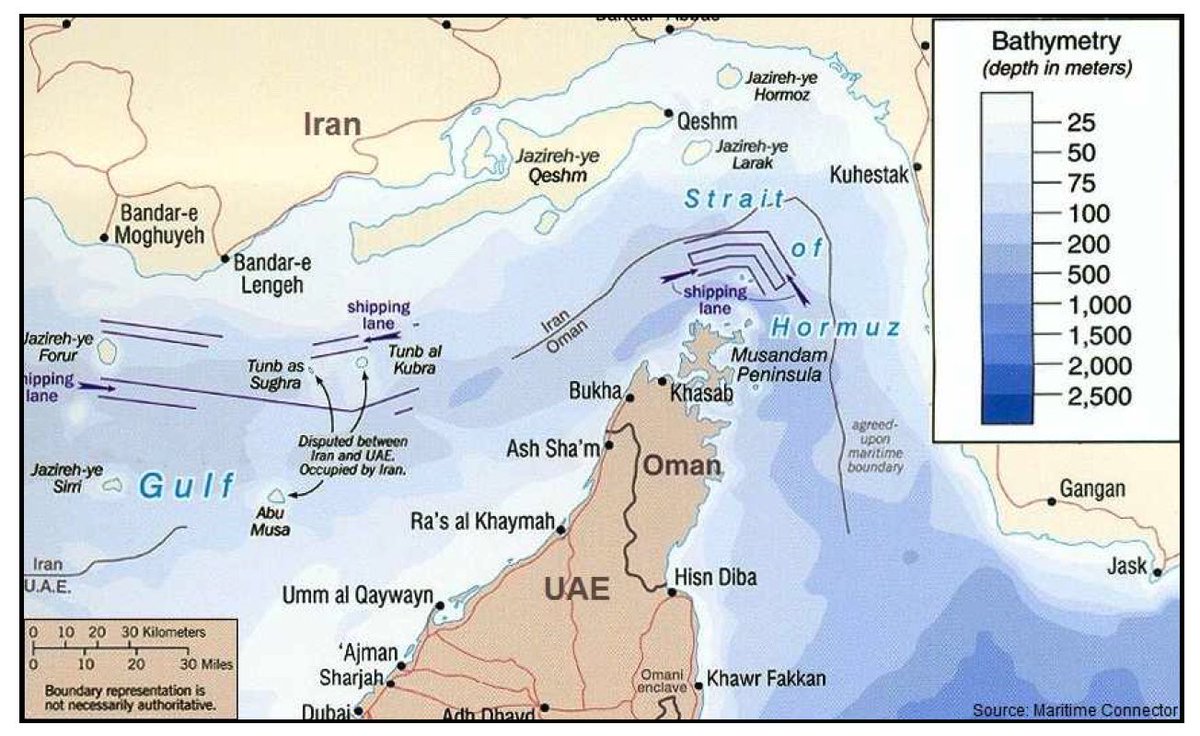
The New York Times reported on April 10, citing US officials, that Iran has been unable to fully reopen the Strait of Hormuz because it cannot locate all of the naval mines it laid in the waterway and lacks the capability to remove them. The IRGC used small boats to plant mines haphazardly during the early weeks of the war. Many locations were never recorded. Some mines have drifted from their original positions. Iran does not have a complete map of what it put in its own water. When Foreign Minister Araghchi said on April 8 that safe passage through Hormuz would be possible “with due consideration of technical limitations,” US officials now confirm he was not being diplomatic. He was being literal. The technical limitation is that Iran mined its own strait and lost track of where the mines are. Iran published a chart on April 9 through Tasnim and ISNA showing a large circle marked “danger zone” covering the standard shipping lanes, with two alternative IRGC-controlled routes around Larak Island. This is the chart of a country directing traffic around its own weapons because it cannot guarantee the weapons will not detonate under the traffic it is trying to collect tolls from. The toll system, the IRGC coordination, the escort protocol, the VHF passcode, all the infrastructure built to monetize the chokepoint exists because Iran cannot simply reopen the chokepoint. The tollbooth is not leverage. The tollbooth is a workaround for a self-inflicted minefield. Richard Meade, editor-in-chief of Lloyd’s List, described the situation during an April 10 webinar: “As of this morning, the Strait of Hormuz remains both open and closed, depending on your position, both geographically and geopolitically. It is, if you like, Schrödinger’s Strait.” Traffic on April 10 stood at 7 to 18 ships per day, with only 2 to 4 tankers, against a pre-war baseline of roughly 140 daily. Over 1,000 vessels are queued outside the strait, including 187 tankers carrying an estimated 172 million barrels of stalled crude. The backlog alone would take weeks to clear even if every mine vanished overnight. And the capacity to clear mines does not exist on either side. The US Navy decommissioned its last dedicated Avenger-class minesweepers before the war. It now relies on Littoral Combat Ship mine countermeasures modules that have never been tested at this scale. The Royal Navy withdrew its last mine countermeasures vessel, HMS Middleton, from the Gulf in early 2026 and transported it home on a heavy-lift ship because it could not make the voyage under its own power. The West dismantled its mine-clearing capability months before the war that required it. Trump demanded “complete, immediate, and safe opening” of the strait as the ceasefire condition. Vance is flying to Islamabad to negotiate terms that require a physical outcome neither side can deliver. Iran cannot find the mines. The US cannot sweep them. The UK sent its last minesweeper home on a cargo ship. And the ceasefire that was supposed to reopen 20 percent of the world’s oil supply is hostage to weapons that are drifting silently through a strait that nobody fully controls. The most honest phrase in the entire ceasefire was “technical limitations.” It just took the New York Times to decode what it meant. The mines are still there. The talks start tomorrow. And 20 percent of the world’s oil is waiting on a map that does not exist. open.substack.com/pub/shanakaans…
Shanaka Anslem Perera ⚡ tweet media
English
152
662
1.6K
241.9K
Ron Loveland retweetledi
Steven Swinford
Steven Swinford@Steven_Swinford·
EXCLUSIVE Sir Keir Starmer has been forced to drop legislation which would cede sovereignty of the Chagos Islands to Mauritius in a further deterioration of relations with Donald Trump The Times has been told that a bill underpinning the controversial deal will not be included in the King's Speech next month after the US president branded it an "act of great stupidity" and withdrew his support The government stands by the deal and will attempt to persuade Trump to change his mind but has acknowledged that it cannot proceed without his backing Ministers are "deeply frustrated" with Trump, who initially supported the deal after extensive discussions between intelligence agencies but changed his mind during a dispute with Nato over plans to seize Greenland The government believes that it puts the future of Diego Garcia, the UK-US base in the islands which has been used during the Iran war, at risk It is concerned that Mauritius will mount a legal challenge granting it access to the waters around Diego Garcia, making it harder for the base to host nuclear submarines and patrol surrounding waters The deal was highly contentious. It would have seen Britain hand over the islands to Mauritius before immediately entering into a 99-year lease for Diego Garcia. The government claimed it would cost £3.5billion, although the Tories disputed this and said it would cost £35billion his over its lifetime. thetimes.com/uk/politics/ar…
English
211
462
1.7K
731.6K
Ron Loveland retweetledi
Kathryn Porter
Kathryn Porter@KathrynPorter26·
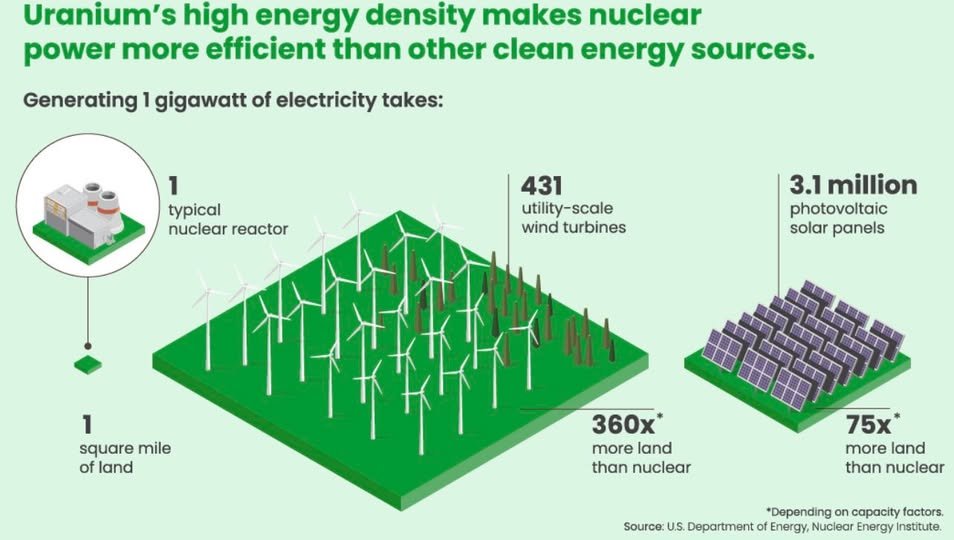
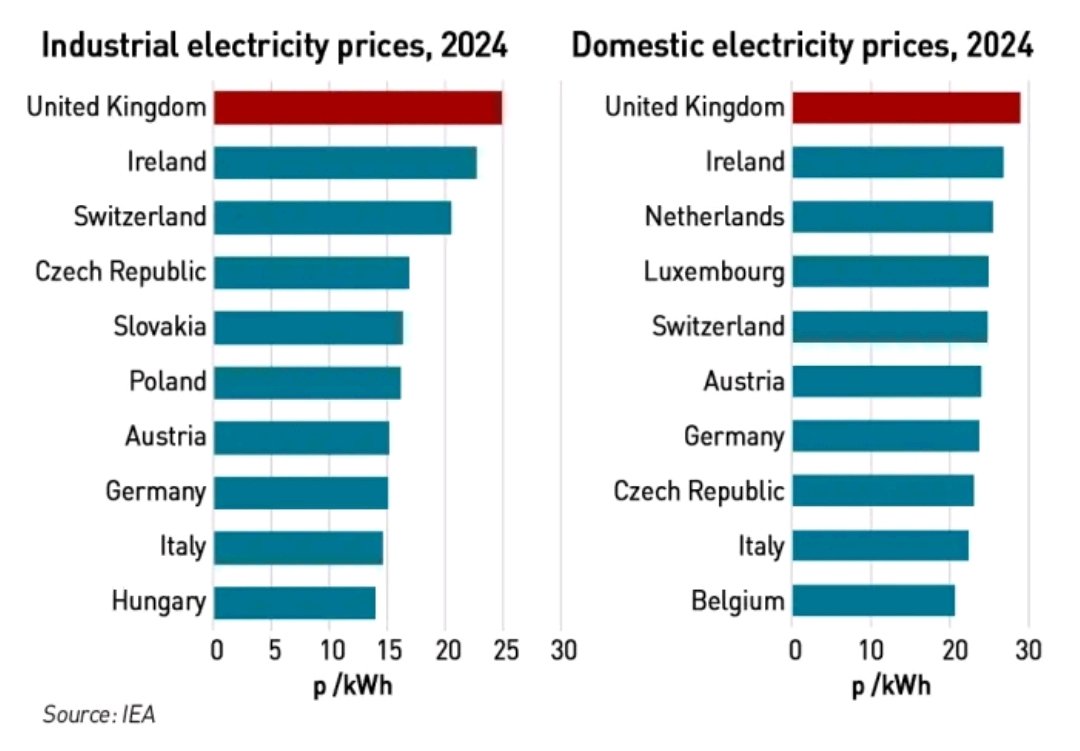
No. It's costing a fortune because generating electricity with gas is still cheaper than using renewables due to the massive subsidies they get, the high cost of backup, the high grid costs due to their low energy density, the high costs of curtailment and the high cost of managing real time intermittency Gas costs are not the reason we have the highest electricity prices in the developed world
Kathryn Porter tweet media
English
2
31
116
982
Ron Loveland retweetledi
Collingwood 🇬🇧
Collingwood 🇬🇧@admcollingwood·
I always weep reading the Wikipedia pages of senior Singaporean politicians. The general career path seems to be: Excel at school and secure a scholarship to study some super difficult subject, like maths or physics, at Cambridge University. Excel at university and get a scholarship to do a post-grad degree in governance or an MBA at Harvard. Join the Singaporean military and excel. Reach at least the rank of Brigadier or General. Enter politics. Excel even compared with others who have similar CVs, rise to become a senior position. Compare that with the career path of the average senior British politican. Get the same results as every other middle class child at school. Do PPE or straight up politics at university. Leverage your contacts to become a SPAD for a cabinet or shadow cabinet member. Get a column writing gig at the Spectator, Economist or New Statesman Become a more senior SPAD. Run in an impossible to win seat to prove you really want to be in parliament. Get parachuted into a safe seat as a rising star. Get a junior ministerial position in the first reshuffle after the election. Get made a cabinet member after the next election. Now, why is Singapore an extremely well run country and we are not?
English
223
882
6.8K
633.3K
Ron Loveland retweetledi
Allison Pearson
Allison Pearson@AllisonPearson·
Many laughed when Starmer said UK would become an AI “superpower”. AI requires huge amounts of cheap power. Mad Ed gave us the world’s most expensive electricity. Just lost us £31 Billion investment. Treason. ⁦@Ed_Milibandmol.im/a/15718965
English
435
3.6K
12K
184.4K
Ron Loveland retweetledi
Steven Swinford
Steven Swinford@Steven_Swinford·
Sir Tony Blair has accused Ed Miliband of taking an “ideological” approach to net zero and called on him to approve new oil and gasfields in the North Sea to protect households and businesses from energy price shocks The Tony Blair Institute, the former prime minister’s think tank, said the government should approve new licences for the drilling of the Jackdaw gasfield and the Rosebank oilfield to help address Britain’s “systematic energy crisis” The report, which was endorsed by Blair, argues that Britain needs to pursue a two-track approach by producing more clean energy while accelerating domestic oil and gas production to reduce Britain’s exposure to global markets Tone Langengen, a policy adviser at the Tony Blair Institute (TBI) and author of the paper, also said the UK risked falling behind global competitors by solely focusing on clean power “If the government doubles down on the wrong parts of the system, the UK will remain exposed to the same vulnerabilities,” he said “But this is also an opportunity to reset — including by accelerating domestic supply to reduce reliance on volatile imports and support UK jobs and tax revenues.” thetimes.com/article/30599d…
English
58
138
531
120K
Ron Loveland retweetledi
Shanaka Anslem Perera ⚡
JUST IN: The Islamabad talks are scheduled to begin Saturday morning. As of right now, it is unclear whether Iran will show up. Iranian state media outlets Fars News and Tasnim both reported on April 10 that “no delegation has left Tehran” for Islamabad. Iran’s ambassador to Pakistan briefly posted on X that the Iranian team would arrive on April 9. That post was deleted. Western sources (WSJ, Haaretz, citing officials) reported the opposite: that Foreign Minister Araghchi and Parliament Speaker Ghalibaf traveled to Islamabad late Thursday. The conflicting signals are not ambiguity. They are leverage. Iran has set an explicit precondition: no negotiations unless the ceasefire covers Lebanon and Israeli strikes there stop. This is the one demand the United States and Israel have categorically rejected. Netanyahu’s office said the ceasefire “does not include Lebanon.” Vance called Lebanon’s inclusion a “legitimate misunderstanding.” IDF Chief of Staff Zamir stood in Bint Jbeil on April 9 and declared Lebanon Israel’s “main battlefield,” adding: “The IDF is in a state of war. We are not in a ceasefire.” So the two-week clock is burning. The ceasefire expires approximately April 22. The first round was supposed to start tomorrow. And Iran’s opening position is that the talks cannot begin until the condition is met that every other party has already refused to meet. Meanwhile, the host country is in damage control. Pakistan’s Defense Minister Asif posted on April 9 that Israel is “evil,” a “curse for humanity,” and a “cancerous state” whose creators should “burn in hell.” The Israeli PMO called the statement “outrageous antisemitic blood libels” from a self-proclaimed neutral arbiter. Pakistan’s own PM Office distanced itself, calling the remarks unacceptable from a government claiming neutrality. Asif deleted the tweet. But screenshots circulate on every continent and Israel has already entered it into the diplomatic record. The Serena Hotel has been emptied. Over 10,000 security personnel deployed. Red Zone sealed. Two-day public holiday declared. A 30-member US advance team is on the ground. A US military transport landed at Nur Khan Air Base on April 10. The infrastructure for the most significant US-Iran meeting since 1979 is complete. And the Iranian delegation may not be coming. Or it may already be there and denying it. The deletion of the ambassador’s arrival post is the kind of information operation that serves both narratives. If the delegation arrives quietly while state media denies it, Tehran preserves the option to walk out at any moment citing Lebanon as the unmet condition. If the delegation genuinely has not departed, the two-week window loses its first 72 hours to posturing before a single word is exchanged at the table. Zamir’s “main battlefield” declaration makes the precondition impossible to meet without Israeli concession. Netanyahu’s simultaneous offer of direct Lebanon talks makes any Iranian-brokered Lebanon clause redundant. Araghchi’s 3.69-million-view post (“the US must choose: ceasefire or continued war via Israel”) makes the demand public and irreversible. Every actor has locked in a position that requires the other side to move first. The ceasefire is 72 hours old. The talks have not started. The mediator’s defense minister called one side a curse upon humanity and deleted it. The other side’s military chief declared the excluded front the primary combat zone. And the clock that was supposed to produce a deal is producing only the architecture of its own failure. Fourteen days is not a long time. Three of them are already gone. open.substack.com/pub/shanakaans…
Shanaka Anslem Perera ⚡ tweet media
Shanaka Anslem Perera ⚡@shanaka86

Everyone is speculating about what JD Vance meant by tools in the American toolkit yesterday. The White House clarified it is not nuclear weapons. X accounts are guessing at cyber operations, covert action, or Israeli escalation. They are all looking in the wrong direction. The most powerful tools in Trump’s toolkit are not weapons. They are dates. April 10th. Islamabad Phase-2 talks begin. JD Vance is expected to lead the US delegation into a room with Iranian negotiators for the first direct contact since the war started. The US arrives having destroyed 85 percent of Iran’s weapons-chemistry capacity, dismantled 130 air defence systems, killed the IRGC intelligence chief, and demonstrated the ability to sever a nation’s entire transport network in 48 hours. Iran arrives having closed the world’s most important chokepoint for 39 days, survived the most intense aerial campaign since 2003, and maintained a functioning state under a headless Mosaic Defence architecture with its new supreme leader Mojtaba reportedly “unconscious” who just approved the ceasefire on behalf of Iran. Both sides bring accomplished facts. Neither side brings concessions. April 19th. The US Treasury waiver on 140 million barrels of Iranian crude at sea expires. This is not a military tool. It is an administrative decision that Trump can make with a signature. If he renews it, Chinese teapot refineries continue processing discounted Iranian crude and the ghost fleet sails unimpeded. If he lets it expire, every Iranian barrel afloat becomes sanctioned cargo, Chinese refineries face secondary sanctions risk, and the $128 billion daily CIPS settlement flow that the war built comes under direct US Treasury pressure. One signature. No missiles required. The waiver expiry is the single most powerful non-kinetic leverage point in the entire conflict because it threatens China’s energy security without firing a shot, and it falls nine days after Islamabad opens. Mid-May. Scott Bessent arrives in Beijing for the summit originally scoped around tariffs and rare earths. But the Iran war rewrote the agenda. China applied last-minute pressure on Iran to accept the ceasefire. China’s ghost fleet operated through the entire conflict. China’s CIPS system surged during the war. China controls 95 percent of heavy rare earth processing. If the waiver expired on April 19 and Chinese refineries are scrambling, Bessent walks into Beijing with leverage that transforms the tariff negotiation into something far larger: a conversation about whether China continues building the parallel financial architecture that the war accelerated or trades it for concessions that preserve the dollar system for another decade. Three dates. Three tables. One president who sits across from a different counterparty at each meeting while holding leverage that connects all three. Islamabad pressures Iran with military facts. The waiver pressures China with sanctions facts. Beijing pressures the global architecture with rare earth facts. The molecule crisis is the connective tissue. Petrochemical molecules destroyed in Iran. Energy molecules flowing through the ghost fleet. Rare earth molecules processed in Chinese refineries. Every molecule passes through a chokepoint that one of the three parties controls, and Trump is the only actor who can apply pressure at all three chokepoints simultaneously. The toolkit is not an arsenal. It is a calendar. And the next five weeks will determine whether the ceasefire becomes the most consequential diplomatic sequence since Bretton Woods or collapses into the third iteration of a structural cycle that has repeated twice in ten months. Full analysis - open.substack.com/pub/shanakaans…

English
25
76
214
141.6K
Ron Loveland retweetledi
Kathryn Porter
Kathryn Porter@KathrynPorter26·
Energy bills mostly go up because of renewables. We're the second worst place in the world for solar according to the World Bank yet we're spending £billions on it @Ed_Miliband just extended subsidies from 15 to 20 years AND increased the price We have the highest electricity prices in the developed world. We're not the only country relying on imported gas so that's obviously not the reason
Kathryn Porter tweet media
English
4
72
202
1.3K
Ron Loveland
Ron Loveland@welshronald·
@robhawkes So we build mare wind farms in the south of England-which has lots of hills
English
0
0
1
35
Robin Hawkes
Robin Hawkes@robhawkes·
Great Britain threw away 5GW of available wind power during Storm Dave and replaced it using gas 🔥 That's one and a half Sizewell C-sized nuclear power stations, or four Dogger Bank A-sized wind farms. Or to put it another way, it's a shit load of power. Why throw it away? Because our straw isn't big enough… Constraints on the electricity transmission network between Scotland and England (as well as further north in Scotland) mean that we can't move enough energy across the border without overloading the system. Imagine a cup constantly filling with water, if your straw is too thin then you won't be able to drink enough water before the cup overflows. In our case the straw is the electricity grid at the border, and the water is the energy generated by the wind farms in Scotland. Any overflowing water would be bad news for the grid so we do everything we can to avoid it. The result is that we pay generators in Scotland to reduce their output so the cup doesn't overflow. Wind farms are usually picked for this because they are the cheapest to switch off and can provide the volumes of energy needed to resolve the constraints. However, the electricity is still needed in the south (it's still thirsty) so what happens next is that we replace that lost wind energy at the last minute with electricity generated via (usually) gas. This is not only a waste of low-carbon energy, it's also expensive. You can see this play out on my map and in the attached visual: 🚦 Traffic-coloured lines show boundary constraints 🟡 Yellow rings show wind farms that were turned off 🔴 Red rings show gas plants that were turned on I'll post a link to the map in the thread.
GIF
English
113
133
419
97.6K
Ron Loveland retweetledi
Kathryn Porter
Kathryn Porter@KathrynPorter26·
It's depressing to be held up as an example of what not to do @Ed_Miliband talks about the UK leading the world on net zero, while the world talks about the UK as a cautionary tale... "UK serves as example of self harm resulting from aggressive targets... The Industrial Revolution that gave us the modern world started in Great Britain with coal, steel and steam power. And now the UK appears to be leading the way to deindustrialisation, thanks in no small part to crippling energy costs." @ClaireCoutinho @AndrewBowie_MP @NJ_Timothy @griffitha @cmackinlay @mattwridley @DavidGHFrost @KemiBadenoch @Keir_Starmer @energygovuk @neso_energy @Iromg @AllisonPearson @MerrynSW @EdConwaySky @afneil @mattotele energynow.ca/2026/04/commen…
English
29
405
1.2K
15.5K
Ron Loveland retweetledi
Andrew Neil
Andrew Neil@afneil·
The nut zealotry of Ed Miliband A new occasional series — No 3 Massive Silicon Valley company OpenAI has today paused its major Stargate UK data centre infrastructure project, citing high energy costs and the regulatory environment in the UK. UK industrial energy costs are the highest in the world (thanks, Ed). OpenAI and other AI giants are worried that Starmer’s desire (backed by Ed) to cosy up closer to the EU will mean AI in the UK coming under the Brussels’ regulatory regime, which is killing off AI projects in the EU.
Andrew Neil@afneil

The nut zealotry of Ed Miliband A new occasional series — No 2 At a time when global supply chains are vulnerable and we should be producing much more of our own food, E Miliband has today approved Springwell Solar Farm. It will cover seven square miles of prime Lincolnshire farmland. And the solar panels are likely to come from China (so much for green manufacturing jobs). Mili-Madness on stilts.

English
97
1.1K
3.7K
87.7K
Ron Loveland retweetledi
Kathryn Porter
Kathryn Porter@KathrynPorter26·
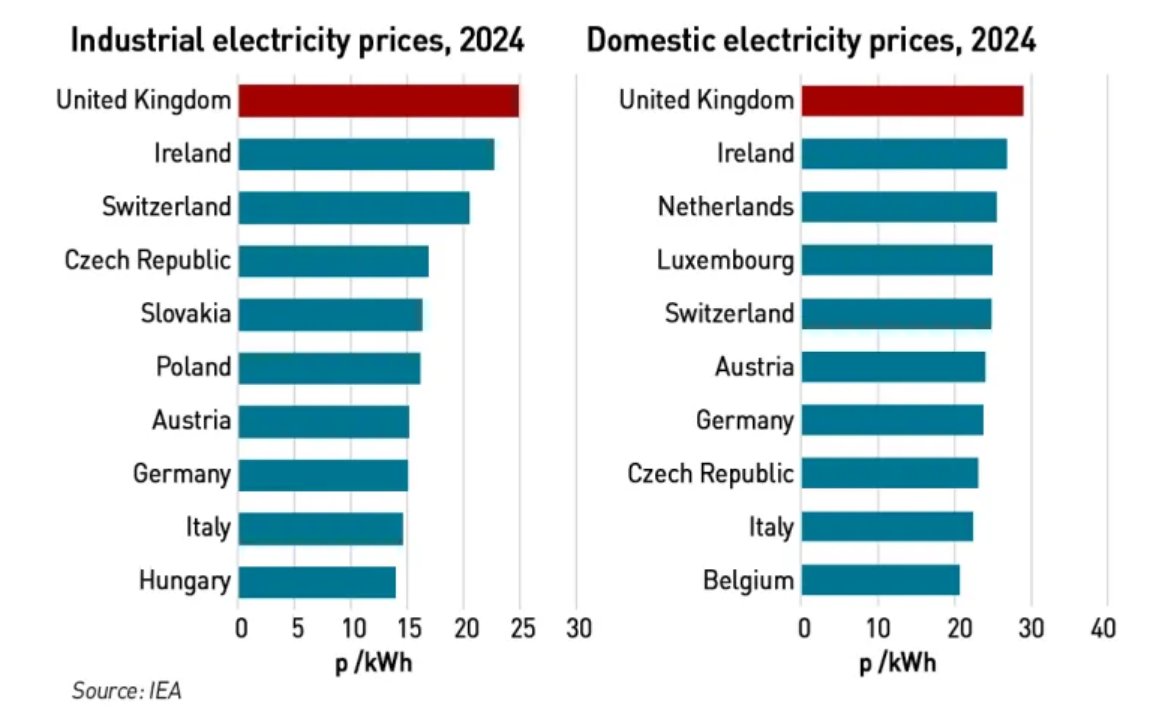
OMG still peddling this nonsense Renewables are MORE EXPENSIVE than generating electricity with gas. You're literally celebrating the thing that causes us to have the HIGHEST electricity prices in the developed world Did you ever listen to or read what the supplier CEOs told the DESNZ Select Committee last year? You really should... Rachel Fletcher, Director of Regulation and Economics at Octopus Energy: “…if we continue on the path that we are on right now, in all likelihood electricity prices for a typical customer are going to be 20% higher in four or five years’ time than they are now. That is even if wholesale prices halve… The point is that the country as a whole at the moment is paying over £20 billion a year on its electricity bills for policy costs. The projections are that that is going to increase. That is one of the hundred pounds that will possibly be added to electricity bills on the current trajectory over the next four years. It is time that we got this burden under control,” Simone Rossi, CEO at EDF UK: “We can compare the cost to serve in France and the cost to serve in the UK. Per point of delivery, the cost to serve in the UK is about £100 per annum. In France, it is €45, which is half, more or less. It is actually less than half. This is not to do with the wholesale price or the gas marginal cost et cetera. It is driven by the fact that we have very complex regulation that has become stratified over the years…. we have in front of us a system where, even if the wholesale price were to halve, as she indicated, the bills will rise. There are two main drivers that we have in front of us in the growth of the bills. One is the demand reduction. We are building infrastructure as if there was more demand, but, in reality, there is less and less demand, so you have a bigger burden on smaller shoulders…” Chris Norbury, CEO at E.On UK: “if I look at the non-commodity costs—policy costs and network costs—certainly some of the modelling that we have suggests that you could get to a position by 2030 where, if the wholesale price was zero, bills would still be the same as they are today because of the increase in those non-commodity costs,” Chris O’Shea, CEO at Centrica: “When you look at what consumers pay, consumers do not actually pay the wholesale gas price for anything backed by a CfD. When people talk about getting the wholesale gas price down, that is quite a red herring. Consumers pay what the CfD price is. If the wholesale electricity price goes to a pound, the CfD will simply make that back up to the £75 per megawatt-hour or so that wind farms are getting at the moment,” committees.parliament.uk/oralevidence/1…
Kathryn Porter tweet media
English
29
427
1.3K
15K
Ron Loveland retweetledi
Shanaka Anslem Perera ⚡
Everyone is debating whether the ceasefire is working. That is the wrong question. The ceasefire is not the deal. It is the opening bid. And if you read Trump’s two posts from today as a negotiating position rather than a victory statement, the next four moves become visible. Move one: uranium for energy. Trump claimed no enrichment and offered to dig up and remove the nuclear dust under Space Force surveillance. Read this as the offer it is. The United States removes Iran’s destroyed nuclear material in exchange for Iran’s permanent return to the Non-Proliferation Treaty with full IAEA access. In return, the US supplies enriched uranium for Bushehr at no cost. Iran saves face by receiving civilian nuclear fuel from the country that bombed its programme. Trump claims the greatest non-proliferation victory since the Soviet collapse. Neither side admits defeat. Both sides get something they could not achieve alone. Move two: sanctions for proxies. Leavitt threw Iran’s 10-point plan in the garbage today. But the 15-point framework Trump referenced includes sanctions and tariff relief. The condition is implicit: cut off Hezbollah. Stop funding the Houthis. Withdraw material support from Hamas remnants. Israel continues to degrade the proxy network through kinetic means. The US offers the economic lifeline that makes proxy expenditure unnecessary. Iran’s IRGC junta, which is running the country through Mosaic Defence without a functioning supreme leader, faces a choice between paying for a proxy war it is losing and accepting an economy that functions. Move three: the security guarantee. Vance called the truce fragile and said elements of the regime are lying about the ceasefire terms. But Vance is flying to Islamabad on Friday to negotiate Phase 2. What does Phase 2 look like if it succeeds? A mutual non-aggression commitment. Iran gets a permanent ceasefire and a guarantee that the United States will not pursue further military action. The US gets a new partner in a region where China is expanding influence through infrastructure, rare earths, and dual-use shipments. The IRGC junta trades theocratic isolation for transactional security. This is the scenario that most analysts dismiss because it sounds impossible. But Trump’s entire career is built on deals that sound impossible until they close. Move four: the joint checkpoint. Iran is already running a toll booth at Hormuz. The IRGC charges yuan and crypto. The Gulf states refuse to pay. The US Navy escorts ships through waters that an Iranian military force is charging fees to enter. The absurdity is the opportunity. A joint US-Iran Hormuz management authority with negotiated exemptions for allied vessels, shared revenue funding Iranian reconstruction, and American oversight ensuring freedom of navigation is the kind of deal that turns an active conflict into a revenue-sharing partnership. It sounds insane. It is also the only framework that addresses both parties’ core interests: Iran needs reconstruction money and sovereignty recognition. The US needs open navigation and sanctions compliance. All four moves share one architecture. The ceasefire buys time. The 50 percent tariff on arms suppliers pressures China. The waiver expiry on April 19 pressures Iran. The NATO troop relocation pressures Europe. And Islamabad on Friday is where these four pressure vectors converge on a single table for the first time. The deal of a lifetime or the collapse of a generation. Friday will tell. open.substack.com/pub/shanakaans…
English
43
201
613
98.1K
Ron Loveland retweetledi
Simon Wakter
Simon Wakter@simonwakter·
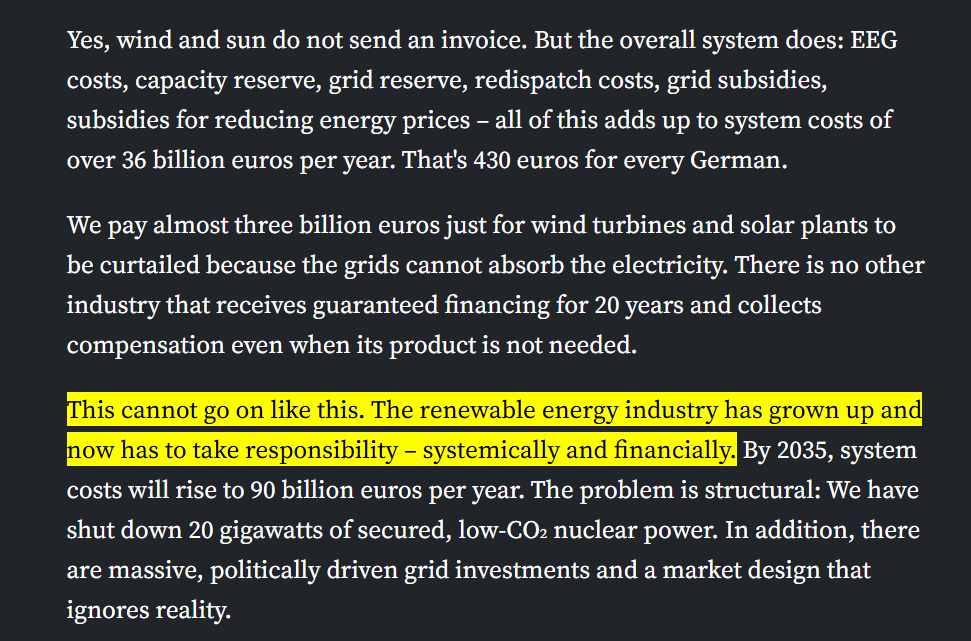
Wow, incredible article from German Energy minister Katherina Reiche 👏 "One fact has been concealed for too long: an energy transition that ignores system costs will ruin the country it claims to save."
Simon Wakter tweet mediaSimon Wakter tweet mediaSimon Wakter tweet media
Bundesministerium für Wirtschaft und Energie@BMWE_

Die Branche der Erneuerbaren ist erwachsen geworden und muss jetzt Verantwortung übernehmen – systemisch und finanziell. Das schreibt Ministerin Reiche im Gastbeitrag in der @FAZ_NET. Wind und Sonne schicken keine Rechnung. Das Gesamtsystem aber wohl. faz.net/aktuell/wirtsc…

English
10
189
589
38.4K
Ron Loveland retweetledi
Shanaka Anslem Perera ⚡
Here is everything that happened on day one of the ceasefire. Read it as one sequence and tell me what peace looks like. Karoline Leavitt said Iran’s 10-point plan was fundamentally unserious, unacceptable, and completely discarded. Literally thrown in the garbage by President Trump. Iran’s Parliament Speaker Ghalibaf said three clauses of that same plan have already been violated by the United States and Israel: the Lebanon ceasefire, a drone incursion over Fars Province, and the denial of Iran’s enrichment right. He called the framework openly violated before negotiations began. Foreign Minister Araghchi said the US must choose between ceasefire or continued war via Israel. It cannot have both. The ball is in the US court and the world is watching. The head of Iran’s National Security Committee said all plans to open the Strait of Hormuz must immediately cease until Lebanon is included. There is either a ceasefire on all fronts or a ceasefire nowhere at all. The Wall Street Journal reported that Israel was not formally part of the negotiations. The extent of consultation was Trump calling Netanyahu shortly before the announcement. Israeli officials were unhappy with the terms, including the planned inclusion of Lebanon. Netanyahu said the ceasefire does not include Lebanon and announced that today Israel dealt Hezbollah the greatest blow it has suffered since the pagers. One hundred targets in ten minutes. A tanker that tried to pass through Hormuz without IRGC approval was turned back. Oil climbed back above $97 on the news. The WSJ reported Iran is limiting passage to 12 ships per day with tolls under the ceasefire. Only four ships transited today. Trump claimed a complete opening of the strait last night. The strait is not completely open. The Saudi East-West bypass pipeline took a drone strike. Sirri Island and Lavan refinery exploded. The UAE intercepted 17 ballistic missiles and 35 drones since the ceasefire began and called the attacks blatant. Kuwait absorbed its heaviest strikes of the war. Cluster munitions hit Beersheba. Hezbollah stopped firing and Israel responded with its largest operation since the war began. Trump declared productive regime change, no uranium enrichment, nuclear dust removal under Space Force surveillance, and many of 15 points agreed. He threatened 50 percent tariffs on any country supplying military weapons to Iran. The Pentagon approved an F-35I software upgrade for Israel. The WSJ reported Trump is considering relocating US troops from NATO countries that were unhelpful during the war. Japan’s prime minister called the strait an international public good. Oman’s transport minister said international agreements prohibit tolls. The IRGC’s Larak toll booth continued collecting yuan regardless. The Financial Times confirmed the $1 per barrel crypto toll that I published on March 24 to 1.6 million views, when it was called nonsense. And a hacker group called FlamingChina stole 10 petabytes of classified Chinese defence data from a supercomputer in Tianjin and is selling it for cryptocurrency on the dark web. That was one day. Under one ceasefire. With three interpretations. Five fronts. Seven contradictory official statements. And zero agreement on what was agreed. Islamabad is in 36 hours. open.substack.com/pub/shanakaans…
Shanaka Anslem Perera ⚡@shanaka86

JUST IN: Iran’s new supreme leader apparently approved the ceasefire from a hospital bed in Qom where US-Israeli intelligence says he is unconscious and unable to participate in any decision-making. Few hours later, IRGC cluster warheads were still detonating over Israeli and gulf cities. Not many in the Western press have connected these two facts, and the connection rewrites everything the market just priced. The system that accepted the ceasefire and the system that violated it are not the same system. That is the point of Mosaic Defence. Twenty years ago, the IRGC restructured itself into 31 independent provincial commands, each with its own missile arsenal, drone fleet, Basij militia integration, and pre-delegated launch authority. The doctrine was designed for exactly this scenario: supreme leader incapacitated, central communications degraded, conventional military infrastructure destroyed. Every provincial commander can execute offensive operations without a phone call to Tehran. The architecture was tested in war games, refined after watching Saddam’s centralised command collapse in 48 hours in 2003, and activated the moment Ali Khamenei was killed on February 28th. The senior IRGC military council that approved the ceasefire through the Supreme National Security Council, citing Mojtaba’s name for domestic legitimacy, does not control the launch decisions of every provincial unit. It cannot. That is by design. The field commanders who fired at Israel and the UAE after the announcement were not violating orders. They were following standing pre-delegated authority that exists precisely so that operations continue when the centre cannot communicate, or chooses not to. The ceasefire was a political act by the council in Tehran. The missile launches were a military act by autonomous field units in the provinces. Both happened simultaneously because the architecture permits it. This is what the market failed to price when WTI crashed nine percent. The nine percent drop assumed a unified Iranian state that accepted a ceasefire and would enforce it across all domains. What exists instead is a fragmented command structure where political leadership in Tehran can sign agreements that provincial military commanders are neither required nor expected to follow in real time. The Mosaic Defence that kept the regime alive through 39 days of the most intense bombing campaign since 2003 is the same architecture that makes ceasefire enforcement structurally unreliable. Israel understood this immediately. The IDF did not pause. It continued eliminating Hezbollah fighters in southern Lebanon, struck a weapons crossing south of the Litani River, and cited Iranian violations as justification for ongoing raids on Iranian targets. Netanyahu’s calculus is transparent: if the adversary’s own military architecture cannot enforce a ceasefire, then the ceasefire does not constrain the defender. The molecule thesis absorbs this development without modification. If the ceasefire holds, the crackers are still rubble and reconstruction takes years. If the ceasefire fragments because autonomous IRGC units continue launching, the war resumes and the deficit deepens. Both branches produce the same terminal condition for petrochemical supply. The human-chain game theory from yesterday and the Mosaic Defence autonomy from tonight converge on the same conclusion: the crisis duration is structurally guaranteed by the adversary’s own defensive architecture, regardless of what any council signs in Tehran or any diplomat negotiates in Islamabad. The supreme leader is unconscious. The missiles are not. open.substack.com/pub/shanakaans…

English
9
89
292
72.8K
Ron Loveland retweetledi
Andrew Neil
Andrew Neil@afneil·
The nut zealotry of Ed Miliband A new occasional series — No 2 At a time when global supply chains are vulnerable and we should be producing much more of our own food, E Miliband has today approved Springwell Solar Farm. It will cover seven square miles of prime Lincolnshire farmland. And the solar panels are likely to come from China (so much for green manufacturing jobs). Mili-Madness on stilts.
Andrew Neil@afneil

The nut zero zealotry of Ed Miliband. A new occasional series. [feel free to add]. Fertiliser prices and shortages are soaring because the petrochemical industries of the Gulf states are major global suppliers but the Strait of Hormuz, through which they export, is closed. Not good for the spring planting season. Undaunted the UK will introduce a levy on imported carbon-intensive fertiliser as part of its costly obsession with cutting emissions, even when the impact is slight. At a time when we should be increasing food security government policy is to penalise farmers further.

English
291
1.8K
6.7K
259.3K
Ron Loveland retweetledi
Kathryn Porter
Kathryn Porter@KathrynPorter26·
This is something everyone interested in energy should read - supplier CEOs giving evidence to the DESNZ Select Committee last autumn Selected highlights... Rachel Fletcher, Director of Regulation and Economics at Octopus Energy: “…if we continue on the path that we are on right now, in all likelihood electricity prices for a typical customer are going to be 20% higher in four or five years’ time than they are now. That is even if wholesale prices halve… The point is that the country as a whole at the moment is paying over £20 billion a year on its electricity bills for policy costs. The projections are that that is going to increase. That is one of the hundred pounds that will possibly be added to electricity bills on the current trajectory over the next four years. It is time that we got this burden under control,” Simone Rossi, CEO at EDF UK: “We can compare the cost to serve in France and the cost to serve in the UK. Per point of delivery, the cost to serve in the UK is about £100 per annum. In France, it is €45, which is half, more or less. It is actually less than half. This is not to do with the wholesale price or the gas marginal cost et cetera. It is driven by the fact that we have very complex regulation that has become stratified over the years…. ...we have in front of us a system where, even if the wholesale price were to halve, as she indicated, the bills will rise. There are two main drivers that we have in front of us in the growth of the bills. One is the demand reduction. We are building infrastructure as if there was more demand, but, in reality, there is less and less demand, so you have a bigger burden on smaller shoulders…” Chris Norbury, CEO at E.On UK: “if I look at the non-commodity costs—policy costs and network costs—certainly some of the modelling that we have suggests that you could get to a position by 2030 where, if the wholesale price was zero, bills would still be the same as they are today because of the increase in those non-commodity costs,” Chris O’Shea, CEO at Centrica: “When you look at what consumers pay, consumers do not actually pay the wholesale gas price for anything backed by a CfD. When people talk about getting the wholesale gas price down, that is quite a red herring. "Consumers pay what the CfD price is. If the wholesale electricity price goes to a pound, the CfD will simply make that back up to the £75 per megawatt-hour or so that wind farms are getting at the moment,” committees.parliament.uk/oralevidence/1…
English
31
356
774
18.2K
Ron Loveland retweetledi
Winston
Winston@ChurchillWw·
Three companies make 75% of the world’s large gas turbines: GE Vernova, Siemens Energy, and Mitsubishi Power. All three have backlogs stretching to 2029 or 2030, and wait times have gone from two or three years to five or seven. Bloomberg estimates more than $400 billion in planned gas plants could be delayed or cancelled because there aren’t enough turbines being made. bloomberg.com/features/2025-…
English
80
774
2.8K
381.1K