
Sabitlenmiş Tweet
wheat
875 posts


wheat
@wheat0x
mcdonalds delta one desk @pastelalpha @hideoutnft
nyc Katılım Ağustos 2020
1.2K Takip Edilen2.4K Takipçiler
wheat retweetledi


theres atleast 17 minecraft kids who stole like 100m in crypto i stg

English
wheat retweetledi

@nick_vladkis @troyhouse Then you generated capital losses. Did you use those yet??
English

Excited for this one!
OpenSea@opensea
Level up your collection. @ArenaClub is bringing their first mint to OpenSea. Allow list based on how you finished last OpenSea Rewards Wave: Phase 1 (Guaranteed): Sapphire chests & above Phase 2 (FCFS): Chromium chests & above Phase 3 (FCFS): Public details in next tweet 👇
English


@zacglover What’s the limit on the 8% cashback? Seems too good to be true
English

got dinner in dubai
bill came out to $700 😭
now i gotta dispute the charge from my own company and pretend i didn’t make it 😅

English

We’re building infrastructure for trading graded cards and other collectibles.
Before scaling, we want tight feedback from real users.
We're opening a small private group this week, with fun perks listed in the thread.
Collectors, traders — DM if interested.

English
wheat retweetledi


I've been getting this question a lot in DMs. Here are the schools of thought that each firm belongs to
Some outliers: Headlands is a weird one, MIT in nature of trading but pretty Chicago in culture. Jump is also MIT (even though they're based in Chicago)

ak0@annanay
SV knows very little about trading. Jane Street will be fine. Joining now is akin to working at a bank in the early 00’s. Probably too late to make superyacht money, but still a good opportunity that most college grads would kill for. There was a big boost when @sama announced that they were recruiting quants; quite a few of the ‘MIT’ school of quant firms have been losing staff to the AI shops recently, particularly HRT. Anecdotally, Jane Street has the most brand recognition, at least amongst YC partners. Different types of trading firm One of the least discussed (and therefore most misunderstood) points is that ‘quant’ firms have extremely different modus operandi. The Chicago School Chicago is home to CME: the biggest futures exchange in the world. When CME released their first API, some of the smart floor traders saw the writing on the wall and hired programmers to automate their deep trading intuition. They were called the ‘upstairs traders’, because they worked from offices on the floor above the pit. These firms view trading from a game-theoretic lens. Juniors are trained on poker and chess games, and the culture is that software is a tool to automate and speed up what is fundamentally a financial game. Traders sit in front of big screens with dashboards (and sometimes Bloomberg terminals) and aren’t afraid to intervene if they see something the models don’t. Quants work for traders. Traders can, and do, put on discretionary trades. Interviews are full of mind-bending brainteasers, but probably not any ML questions. SIG (and its offspring, like Jane Street) and DRW are the big examples here. Jump started out in Chicago, but now operates more like an ‘MIT School’ shop. The MIT School On the other side are the nerds who see the markets as a big stats and engineering problem. They solely hire people with backgrounds in hard science, and shun finance grads. Strategies are tested and deployed in a rigorous manner akin more to the software lifecycle at big tech. Quants find alpha, and ‘traders’ simply monitor and deploy their strategies without a risk mandate. Citadel Securities, HRT and Tower are firmly in this school. Which is Best? Here’s the best part: all of these firms are VERY profitable. Many ways to skin a cat. The MIT School works best when on efficient, liquid markets, where the models have a lot of data to train on and sudden changes in regime are rare. Think US equities, CME futures, and so on. The Chicago school works best on the rest: when markets are thin, prone to sudden shocks, or have a heavy broker-drive OTC element. Think EU equity options, rare commodities like palladium, frontier equities. Misc There are an unlikely number of Dutch HFTs (IMC, Optiver, and its offspring like Flow and Akuna). Most are in the Chicago School style, and have their US offices in Chicago. The most convincing argument I’ve heard for this is that one of the only banks that would clear HFT firms when it was a new industry was ABN Amro: a Dutch bank. If someone has a better idea, feel free to correct me. If you want to get inside the mind of someone trained at Jane Street, @AgustinLebron3 book ‘The Laws of Trading’ is a great read. And fwiw, I do think the allure of quant firms is dying - working at a bank in the 00's was certainly lucrative, but I don't hear anyone bragging about it now.
English
@barrybutterhand @Auri_0x @DewhalesCapital in retrospect, usual team forcing longer vest or refund for US angels after kraken (or some other exchange) entered cap table saved me. was annoyed in the moment but I guess it worked out for the better
English

@Auri_0x @DewhalesCapital Usual scammed hard for real.
Never trust EU politicians running a crypto project
English

So you wanna be an angel investor?
My story with @DewhalesCapital
Total invested: $162k
Returned: ±$8250
The end is poetic too.
I got kicked for calling out Elixir and Usual as scams cause and i quote "you are not acting professionally, its bad for business"
English

@coan_henry @NatPurser but theres no annual fee? what other card has an airport lounge with no AF?
English

@NatPurser This is my issue with Bilt. It bills itself as a premium brand but fails to deliver. No airport lounge, no concierge, but you can buy ugly vases and vinyls with your points!
English

thank you to Rent Payment Company Bilt™️ for taking the sting out of paying rent with exclusive access to ASAP Rocky’s vinyl album DON’T BE DUMB

English

Are macbook airs actually good value for the specs? Kinda seems like it except for some of the extorniate premiums on extra RAM / Storage. Contemplating getting for travel
English
@CardPurchaser @beckettcollect seems legitimate from what I can see. See 0 mention of this on X or even from the company itself

English
English

I am in groupchats with adult people handling 6-7 figures on-chain who are discussing various methods to get cheaper or free Spotify premium
Ouch.
English
@mattyklein_ feel like this should be the norm for sure. or else you end up with them accepting bribes (and when you hear the amounts they're getting, you say "thats all it takes?")
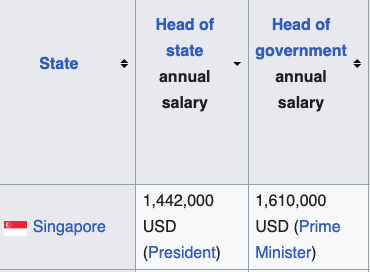
English

no wonder the mayor of America’s most important city is a marxist with no job experience
anyone qualified for the job can earn 10x this amount in Manhattan
we need to get serious about compensating public officials

English

helping fren to look for a wife:
what fren is:
> networth - self made 8 figs (9 figs if you include trust fund)
> product export biz conglomerate heir
> early crypto investor (he bought eth at $90 ;) )
> at a ripe age of 25 this year (prefer <25F)
> fren is genuinely a good person
fr if interested, dm me your tg handle
English


@spyflips @eightsleep yes. 4k is crazy for a bed and I thought it was kinda dumb before but i think its worth after getting one
English
