

Lewis Wheatley
226 posts


@Peri_83 @pendle_fi Sold too early this is going to $10 minimum
English

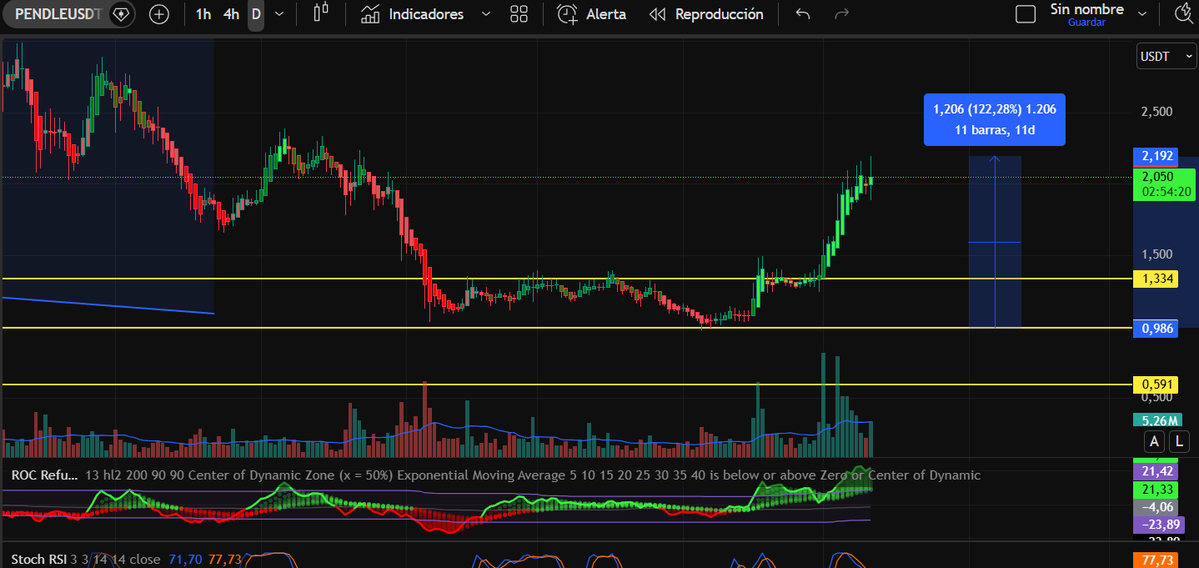
Así como dije que @pendle_fi llevaba buena ostia en su momento, también reconozco que me esta saliendo bien mi compras del token $PENDLE he soltado ya casi el 75% de mis compras en Spot... más de 120%
x.com/Peri_83/status…
Peri@Peri_83
Un proyecto que me gustaba y que desde que cambio los tokenomics se esta yendo a la mierda literal es @pendle_fi , te sigue gustando @deLarg0 ? , justo hace unos meses lo comente por privado con @lordjorx si no afectaría los nuevos cambios y Jordy ya me comento que lo veía bearish
Español

💥BOOM!
🚨IT'S OFFICIAL: The Committee will markup the CLARITY ACT on Thursday, May 14 at 10:30 AM EST.
🇺🇸 The U.S is about to become the crypto capital of the world!

English
English

Since the RWA wave on Pendle, $PENDLE has surged 80%(nearly 2x’d) in the past 30D
A Few Hightlights and Updated Pools you might have missed
1/ last week, @boros_fi Introduced its Rate Sensitivity (x.com/boros_fi/statu…) to know more
2/ Pendle’s DApp Assistant (peepo) is now AI boosted (x.com/pendle_fi/stat…)
3/ Pendle Thesis by @stacy_muur (x.com/stacy_muur/sta…)
↳ Hot on Pendle now ($STRC related pools)
➤ PT-sUSDat 13.02% APY
➤ PT-apyUSD 15.91% APY (loopable on Morpho up to 65.16%)
➤ PT-apxUSD 13.75% APY (loopable on Morpho up to 39.26%)
++ @ethena s5 airdrop is now claimable via (tokenmanager.coinbase.com/airdrop/ethena…)
Pendle.

SpiceXR 🍡@0xspicexr
RWA has grown fast, but focusing only on the numbers misses the real shift Yes, moving from $5B to $20B+ in a little over a year is meaningful But growth alone isn’t the story, crypto has seen bigger percentage moves on weaker foundations What’s different here is where the yield is coming from For most of DeFi’s cycle, returns were largely internal due to incentives, leverage loops and volatility. That model worked in expansion phases, but it was always fragile. The moment conditions tightened, yields compressed because there was no external source feeding them RWA changes that dynamic It introduces cash flows that don’t depend on crypto native activity, like Treasuries, credit, structured products and makes them accessible onchain And that’s why the type of players entering matters When @BlackRock,@OndoFinance, and @centrifuge show up, it wasnt for experimentation or narrative exposure It’s because tokenization improves distribution for faster settlement, broader access, and more flexible usage of familiar instruments But tokenization on its own is not that transformative Because, putting a treasury onchain and calling it a token doesn’t suddenly unlock new value. It just makes the asset easier to move. The real shift happens when DeFi starts to do something with that asset This is where I think @pendle_fi is more important than most people give it credit for Pendle doesn’t create yield, it reframes it. By splitting principal and future yield into separate components, it turns a passive position into something you can actively structure. You can fix returns, take directional views on rates, or combine both depending on what you’re trying to achieve Although it may sound as a small abstraction, but it fundamentally changes how capital behaves You move from holding yield to positioning around yield And once that layer exists, the rest of DeFi starts to make more sense Protocols like @aave and @Morpho can use these positions as collateral, which means predictable cash flows can now support borrowing, leverage, and more complex strategies. At the same time, credit protocols continue expanding the supply side, feeding more real world assets into the system What you get is a system that is slowly becoming more capital efficient, not because of higher risk, but because of better structuring That’s the part I think is underappreciated In other words, the edge isn’t in accessing the yield, it’s in how you use it. Zooming out, this is where the TradFi → DeFi bridge starts to feel more interesting Not because everything is moving onchain, but because the most useful parts like liquid, yield generating asset are being integrated into a system that can recombine them more flexibly IMO, DeFi doesn’t need to replace traditional finance, it just needs to make its components more efficient and composable And if that trend holds, RWA starts to look more like core infrastructure layered on top of DeFi
English


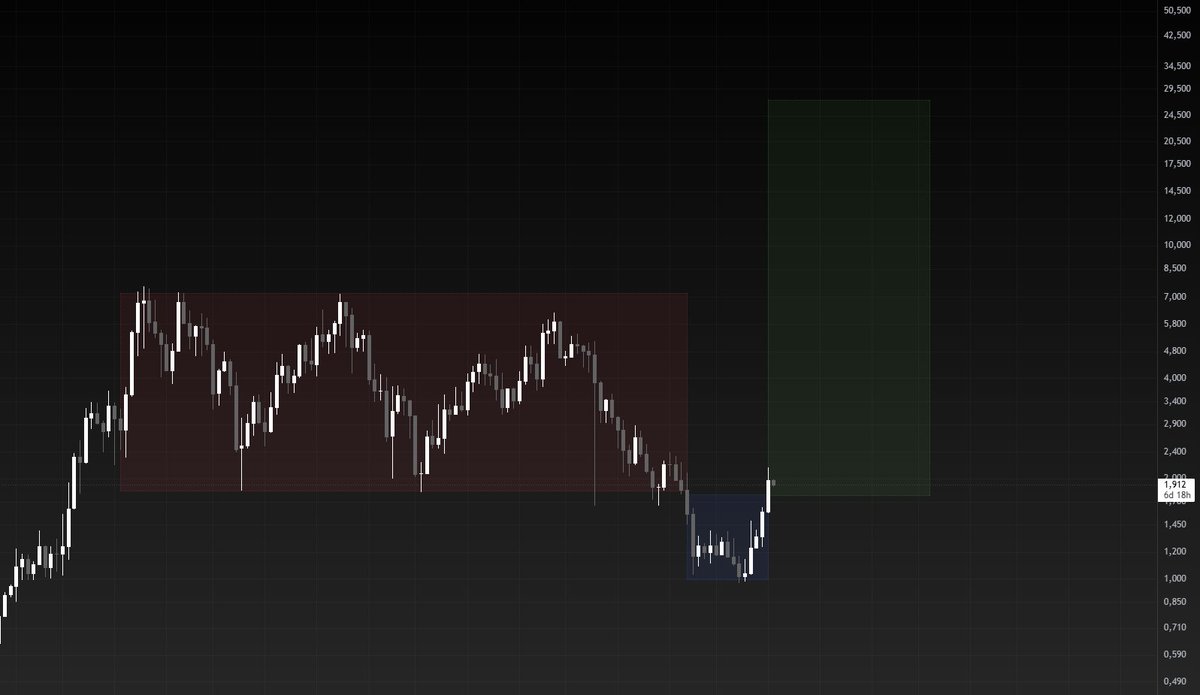
$PENDLE measured move target of 2 year consolidation after the sweep is a whopping 27x : 27-30$.

English

Boros crosses $10 Billion in Cumulative volume.
Yesterday @boros_fi did $220 Million in volume.
Almost $100 Million $PENDLE locked .
2026 gonna be EPIC for @pendle_fi .

English
Lewis Wheatley retweetledi

LIVE: The DOJ Lied On Saturday When They Falsely Told Congress & Americans That ALL Epstein Files Had Been Released! The Files We Have Seen Are Over-The-Top Satanic! Alex Jones Is About To Lay Out What The System Is Hiding & How The People Can Fight Back! twitter.com/i/broadcasts/1…
English

Okay, if you were given $100K right now and had to deploy it all into altcoins, what would you buy? 🤔
English

@KangaMage @PidgeonTrades Price will catch up once market conditions are right
English

@PidgeonTrades Does the price matter? The revenue generation is exemplary.
English


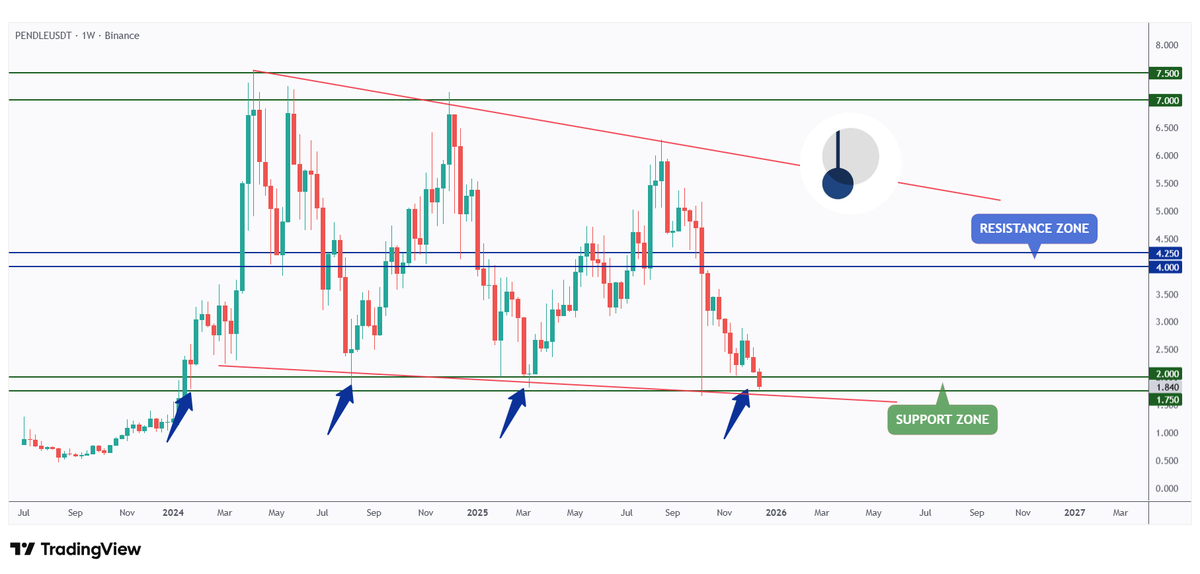
$PENDLE is sitting at long-term support.⚔️
Buyers are defending, but momentum is still weak.
Sellers remain in control for now.📉
As long as this support holds, the only way from here is up. 🚀
Can @pendle_fi follow through? 👀
English

What’s the one altcoin you still think has a real catalyst heading into 2026?
English

Chart Request Day!
Which #altcoin would you like me to chart? 📊
I'll choose 3 in the coming days!
English



Lewis Wheatley retweetledi
🚨 The Liquidation Compensation Event is LIVE! ⚡️
MEXC is protecting traders with a $500,000 Protection Fund!!💰
✅ First losing trade = fully compensated!
🗓️ Oct 30 – Nov 12
New users: up to 100 USDT
Existing users: up to 50 USDT
👉 Join now: mexc.com/campaigns/futu…

English