Sabitlenmiş Tweet


Suomi
Walter van der Cruijsen
295.1K posts

@wltrrr
Interested in current affairs, framing, populism, spin. sarcasm, parodies and satire, politics, art. Alter ego of @wvdc

Jeff Bezos: "If we ran Amazon the way New York City runs their school system, packages would take 6 weeks to arrive, we would charge you a $100 delivery fee and when the package did finally arrive, it would have the wrong item in it."


JUST IN: Number of Ebola cases in Congo reaches 1,000, according to the health ministry

Why are medics being killed in Lebanon? Since the ceasefire was agreed on April 17th nearly 700 people have been killed. And out of those, 20 have been medics. Sky’s @AlexCrawfordSky reports trib.al/RR9UhhH

🚨 Pardoned Jan 6 insurrectionist David Daniel has pled guilty to child s*xual abuse.


There needs to be an end to the false expectations surrounding Israeli-Saudi normalization. Let’s start with the semantic issue. Anyone familiar with the relationship between Saudi Arabia, the Gulf states, and the broader regional order understands that if normalization between Israel and Saudi Arabia ever happens, it will not be branded as an extension of the “Abraham Accords.” From the Saudi perspective, that is not a cosmetic or semantic matter. Riyadh will insist on its own framework, its own terms, and its own political narrative. But that is the smaller issue. To understand just how detached current normalization talk is from regional realities, it is worth reading the recent arguments made by Prince Turki al-Faisal and other influential Saudi voices. In essence, the prevailing Saudi view today is that Israel has become a major source of regional instability, in some respects viewed as even more destabilizing than Iran. At the same time, Crown Prince Mohammed bin Salman, who sees himself as a central leader of the Arab world, is unlikely to move toward normalization without significant and visible progress on the Palestinian issue. The reality is that renewed Saudi-Iranian accommodation is far more likely in the near term than Saudi-Israeli normalization. That may be uncomfortable for many in Washington and Jerusalem to acknowledge, but it reflects the region as it actually exists, not as some policymakers wish it to be. Saudi Arabia will not agree to normalization in exchange for cooperation on Iran alone while the Palestinian issue remains unresolved. Contrary to the hopes of some in Israel and the United States, there was never a realistic path toward bypassing the Palestinian question on the road to broader regional normalization. This is also why comprehensive peace agreements between Israel and countries like Lebanon or Syria remain highly unlikely under current conditions. Much of the regional diplomatic architecture ultimately runs through Riyadh, and Saudi Arabia is not prepared to legitimize a regional order that sidelines Palestinian aspirations. From the Saudi perspective, Israel cannot indefinitely hold both ends of the stick, deepening control over the West Bank while simultaneously expecting the political and economic benefits of normalization with the Arab world. The sooner policymakers internalize that reality, the more grounded and effective regional diplomacy can become. And this is true not only under Israel’s current government, but very likely under future governments as well. That is precisely why it is irresponsible to continue selling illusions to the Israeli public on this issue. There is no serious regional pathway to normalization with Saudi Arabia that completely bypasses the Palestinian question. Repeating that promise over and over may serve short-term political narratives, but it does not change the strategic reality in the Middle East. At some point, Israeli policymakers and the public alike will have to confront a basic fact: normalization with the Arab world, especially with Saudi Arabia, will almost certainly require meaningful movement on the Palestinian track. Not symbolic gestures, but substantive political steps. Pretending otherwise may be politically convenient, but it only deepens the gap between expectations inside Israel and the diplomatic realities shaping the region. #IranWar #Iran



Author of 'Reading Lolita in Tehran': 'Netanyahu's government doesn't represent Israelis' haaretz.com/magazine/2025-…

Blanche: My job is to do the right thing. It's to do the right thing, no matter who is on the other side. And the fact that it was President Trump and his sons and his company played no role in my decision except to do the right thing.

VVD en JA21 hekelen label extreemrechts: 'Waarom hoor je nooit radicaal-links over Jimmy Dijk?' #WNL wnl.tv/2026/05/25/vvd…

Summary of Dutch colonialism in 1930s Indonesia: Two children, two utterly different lives!

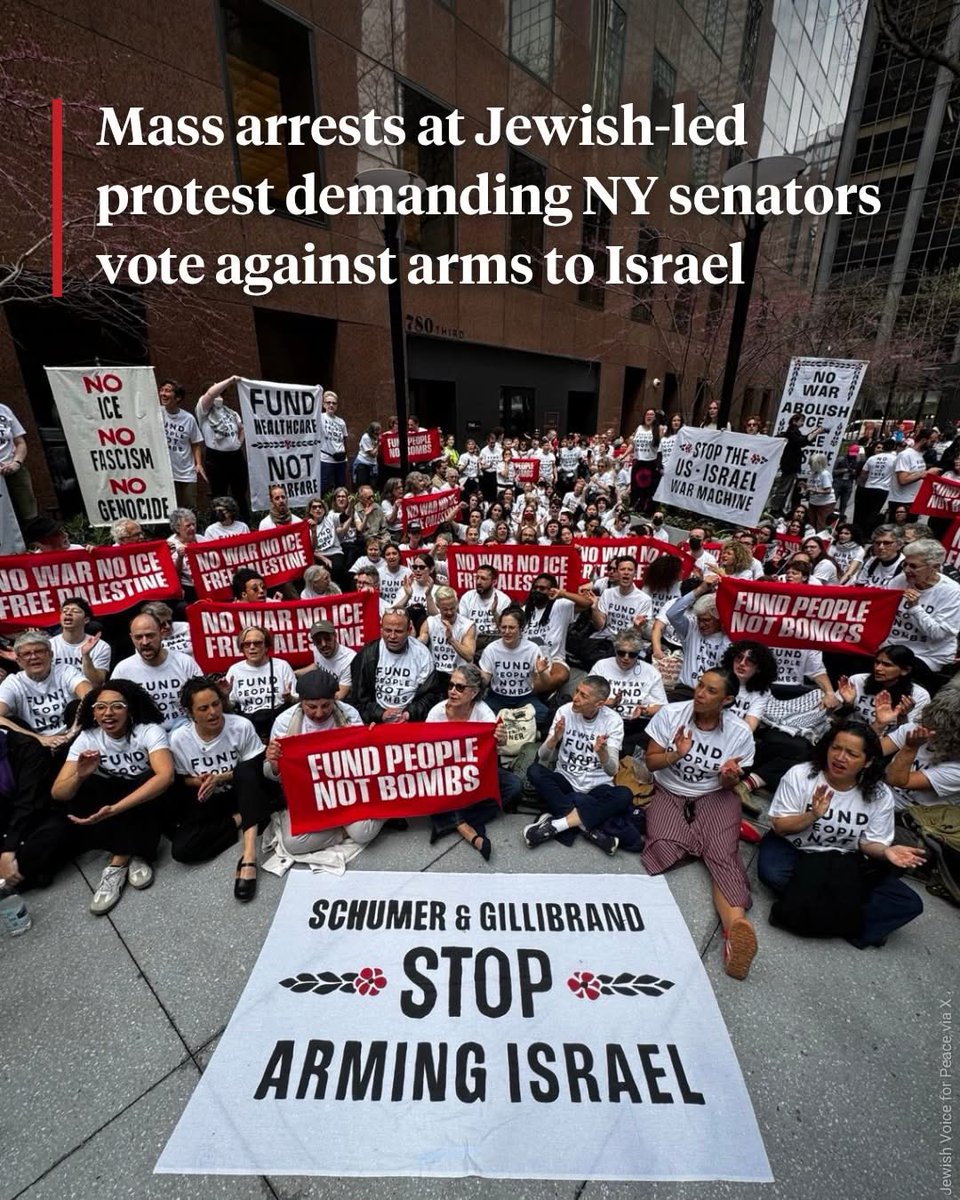
For 100 years, Jews were a cherished part of the Left. They built the Labor Movement, wrote the New Deal, marched with Dr. King. Yet today, the Left has turned on the Jews. Why did Jews become Democrats? And why did the Left turn on them? My new book answers those questions:



"Los libaneses deben dar las gracias a Israel por comerse un tomate cherry, deberían cruzar la frontera, dar la mano a los israelíes y decir "Gracias Israel por hacerme la vida más facil". Mike Huckabee, el fanático sionista embajador de EEUU en "Israel", aseguró que los libaneses a los que bombardean deben dar las gracias a los sionistas por comer tomate cherry. Esta es la clase de dementes que están en los puestos de poder de EEUU, no solo no condenan el genocidio que "Israel" perpetra, sino que pretende que le den las gracias.