Belisarius (e/acc)

3.1K posts

Belisarius (e/acc) banner
Belisarius (e/acc)

Belisarius (e/acc)

@worldrotator

Wartime Tinkerer

Katılım Haziran 2011
709 Takip Edilen84 Takipçiler
Brian Potter
Brian Potter@_brianpotter·
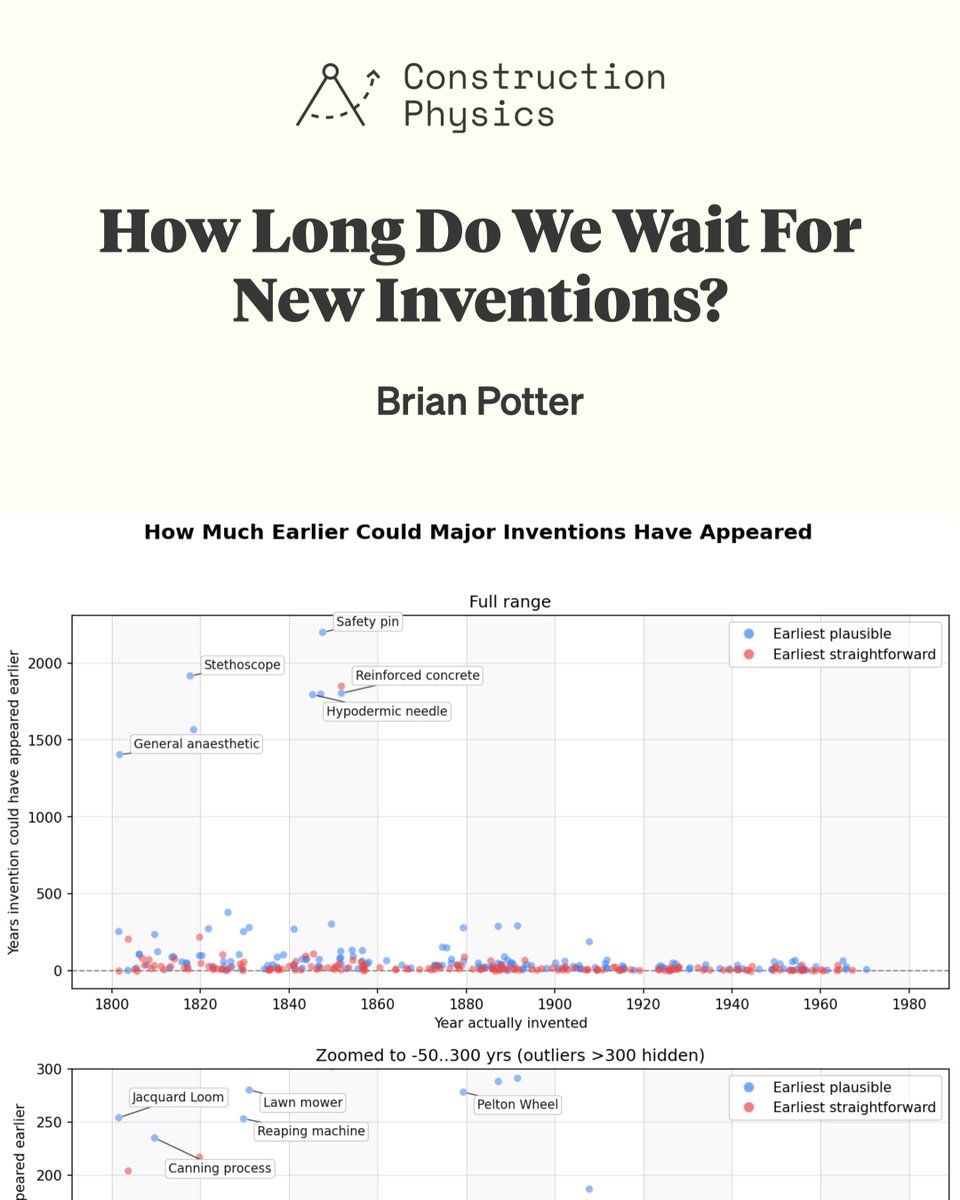
This week on Construction Physics: I wanted to know how long it takes between when an invention becomes technically possible, and when it actually appears. So I took a list of 190 major inventions, and asked Claude. construction-physics.com/p/how-long-do-…
Brian Potter tweet media
English
9
26
133
17.5K
Belisarius (e/acc) retweetledi
ib
ib@Indian_Bronson·
Imagine if during the early innings of the Bronze Age, a little over 5000 years ago, some Neolithic tribes whined endlessly about innovations like organized agriculture, animal husbandry, city-building, and trade, as well as bronze weaponry, chariots, and professional armies. Constantly griping about how unfair everything was and telling each other stories about the Stone Age and how everything was simpler then and better then, or how all the new bronze stuff is fake and doesn’t work as well as stone, but mostly stories about how they were on top, instead of the new tribes who keep beating them, and how they are the rightful winners but are just being scammed somehow. It would be a little contemptible wouldn’t it?
English
3
5
41
3.3K
Belisarius (e/acc) retweetledi
Hayek-Club Weimar
Hayek-Club Weimar@WeimarClub·
Niemand hat den "Kapitalismus" erfunden. Kapitalismus ist das, was freie Menschen von Natur aus tun - Waren und Dienstleistungen zu ihrem eigenen Vorteil tauschen.
Deutsch
494
1.7K
13K
1.6M
Belisarius (e/acc) retweetledi
Hunter📈🌈📊
Hunter📈🌈📊@StatisticUrban·
Many of you would understand the world much better if you took 4-5 economics classes, or purchased a textbook and made an honest and rigorous effort to understand it. Many of you appear to think ~0 about incentives, trade-offs, constraints, or second-order effects.
English
105
299
3.4K
99.1K
Belisarius (e/acc) retweetledi
Matthew Yglesias
Matthew Yglesias@mattyglesias·
We need to pivot all this braindead anti-property tax sentiment into the pure light of Georgeism
Matthew Yglesias tweet media
English
46
198
2.3K
129.5K
Belisarius (e/acc) retweetledi
Justin Thomas
Justin Thomas@JustinThomasAI·
When the tractor was invented, nearly half of the American workforce was employed in agriculture. Today, that number is less than two percent. Many people genuinely believed society would collapse under the weight of that displacement. It did not. The economy absorbed those workers and grew in ways no one could have predicted. I think about that every time I hear someone say that AI is going to eliminate human performance. I do not believe it for a second. In fact, I believe the exact opposite. AI is going to unlock parts of human capability we have never had access to before. It is a tool that will let us think bigger, move faster, and finally solve problems that have sat unsolved for generations. The next fifteen years of human progress are going to look like the last thousand years compressed into a single lifetime. We are living in the most exciting time in human history. Take advantage of it.
English
3
1
8
355
Belisarius (e/acc) retweetledi
Oscar Archer
Oscar Archer@OskaArcher·
I invented a fireproof moisture-control building material partially thanks to literature I could access with Sci-hub. Hopefully it saves lives in the decades ahead.
Mushtaq Bilal, PhD@MushtaqBilalPhD

> be Alexandra Elbakyan > be born in Kazakhstan in 1988 > start coding at 12 > hack your internet provider at 14 > hack MIT Press at 16 to download neuroscience books you can't afford > get a CS degree from Satbayev University > intern in neuroscience at Georgia Tech > speak at Harvard on brain-computer interfaces > notice researchers can't read the papers they need > notice academic publishers charging $30 a paper > notice peer reviewers worked for free > notice editors worked for free > notice universities funded the research with billions of dollars of public money > build Sci-Hub in 2011 > upload nearly every paywalled research paper ever published > give it away for free > get sued by Elsevier > get hit with a $15 million judgment > don't give a flying f*ck > keep Sci-Hub up > get domain after domain seized > register a new one > keep Sci-Hub up > get investigated by the US Department of Justice > don't give a flying f*ck > get accused of working for Russian intelligence > don't give a flying f*ck > have the FBI subpoena your iCloud > get named one of Nature's ten people who mattered in science > get a parasitoid wasp named after you > get a deep-sea snail named after you > get the Electronic Frontier Foundation Award for Access to Scientific Knowledge > become a legend

English
0
19
154
6.2K
Belisarius (e/acc) retweetledi
Replit ⠕
Replit ⠕@Replit·
The classroom changed. The homework changed. How we learn changed. 18 million students already build on Replit and now, there's a dedicated space just for them. No setup. No lectures. Just building. Teachers get free access. Students get 50% off Core. And if you're running a program, we'll help you scale it. Claim yours at replit.com/edu
English
26
41
303
73.9K
Belisarius (e/acc) retweetledi
Brivael Le Pogam
Brivael Le Pogam@brivael·
Elon Musk avait dit un truc qui m'avait marqué sur l'allocation de ressources. En substance : passé un certain niveau de richesse, l'argent n'est plus de la consommation, c'est de l'allocation de capital. Cette phrase change tout. L'économie, dans le fond, c'est juste un problème d'allocation. Tu as des ressources finies et des usages infinis. Qui décide où va quoi ? Imagine une cour de récré. 100 enfants, des paquets de cartes Pokémon distribués au hasard. Tu laisses faire. Très vite, un ordre émerge. Les bons joueurs accumulent les cartes rares, les collectionneurs trient, les négociateurs trouvent des deals. Personne n'a planifié. Et pourtant chaque carte finit dans les mains de celui qui en tire le plus de valeur. Le système maximise le bonheur total de la cour. C'est ça, la main invisible. Maintenant fais entrer la maîtresse. Elle trouve ça injuste. Léo a 50 cartes, Tom en a 3. Elle confisque, redistribue, impose l'égalité. Trois effets immédiats. Les bons joueurs arrêtent de jouer, à quoi bon. Les mauvais n'ont plus de raison de progresser, ils auront leur part. Les échanges s'effondrent. La cour est égale, et morte. Elle a maximisé l'égalité, elle a détruit le bonheur. Le problème de la maîtresse, c'est qu'elle ne peut pas avoir l'information que la cour avait collectivement. C'est le problème du calcul économique de Mises, formulé en 1920. L'URSS a essayé de le résoudre pendant 70 ans avec le Gosplan. Résultat : pénuries, queues, effondrement. Pas parce que les Soviétiques étaient bêtes, parce que le problème est mathématiquement insoluble en mode centralisé. Quand Musk a 200 milliards, il ne les consomme pas, il les alloue. SpaceX, Starlink, Neuralink, xAI. Chaque dollar est un pari sur le futur. Et lui a un track record. PayPal, Tesla, SpaceX. Il a démontré qu'il sait identifier des problèmes immenses et y allouer des ressources avec un rendement spectaculaire. L'État aussi a un track record. Hôpitaux qui s'effondrent, éducation qui décline, dette qui explose, services publics qui se dégradent malgré des budgets en hausse constante. Le marché identifie les bons allocateurs, la politique identifie les bons communicants. Le profit n'est pas une finalité, c'est un signal. Il dit : tu as alloué des ressources rares vers un usage que les gens valorisent suffisamment pour payer. Plus le profit est gros, plus la création de valeur est grande. Quand Starlink est rentable, ça veut dire que des millions de gens dans des zones rurales ont enfin internet. Quand un ministère est en déficit, ça veut dire qu'il consomme plus qu'il ne produit. L'un crée, l'autre détruit, et on appelle ça redistribution. Dans nos sociétés il y a deux catégories d'acteurs. Les entrepreneurs et les bureaucrates. L'entrepreneur prend un risque personnel pour identifier un problème, mobiliser des ressources, créer une solution. S'il se trompe il perd. S'il a raison, ses clients gagnent, ses employés gagnent, ses fournisseurs gagnent, l'État collecte des impôts. Il est la cellule de base du progrès humain. Le bureaucrate ne prend aucun risque personnel. Son salaire est garanti. Au mieux il maintient une rente existante. Au pire il la détruit par excès de réglementation, mauvaise allocation forcée, incitations perverses qui découragent ceux qui produisent. Mais dans aucun cas il ne crée. Regarde les 50 dernières années. iPhone, internet civil, SpaceX, Tesla, Google, Amazon, Stripe, mRNA, ChatGPT. Toutes des inventions privées, portées par des entrepreneurs, financées par du capital risque. Pas un seul ministère n'a inventé quoi que ce soit qui ait changé ta vie au quotidien. La France est devenue le laboratoire mondial de la dérive bureaucratique. 57% du PIB en dépenses publiques, record absolu. Une administration tentaculaire, une fiscalité qui pénalise la création de richesse. Résultat : décrochage face aux États-Unis, à l'Allemagne, à la Suisse. Fuite des cerveaux. Désindustrialisation. Dette qui explose. Et le pire c'est que la mauvaise allocation s'auto-renforce. Plus l'État prélève, moins les entrepreneurs créent. Moins ils créent, moins il y a de base fiscale. Plus l'État s'endette et taxe. Boucle de rétroaction négative parfaite. La maîtresse pense qu'elle aide, et chaque année la cour produit moins. Dans nos sociétés, ce sont les entrepreneurs, toujours, qui font avancer la civilisation. Les bureaucrates au mieux maintiennent une rente, au pire la détruisent. Aucune société n'a jamais progressé en taxant ses créateurs pour subventionner ses gestionnaires. La question n'est jamais qui a combien. C'est qui alloue le mieux la prochaine unité de ressource pour maximiser le futur de l'humanité. La réponse depuis 200 ans n'a jamais changé. Ce ne sont pas les fonctionnaires.
Français
3.3K
16.4K
61.6K
81.3M
Belisarius (e/acc) retweetledi
Aakash Gupta
Aakash Gupta@aakashgupta·
For 1,800 of the last 2,000 years, China or India was the world's #1 economy. America has held the title for about 150. The chart is 2,000 years of mean reversion. In year 1 AD, Han China and the Indian subcontinent together produced more than half of world economic output. In 1500, still around half. In 1700, on the eve of the Industrial Revolution, China alone was 22% and India was 24%. Two countries, half the world's GDP, for 17 straight centuries. Then a 200-year glitch began. Britain mechanized cotton in 1780. Steam engines, railroads, iron smelting, the factory system. Per capita output in northwest Europe doubled, then quadrupled, then went 10x while Asia stayed agricultural. India was actively deindustrialized by British trade policy. The Qing Dynasty got carved up by foreign concessions. Japan's Meiji Restoration in 1868 was the only Asian economy that industrialized in time to defend itself. By 1950 the chart is unrecognizable. The United States alone was nearly 28% of world GDP. The combined share of China and India had collapsed below 9%. A civilizational baseline of 50%+ went to single digits inside four generations. Then it started reverting. China's reform and opening launched in 1978. India's liberalization came in 1991. The two countries that defined economic gravity for most of recorded history started compounding at 6-10% a year while the developed world settled into 2%. By 2017 China was back to 18% and climbing. The story of the 21st century gets framed as a rising challenger threatening the established order. The chart says the established order was the threat. The 200-year window from 1820 to 2000 is the deviation. Everything before and after is the mean. Industrial Revolutions don't happen in the country with the largest economy. They happen in the country that breaks the agricultural ceiling first. Britain did it once. The United States did it second. Whoever does it next sets the next 200-year baseline.
Aakash Gupta tweet media
English
13
42
133
9.4K
Belisarius (e/acc) retweetledi
Mustafa Suleyman
Mustafa Suleyman@mustafasuleyman·
Little thought experiment to put AI chip improvements in perspective: Imagine that every person on Earth uses a calculator to perform one calculation per second. Everyone works 24 hours a day without rest. Every second, we all hit equals on the calculator for a long digit multiplication. It would take all of us together hitting equals non-stop about 22 days to complete what a single GB300 chip does in just one second.
English
50
29
301
30.5K
Belisarius (e/acc) retweetledi
Asher Perlman
Asher Perlman@asherperlman·
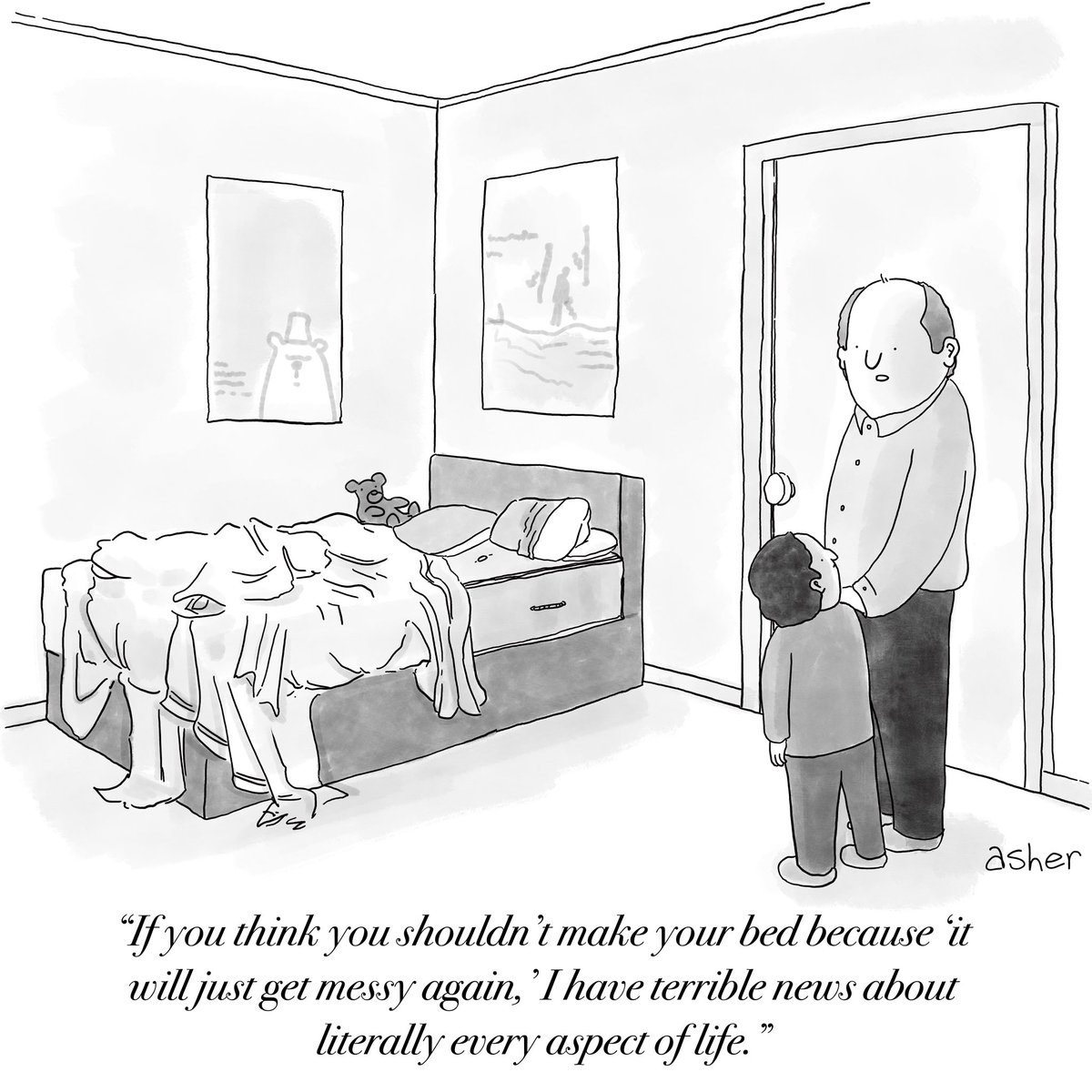
Asher Perlman tweet media
ZXX
57
4.6K
72.5K
783.7K
Belisarius (e/acc) retweetledi
Men's Humor
Men's Humor@MensHumor·
Men's Humor tweet media
ZXX
49
6K
158.1K
1.4M
Belisarius (e/acc) retweetledi
Path of Men
Path of Men@PathOfMen_·
Huge fan of whatever this is
English
54
1.4K
12.2K
231K
Belisarius (e/acc) retweetledi
✧
@cessonmute·
In case you forgot: We live on a planet where whales sing songs that travel for miles. Where trees can recognize their own offspring and protect them underground. Where dolphins give each other names and where lightning can create glass in the sand. Where horses can read human emotions. Where rain has a smell before it even arrives and where the ocean can glow in the dark. A planet where the stars we see might not even exist anymore.
@cessonmute

hit me with the harshest reality truth

English
92
9.1K
51.5K
1.4M
Belisarius (e/acc) retweetledi
Benjamin Ze’ev 📚🎻🏺
Benjamin Ze’ev 📚🎻🏺@ArchaeoBenjamin·
I am not autistic because of vaccines or Tylenol. I am autistic because my mom (who owns 100s of puzzles & is obsessed with order & schedules) decided to make kids w/my dad (who reads plane manuals for fun & wouldn't intuitively recognize a social cue if it hit him in the face).
English
106
3.1K
53.7K
668.7K
Belisarius (e/acc) retweetledi
PK🍓🍉
PK🍓🍉@PKontwt·
Once you actually go outside and talk to normal people, you’ll realize that none of this Twitter shit is real at all
English
710
11.1K
94.4K
2.1M