Amir
3.5K posts

Amir
@x4rius
Just having a fair dinkum go at life 🌴 🇦🇺 Doing lots of cool stuff at @soaratlas, Detail and IREX (👽)

Fifteen years ago, we asked a simple question: what if we could build a living map of the Earth? Today, with Merlin, we’re taking a major step toward that vision, remapping the entire planet daily at 1 m resolution. The question is no longer “Can I get an image?” It’s “What changed today?” That shift will define the future of Earth observation. More here: satellogic.com/2026/03/18/int…


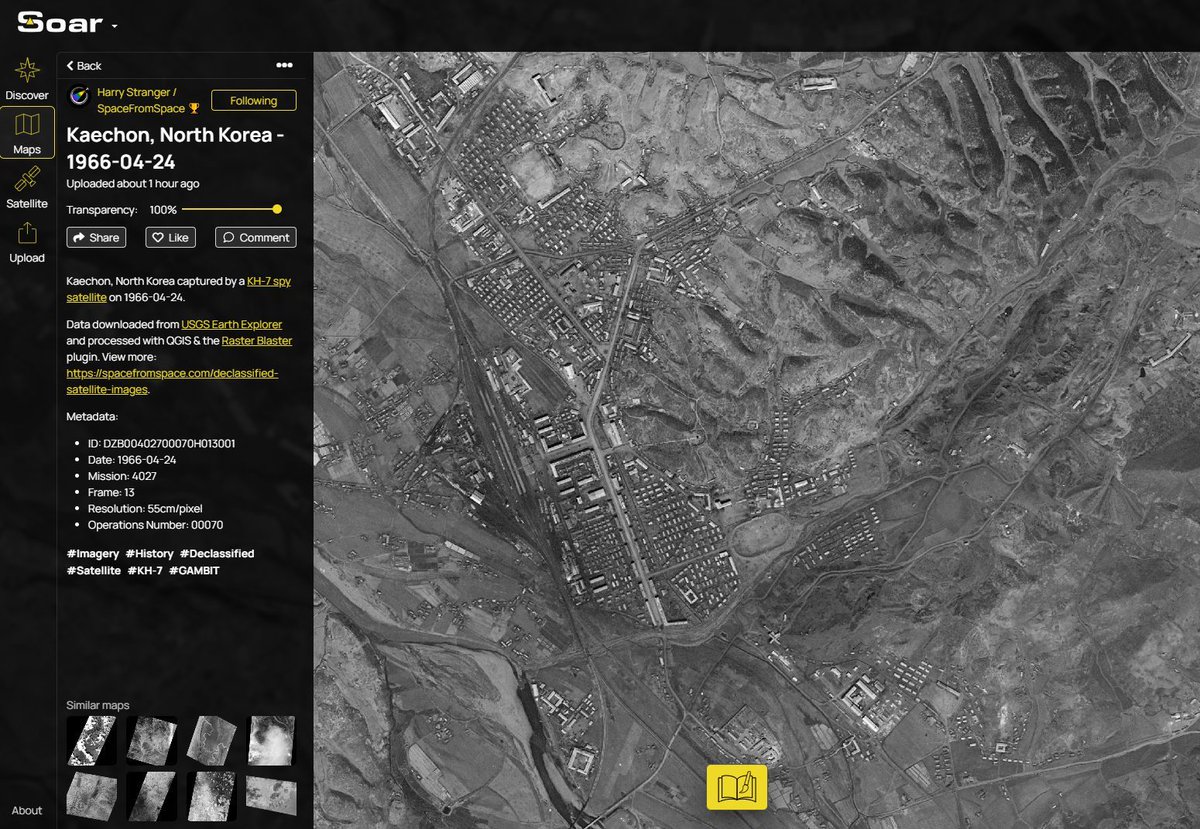
As conflicts break out, AI-generated fake imagery is becoming more common online. At Soar Atlas, we manually review every satellite image and map that comes through our system to ensure uploads remain trustworthy. One image currently circulating shows an air base with planes painted on the ground. While it may look convincing at first glance, there are a few clues that suggest it isn’t real satellite imagery. First, most commercial satellites, such as those operated by Maxar Technologies or Planet Labs, capture imagery at roughly 30cm per pixel. Because of this physical limitation, extremely fine details usually aren’t visible from space. If an image appears unusually sharp or shows very small features with perfect clarity, it’s worth questioning. Satellites don’t capture imagery the way it’s often portrayed in movies. They aren’t constantly watching every location with a live camera in the sky. Most Earth-observation satellites travel in fixed orbits and only pass over the same area at certain times, which means many major events are not captured immediately and may only be imaged hours or even days later depending on when the next pass occurs. Weather is another major limitation. Cloud cover frequently blocks optical satellite imagery, making it difficult to capture clear views of the ground. While some satellites use radar to see through clouds, these systems produce radar imagery rather than traditional photograph looking imagery, which can be harder for the public to interpret visually. It’s also important to look for a source. Authentic satellite imagery is almost always credited to the provider, often through a watermark or attribution. If there’s no source attached, that’s a warning sign. Another useful check is whether the imagery is georeferenced. When imagery is properly placed over real-world maps, such as those on Soar Atlas, it becomes much easier to verify whether features actually line up with the surrounding environment. AI will often get these kinds of details wrong. Finally, keep an eye out for AI tool marks or watermarks, such as the small star symbol added by Gemini in the corner. Every image on soaratlas.com we've verified. If you think something doesn't look right, click the three dots and report the map or ping us! As AI tools improve, spotting fakes will become harder. During this conflict we’ve unfortunately come across many examples, so it’s important to stay cautious and take a moment to question images before sharing them.


🚨Soar Atlas has obtained new very high-resolution satellite imagery of Fujairah Oil Industry Zone in UAE, from Mar 5th. Explore & compare here: tinyurl.com/kmtp59nn Two tanks are seen engulfed in flames as workers spray water to cool others. One tank is already destroyed.