
Sabitlenmiş Tweet
Xavier FM
2.5K posts

Xavier FM
@xavierfm3
Student of Law and Philosophy | McGill and University of Toronto alumnus | Canadien français | Si Deus pro nobis quis contra nos? | @RunnymedeSoc alumnus | Papa
Montréal, Québec Katılım Temmuz 2016
533 Takip Edilen772 Takipçiler
@finseraste C’est trop tard. La « démocratie » ici a toujours servi de rempart contre l’auto détermination des Canadiens français.
Français
@finseraste I was actually looking forward attending an event at La Voûte because I like going out but that was quite a lame show thrown in a lame atmosphere.
English
Xavier FM retweetledi

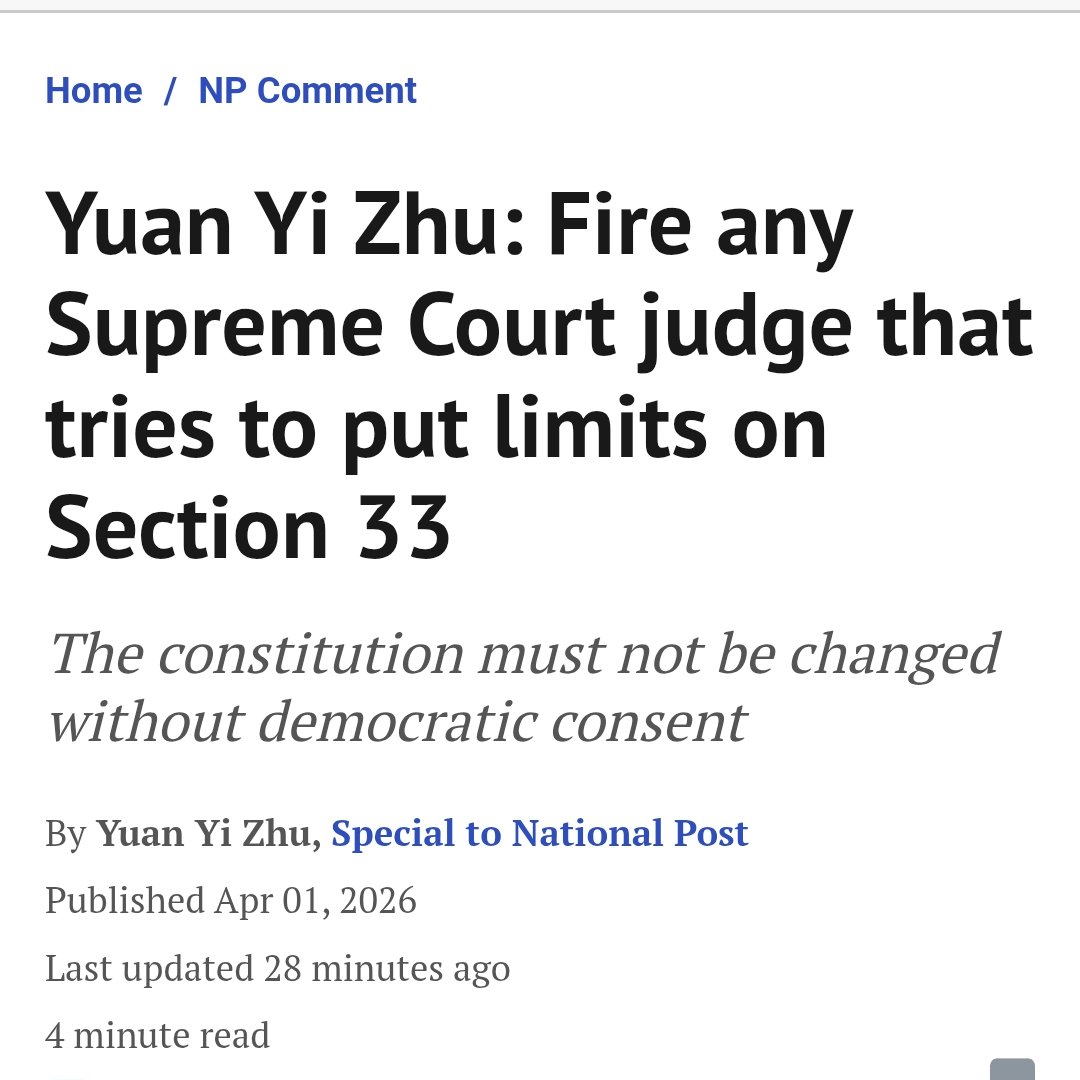
A major constitutional showdown is now before the Supreme Court of Canada, and at its core is a simple question of who decides.
Constitutional interpretation is not a straightforward exercise. Rights are stated at a high level of generality, as they must be, and don’t contain detailed instructions for their application. They must be interpreted and operationalized in the real world, and balanced in relation to other rights and other public policy objectives. Courts are not uniquely equipped to perform this task, nor were they ever meant to monopolize it. In our parliamentary democracy, legislatures have an essential role to play in that process, and that is what section 33 is for - a necessary condition of patriation and part of the constitutional design where coordinate interpretation can occur in a back and forth between courts and legislatures.
The federal government has intervened in these cases to argue contrary to the clear textual basis of the Constitution that repeated invocation of the clause “irreparably impairs” a rights. Though the clause clearly prohibits the policing of its use beyond correctness of application, they argue courts should in fact be able to assess whether legislatures have used it too much.
Ottawa has also argued that courts should be able to issue declarations that laws are unconstitutional even where section 33 prevents them from being struck down. A constitutional press release, if you will. Formally toothless, but plainly political in purpose and effect. And given the Court’s decision in Power, which contemplates retroactive damages for laws later found to be unconstitutional, this sort of declaratory power could become a backdoor route to financial liability as well. Given all the innovations the courts have been prone to, one would not put this past them.
English
Xavier FM retweetledi

Podcast discussion for Macdonald-Laurier Institute's Judicial Foundations Project between @CopelanPeter and @yuanyi_z, @xavierfm3, and @FCote_Avocat on the notwithstanding clause case (English Montreal School Board / Hak) pending at the Supreme Court of Canada.
Link in thread:
Peter Copeland@CopelanPeter
A major constitutional showdown is now before the Supreme Court of Canada, and at its core is a simple question of who decides. Constitutional interpretation is not a straightforward exercise. Rights are stated at a high level of generality, as they must be, and don’t contain detailed instructions for their application. They must be interpreted and operationalized in the real world, and balanced in relation to other rights and other public policy objectives. Courts are not uniquely equipped to perform this task, nor were they ever meant to monopolize it. In our parliamentary democracy, legislatures have an essential role to play in that process, and that is what section 33 is for - a necessary condition of patriation and part of the constitutional design where coordinate interpretation can occur in a back and forth between courts and legislatures. The federal government has intervened in these cases to argue contrary to the clear textual basis of the Constitution that repeated invocation of the clause “irreparably impairs” a rights. Though the clause clearly prohibits the policing of its use beyond correctness of application, they argue courts should in fact be able to assess whether legislatures have used it too much. Ottawa has also argued that courts should be able to issue declarations that laws are unconstitutional even where section 33 prevents them from being struck down. A constitutional press release, if you will. Formally toothless, but plainly political in purpose and effect. And given the Court’s decision in Power, which contemplates retroactive damages for laws later found to be unconstitutional, this sort of declaratory power could become a backdoor route to financial liability as well. Given all the innovations the courts have been prone to, one would not put this past them.
English
Xavier FM retweetledi

Kerry Sun: The Canadian Bar Association's vague attempt to shame scrutiny of the courts nationalpost.com/opinion/kerry-…

English
@HoneyTongueMuse @FeserEdward Can you explain this one to me? Or @FeserEdward? I am genuinely interested in the developed rationale.
English

It is wrong to threaten to do something which is intrinsically immoral, even if the threatened evil action never happens.
English
Xavier FM retweetledi
Updated on SSRN: Our response to every argument advanced in support of the admittedly audacious and creative thesis that courts can declare “incompatibility” with Charter rights notwithstanding the valid use of the notwithstanding clause.
papers.ssrn.com/sol3/papers.cf…
English
Xavier FM retweetledi
@TristinHopper @finseraste You will maybe in time do this very thing except the CEO will not be speaking French. But only time will tell.
English

@finseraste Funny, I don't ever recall demanding that a CEO (at a moment of organizational crisis) drop everything to prostrate himself before a Parliamentary committee because a Quebecer was speaking French.
English

If the Supreme Court nukes the Notwithstanding Clause, the opposition should pledge to remove any judge who voted in favour using the procedure under s. 99 of the BNA Act, 1867.
National Post@nationalpost
Colby Cosh: Is the Supreme Court preparing a judicial coup d’etat? nationalpost.com/opinion/is-the…
English
Xavier FM retweetledi
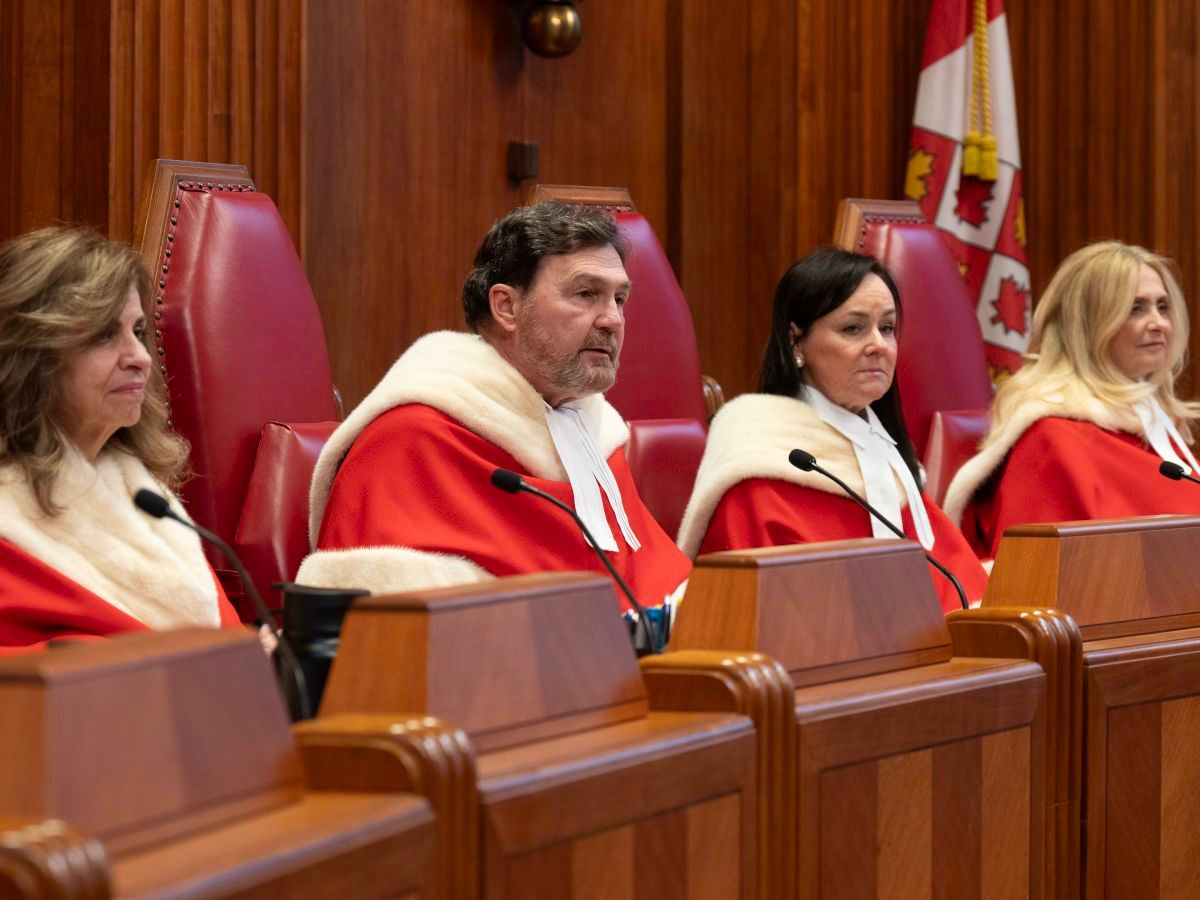
Colby Cosh: Is the Supreme Court preparing a judicial coup d’etat? nationalpost.com/opinion/is-the…
English
@Guil_Rousseau Opportunité manquée ici : je crois que la question de Kasirer est en fait s’il faut compléter Ford est expliquant clairement qu’un jugement déclaratoire n’est pas permis lorsque a33 est utilisé. Il faut faire le pont entre Ford et Hak, et rappeler qu’il n’y a rien à déclarer.
Français

Conclusion de ma plaidoirie en Cour suprême sur la clause de souveraineté parlementaire et échange avec le juge Kasirer sur l'idée que la cour puisse (ou pas) rendre un jugement déclaratoire (donc sans effet) quand cette disposition est utilisée. facebook.com/share/v/17x4jr… #polqc
Français
@JCJasmin3 Notre représentant @BonnafousJulien s’attaque à la religion et la Bible dès que possible. Je crois qu’il en fait sa fierté. Le Bloc n’a aucune perspective historique sur la nature fondamentale du peuple québécois et agit constamment pour maintenir le PLC au pouvoir.
Français

Ça serait le fun que le Bloc arrête de s'aliéner la foi qui a fondé le Québec pour plaire à une poignée de vieux électeurs aigris.
Julien Coulombe-Bonnafous@BonnafousJulien
À la veille de l’intervention de son procureur général à la Cour suprême contre la Loi 21, Mark Carney participe au petit déjeuner national de la prière, en soulignant la parole du Christ. Voici le vivre-ensemble canadien, qu’on tente de nous imposer avec nos taxes et impôts…
Français
@Guil_Rousseau Bravo ! Je soupçonne qu’il manque encore de clarifier ce que dit et ne dit pas Ford, notamment sur la question des déclarations judiciaires lorsque a33 est invoqué, ainsi que l’application au cas d’espèce. Nerf de la guerre pour Kasirer, et peut être d’autres juges aussi.
Français
À part pour mon rabat de toge un peu croche au début (lol ! ) tout a bien été pour ma plaidoirie en Cour suprême en défense de la laïcité et de la souveraineté parlementaire du Québec ! Merci au Mouvement Laïque Québécois pour sa confiance.
facebook.com/share/v/1AfRvY… #polqc #assnat
Français
Xavier FM retweetledi
This is very paper tiger.
Provincial conservatives already struggle to find like-minded lawyers to fill judicial vacancies. More input on federal judges won't fix that.
What these premiers really need is a bigger stake in legal education. Without that, the rest is pointless.
Barbara Patrocinio@BarbaraPatroci
Premiers Doug Ford, François Legault, Scott Moe and Danielle Smith have sent a joint letter to PM Mark Carney calling for provinces to have a formal, meaningful role in appointing judges to Canada’s top courts. #onpoli #cdnpoli
English
De l’or, merci Bérard !
Julien Coulombe-Bonnafous@BonnafousJulien
2,4 millions pour sortir Trump d’un chapeau pour s’attaquer à la clause dérogatoire et la loi 21? Cher payé.💰 Tout pour affaiblir le Québec et la volonté démocratique des Québécois. Extraits du procès du Québec qui s’ouvrait aujourd’hui à Ottawa 👇
Français
ICYMI. Will the Supreme Court of Canada miss a perfect opportunity to hold its tongue?
journals.library.ualberta.ca/constitutional…
English
@JCJasmin3 Exemption nécessaire car tout et n’importe quoi est “haineux”.
Français
On ne pourra pas me reprocher d'esquiver les enjeux controversés. Dans ce texte, j'argumente en faveur du maintien de l'exemption religieuse dans les dispositions relatives aux discours haineux dans le code criminel.
J'aimerais bien entendre ce que vous en pensez.
lapresse.ca/dialogue/opini…
Français