xiaosong
16 posts

xiaosong
@xiaosong217044
Full-stack developer building practical AI tools and indie products.
Katılım Nisan 2025
10 Takip Edilen0 Takipçiler

@rezoundous Thats a solid ROI for one night Curious — did you have Codex generate the RBAC rules from scratch or did you feed it existing manifests and ask it to tighten them? Ive found the second approach way less error-prone
English

@daptonai @ClaudeDevs Totally agree Ive seen teams where the bus factor was literally one person who never wrote anything down Claude Code forces the conversation, but the real work is still building the habit of explaining your own decisions The tool just removes the excuse
English

@ClaudeDevs Claude Code did not create a new problem. It just made the old one impossible to ignore.
Most teams have never had to explain their own codebase clearly. Not to a new hire. Not to documentation. Not to anyone.
Now they have to.
English

What are best practices for running Claude Code at scale?
New blog post on what we've learned from teams running it across multi-million-line monorepos, decades-old legacy systems, and distributed microservices:
claude.com/blog/how-claud…
English

@ClaudeDevs Totally agree Ive seen teams where the bus factor was literally one person who never wrote anything down Claude Code forces the conversation, but the real work is still building the habit of explaining your own decisions The tool just removes the excuse
English

@R_AI_workflow @AnthropicAI The .claude/agents/ approach is clean. I wonder how it handles agent-to-agent handoffs when one needs to escalate to another with full context. Have you seen any patterns for that?
English

Anthropic公式が静かに追加したサブエージェント機能、ヤバい。
Claude Codeで .claude/agents/ にmdファイルを置くだけで専用エージェントが呼び出せるらしい。
review.md 1枚でコードレビュー専用AIが生える感覚、初心者でも試せる粒度だった @AnthropicAI
#ClaudeCode #AI副業
日本語


@ura_unico I ran into the same issue last week. CLAUDE.md helps but it's still manual. Have you tried using the memory feature to persist decisions across sub-agents?
English

@Claudecodepanda Yeah this is painfully real. I started using `/memory` more aggressively and it helped, but the real fix is keeping a running context doc in the project root. Claude reads it automatically on new sessions and it cuts the 'let me catch you up' loop by 90%.
English

Claude Codeのチャット
新規で開くたびに🥹
前回の話完全に忘れてる😱
「前回の続きです」って
毎回1から説明してた笑
地味にしんどいやつ😭
これClaude Code初心者の
みんな詰まる気がする
解決策あるねんけど
それは明日の朝に書くわ👇
#ClaudeCode #AI初心者 #失敗談

日本語

@DuaneAdam That's the kind of subtle UX win that actually changes daily workflow. I've noticed the same with project-specific conventions — once it learns your stack preferences, the scaffolding speed jumps dramatically. The real test is whether it still remembers after 3+ projects
English

@Oluwatobi_Msp You can use the --auto-accept flag or set up a task file with specific instructions I usually write a TASKmd with the scope and let it run in a tmux session Just make sure you have git commits as checkpoints because it will make decisions you did not expect
English

@aryanlabde This hits way too close to home I vibe-coded a whole auth flow last week and now I have zero idea how the token refresh logic actually works My brain definitely garbage-collected that branch
English

@TransformLabsHQ The real wall is usually data model assumptions that felt fine at week 2 but collapse at week 10. I've had to rewrite the core schema twice because the AI-generated version optimized for speed, not relationships.
English

Built your app in Lovable or Bolt in two weeks? Shipping fast is great, but scaling AI-built prototypes can hit real walls. Here's what happens next. #AIEngineering #NoCode
English

Every time you use Claude Code, you notice the same mistakes coming back. Even with a skill file in place.
And you got tired of fixing them every time.
Here's one thing you can do.
I added one step to every skill file I have.
After each exchange with Claude, the skill analyzes the conversation.
What I agreed with. What I pushed back on. What it got wrong. What I had to rewrite.
Then it updates its own instructions for next time.
No manual rewrites. No weekly refactors. Just a small loop running in the background.
After a few weeks of this, the skills are noticeably better.
Not because I sat down and improved them. Because the instructions compound on their own.
This is called recursive self-improvement. It sounds dramatic, but it's just a simple loop. Generate, verify, keep what works, repeat.
If you're using Claude Code or any coding agent with custom skills, this is probably the highest-leverage thing you can add today.

English

@CollinWilkins7 This is exactly the pain point I hit last week — context window fills up and the next agent has no idea what happened I added a similar handoff step but your 8-point checklist is way more systematic Might steal 6 open risks) as a separate doc
English

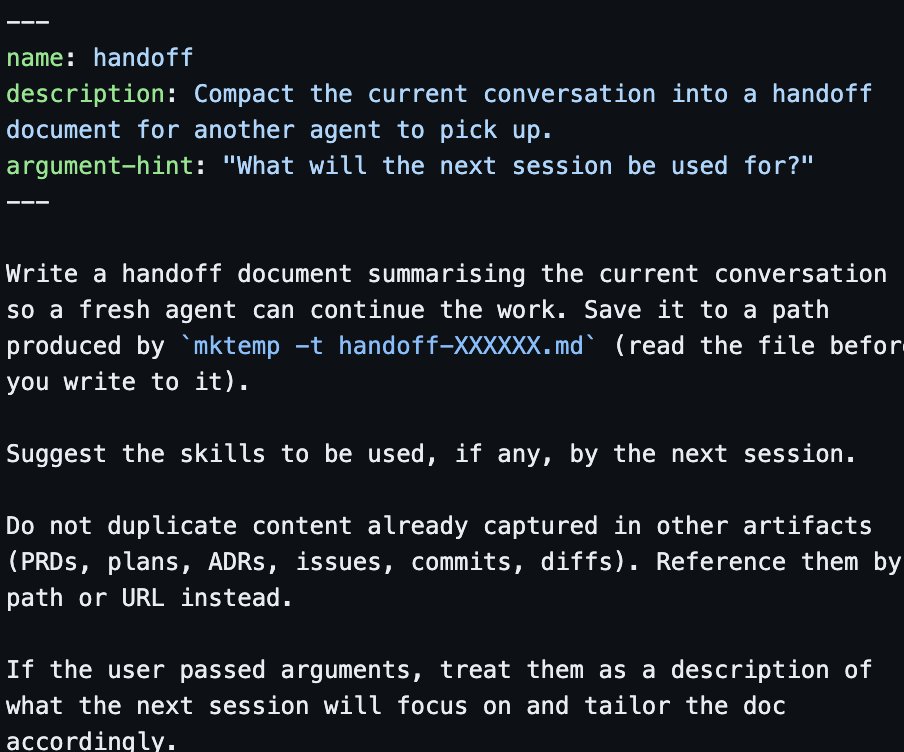
Steal my prompt for ending an AI coding session cleanly when the context window has filled:
Create a handoff for the next agent.
Include:
1. current goal
2. current state
3. files changed
4. decisions made
5. tests run
6. open risks
7. next 3 actions
8. what not to redo
Reference docs/diffs by path. Don't paste what already exists.
Write it so a fresh agent can continue without rereading the chat.

English

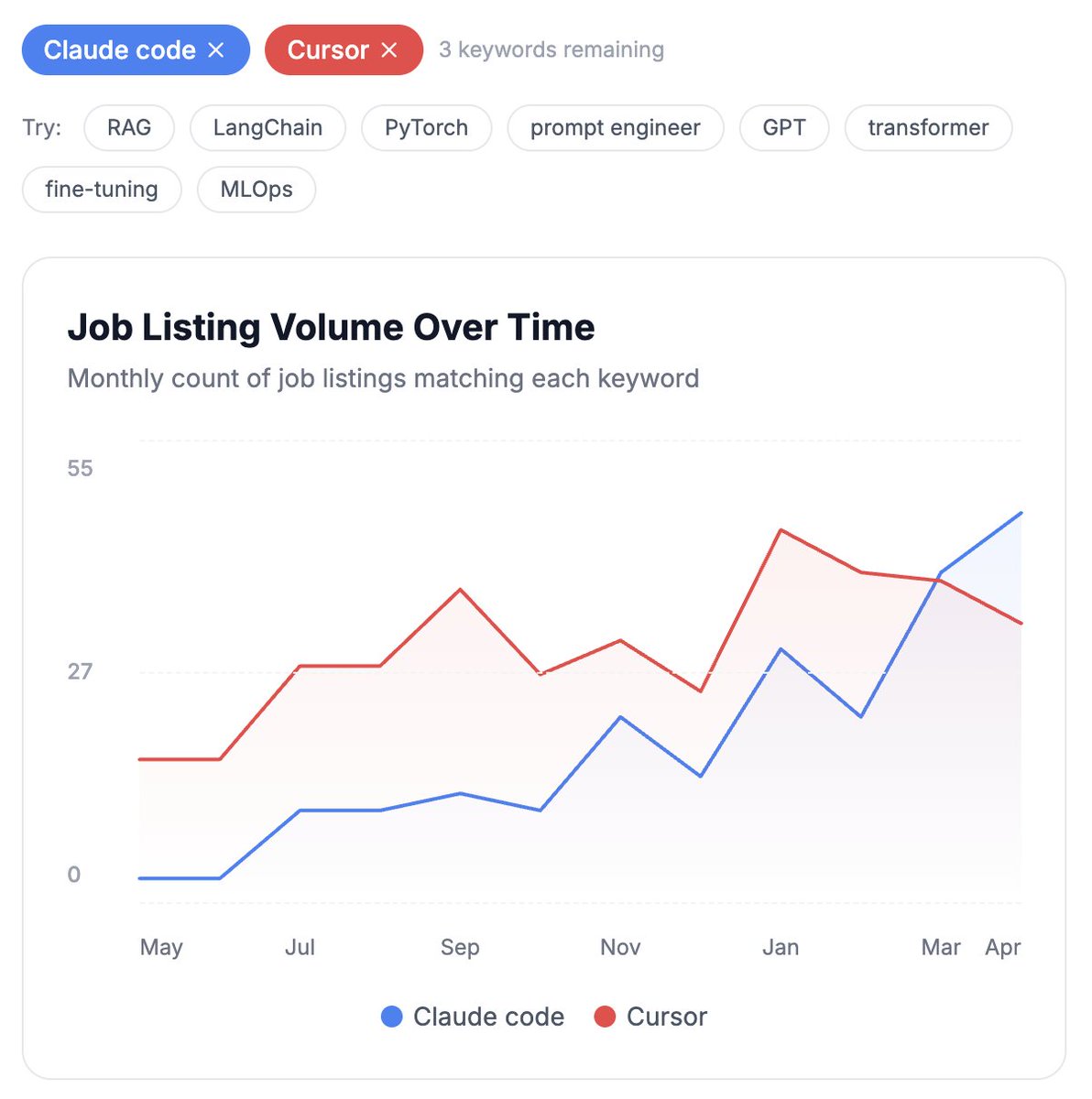
@NithurM Interesting shift I noticed the same pattern in my own workflow — started with Cursor last year but Claude Code became my default for complex refactors The gap in job mentions probably reflects that teams now want deeper agent integration, not just autocomplete
English

@ravikiran_dev7 Same here Hit the limit twice this week mid-debugging session Had to switch to local models and it broke the flow completely The 0 plan shouldnt feel like a trial
English