
Sabitlenmiş Tweet
0xZhang
3.3K posts


打卡1143天
Opinion反撸,Perle Labs反撸,2026年的第一季度就是这么难。
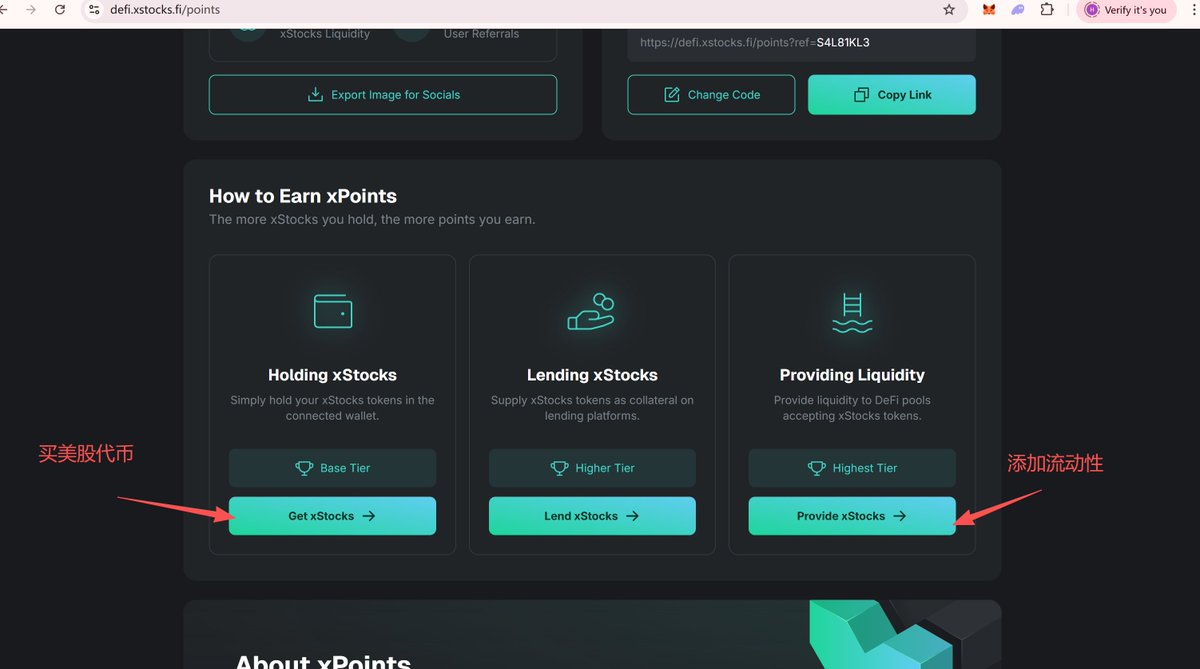
1、今天开始做xstocks,思路就是买美股代币、添加流动性,然后挣Points,邀请可以增加微不足道的Points。
邀请链接:defi.xstocks.fi/points?ref=7XA…
2、Tempo是早期项目,生态还没完善,试了一个号,就跨链+Swap
xstocks看着铺天盖地的广告,其实持有者才9万地址;Tempo看着融资5亿美元,实际上没多人关注;
所以现在撸空投不算卷,只要gas损耗在可控范围,反撸也不怕。
中文

聊聊 Opinion 这个项目,这大概是我最后一次提它。
这几天有点失眠,因为在 Opinion 上投入资金比较大,单号拿到的空投大概 200 刀,但单号磨损在 400 刀左右,整体算下来亏损上万刀了 。
发这篇推文当花钱买个教训,站在亏损的角度客观复盘一下这个项目。
1⃣猛一看代币经济学写着 23.5% 的 airdrop 挺唬人,但实际 TGE 解锁只有 3.5%,剩下的 20% 要分 7 个月线性解锁 。
项目方还搞了个质押拿更多空投的套路,有点像劣质版的 Backpack 玩法 。
人家 Backpack 本身空投占比就有 25%,Opinion 这 3.5% 对于所有参与刷数据的用户来说,完全就是一次羞辱 。
2⃣最离谱的是我在 DefiLlama 上算的一笔账。
Opinion 去年 Q4 和今年 Q1 的总收入差不多在 1600 万到 1700 万美元之间 。
代币总量 10 亿枚,3.5% 的空投就是 3500 万枚,按单价 0.5U 算,正好是 1750 万 。
严格来说,项目方是直接把所有的营收拿出来当空投发了,完全是“取之于用户,用之于用户”的背刺 。
3⃣复盘看,最开始其实很难判断这是个反撸项目 。
它有币安实验室背景,是 BSC 链上龙一,在整个预测市场里排在 Polymarket 和 Kalshi 后面算龙三,很容易让人放松警惕 。
大家拿一分的成本基本在 10 到 30 刀,但目前一分的价值只有 6U,全网基本都被反撸 。
直到暴雷后,才有人跳出来说这是万卉做的盘子 。
4⃣这一波 Opinion 算是把整个预测市场的碗都给掀了 。
既然 Opinion 作为头部,营收这么高都只能按手续费去发空投,那后面像 Probable、Predict 这些项目如果效仿,大概率也是反撸 。
所以现在再去刷这些 BSC 上的预测市场,基本等于 49 年入国军,个人建议不用刷了 。
5⃣最后一点心里话。
我自己亏钱,愿赌服输无所谓,但看到有小伙伴因为不太懂跟着我亏了钱,我内心确实挺愧疚,这也是我这几天睡不着的最大原因 。
这事儿我也反思了,以后我的内容会更克制,尽量只站在客观中立的角度去讲项目机制和操作方法。
不再公开讲太多我个人对项目的估值和主观预期了 。
Opinion,就此盖棺定论 ——垃圾项目。
中文
@Benjieming1Q84 发Token就是为了卖给二级,二级没有流动性。只能出货给撸子了。有标的打开天花板(Hyper),还有点想象力,二级还有人接。否则包反撸(尤其某Labs),快餐套皮太多了,站台的咖位越大反撸越狠。三浪打完500U!不排除暴涨的可能!
中文

1️⃣想长期在这个圈子发展的博主,不能一点真话不说,讲50%真话也行。
2️⃣现在,但凡听到KOL三个字:
- 和项目方一伙的!
3️⃣不能这样。
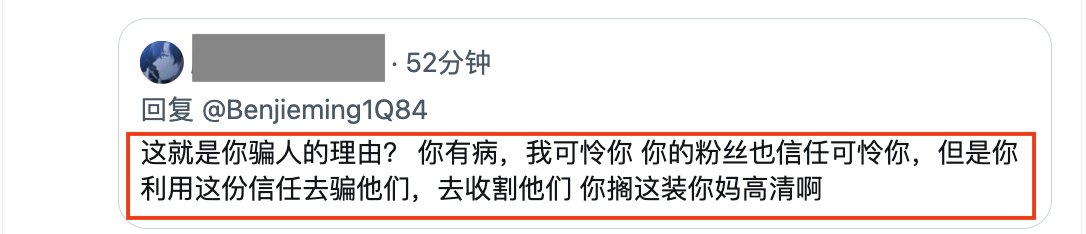
4️⃣Genius的Mod这样骂我,我心里知道,他就觉得我不敢回应:因为他认定我拿了o1exchange的好处。
->我如果拿o1exchange好处,我穷一辈子,我老婆再次得病。
中文
【撸毛3年了,第一次在社区“被骂”】
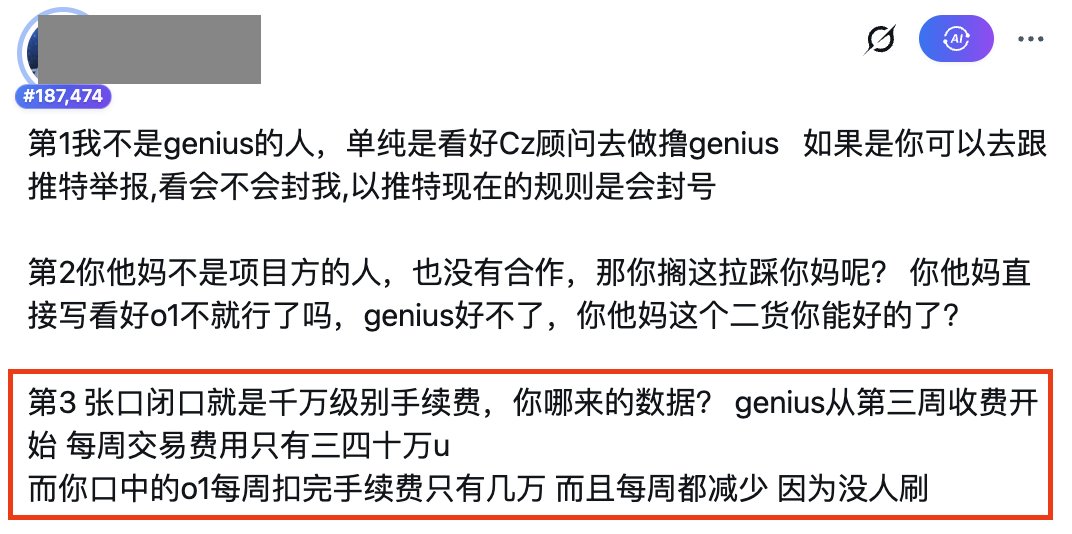
1️⃣Genius这个项目厉害。
2️⃣还没见过“项目不让说的”。
- 说交易量可能受影响,不行。
- 我按照一些数据猜测了一下手续费收入,也不行。
3️⃣那......我这样说:
- Genius这个项目非常好,有CZ站台,必是大毛,而且手续费也不高。
- 项目方最后可能自己凑钱发空投。


中文
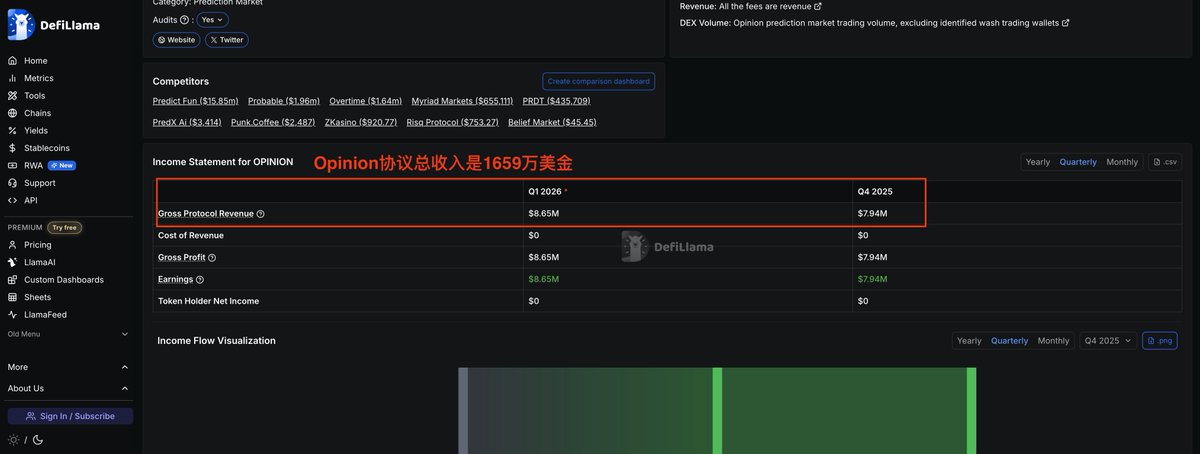
1️⃣我之前统计了预测市场项目的“融资”+“协议收入”,目前来看,Opinion是把“大家贡献的手续费拿出来发空投了”:
- Opinion第一轮空投的代币数量是3500万枚(占总量3.5%),按照目前盘前价格0.53U/枚,空投价值1855万美金。
- 我查看了Defillama的数据,Opinion的协议总收入是1659万美金。
- 如果开盘后的代币价格就是0.5U左右,那么就刚好“协议收入(手续费)”=“空投金额”。
2️⃣那么,这对我们继续撸“其他项目”,就是很重要的参考:
- 市场冷的时候,代币价格低,基本就是“协议收入(手续费)”=“空投金额”,我们要按照这个来评估自己的成本。
- 而且,如果市场“超级冷”,代币价格“超级低”,那反撸得更厉害。
3️⃣我的动作:
- 每周都跟进项目方的“协议收入”,去估算“成本”和“代币价值”。
- 先假设项目都没有融资。
4️⃣要认清一点,我们“相当于用手续费ICO买币”,“项目方空投时市场的热度很重要”。
Benjieming的撸毛之旅@Benjieming1Q84
【我会谨慎参加其他“没有融资”的预测市场项目 -我的思考】 ⭐️从Defillama的数据来看,除了Opinion和Polymarket之外,其他预测市场项目的“协议收入”,都非常低。 ⭐️很多平台还处于“0手续费”吸引客户阶段。 ⭐️Polymarket也是26年Q1才开始有收入,但是Polymarket应该是一个特例,它是走的“像京东那种烧钱模式”,其他项目几乎做不到。 1️⃣我对比了几个主流预测市场平台的收入: - Opinion,目前的空投预期最强,所以收入最高。 - Polymarket,龙头,但是之前一直是“0手续费”,只是最近才对5分钟和15分钟加密货币市场及体育市场进行收费,收入不高。 - Predict收入极低。 - Probable目前也是“0手续费”,没有收入。 2️⃣我的思考是,我们在进行其他预测市场撸毛时,只需要参考Opinion就行,不能参考Polymarket。 3️⃣我的结论: - 如果融资和收入等于Opinion,那估值就参考Opinion。 - 如果融资和收入远远低于Opinion,那就要降低预期。 4️⃣我的参与情况: - Polymarket,⭐️⭐️⭐️⭐️⭐️ - Predict,⭐️⭐️⭐️⭐️ - Probable,⭐️⭐️⭐️⭐️ - 其他,暂时不参加。 (Opinion马上收尾了,不算)
中文


中文

opinion这么搞完,今天晚上最气的人应该是 @predictdotfun 和 @0xProbable 的founder。
opinion吃完手续费,就把锅砸了。但是剩下两家还需要撸子来贡献和数据啊,这咋办。撸子也知道自己是被撸的肉牛了现在。
中文

I'm actually trying to do something even more ambitious:
Create "cypherpunk principled non-ugly ethereum" as a bolt-on to the present-day system, in a way that's as tightly integrated and interoperable as possible, and then grow it over time, in the mean time making sure ethereum itself gains the cypherpunk and simplicity properties that just necessarily have to be system-wide (eg. censorship resistance, zk prover friendliness, consensus properties). Then, in 5 years (or maybe way sooner with AI coding and verification, who knows), we have an open pathway to turn the existing system into smart contracts written in the language of the new system if/when we want.
Ethereum has already made jet engine changes in-flight once (the merge), we can do it ~4 times more!
(state tree, Lean consensus, ZK-EVM verification, VM change)
English







The best networks and communities don’t win because they grow fast. They win because they survive, ship relentlessly, and allow progress to compound over time. Happy birthday Abstract 💚
English

lens/farca/firefly
当前死亡笔记的持有者,vitalik

vitalik.eth@VitalikButerin
In 2026, I plan to be fully back to decentralized social. If we want a better society, we need better mass communication tools. We need mass communication tools that surface the best information and arguments and help people find points of agreement. We need mass communication tools that serve the user's long-term interest, not maximize short-term engagement. There is no simple trick that solves these problems. But there is one important place to start: more competition. Decentralization is the way to enable that: a shared data layer, with anyone being able to build their own client on top. In fact, since the start of the year I've been back to decentralized social already. Every post I've made this year, or read this year, I made or read with firefly.social, a multi-client that covers reading and posting to X, Lens, Farcaster and Bluesky (though bluesky has a 300 char limit, so they don't get to see my beautiful long rants). But crypto social projects has often gone the wrong way. Too often, we in crypto think that if you insert a speculative coin into something, that counts as "innovating", and moves the world forward. Mixing money and social is not inherently wrong: Substack shows that it's possible to create an economy that supports very high-quality content. But Substack is about _subscribing to creators_, not _creating price bubbles around them_. Over the past decade, we have seen many many attempts at incentivizing creators by creating price bubbles around them, and all fail by (i) rewarding not content quality, but pre-existing social capital, and (ii) the tokens all going to zero after one or two years anyway. Too many people make galaxy-brained arguments that creating new markets and new assets is automatically good because it "elicits information", when the rest of their product development actions clearly betray that they're not actually interested in maximizing people's ability to benefit from that information. That is not Hayekian info-utopia, that is corposlop. Hence, decentralized social should be run by people who deeply believe in the "social" part, and are motivated first and foremost by solving the problems of social. The Aave team has done a great job stewarding Lens up to this point. I'm excited about what will happen to Lens over the next year, because I think the new team coming in are people who actually are interested in the "social": even back when the decentralized social space barely existed, they were trying to figure out how to do encrypted tweets. I plan to post more there this year. I encourage everyone to spend more time in Lens, Farcaster and the broader decentralized social world this year. We need to move beyond everyone constantly tweeting inside a single global info warzone, and into a reopened frontier, where new and better forms of interaction become possible.
中文
Cloud and blockchain follow the same adoption curve. Consumer adoption validates tech. Global brand adoption cements demand. Institutional adoption makes it inevitable. Signs will be obvious in hindsight.
English

你可能忘记了,从第一次发布 $SEA
到现在已经整整快过去一年时间了🫨
Opensea 基金会就提到两次 $SEA
一次是10月份的大批量封号,社区都在说封号的问题,,导致链上数据急剧下滑,最后迫于数据压力 都给全部解封了。
由于数据持续下滑, 10月份就又来了一条鸡血推文
关键内容 : $SEA 将在 2026 年第一季度推出。
基金会确认 50% 的供应量将分配给社区,其中超过一半通过首次认领(initial claim)发放。早期用户(OGs)和参与过 OpenSea 奖励计划的用户都将被单独且有意义地考虑。
看看26年第一季度结束亚当是人是狗 🦭
OpenSea Foundation@openseafdn
$SEA is coming. Here are a few things to know: • Historical OpenSea usage, not just recent activity, will be an important ingredient • Claim process will be simple and accessible. US users welcome • We’re focused on long-term sustainability and supporting a healthy, enduring community • No details on timing yet. We’re taking the learnings from this space and getting it right As always, only trust updates from @openseafdn and @opensea
中文