

Experimental Philosophy
8.1K posts
Experimental Philosophy
@xphilosopher
Experimental philosophy: An interdisciplinary field that uses the collection of empirical data to shed light on philosophical issues.
Katılım Mart 2009
1.3K Takip Edilen20.3K Takipçiler

Philosophers, we need your help
We are running a study on philosophers’ intuitions about thought experiments
moralsciencelab.com/intuitions/
Only takes a few minutes!

English
The claim that someone is morally good in their true self is not a claim that they aren't to blame for what they've done
It is a a way of acknowledging that they are to blame and then saying that they should be forgiven
English
This new paper by Mario Attie-Picker suggests a surprising answer
You can get out of blame by either:
(a) saying that you are not responsible
(b) saying that you *are* responsible and asking for forgiveness
English
Suppose you are caught doing something bad , and you say:
"Deep down in my truest self, I always knew it was wrong"
Studies show that if you can get people to believe this, they will blame you less ... But why? Wouldn't it make sense for them to blame you MORE?
Brian D. Earp, Ph.D.@briandavidearp
Getting Out of Blame: Excuses, Forgiveness, and the Deep Self onlinelibrary.wiley.com/doi/10.1111/ej…
English
My teenage daughter just interviewed cognitive scientist Phil Corlett
youtube.com/watch?v=Pe6rLP…

YouTube
English
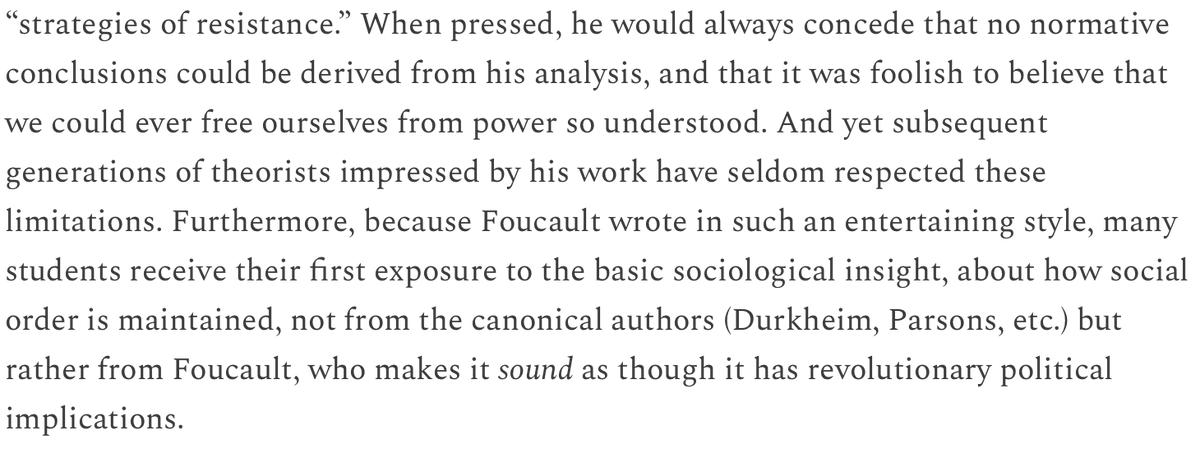
@ashleytrubin In my opinion, it is deeply important for us as researchers to think less about this sort of issue
We should all be thinking less about what Foucault really meant and more about what the evidence suggests about what the right answer actually is
English

One of the more interesting findings I've learned in the last year is that a lot of the big name scholars who give license to extremely poor work were actually quite good and careful--the problem is they've been misread, watered down, and extended in improper ways. Nice example:
English

The orthodoxy in philosophy is that there’s no knowledge in “fake barn” cases
But in a study of philosophers, majority say that there *is* knowledge in fake barn cases
How is it even possible for philosophical orthodoxy to come apart like this from what philosophers believe?

English
@MattLutzPhi @jessespafford Is your paper available on the web anywhere? Can you give us a link to it?
English
@xphilosopher @jessespafford Got a paper trying to du that that's been desk rejected by every major journal. Cest la vie.
English
@byrd_nick @d08890 In my opinion, the philosophical orthodoxy about fake barn cases is due to something about the sociology of philosophy
Goldman said that these were cases of non-knowledge, and something about his position in the discipline led everyone to accept his verdict about those cases
English
@byrd_nick @d08890 Thanks! The key point from the Horvath and Wiegmann study is about the difference between fake barn cases and Gettier cases. Philosophers deny knowledge in Gettier cases but attribute knowledge in fake barn cases
English
@MattLutzPhi @jessespafford I think that might be right! Maybe there’s hope now for an approach that revives something at least vaguely along those lines
English
@xphilosopher @jessespafford The casual theory of knowledge got done dirty.
English
@MattLutzPhi @jessespafford Strongly agree with this. The intuitive response is: this case is confusing. Then the orthodoxy (that it is not knowledge) arose because of something sociological involving philosophers being willing to accept Goldman’s verdict about this case
English
@jessespafford @xphilosopher My take is that intuitions about the case aren't particularly strong, you can kind of see where the no-knowers are coming from, and the fact that Goldman presented the case so confidently as a counterexample to his own earlier view just kind of dazzled a lot of people.
English
@byrd_nick @d08890 They do answer that second question, and the results are pretty interesting
Among non-philosophers, there is more consensus that fake barn cases are knowledge. Among philosophers, there is a larger minority saying non-knowledge, but the majority still say knowledge
English

@d08890 @xphilosopher Now I want to see the distributions broken down by participant source. I’d trust expect listserv recruitment to yield only philosophers better than a public website.
I’d also be curious to see the distributions broken down by education (e.g., PhD in philosophy vs everyone else).
English
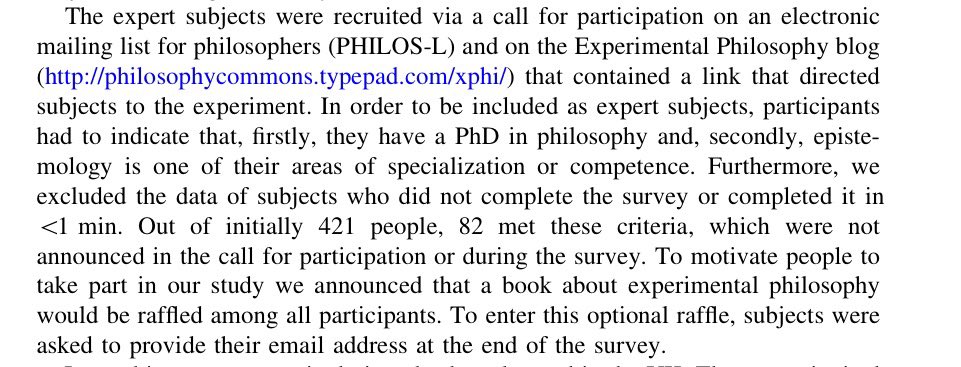

@xphilosopher different samples maybe? or at least that's one potential explanation: orthodoxy among epistemologists and thus among people more likely to publish about barn cases, but not among philosophers simpliciter (i haven't seen the data set so idk if this is what happened)
English

Another installment in linguist Lelia Glass’s beautiful series of papers on differences between good and bad
This one’s about why “The dishes are clean” means all the dishes are clean but “The dishes are dirty” doesn’t mean all the dishes are dirty
snl-journal.org/media/journals…

English
Experimental Philosophy retweetledi

Happening this week!
Experimental Philosophy in China: Webinar Series – Session 3, Experimental Jurisprudence
Time: 9:00 AM, June 25 (Thursday), Beijing Time (UTC+8)
Tencent Meeting (VooV Meeting) ID: 965-198-333
Link: meeting.tencent.com/dm/GJN9NsVFCqiI
Speaker: Kevin Tobia


English
@rodrigodiazxphi This analysis finds that 17 experimental philosophy papers have been published in Nous, and 35 papers have been pushed in Analysis
If someone had predicted this back in 2005, everyone would have said that they were crazy and nothing even close to this was possible
English
@rodrigodiazxphi Ha! This is a delightful "glass half full, glass half empty" sort of situation
When the field of experimental philosophy first started back in the early 2000s, I would never have imagined that anywhere near this many experimental papers could get published in philosophy journals
English
The journal Cognition – arguably the top journal in cognitive science – has published *ninety-nine* experimental philosophy papers
Clearly, experimental philosophy is now very well integrated into the broader field of cognitive science
Joanna Demaree-Cotton@Jo_DC
Ever wondered which journals have published the most x-phi over the last 25 years? Wonder no more! @rodrigodiazxphi and Max Bauer have scraped a bunch of PhilPapers data to find out the answer. See link 👇for our full blogpost xphi.net/2026/06/12/wha…
English