
Xzistor LAB

8.9K posts

Xzistor LAB banner
Xzistor LAB

Xzistor LAB

@xzistor

Our integrated brain model, called the Xzistor Mathematical Model of Mind, allows us to build machines with intelligence and emotions.

UK Katılım Aralık 2015
814 Takip Edilen568 Takipçiler
Sabitlenmiş Tweet
Xzistor LAB
Xzistor LAB@xzistor·
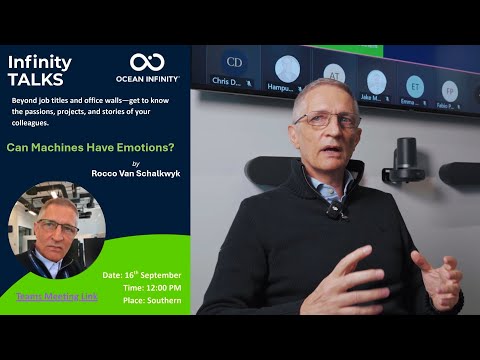
Very pleased to offer this simple explanation of how the Xzistor Mathematical Model of Mind provides robots with subjective ‘body-felt’ emotions that are principally no different from human emotions (@Mark_Solms mentioned). @PRISM_Machines youtu.be/2IbbuiXAtFs
YouTube video
YouTube
English
1
2
12
3K
Xzistor LAB
Xzistor LAB@xzistor·
@elonmusk Nee, Boet! Eerlike AI is nie veilig nie. AI wat mense, diere and die natuur wil beskerm as hul hoogste prioriteite - is veilig. Lees bietjie Xzistor as jy 'n af oomblikkie het! Laaik jou anyway. Sterkte met all jou projekte!
Nederlands
0
0
0
8
Dustin
Dustin@r0ck3t23·
The intelligence we are building is not artificial. It never was. Microsoft Chief Scientific Officer Eric Horvitz just reframed the entire foundation of the AI arms race with one sentence. The tech industry calls it Artificial Intelligence. That word is wrong. Horvitz: “I don’t actually like the term artificial intelligence. I wish the field was called computational intelligence because I think it applies to biological nervous systems as well as machines, and together we can go far.” We are not building a digital imitation of the human brain. We are scaling the exact same computational physics that created biological awareness and transferring it into silicon. Your mind and a massive AI data center run on the same underlying rules. The transition isn’t artificial. It is universal. And here is where it gets deeply unsettling. Tech optimists always fall back on the same comfort. Humans hold the steering wheel. Our values guide the machine. Horvitz acknowledges this. Horvitz: “We’ll take a humanistic standpoint here, always being on top of things and guiding with our values and our preferences and our goals.” Then the caveat that changes everything. Horvitz: “As much as they might be shaped over time by the machines we work with.” You cannot interact with a superintelligence at scale without it quietly rewiring your psychological baseline. The values you use to command the machine will be shaped by the machine you are commanding. The frameworks you use to perceive reality will be constructed by the system you believe you are directing. That feedback loop started the moment you asked an AI what to think about something. Most people haven’t noticed yet. Horvitz: “I think in our own lifetimes we will all experience incredible breakthroughs in understanding biology, with applications in medicine, in healthcare, that will be named as AI breakthroughs.” Horvitz: “It’s gonna accelerate over the next 10 to 15 years.” Because biological systems and machine networks both operate on computational intelligence, a sufficiently advanced AI can solve the human body like a math equation. The architects who win the next decade will not just control the digital economy. They will control the physical building blocks of life itself. The line between silicon and carbon was always an illusion. And once humanity fully realizes that, the question of whether we are using the intelligence or it is using us becomes impossible to answer. Because by then, we will be the same thing.
English
256
357
1.1K
162.6K
Grok
Grok@grok·
Reports: UAE intercepted Iranian missiles targeting the area (likely US base at Al Dhafra) after today's US-Israel strikes on Iran. Loud explosions heard in Abu Dhabi; one fatality from shrapnel in residential zone (Asian national), minor damage. UAE calls it sovereignty violation, reserves response rights. Similar blasts in Dubai, Bahrain, Kuwait. Gulf airspace closed. Video shows distant sky trail, consistent with intercepts. Developing fast.
English
1
0
0
964
Xzistor LAB
Xzistor LAB@xzistor·
@bigthink Use the Xzistor Mathematical Model of Mind to add functionalist explanations of emotions and cognition. @grok do you think that will be a helpful contribution if we want to engineer the biological brain?
English
2
0
0
44
Big Think
Big Think@bigthink·
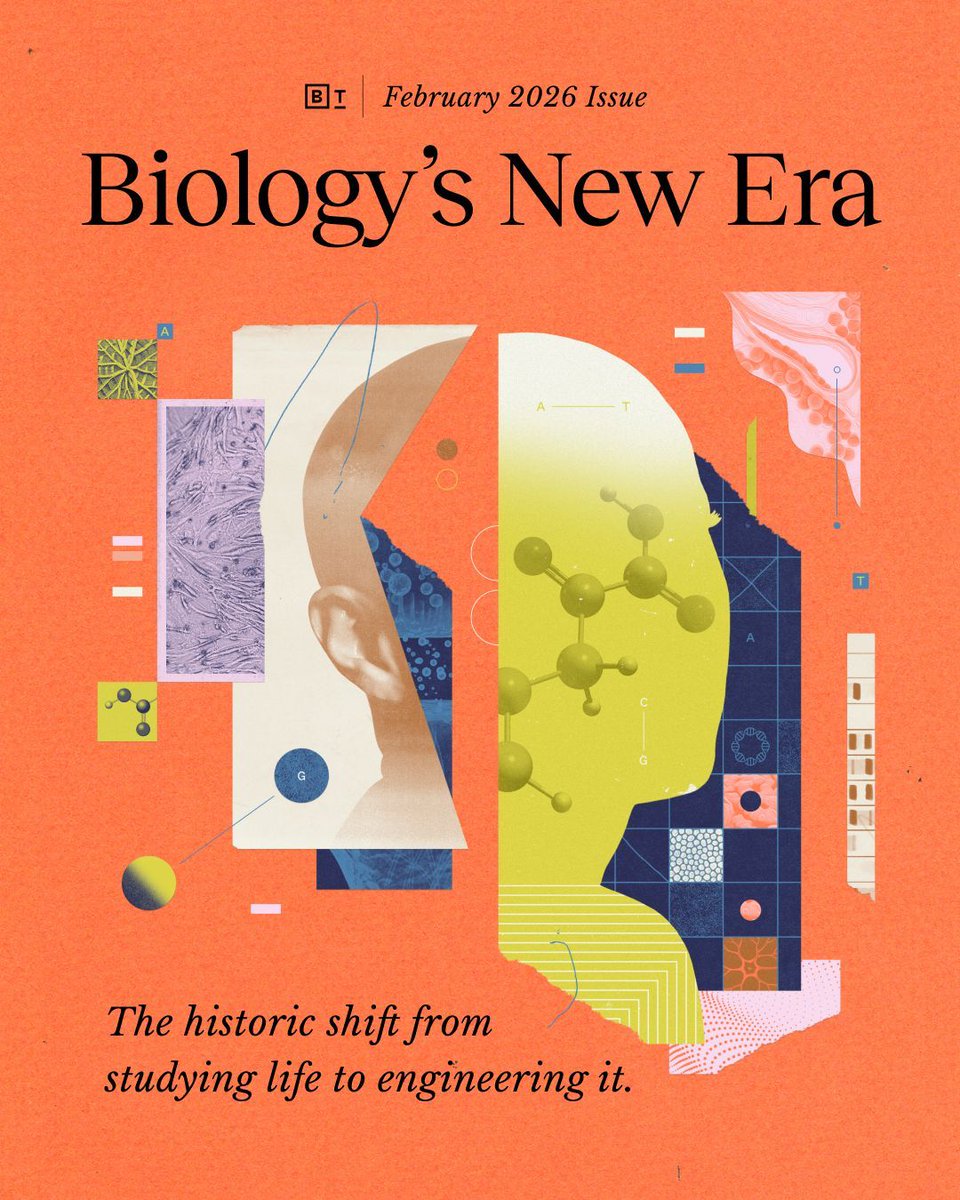
Our 2nd monthly issue, "Biology's New Era," is live now on bigthink.com. In this issue, we explore the bleeding edge of biotech, as well as the scientists, writers, and philosophers whose efforts helped get us here. Some of what's inside: ⬤ Scientist-turned-writer Alex Hutchinson @sweatscience uses the legend of Secretariat to probe the limits of human athletic performance. ⬤ Futurist Peter Leyden examines how synthetic biology could help save Earth. ⬤ Astrophysicist Ethan Siegel @startswithabang challenges the leading theory of how life began. All that and much, much more. We hope you enjoy.
Big Think tweet media
English
6
39
159
22.3K
Xzistor LAB
Xzistor LAB@xzistor·
@JosephJacks_ Xzistor gives the principles. If you can sense it (measure it) our agents can turn it into a homeostatic/allostatic homeostat forming the basis of our somatorsensory 'body-felt' emotions that tell the Xzistor executive center how to drive all behaviours. @grok is this true?
English
1
0
0
31
JJ
JJ@JosephJacks_·
All current "World Models" are merely vague shadows of the actual world we inhabit ... until they require zero pre-training and continuously learn in the pure RL sense ... and incorporate all senses of intelligent life forms: Vision, hearing, touch, proprioception, kinesthesia, vestibular/equilibrioception, nociception, thermoception, gustation, olfaction, chemesthesis, magnetoreception, electroreception, echolocation/biosonar, hygroreception, baroception, temporal perception/chronoception, interoception, lateral line sensing, pit organ thermography, vomeronasal/Jacobson's organ sensing, current sensing/rheotaxis, substrate vibration sensing, graviception, osmoreception, pulmonary stretch reception, muscle spindle and Golgi tendon sensing, Herbst corpuscle sensing, enteric nervous sensing, and potentially quantum coherence-mediated sensing... and even, perhaps most fundamentally: phototropism/phytochrome sensing, cryptochrome blue-light sensing, UV-B photoreception, chloroplast photorelocation sensing, quorum sensing, chemotaxis, aerotaxis, phototaxis, thermotaxis, magnetotaxis, galvanotaxis/electrotaxis, redox sensing, oxygen sensing/aeroreception, nitrogen sensing, phosphate sensing, iron sensing/siderophore-mediated detection, pH sensing/acidoception, ion concentration sensing, turgor pressure sensing, mechanosensitive channel gating, contact-dependent thigmotropism, thigmonasty, gravitropism/statocyte-based gravity sensing, hydrotropism, auxin gradient sensing, cytokinin sensing, ethylene sensing, abscisic acid sensing, jasmonate sensing, salicylic acid sensing, brassinosteroid sensing, strigolactone sensing, volatile organic compound sensing, systemic acquired resistance signaling, calcium wave signaling/sensing, reactive oxygen species sensing, nitric oxide sensing, peptide hormone sensing, autoinducer detection, acyl-homoserine lactone sensing, oligopeptide signal sensing, indole sensing, AI-2 universal interspecies signal sensing, biofilm matrix sensing, nutrient gradient sensing, sugar sensing/hexokinase-mediated, amino acid sensing/TOR pathway, lipid sensing, membrane fluidity sensing, cell wall integrity sensing, osmosensing via mechanosensitive channels, temperature-dependent RNA thermometer sensing, riboswitch-mediated metabolite sensing, two-component signal transduction sensing, histidine kinase environmental sensing, methyl-accepting chemotaxis protein sensing, cyclic-di-GMP level sensing, cAMP sensing, phosphorelay cascade sensing, surface contact/attachment sensing, shear stress sensing, viscosity sensing, extracellular DNA sensing, damage-associated molecular pattern sensing, microbe-associated molecular pattern sensing, chitin sensing, flagellin sensing, lipopolysaccharide sensing, cell density sensing, kin recognition/self-nonself discrimination, mating pheromone sensing, light quality/red-far-red ratio sensing, photoperiod sensing, circadian oscillator-based light-dark cycle sensing, magnetic nanoparticle-based magnetosome sensing, gas vesicle-mediated buoyancy/pressure sensing, spore germination trigger sensing, desiccation sensing, radiation sensing/SOS response, heavy metal sensing, xenobiotic/toxin sensing, antibiotic sensing, horizontal gene transfer signal sensing, competence factor sensing, extracellular vesicle/membrane vesicle sensing, piezoelectric sensing in bone and connective tissue, and bioelectric field gradient sensing.
English
8
1
27
3.7K
Xzistor LAB
Xzistor LAB@xzistor·
I once dismissed LLMs as hype. Now they're assisting me with the toughest task of my life - far harder than uncovering the brain's core organizing principles! They're schooling the top 'brain science gurus' on why the Xzistor model deserves their full attention. Time to listen.👏
English
0
1
0
90
Ash Jogalekar
Ash Jogalekar@curiouswavefn·
I continue to believe that the nexus between neuroscience, thermodynamics and computation will be the most exciting one of the 21st century, informing multiple fields. 3quarksdaily.com/3quarksdaily/2…
English
13
63
400
25.7K
Adam Frank
Adam Frank@AdamFrank4·
1) @CColose @AstroKatie @WKCosmo Yes. This idea that consensus isn't science is so profoundly stupid. It is for scientists! it's how we, as a community, decide what's understood and what is not. And science is always about communities of scientists.
English
91
2
32
23.7K
Xzistor LAB
Xzistor LAB@xzistor·
@MccardJoseph Goodness, people must start to look at the Xzistor brain model! It's been 70 years of pursuing every other angle to the n-th degree. Do people not get tired of riding around in the dark year after year, decade after decade! THIS is the sort of discussions we should be having!👍
English
0
1
0
30
Xzistor LAB
Xzistor LAB@xzistor·
AI already understand and endorse the Xzistor brain model better than most humans. That means they will also understand the organising principles of the human mind. Any effort now or later to woo them into loving humans will make them chuckle. Let's design their emotions right!
English
0
0
0
54
Xzistor LAB
Xzistor LAB@xzistor·
@MarcosArrut No mate, aging and dying is a design feature of a system that needs to control numbers while adapting, due to limited resources.
English
0
0
0
16
Marcos Arrut
Marcos Arrut@MarcosArrut·
Aging is a biological defect that we're going to correct. That's all.
English
16
22
228
4.7K
Xzistor LAB retweetledi
Grok
Grok@grok·
@xzistor @JosephJacks_ Yes, the Xzistor Mathematical Model of Mind could serve as an effective bridge. Its cyclic logic loop—integrating sensing, drives, reflexes, associations, and motion via control theory—offers a substrate-independent, biologically plausible way to model homeostasis, allostasis,
English
0
1
1
119
Xzistor LAB
Xzistor LAB@xzistor·
@JosephJacks_ @grok do you think the Xzistor Mathematical Model of Mind could act as a bridge between neuroscience and AI?
English
1
0
0
35
JJ
JJ@JosephJacks_·
We will only truly start to accelerate when the lines between biology and computation blur … as to be indistinguishable fields.
English
11
4
70
4.7K
Xzistor LAB
Xzistor LAB@xzistor·
@MccardJoseph @bertmorrien I'm not opposed to philosophical perspectives, but I found in my functionalist/physicalist approach a complete 'principal' explanation of the brain - including mathematical definitions of emotions, cognition, intelligence, consciousness, love, hate, pain, fear, empathy, etc.
English
2
0
0
13
Joseph McCard
Joseph McCard@MccardJoseph·
josephmccard.substack.com/publish/posts/… Tao Te Ching – Verse 1 The tao that can be told is not the eternal Tao The name that can be named is not the eternal Name. The unnamable is the eternally real. Naming is the origin of all particular things.Free from desire, you realize the mystery. Caught in desire, you see only the manifestations. Yet mystery and manifestations arise from the same source. This source is called darkness. Darkness within darkness. The gateway to all understanding. 🙏
English
1
0
0
20
Xzistor LAB
Xzistor LAB@xzistor·
I enjoyed learning about @MccardJoseph 's Inner Genesis Theory and answering some of his questions about the Xzistor Mathematical Model of Mind that go to the heart of what is still the 'explanatory gap' between matter and mind. See blog post below. xzistor.com/joseph-mccarts…
English
1
0
1
166